Thirty years beneath the surface: The story of the Two Oceans Aquarium
When the Two Oceans Aquarium first opened its doors on 13 November 1995, Cape Town gained a world-class celebration of the ocean’s wonders. Nestled at the meeting point of the Indian and Atlantic Oceans, few places in the world are better positioned to showcase such a unique and vibrant convergence of marine life.
The history of the Aquarium began long before opening day, though.
Let’s look back at over 30 years of marine conservation, education, and research.
Building the future (1994 – 1996)
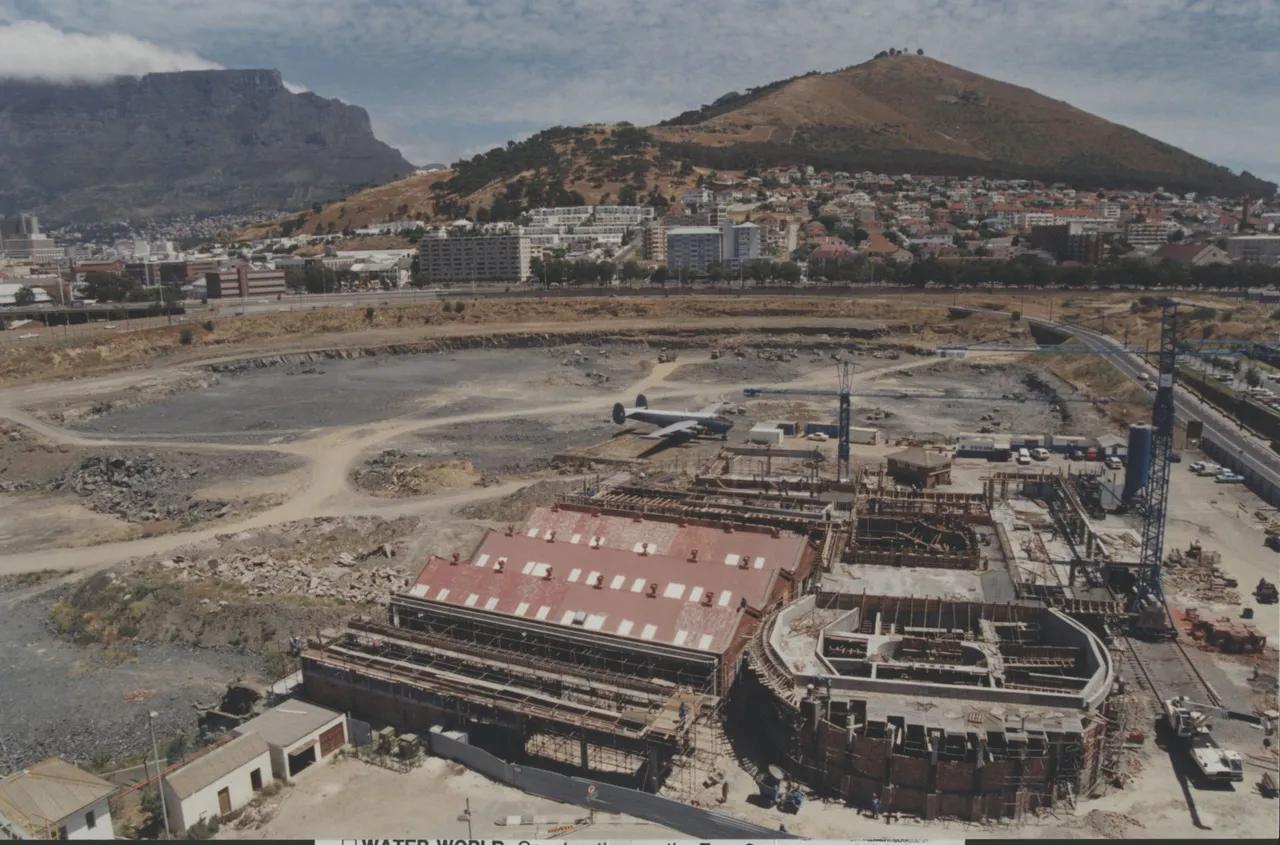
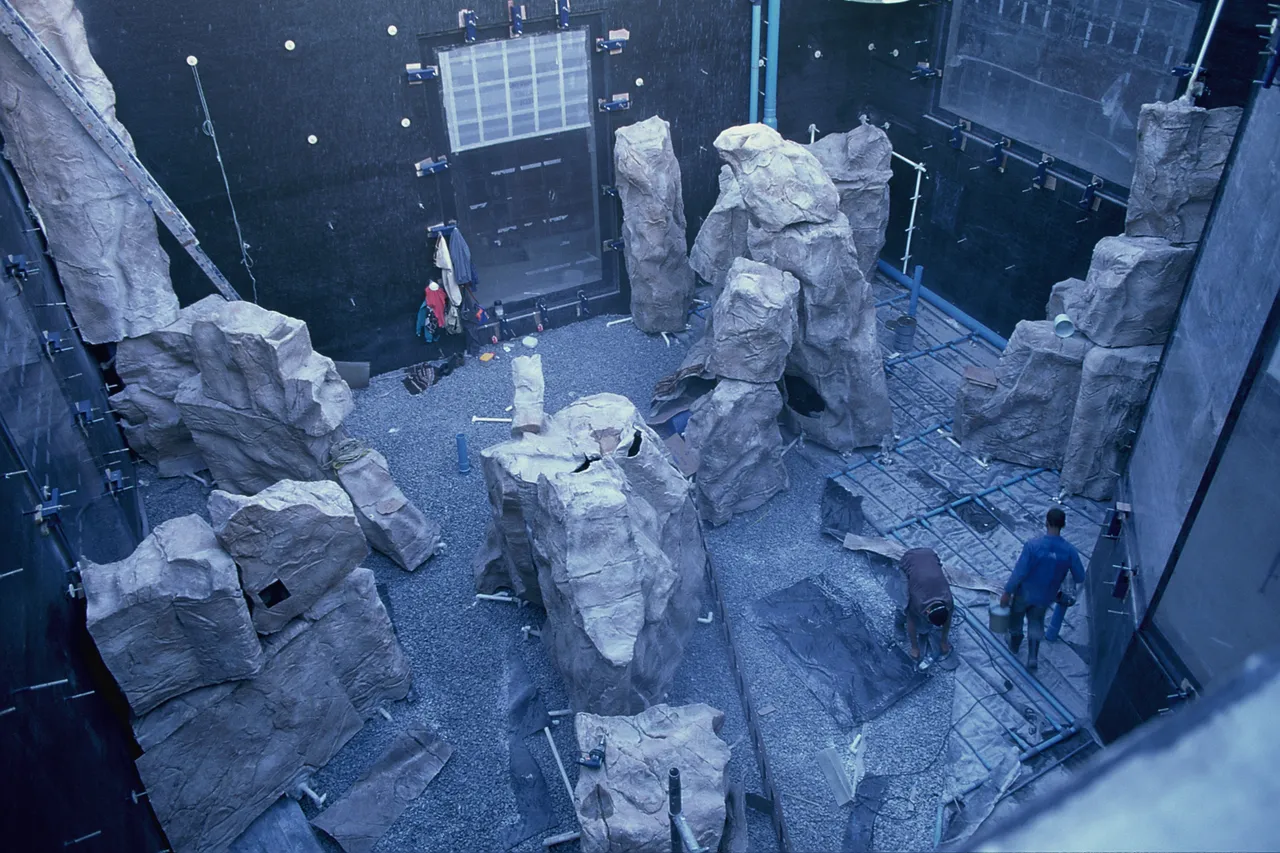
Construction for the Aquarium began in May 1994, following eight years of painstaking research in which the core team dedicated countless hours and profound passion to creating the foundation of what would become an internationally recognised tourism attraction.
During the construction phase, the small Aquarium team began to carefully select animals that would be housed in their new exhibit spaces. In the interim, the animals were temporarily kept in a holding facility in Granger Bay, devotedly cared for by a team of aquarists and volunteers. In fact, our current CEO, Michael Farquhar, was one of the volunteers who cared for the animals in this intermediate phase!
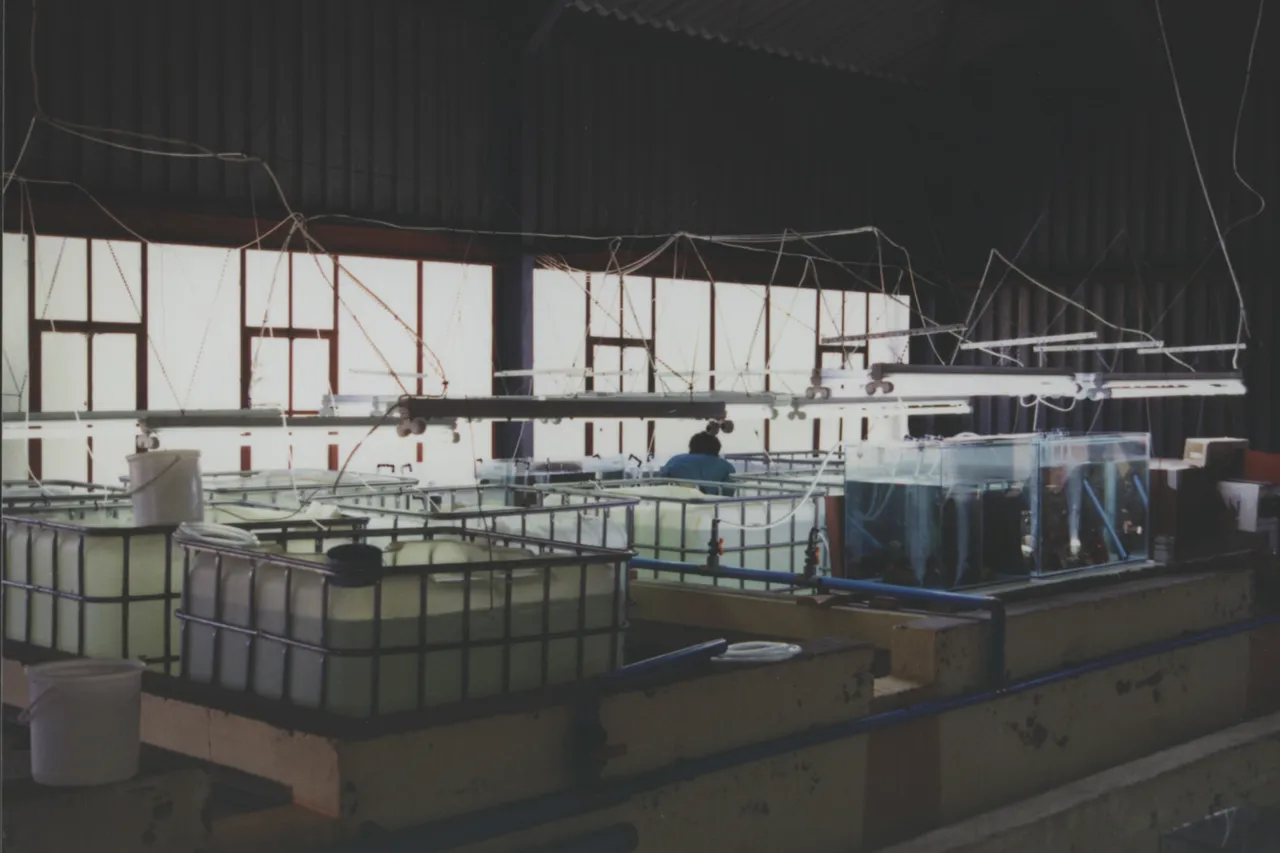
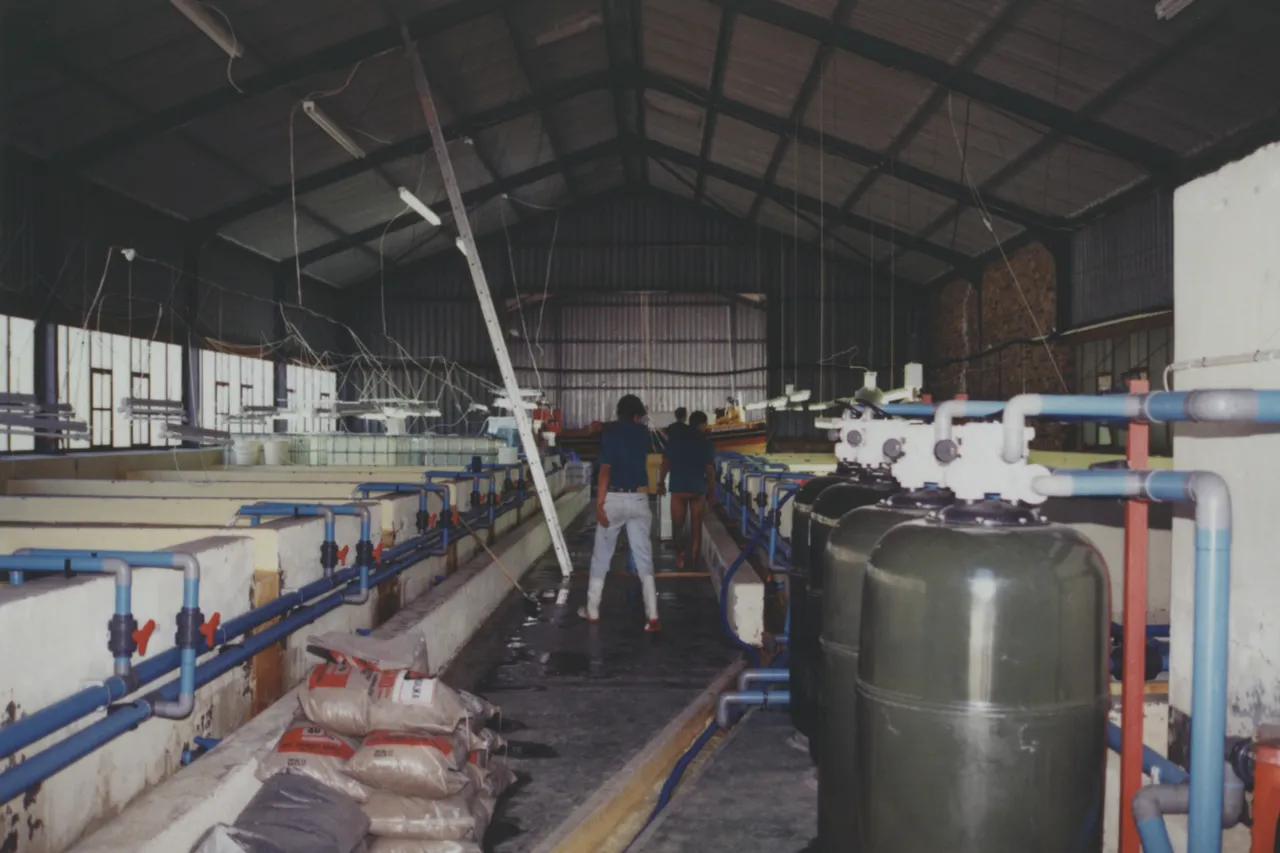
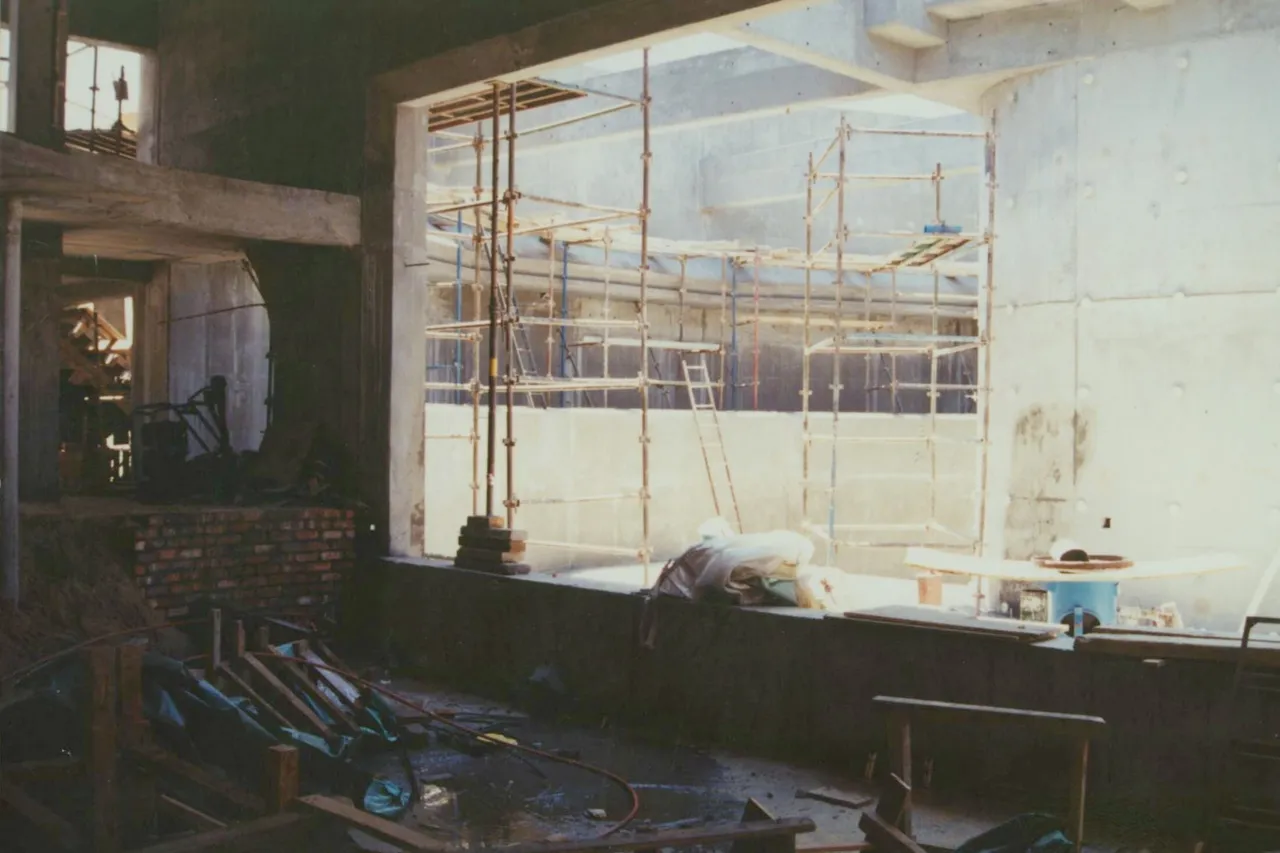
It was over these 18 months that two of our main, large-scale exhibits came into existence: The now-Save Our Seas Foundation Shark Exhibit and the now-Kelp Forest Exhibit. For the team working on the exhibits themselves, this was a process of learning, big decisions, and many hours of dedication. At the centre of all the main decisions around the exhibit (and all the others) was the team’s absolute commitment to keeping the exhibits as close to the natural environment as possible to simulate the animals’ natural habitats. You can read all about these main exhibits here.
Helen Lockhart joined the team at the Information Desk a month before the Aquarium opened. Now the Conservation and Sustainability Manager, Helen is the Aquarium’s longest-serving staff member! At the beginning, Helen had no prior knowledge of the ocean – she was fascinated by the strawberry anemones and feather sea stars.
Just days before the Aquarium was set to open, word reached the team that a ragged-tooth shark had stranded in a Struisbaai tidal pool. A curious crowd had gathered, so Aquarist Billy Stanley and a few other staff raced to the scene where they enacted an unforgettable rescue. The decision was made to give the shark a new temporary home in the predator exhibit, which was called the I&J Ocean Predator Exhibit at the time. The shark was later dubbed Maxine and became one of the Aquarium’s most popular and beloved animals.
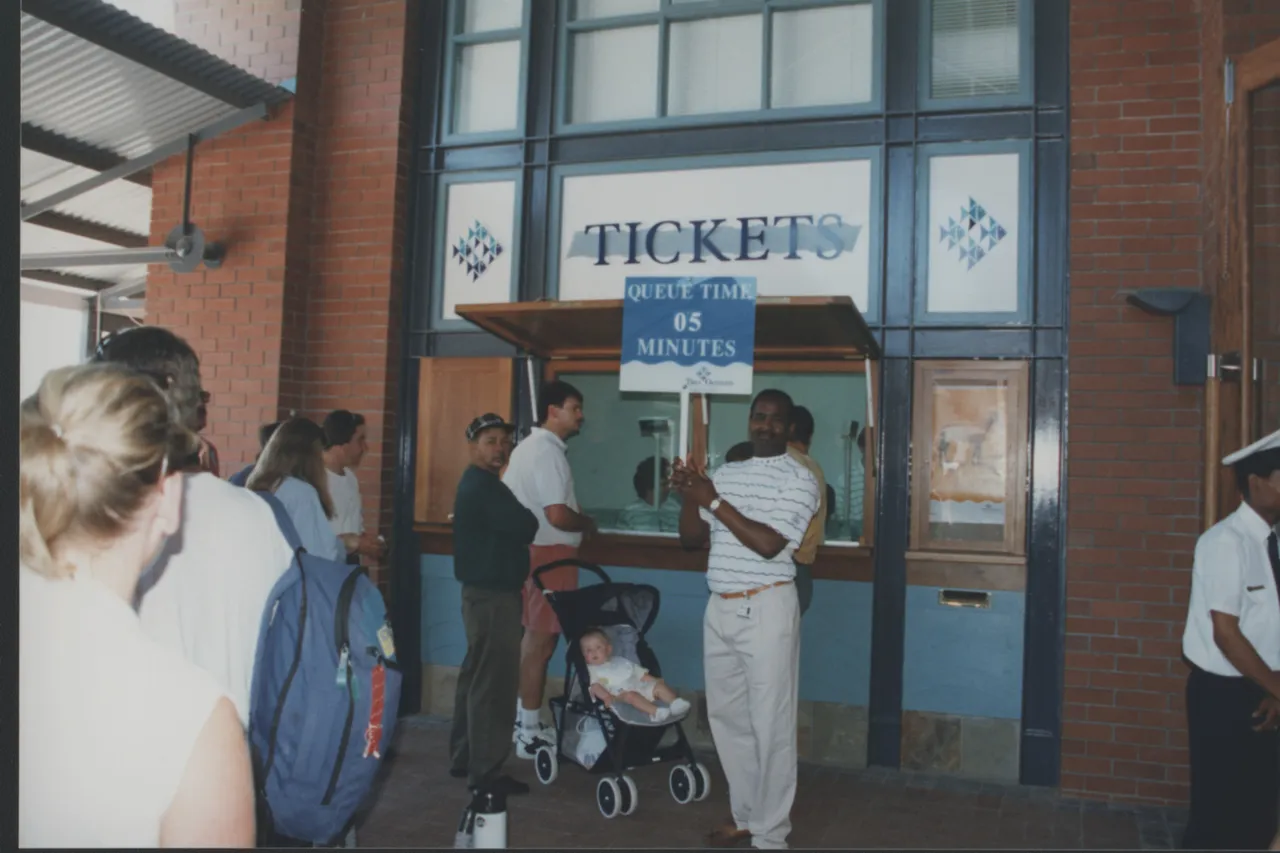
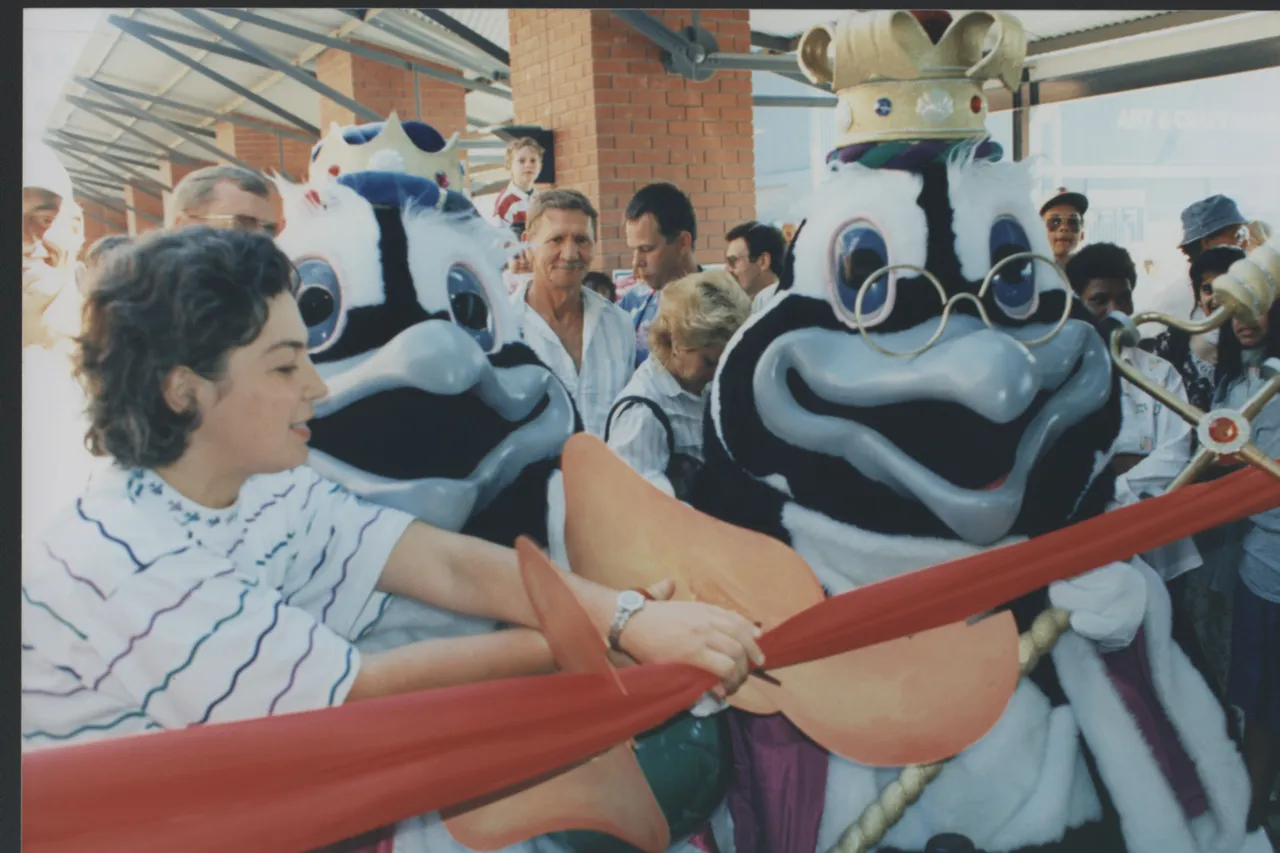
Finally, the Aquarium debuted with a splash on 13 November 1995. The two large-scale exhibits, the Open Ocean and Kelp Forest Exhibits, quickly became the biggest drawcards!
A growing legacy (1997 – 2005)
The years that followed cemented the Aquarium’s reputation for innovation, education, and care.
Michael joined the team in an official capacity in April 1997 as an Aquarist. Having studied marine biology and ecology at Rhodes University, his speciality was in water quality and kelp growth in the Kelp Forest Exhibit. Later in the year, Bianca Engel, another of the Aquarium’s longest-serving staff members, joined the team as part of the second-ever intake of volunteers. Bianca is currently the Deputy Head of Ocean Campus!
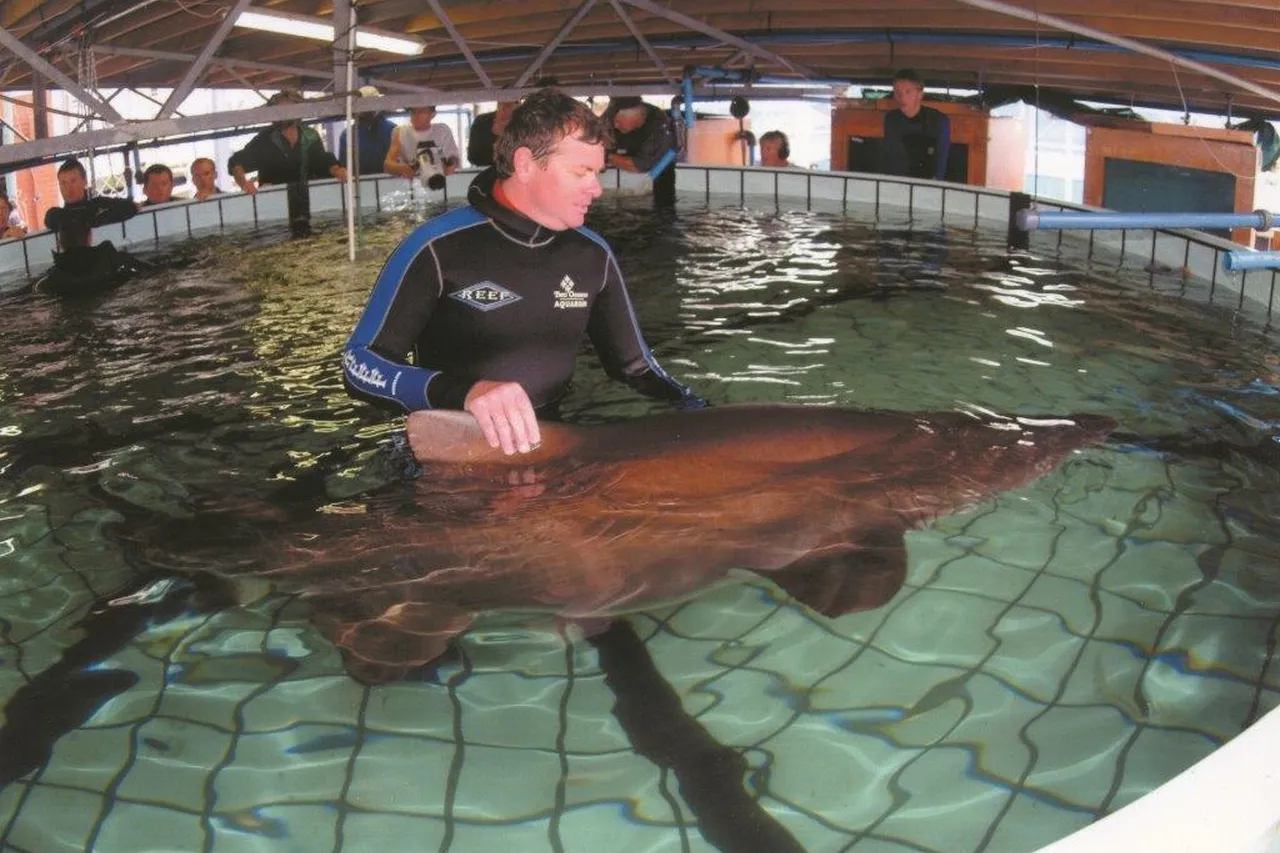
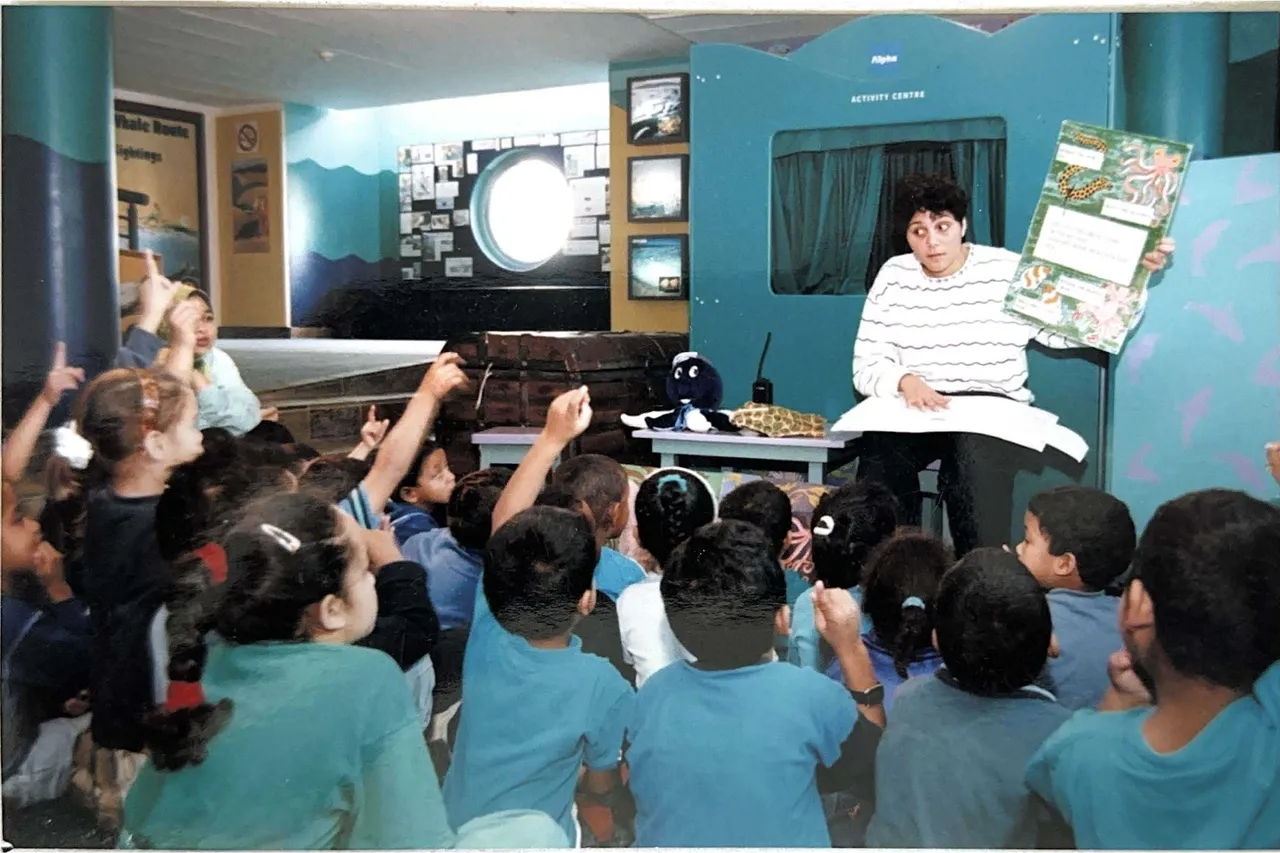
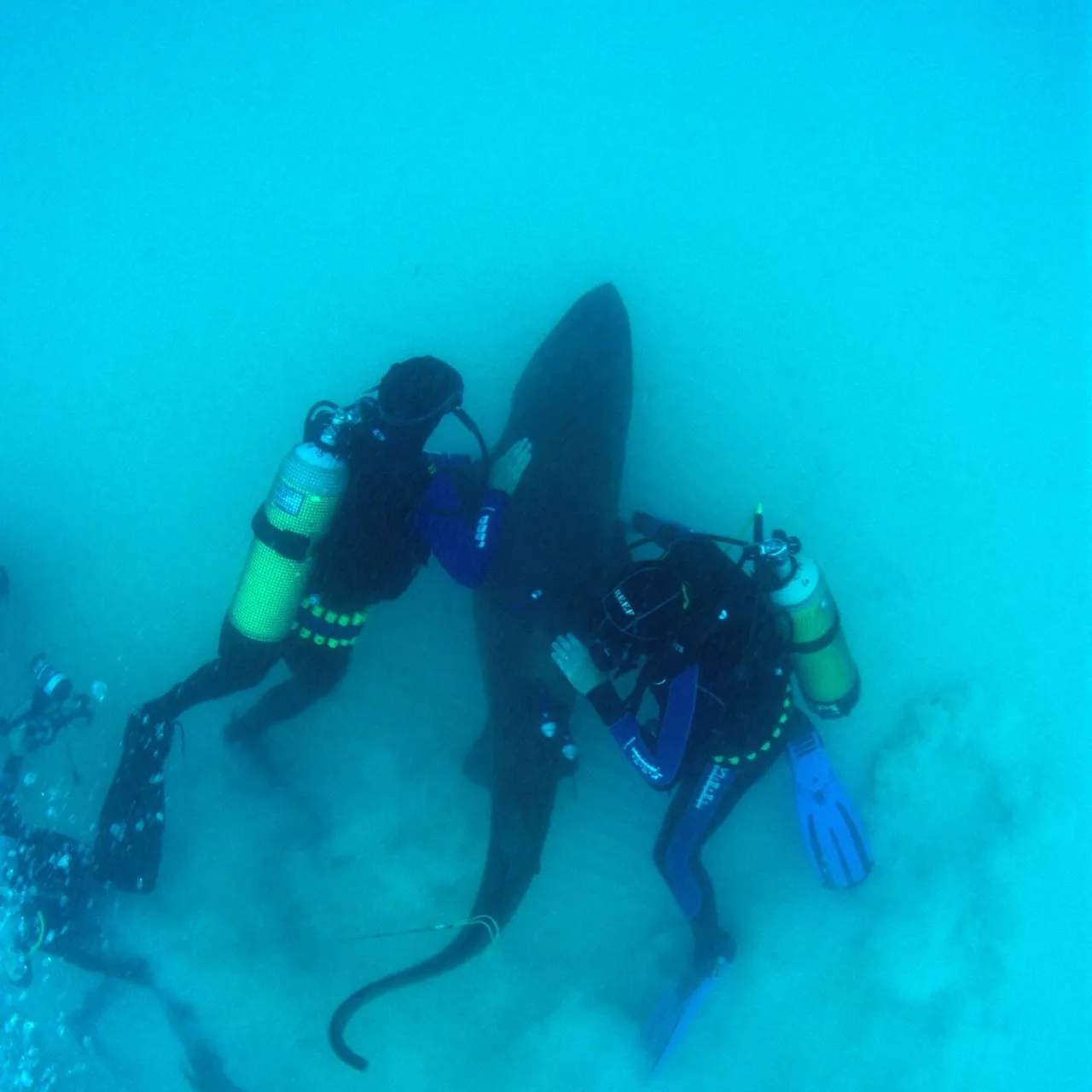
In 1997, the Open Ocean Exhibit was renamed the I&J Predator Exhibit in recognition of Irvin & Johnson’s support, and the Adventure Dive Programme was launched, inviting scuba divers to swim alongside Maxine and the other ragged-tooth sharks. This programme would be the catalyst for what Aquarium visitors now know as a five-star Dive School.
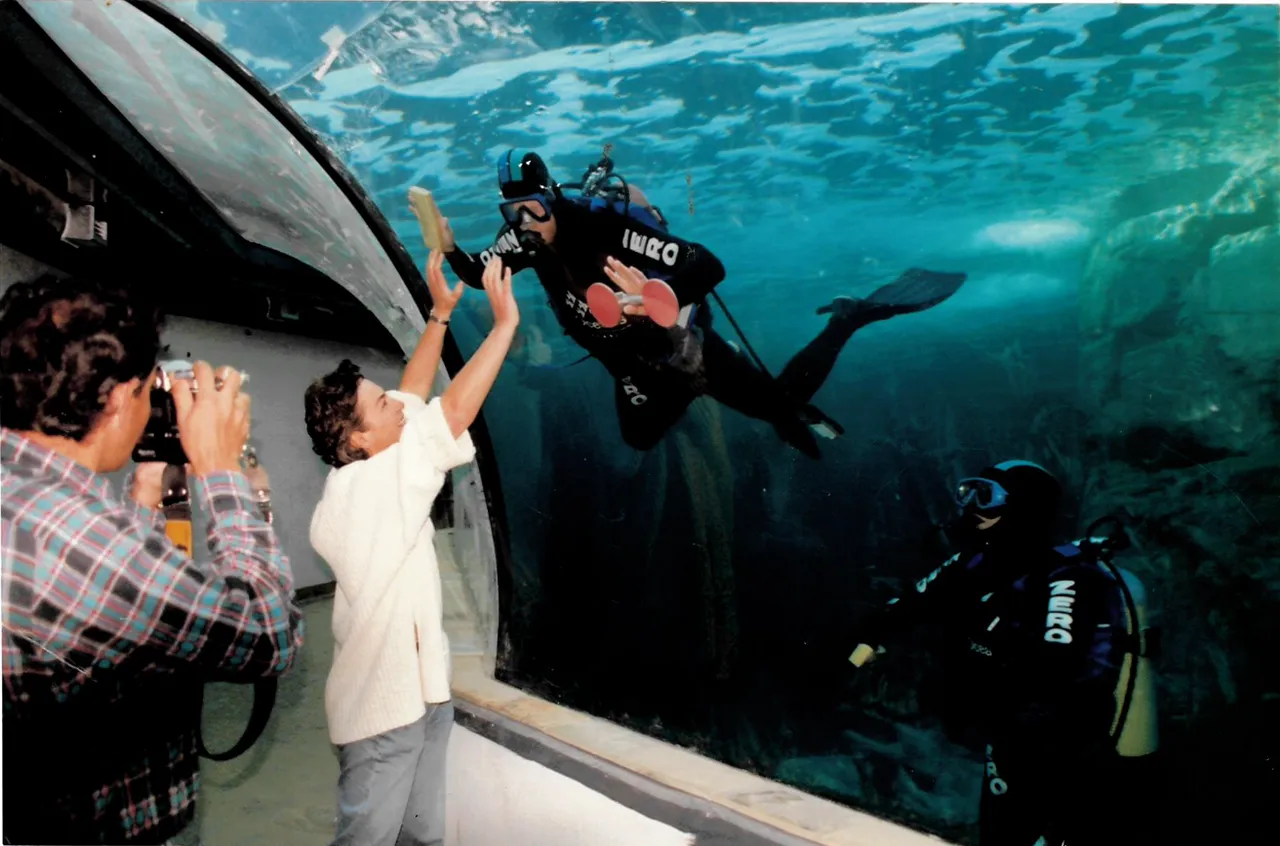
In April 1998, Bianca officially joined the staff as part of the team at the Children’s Play Centre. In these early days, the Aquarium’s education efforts focused on short ocean-themed stories and puppet shows but did not have any connection to the South African school curriculum. Having previously studied a teaching degree at the University of Cape Town, Bianca saw an incredible opportunity for growth for the Aquarium’s education programme.
Having been promoted to a teaching position, Bianca and the other education staff began to take the earliest iteration of our mobile classroom to fairs and expos around the Western Cape.
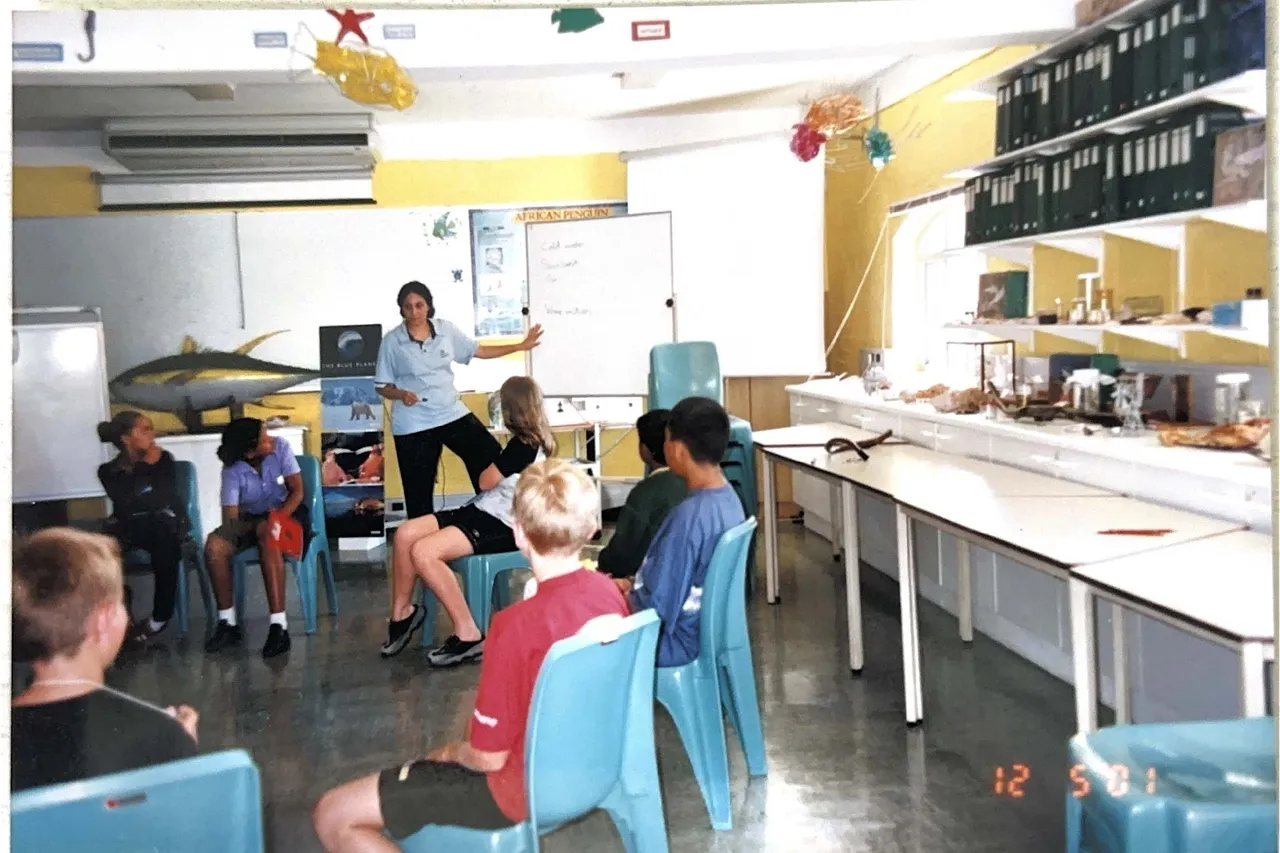
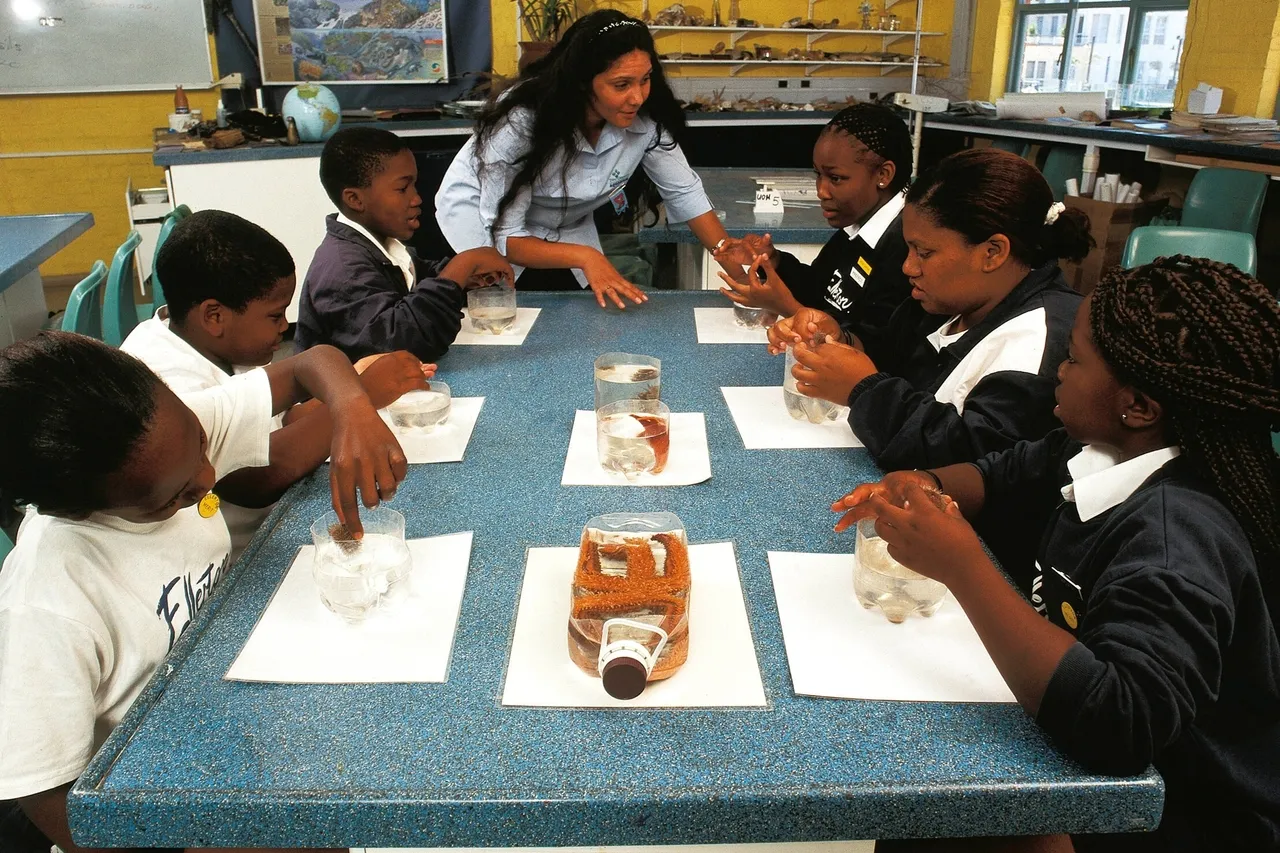
Between 1999 and 2002, the Aquarium made strides with its large-scale exhibit spaces: Fangs featured eels and sea snacks and earned the Marketing Organisation of the Year Award, while Living Dead showcased “living fossils” like crocodiles and giant isopods. A fully equipped wet laboratory was introduced in 2002, giving students hands-on access to marine science.
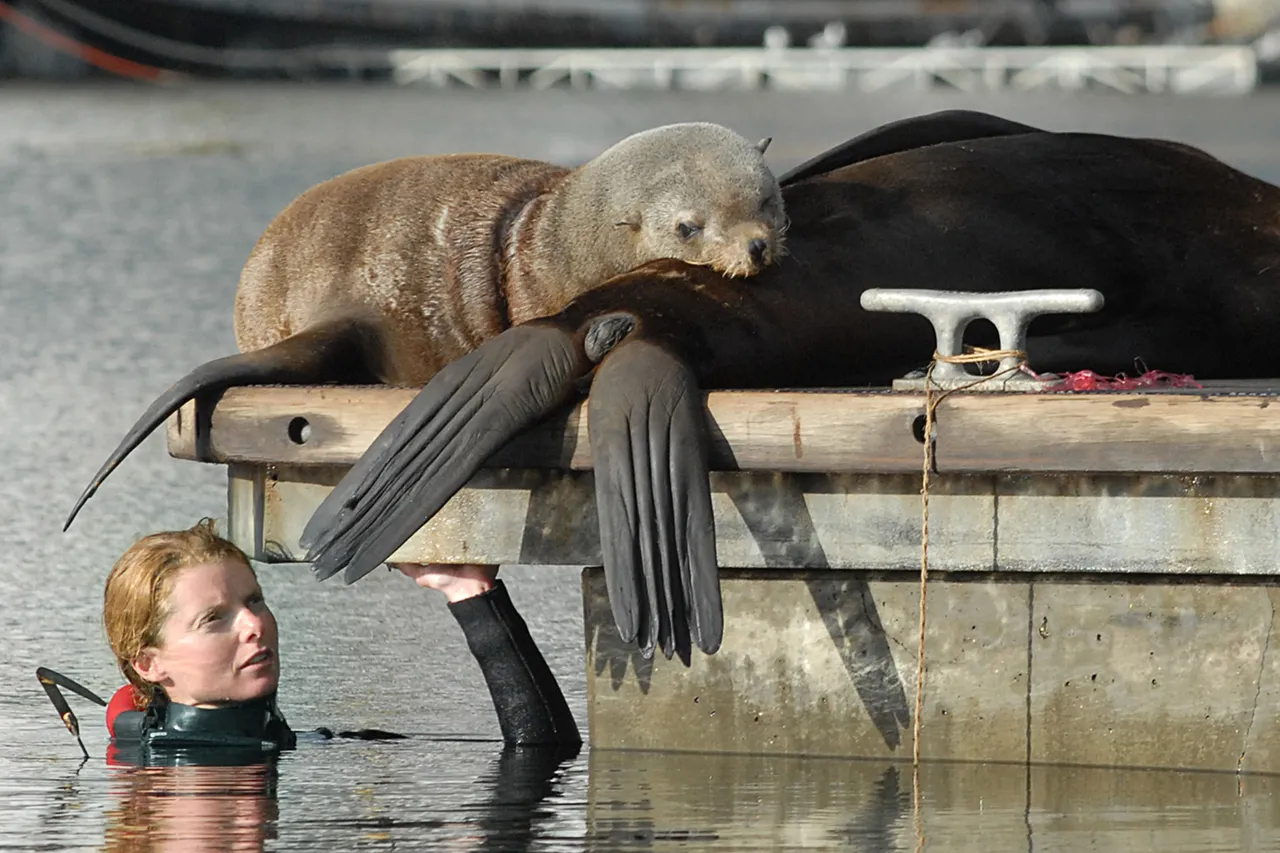
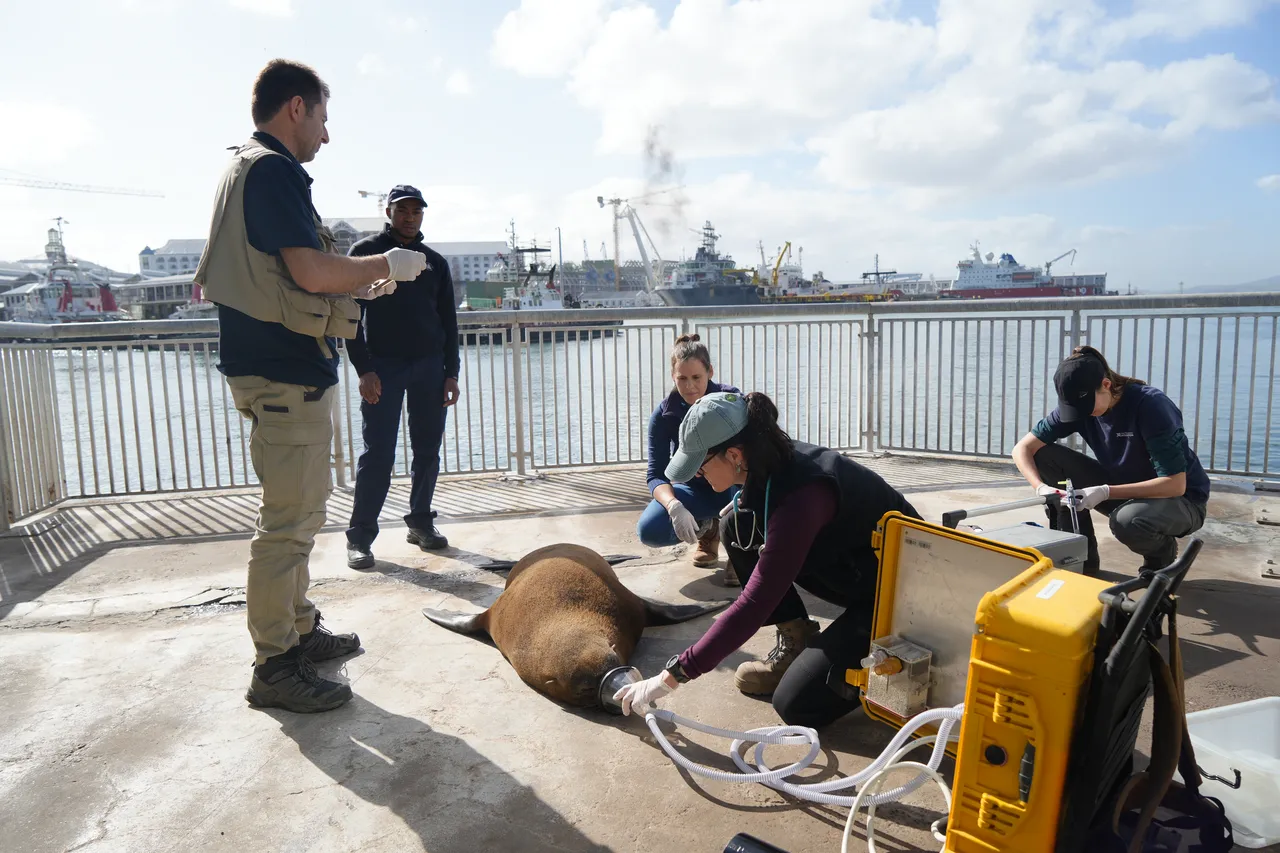
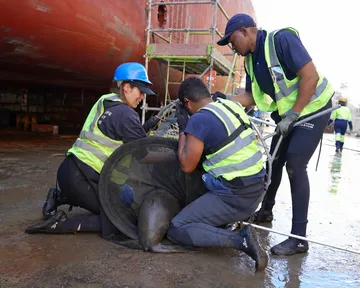
In the early 2000s, Vincent Calder and Claire Taylor sparked the beginning of what would later become the Marine Wildlife Management Programme. The two had noticed that the local Cape fur seals would often become entangled in pollution from the working harbour. Unable to ignore the problem and desperate to help these animals, Vincent and Claire began to experiment with disentangling methods in an attempt to access the seals more easily and safely (for both parties), and to ensure more successful and less stressful rescues. During this process, the current (and very effective) method of aquatic disentanglement was born!
In 2003, the beloved Children’s Puppet Theatre was unveiled in partnership with the City of Cape Town, using storytelling and humour to teach environmental lessons. By this point, the Aquarium’s education work had expanded – four classrooms were equipped with microscopes and small tanks with their own life support systems. This opened up a world of possibilities for school groups from around the province.
In 2004, ragged-tooth shark Maxine became the first shark ever to be tagged and released back into the wild by the Aquarium. Rescued in 1995, Maxine inspired the Save Our Seas Foundation M-Sea Programme, which used science and tracking data to educate and raise awareness for shark conservation. Michael, who had been promoted to Curator after being the Operations Manager for a while, played a key role in Maxine’s release.
2005 saw the Aquarium celebrate its 10th birthday, introduce the Adopt-a-School and pensioner programmes, and refresh its tropical galleries to better showcase the beauty of both oceans.
From green to gold (2007 – 2011)
The Aquarium’s commitment to sustainability was officially recognised in 2007 with a silver rating from the Heritage Environmental Rating Programme. This status was even upgraded to gold the following year! It was around this time that Helen found her passion for sustainability and was given the opportunity to study two degrees in the subject through the Aquarium.
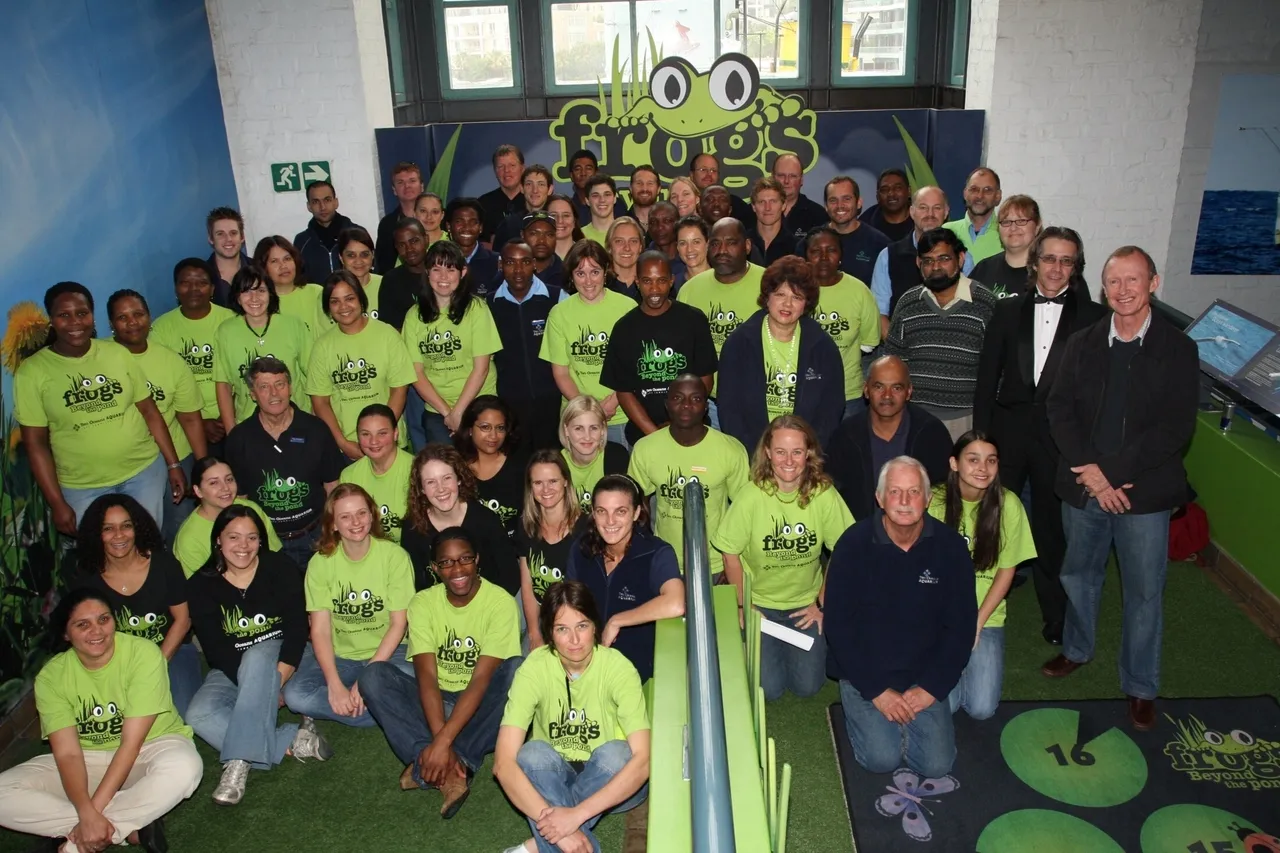
The interactive exhibit Frogs – Beyond the Pond highlighted the Aquarium’s commitment to conservation, drew interested crowds, and highlighted the importance of amphibians in the ecosystem. At this point, the Aquarium housed a few Western leopard toads that had been rescued from dire situations.
Education remained at the heart of the Aquarium’s mission. Bianca, who had taken the position of Deputy Head of Education, was named Marine Educator of the Year in 2010. As one of the founders of both the Young Biologist and Marine Sciences, this award was a well-deserved honour.
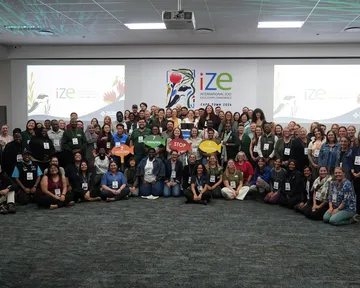
Innovation continued to flow. Helen emerged from her degrees with a renewed vigour for improving the Aquarium’s ecological footprint and inspiring the staff to live more sustainably. By 2011, renewable energy installations, solar panels and a wind turbine, made the Aquarium a model of sustainability, earning Platinum status from Heritage. The same year, the Aquarium hosted the 8th International Aquarium Congress, the first ever held in Africa.
Through the rescue and welfare work with the Cape fur seals, and the newly-installed Seal Platform proving to be a great success, the Aquarium was granted a government permit to undertake seal rescues and disentanglements within the greater Cape Town harbour in 2011.
Research, renewal, and reconnection (2013 – 2018)
The next decade brought expansion in research and conservation. In 2013, a long-term study of sevengill sharks began, using acoustic and satellite tags to unlock the secrets of these apex predators.
Around this time, it was discovered that the membrane lining between the two large-scale exhibits was beginning to corrode. Of course, considering that each exhibit held about a million litres of water, this was quite a hairy situation! After 20 years, both exhibits were in desperate need of repairs.
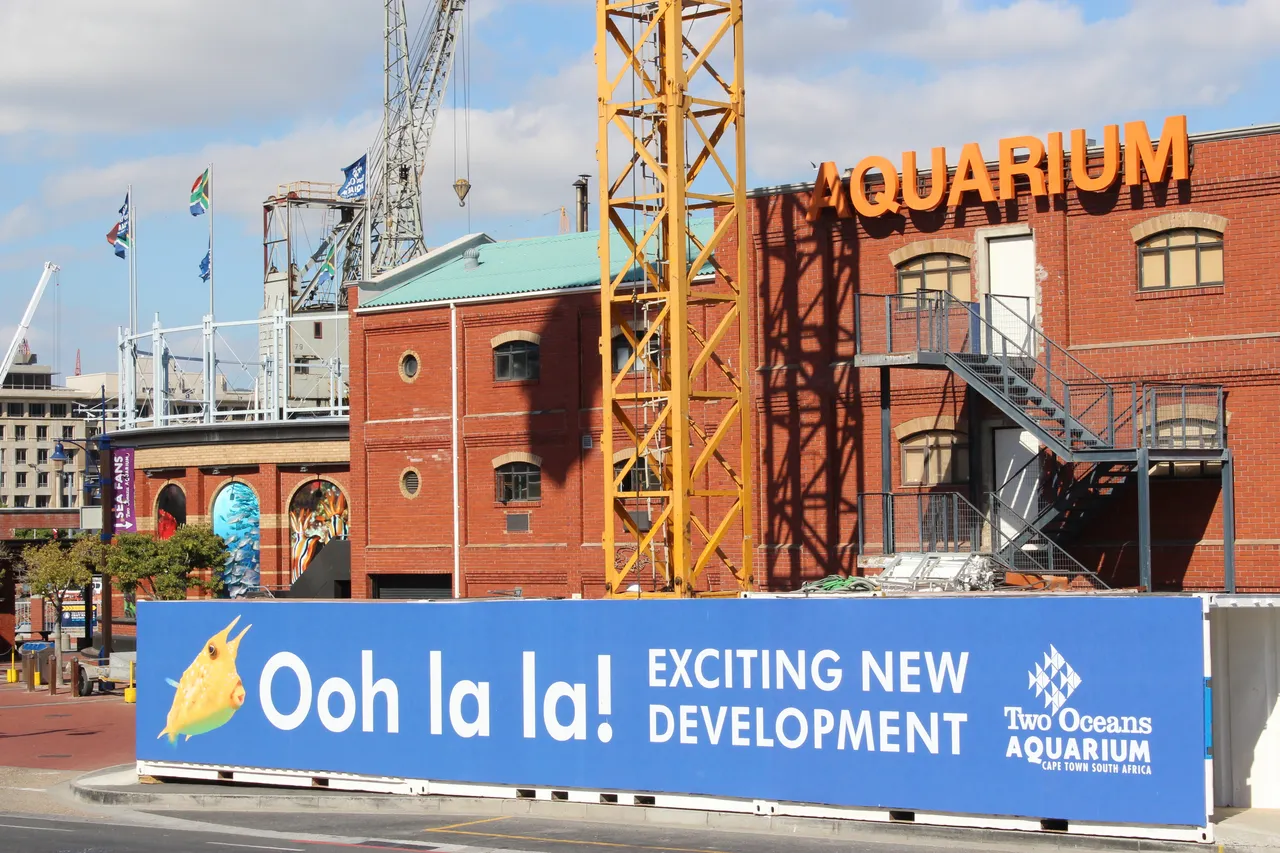
With much consideration, it was decided that they couldn’t close their two main drawcards for repairs without giving the public something to reward them for their patience during the construction time. The best way to fix the problem was to build a new exhibit space in which many of the animals in the other two exhibits could spend their time while the repairs were being made. Construction of the new exhibit began in 2014, with plans for a massive 1.6 million litre display and South Africa’s first 10 metre underwater tunnel!
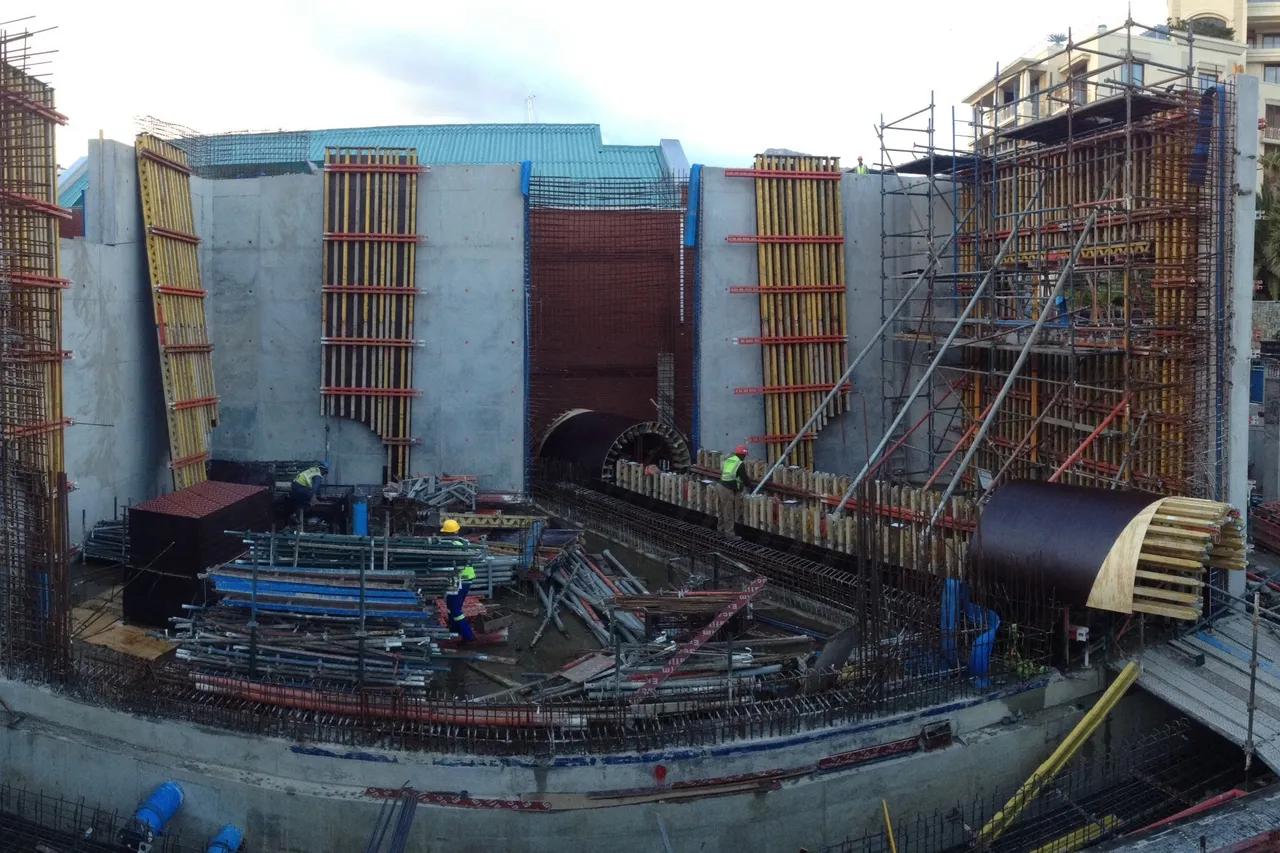
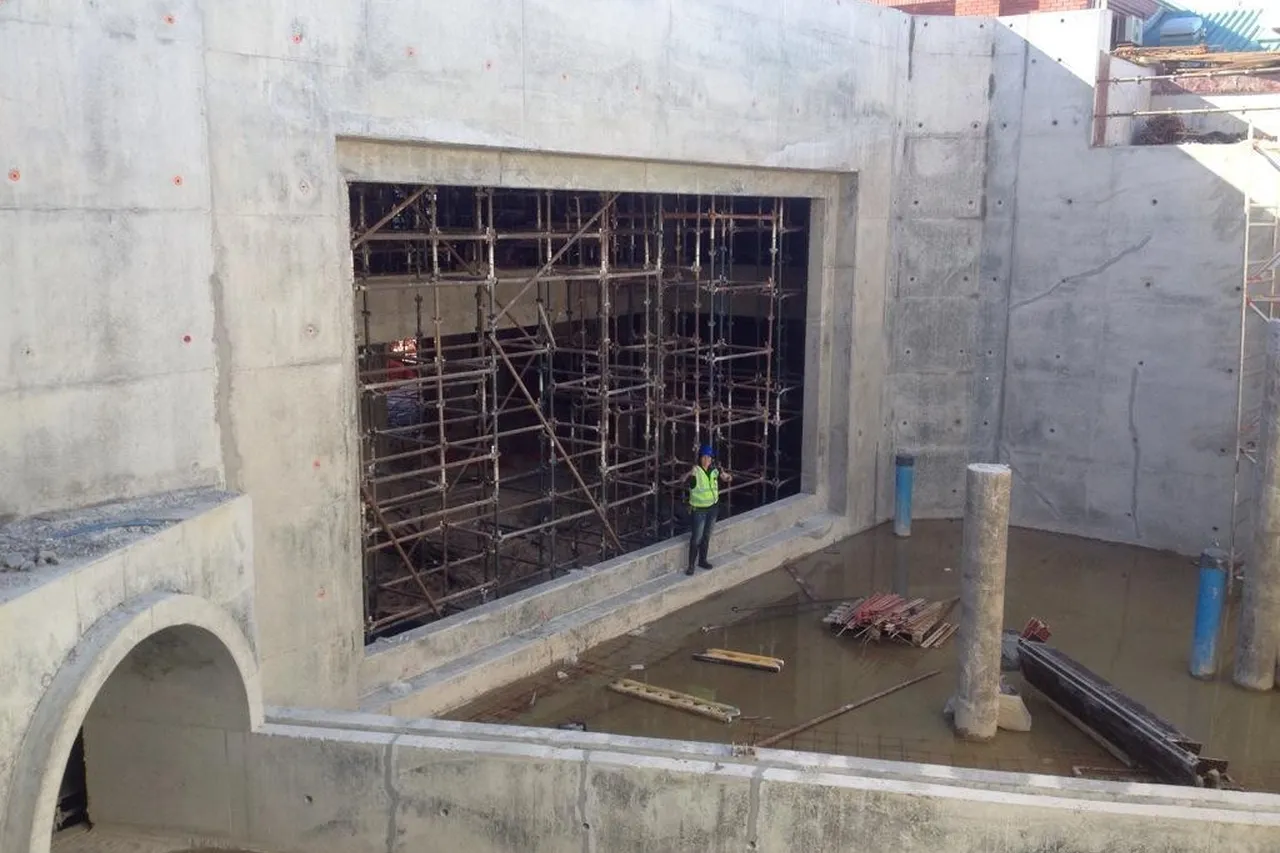
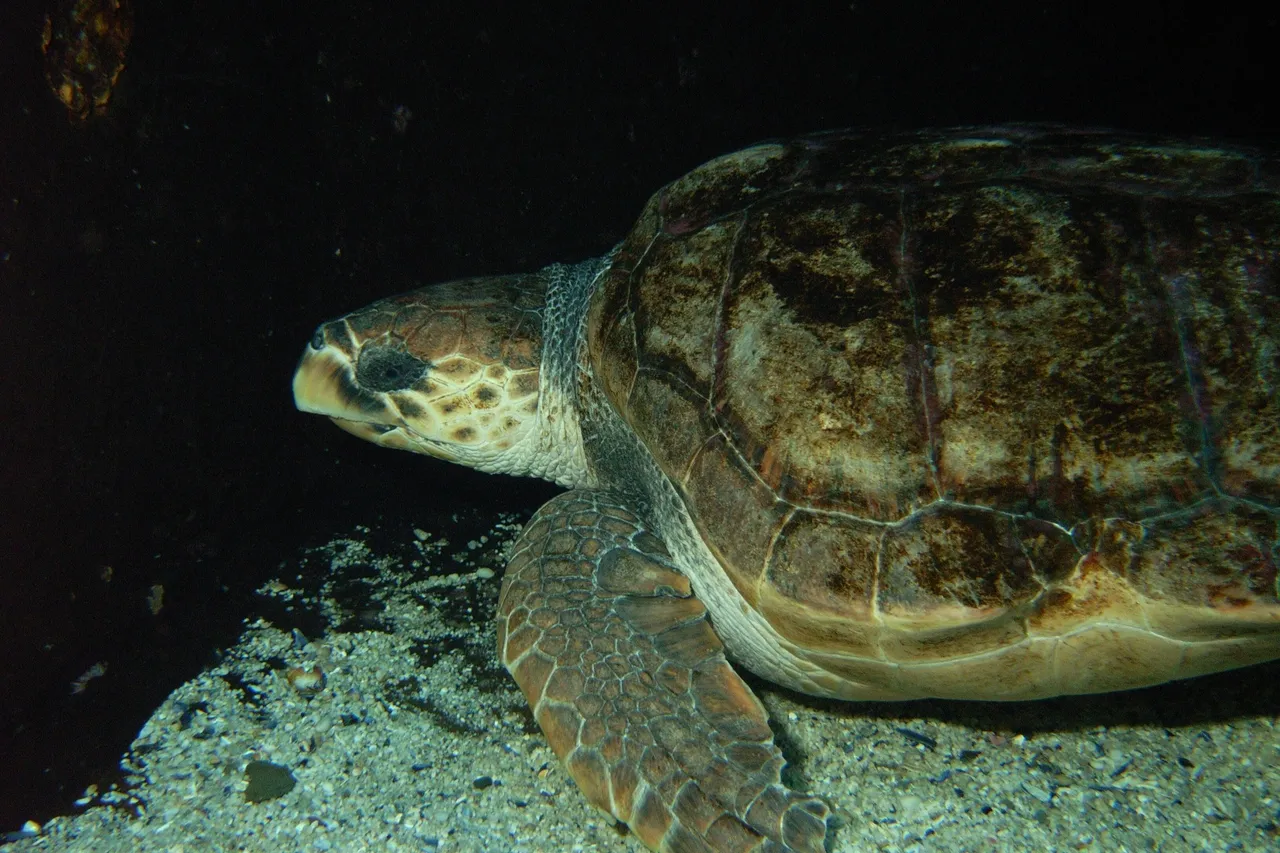
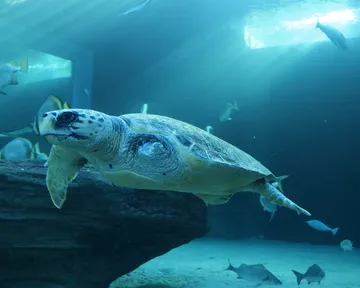
The new exhibit opened in 2016 alongside the popular Jelly Gallery and became the new home for loggerhead turtle Yoshi, who was rescued shortly before the Aquarium opened. That same year, Michael took the helm as CEO.
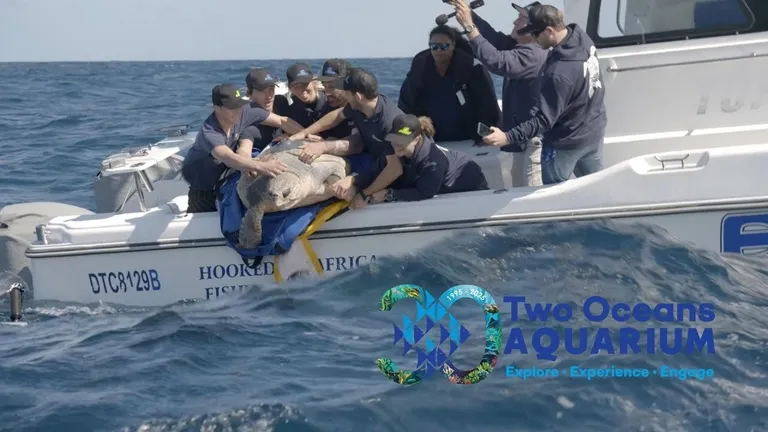
In 2018, the world celebrated the Yoshi’s release after 20 years at the Aquarium. Yoshi’s rehabilitation process inspired the creation of what is now the Turtle Conservation Centre.
Education and recognition (2019 – 2022)
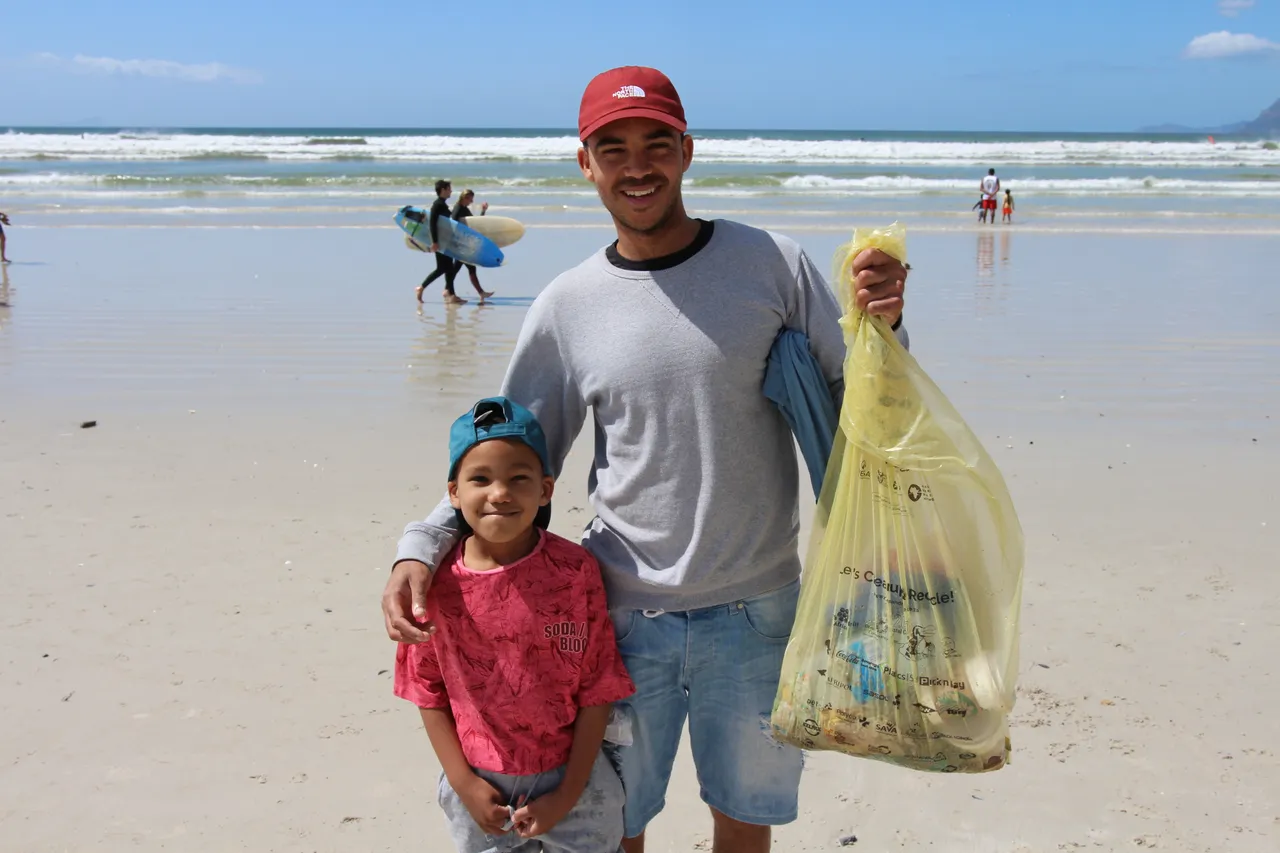
2019 was an exciting year for the Two Oceans Aquarium, with the launch of the Two Oceans Aquarium Foundation formalising decades of education, research, and conservation work. That same year, Trash Bash, a monthly beach cleanup series, began in partnership with The Beach Co-op.
The Foundation introduced Marine Sciences FET, and the subject was later gazetted for national inclusion in the school curriculum. The Turtle Rescue and Rehabilitation Programme (now the Turtle Conservation Centre) had a record-breaking year, saving and releasing more than 200 turtle hatchlings, while the Marine Wildlife Management Programme was officially named.
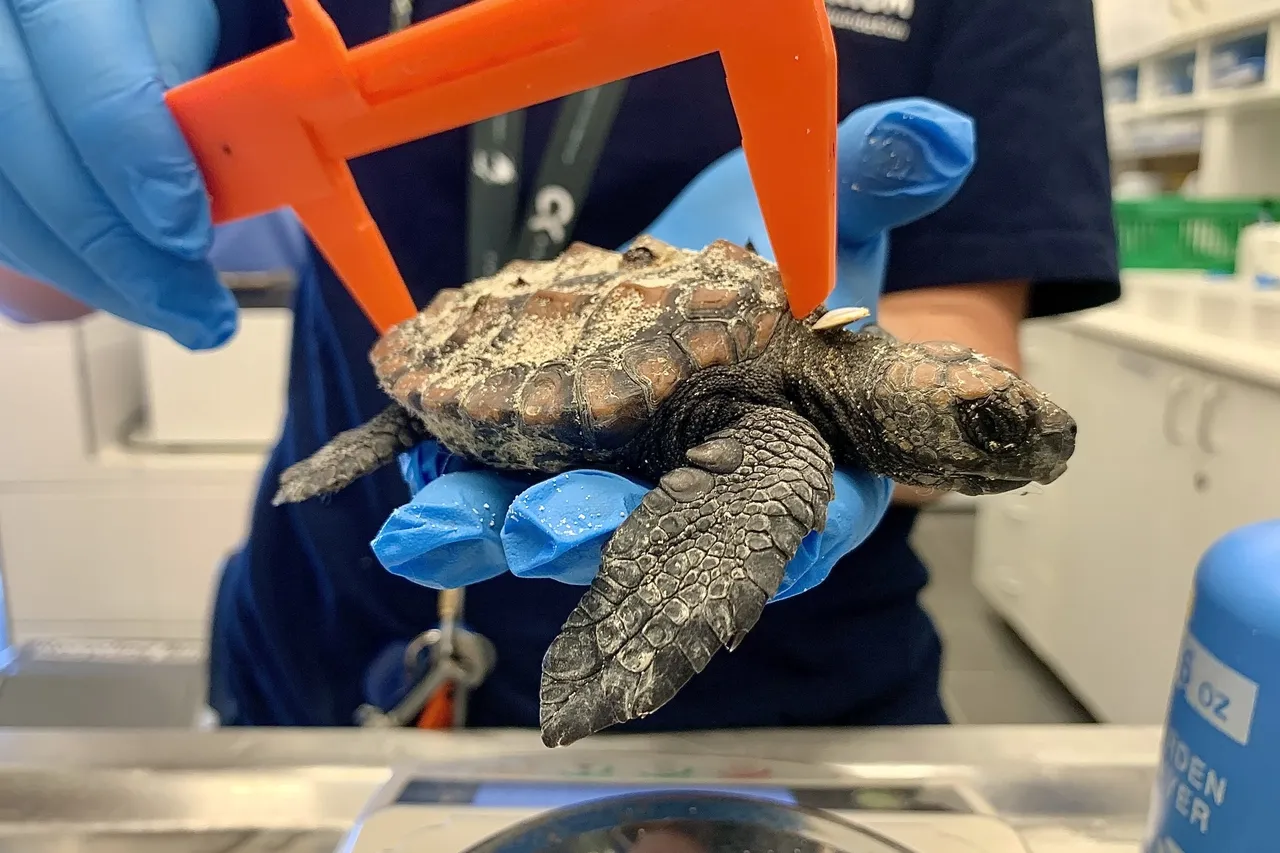
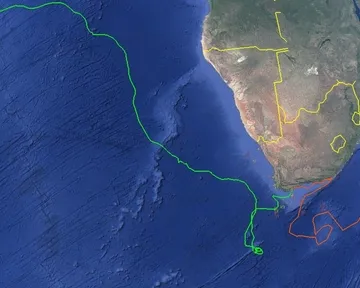
Like many, the Aquarium faced an unprecedented challenge in 2020, closing temporarily during the COVID-19 pandemic. Yet the care never stopped: Staff remained on site to care for the animals, coming up with unique ways to keep their audience engaged. That same year, the transmissions from Yoshi’s satellite tag broke records as audiences followed her incredible migration to Australia, even guiding scientists to new loggerhead turtle feeding grounds.
By 2021, the Aquarium had reopened, launched its PADI Dive School, and celebrated South Africa’s first Marine Protected Areas Day. A year later, the Dive School achieved PADI Five Star Dive Centre status!
New frontiers (2023 – 2025)
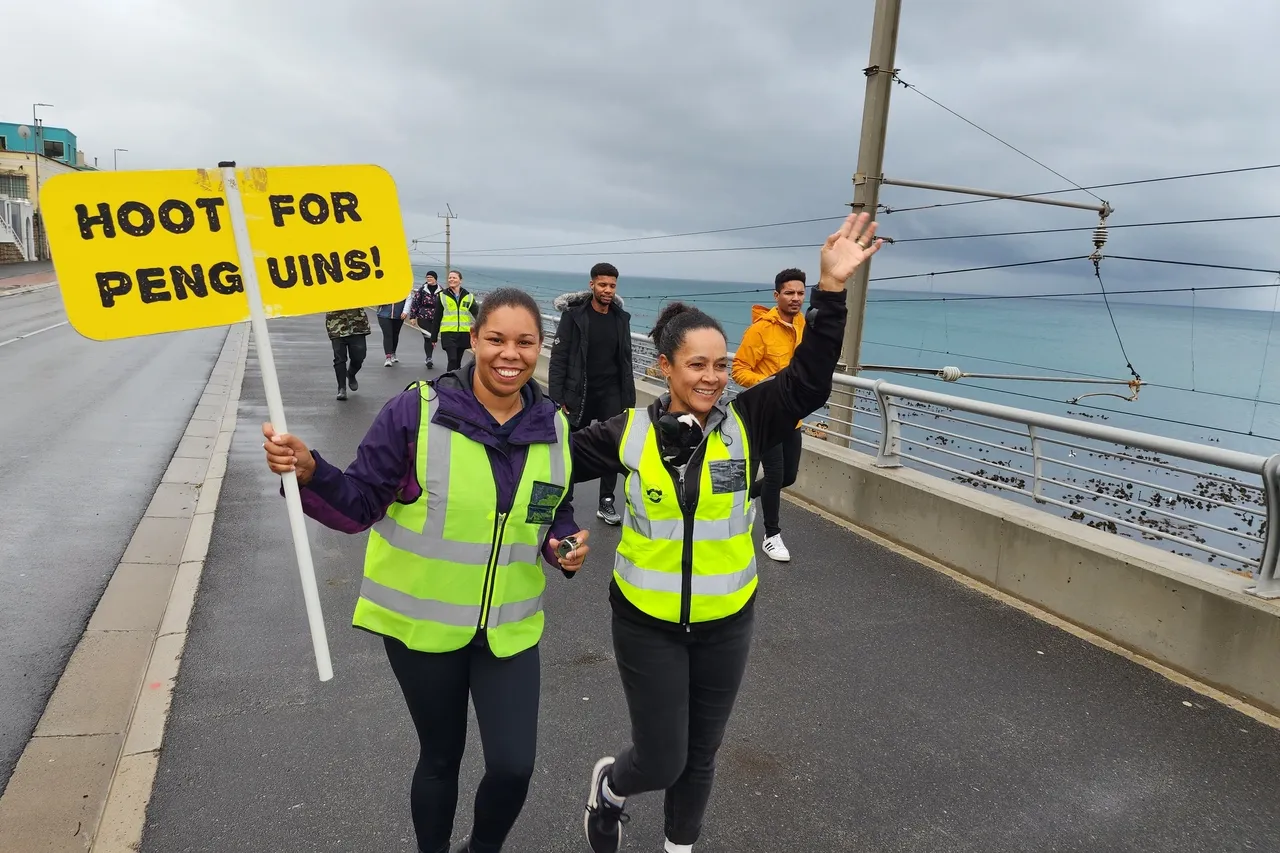
Conservation success stories continued. In 2023, Bob the green turtle was released after eight years of rehabilitation, Dané the ragged-tooth shark was tagged and released, and the Aquarium hosted its first African Penguin Waddle to support the #NotOnOurWatch campaign. That same year, the Young Biologist Course celebrated 20 years of inspiring ocean stewards.
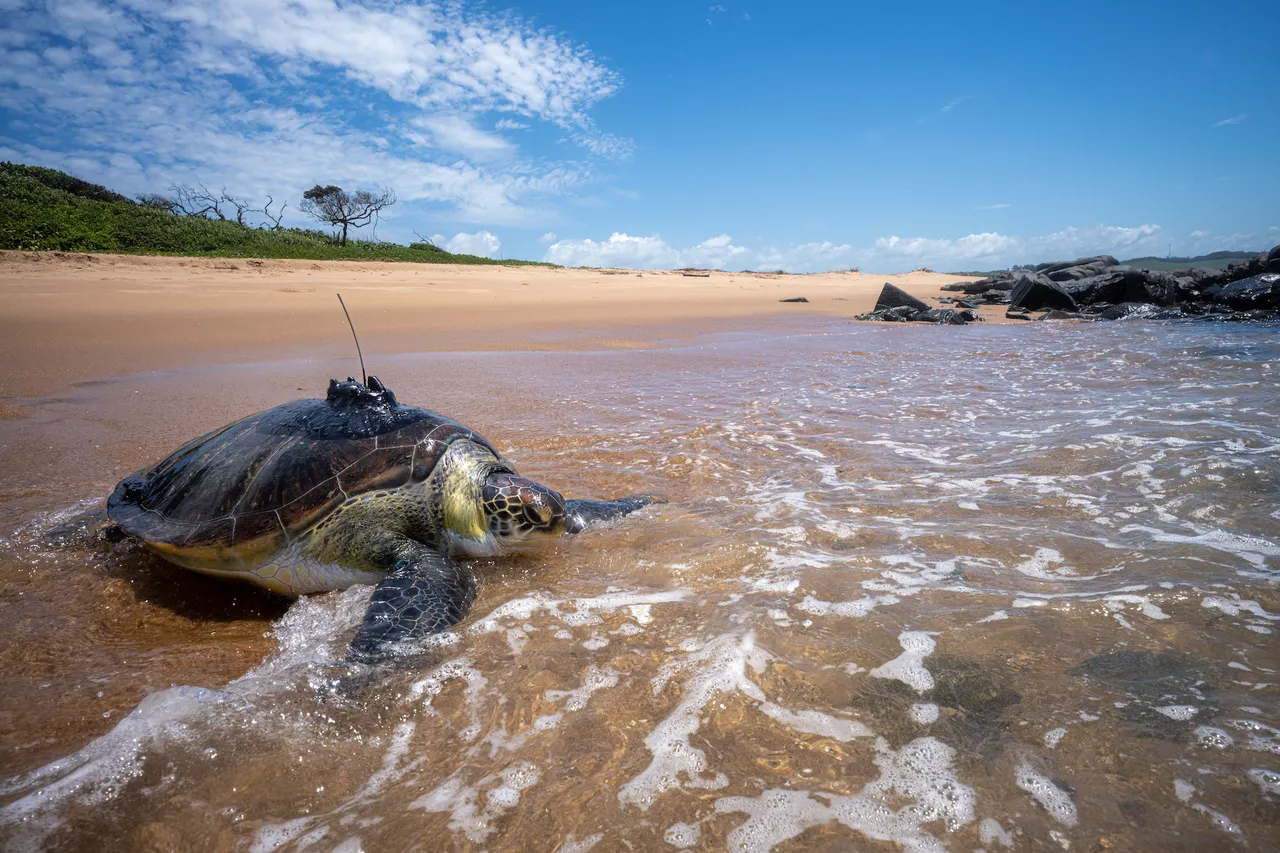
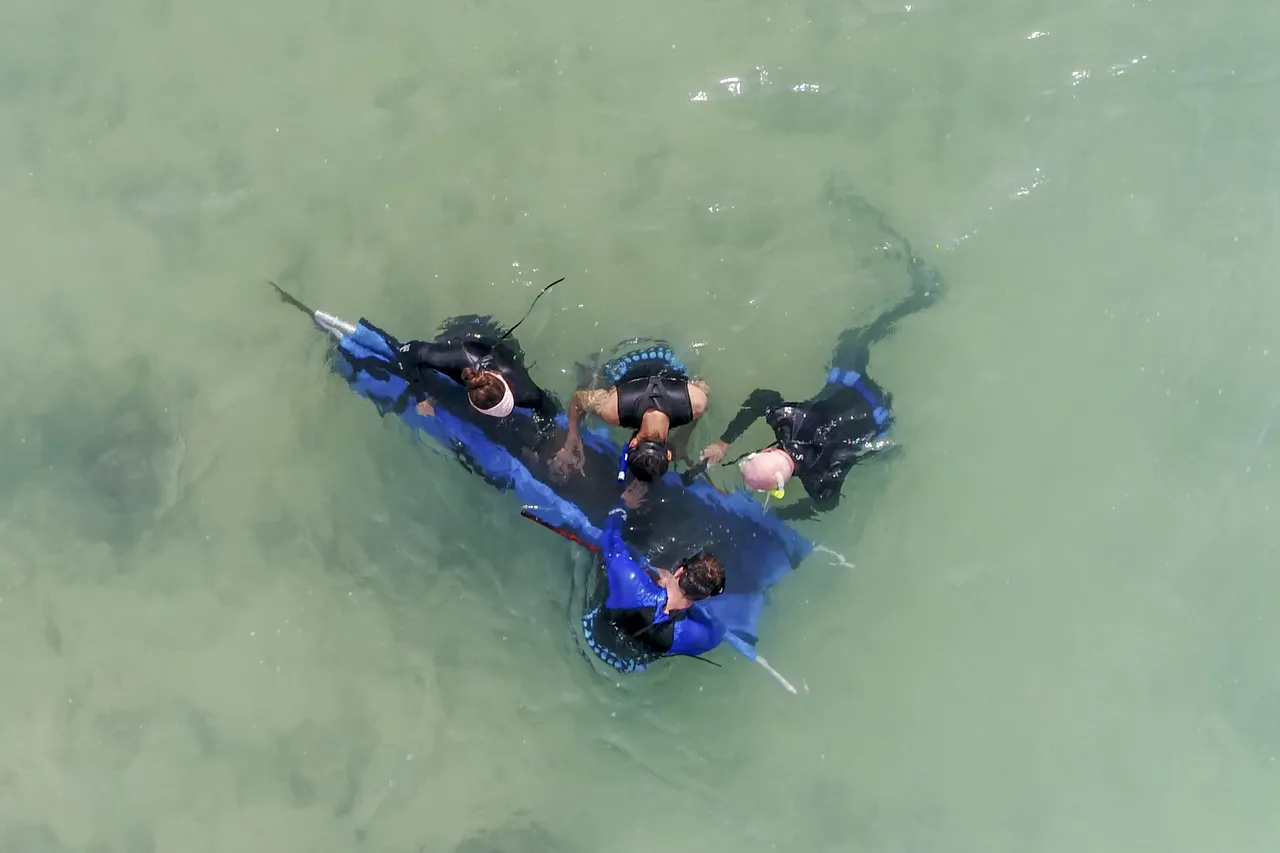
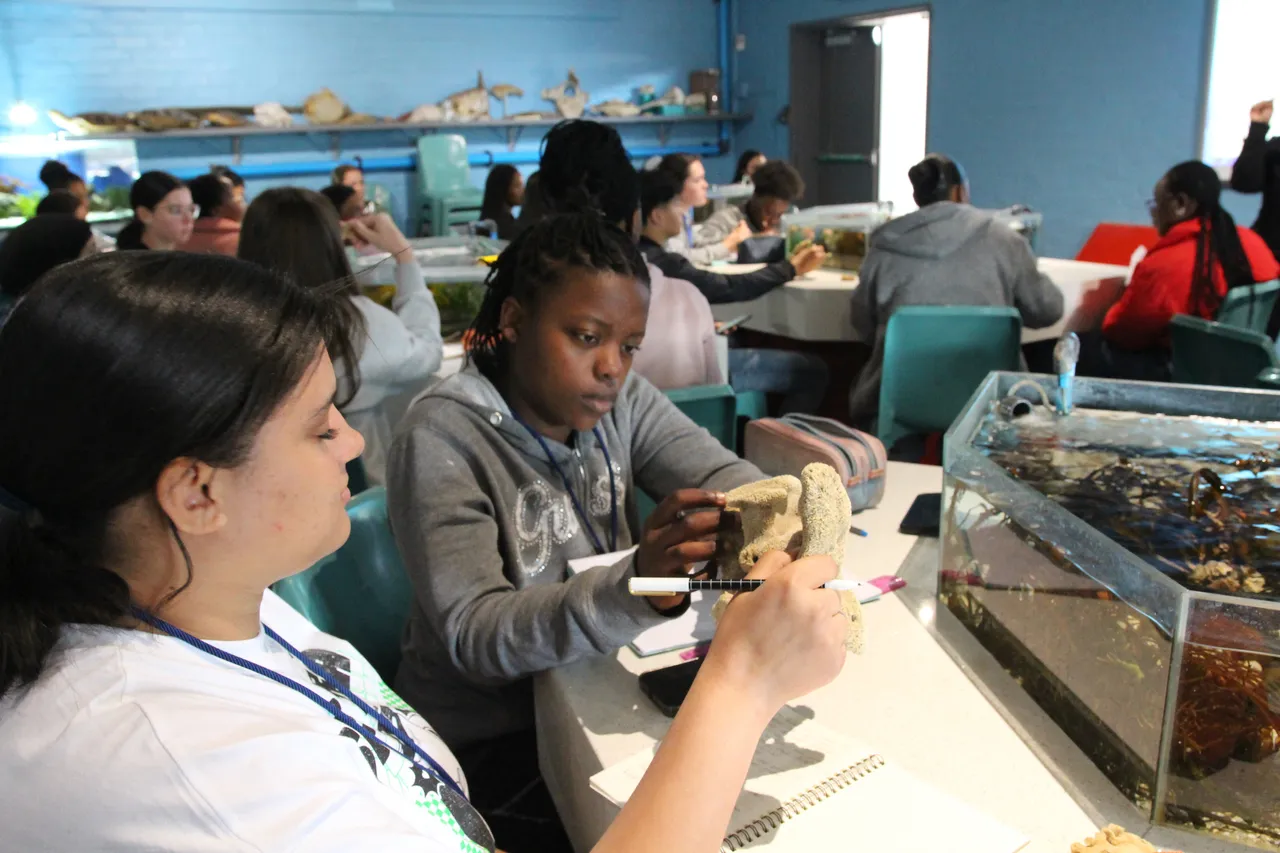
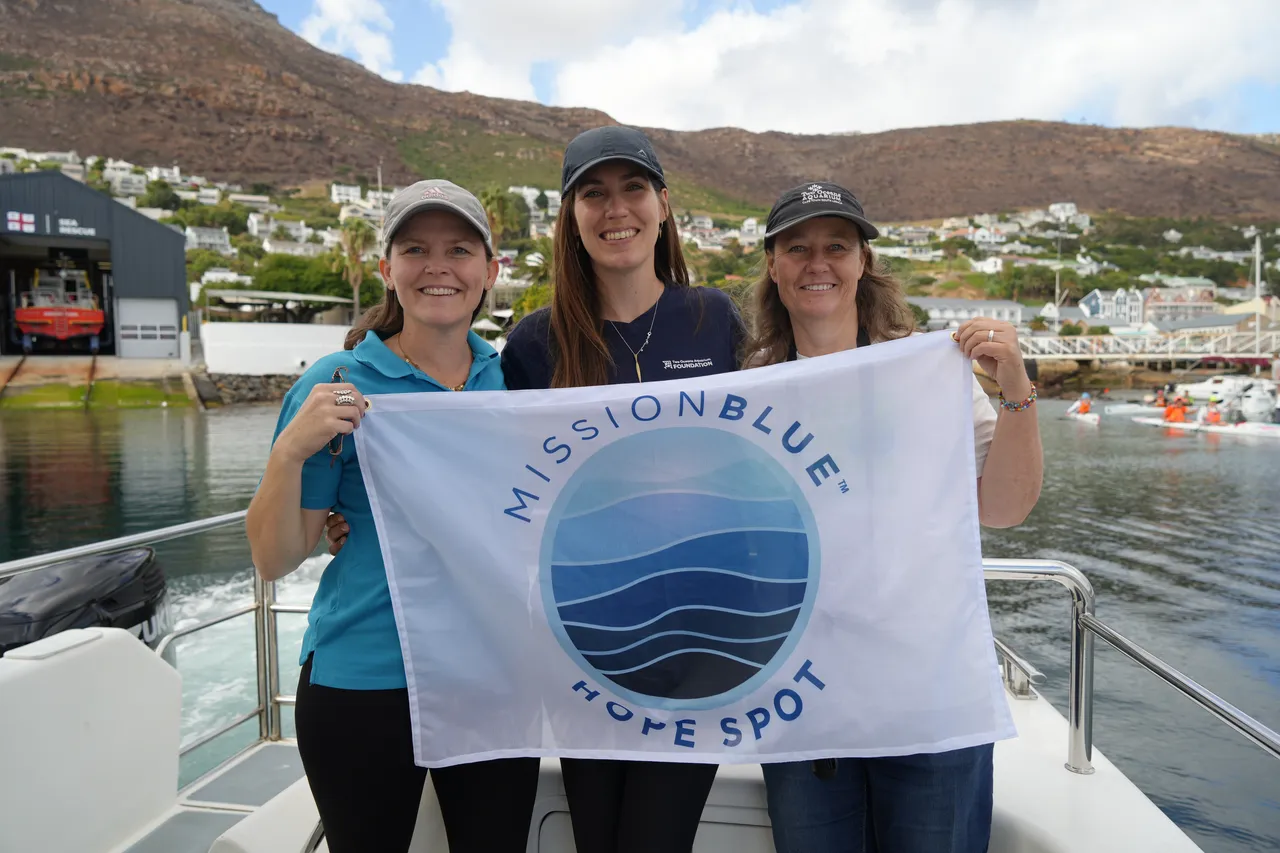
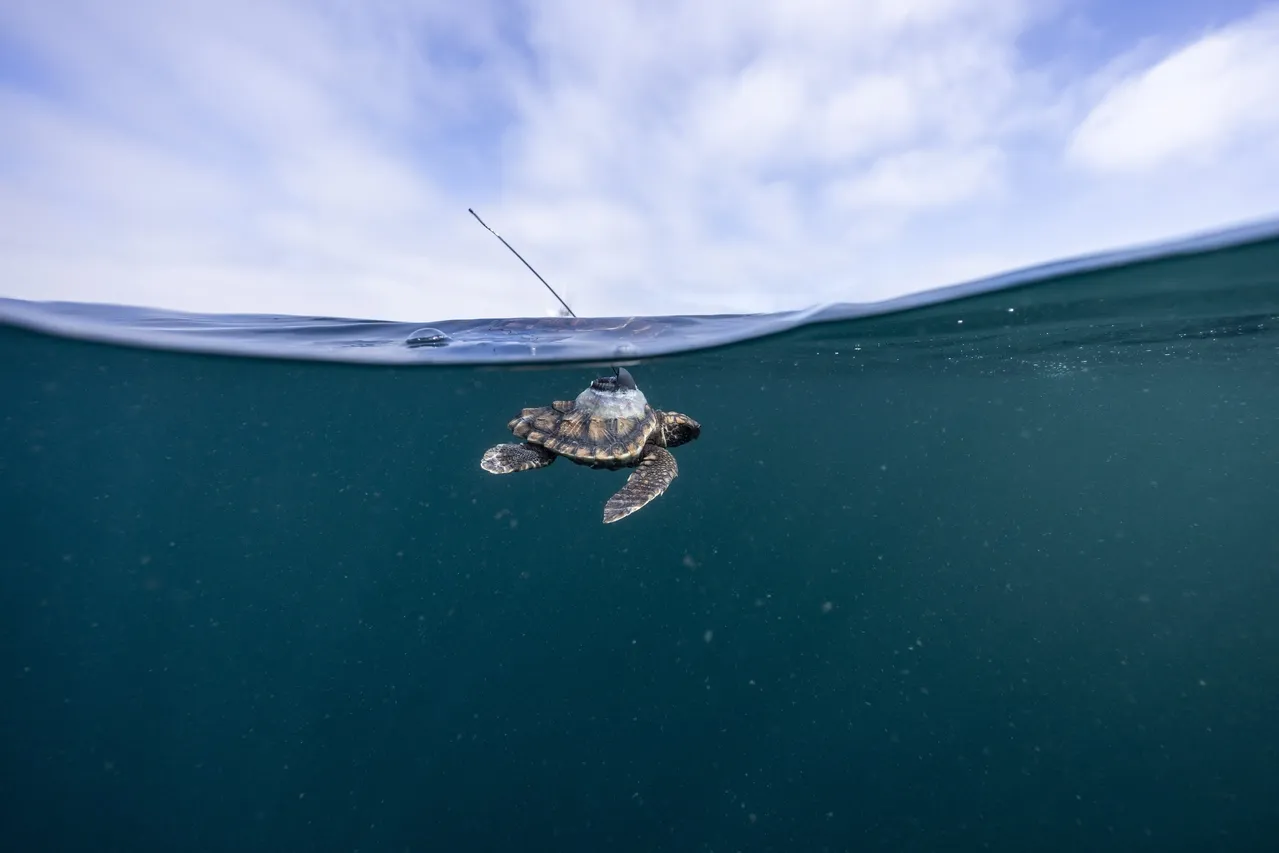
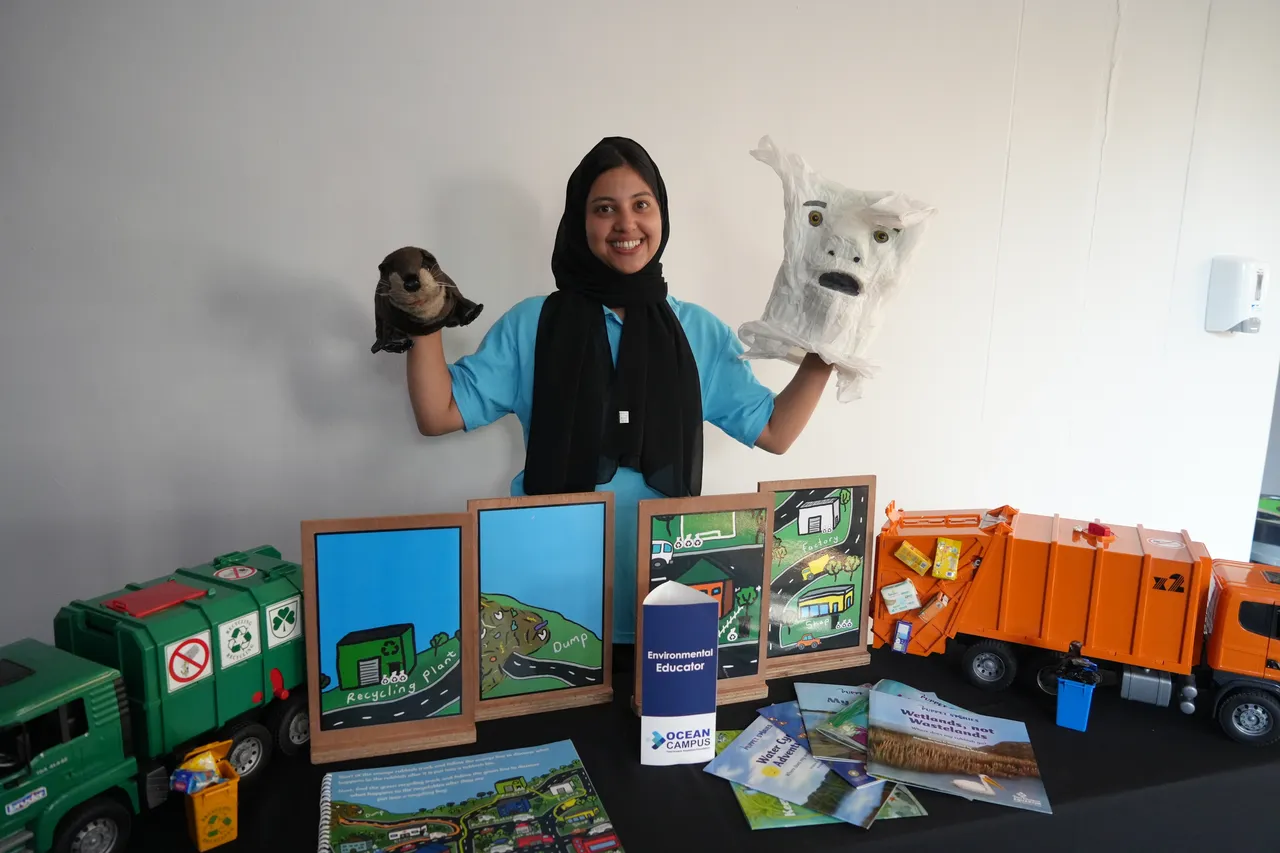
The momentum carried into 2024, when the Aquarium and its Foundation became co-champions of Mission Blue’s False Bay Hope Spot. An African-first satellite-tagging project saw 14 loggerhead hatchlings released in partnership with Upwell and Florida Atlantic University, and the launch of Ocean Campus created a central hub for ocean education.
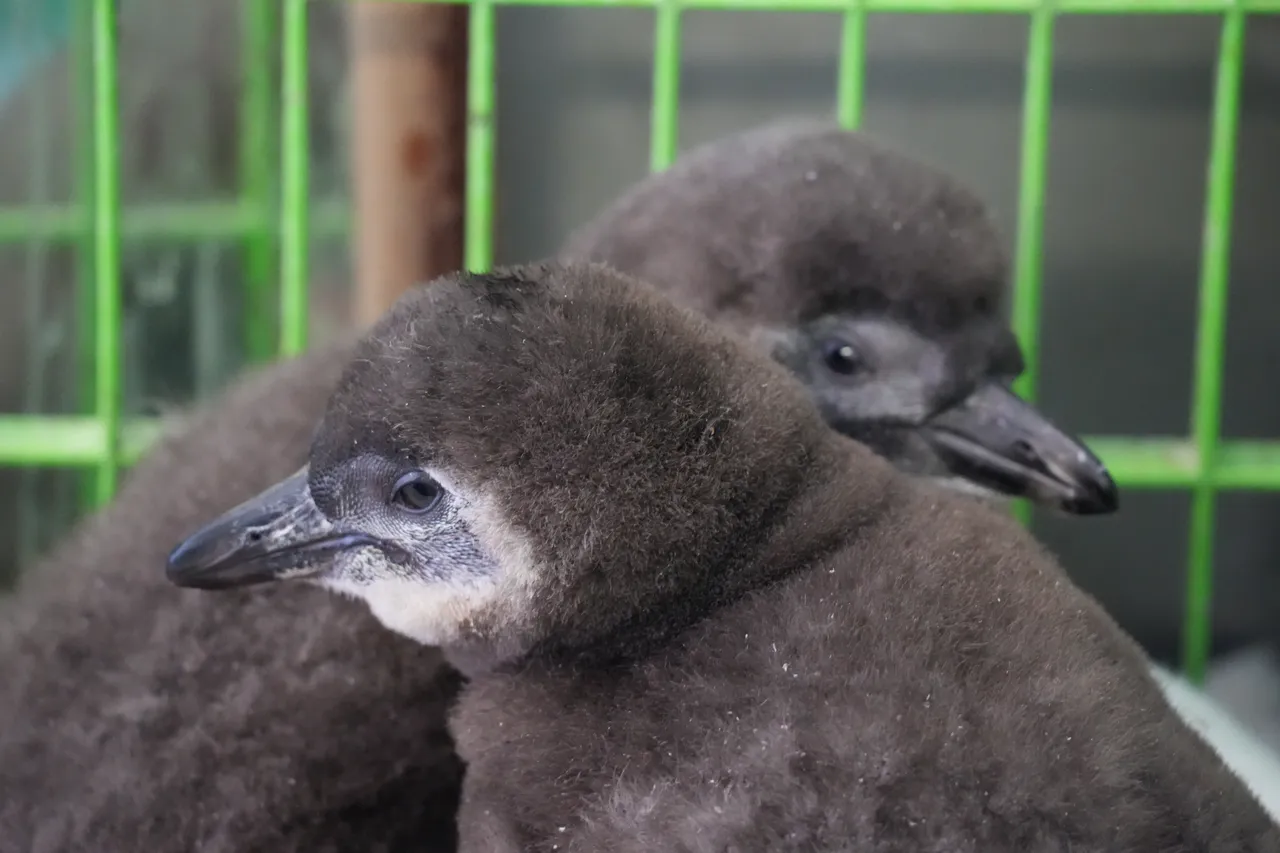
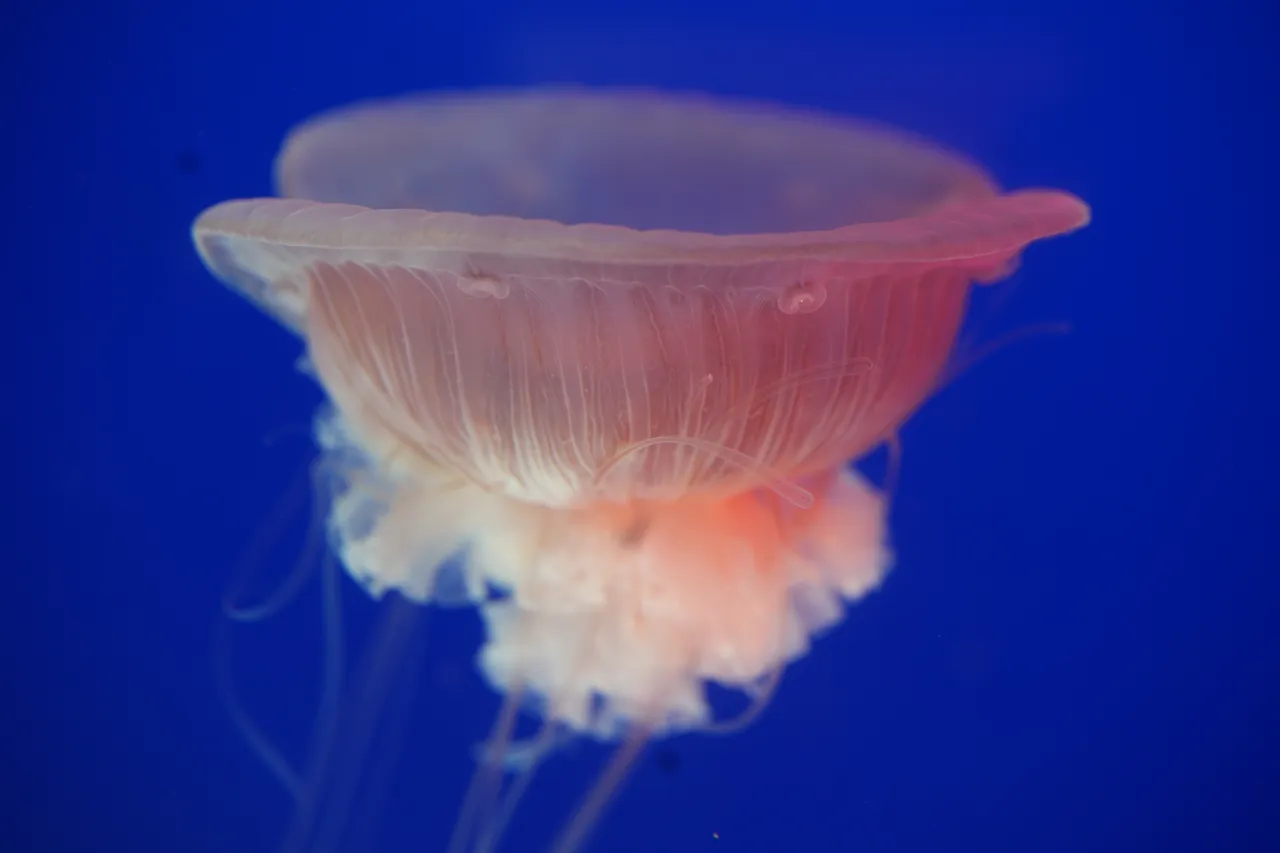
Now, in 2025, the Two Oceans Aquarium celebrates 30 years of ocean inspiration. From pioneering shark research and turtle releases to sustainability and education, the Aquarium continues to evolve, welcoming two new African penguin chicks and the reappearance of pink meanies in the Jelly Gallery. This year also marked the Foundation’s Seal Health Week, bringing together experts to address urgent conservation challenges.
Three decades of dedication
From its humble beginnings on the Cape Town docks to its position today as a global leader in marine conservation, the Two Oceans Aquarium has never stopped growing, innovating, and inspiring. Through it all, the Aquarium has had the support of an incredible community – from past and present staff to first-time and regular visitors, sponsors, and friends.
As it enters its next chapter, the Aquarium remains a place where science meets storytelling, and where every visitor, student, and diver is reminded that the ocean’s future is in all of our hands.
Watch our 30-year story
Join our team as they share heartfelt stories from their personal journeys through the Two Oceans Aquarium’s 30-year history. Discover how our work has grown, adapted, and made a splash over three unforgettable decades.
Related News
Sign up to our Newsletter
Receive monthly news, online courses and conservation programmes.