The Two Oceans Aquarium released Blue, the ragged-tooth shark, back into her ocean home
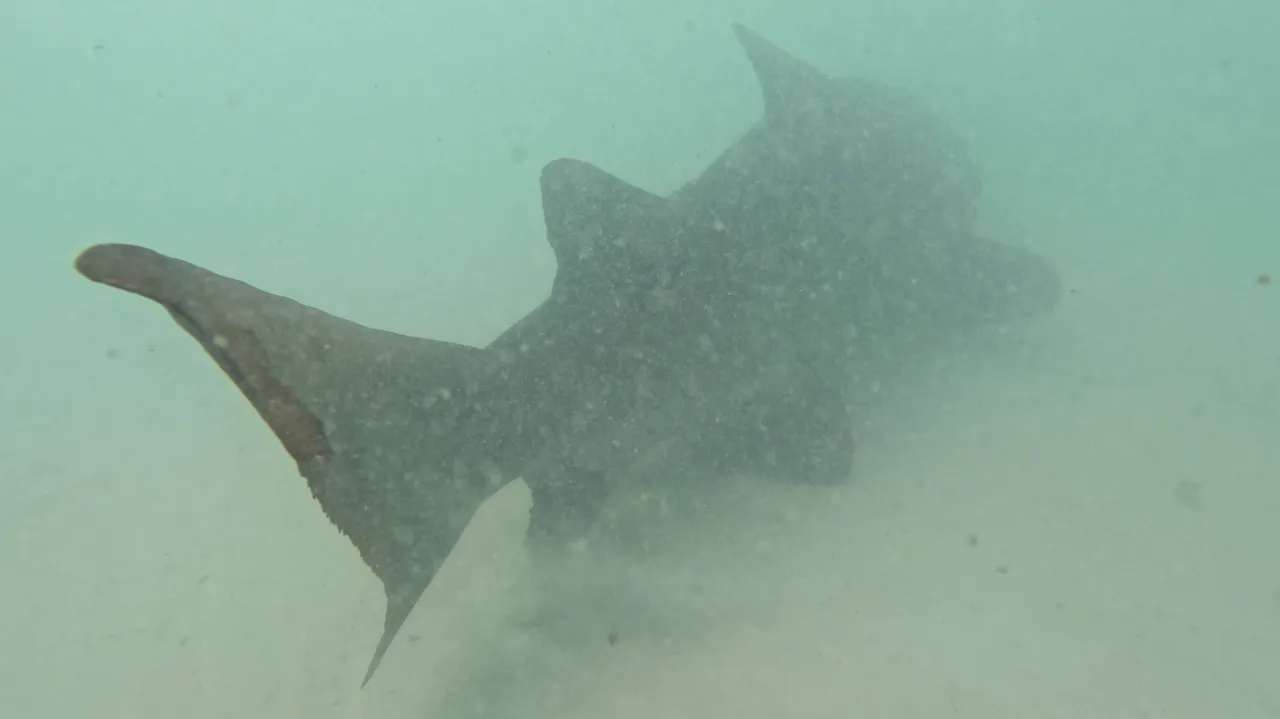
After eight years in our care at the Two Oceans Aquarium, Blue, a female ragged-tooth shark, has returned home to the ocean.
On 18 March 2026, as part of our ongoing shark conservation efforts, we successfully released Blue at Struisbaai. Throughout her journey, the Aquarium’s Curatorial staff accompanied her to ensure a calm and safe return to the wild.
Blue’s journey with the Two Oceans Aquarium and beyond
Blue arrived at the Two Oceans Aquarium on 3 May 2018 after being rescued alongside another ragged-tooth shark, Charlie. At the time, she weighed just 26.6kg and measured 183cm in length.
Over the years, Blue grew into a powerful ambassador for her Critically Endangered species in the Save Our Seas Foundation Shark Exhibit. She helped challenge misconceptions about sharks and inspired visitors to better understand and protect our ocean and its inhabitants.
Dr Ilse Jenkinson, Two Oceans Aquarium veterinarian, explains: “Catch and release is a central component of the Aquarium’s ragged-tooth shark conservation programme. The reason for temporarily including them in our exhibits is to be an ambassador species for sharks, educating our visitors on the wonder of the ocean. The message these sharks deliver is not to fear them but to be in awe and wonder of these complex animals.”
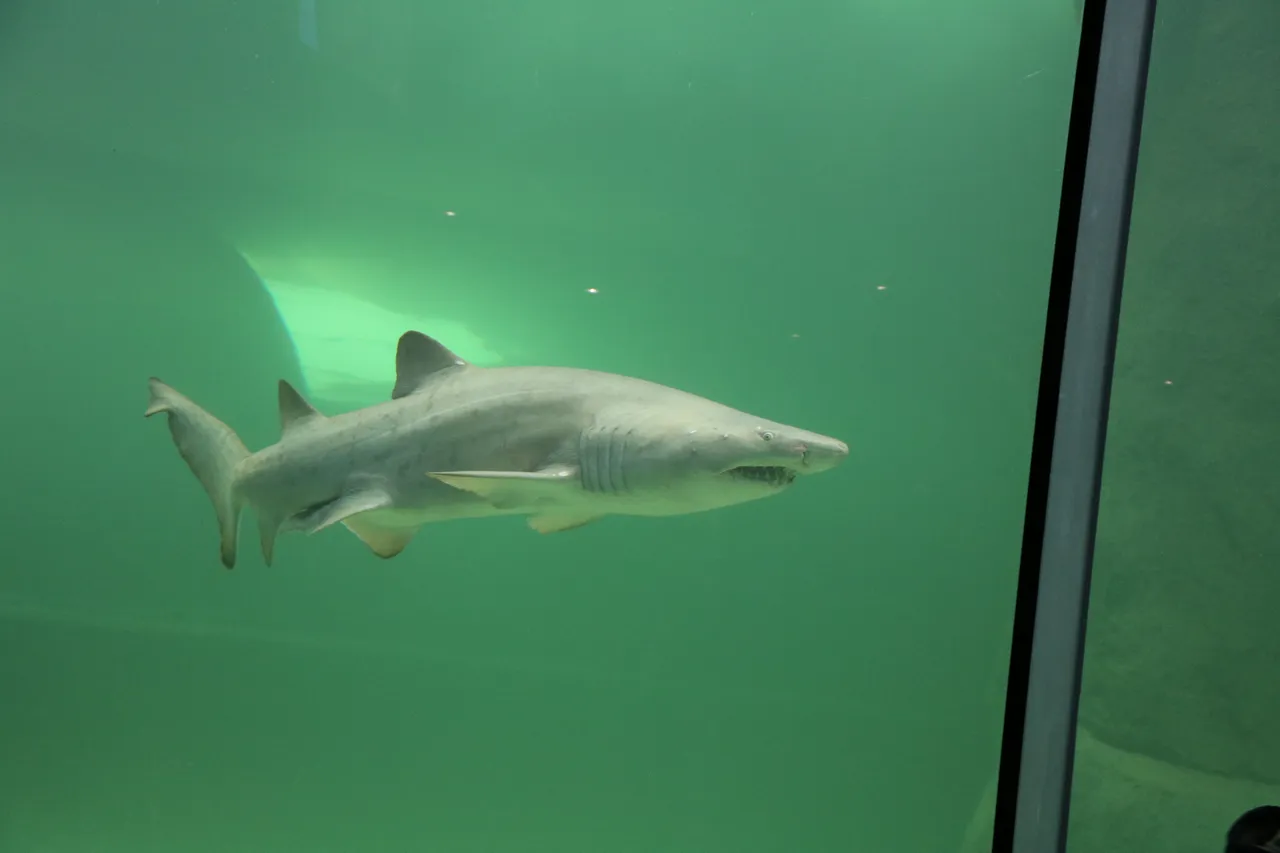
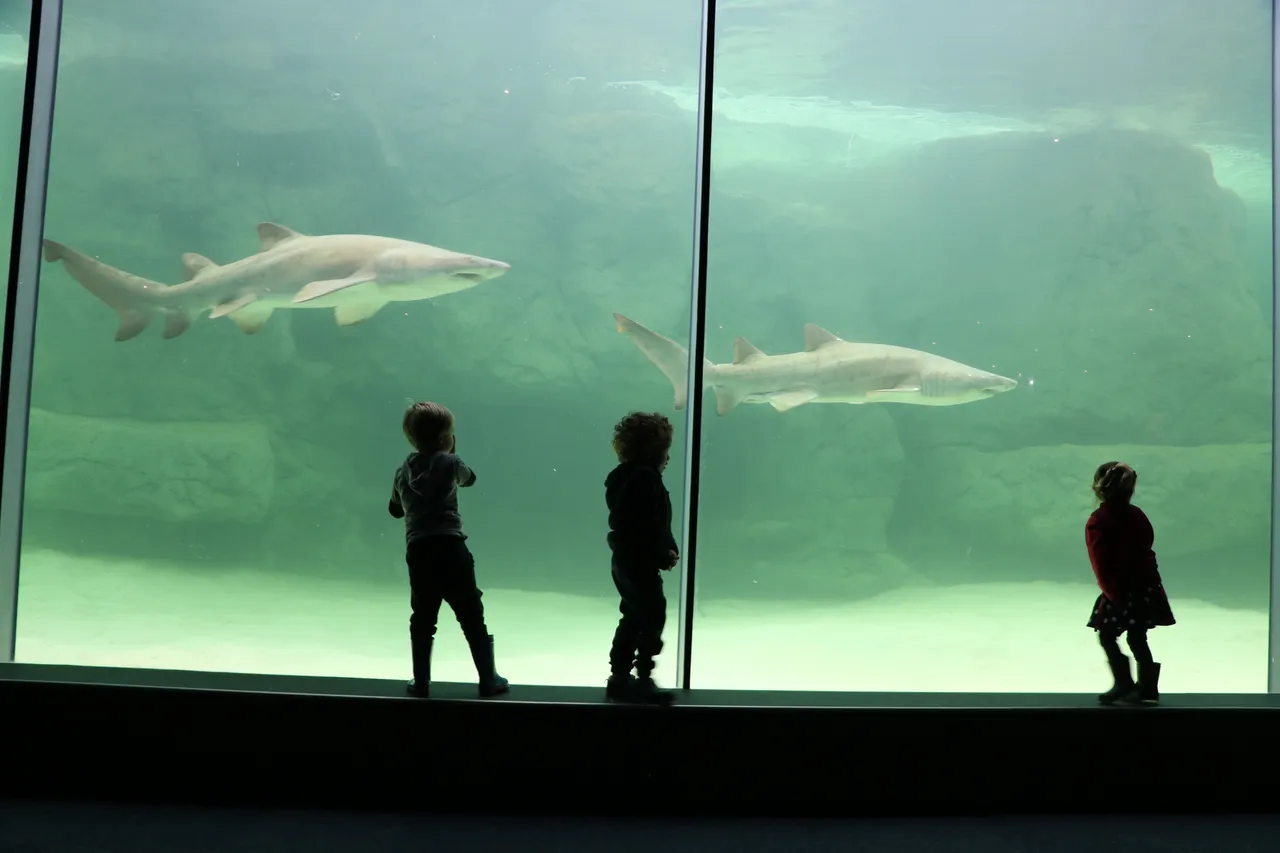
By 2026, Blue had reached 201kg and 295cm in length. As a large, sexually mature adult, it was time for her to return to her ocean home, where she may contribute to the wild population.
Once the decision had been made, the Aquarium’s veterinary and Curatorial teams began preparing Blue for release, prioritising her health and well-being.
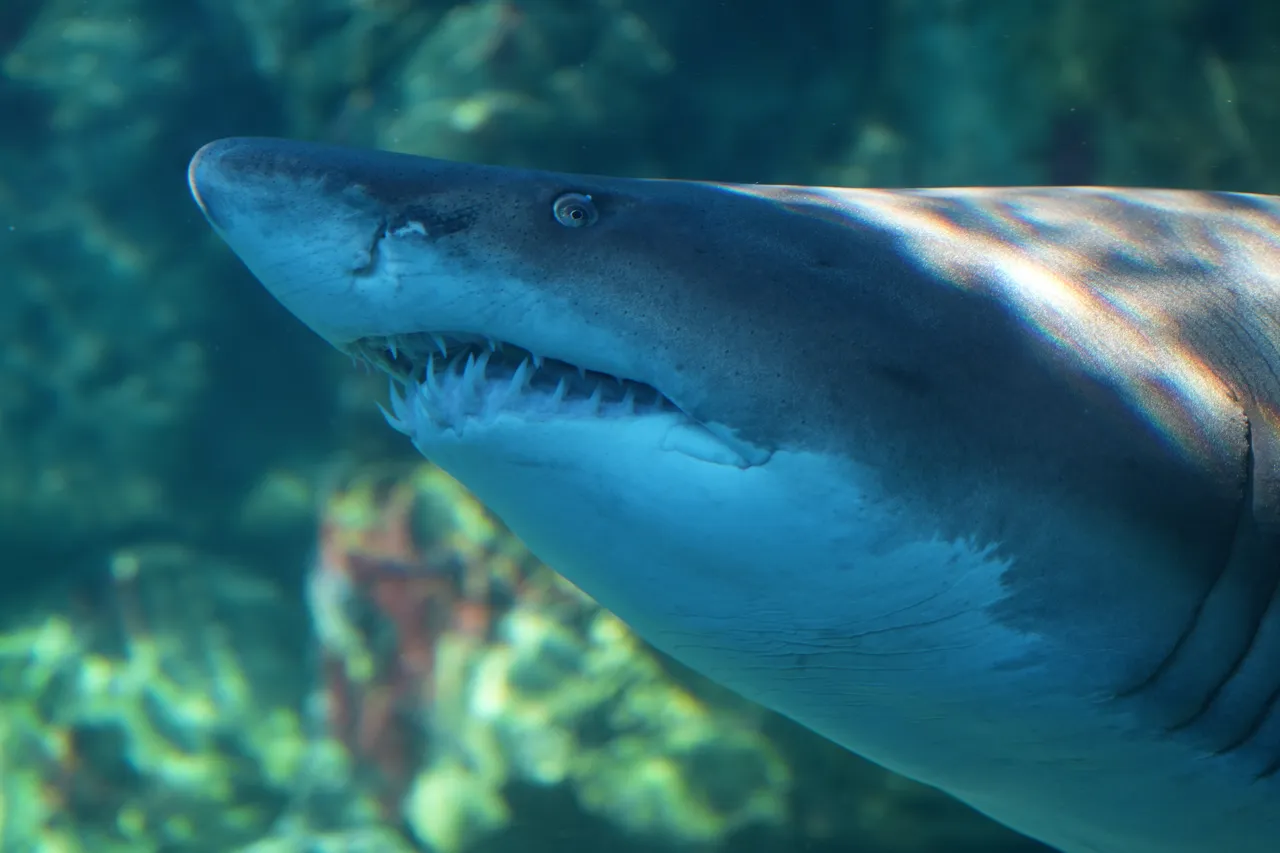
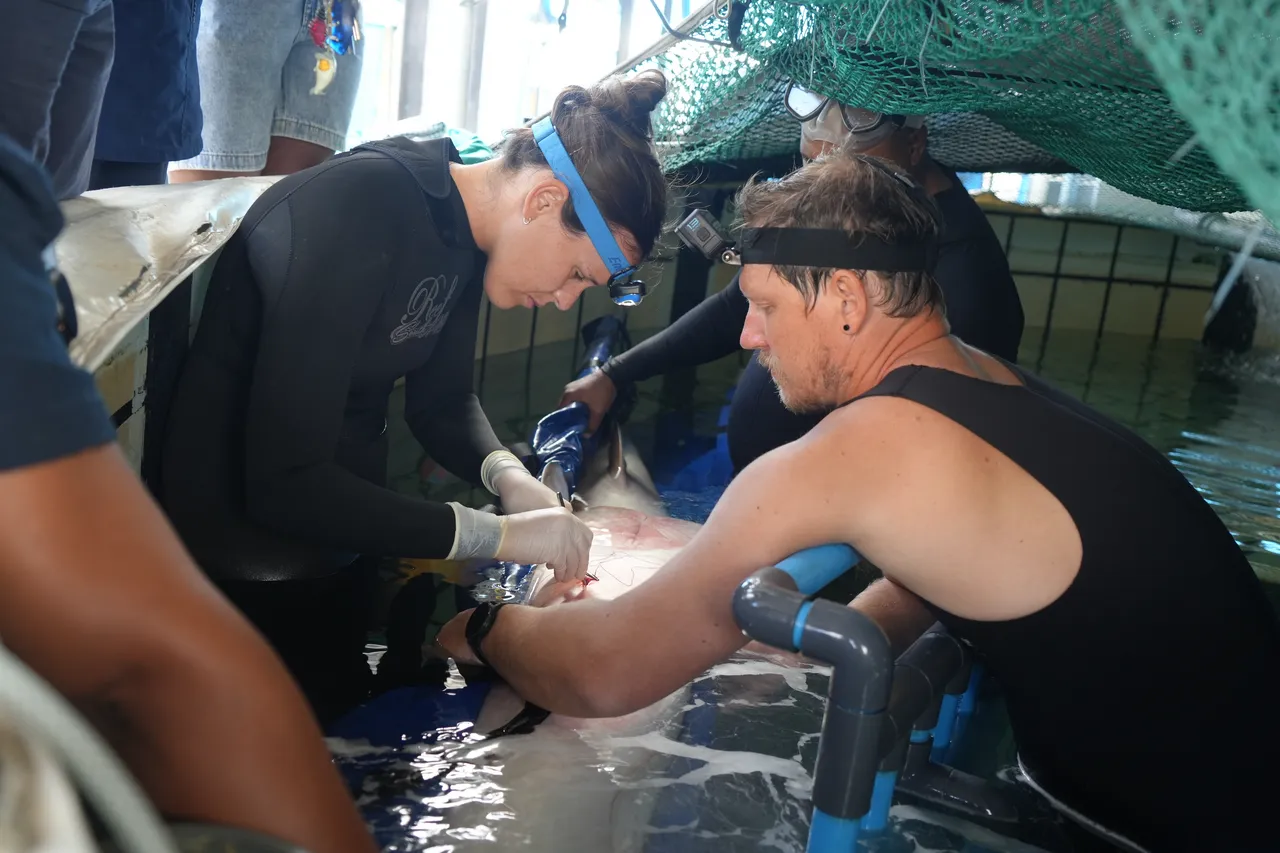
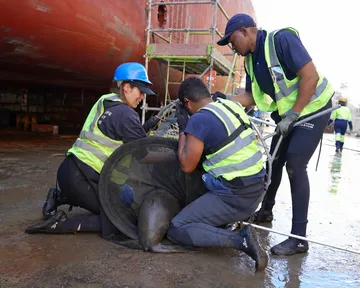
On 24 February 2026, Blue was moved from the Save Our Seas Foundation Shark Exhibit into temporary housing for a month of close observation. During this period, Dr Ilse conducted regular and comprehensive health assessments, including blood tests, measurements, and physical examinations, to confirm her readiness for release.
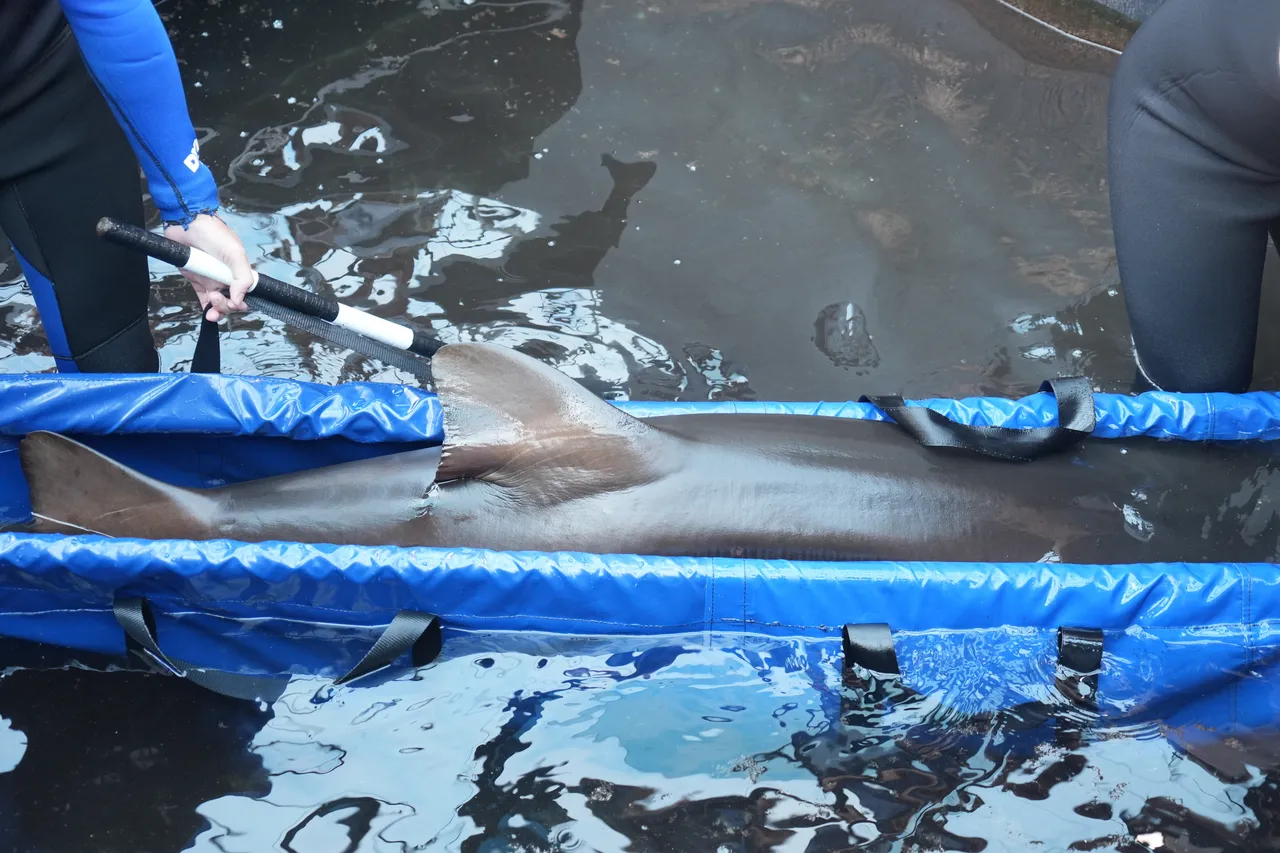
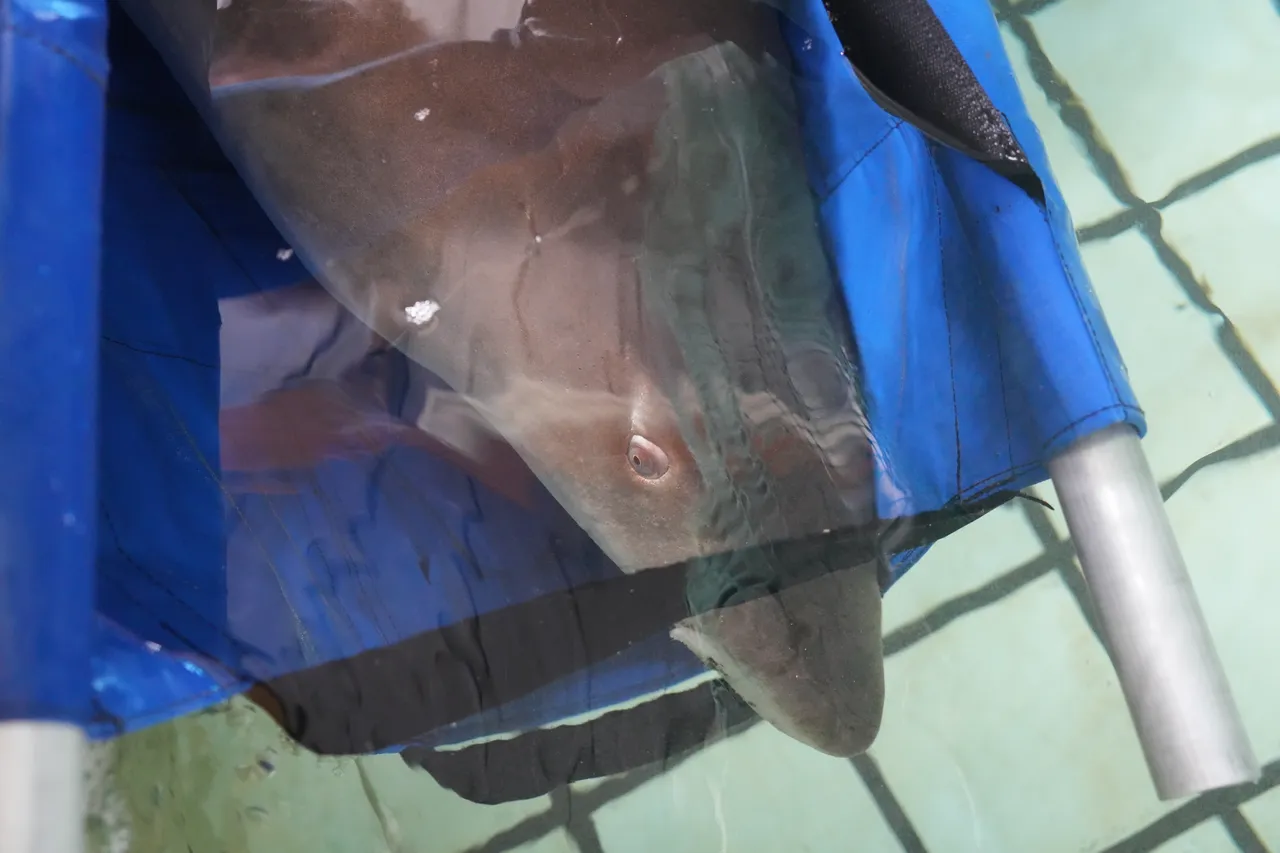
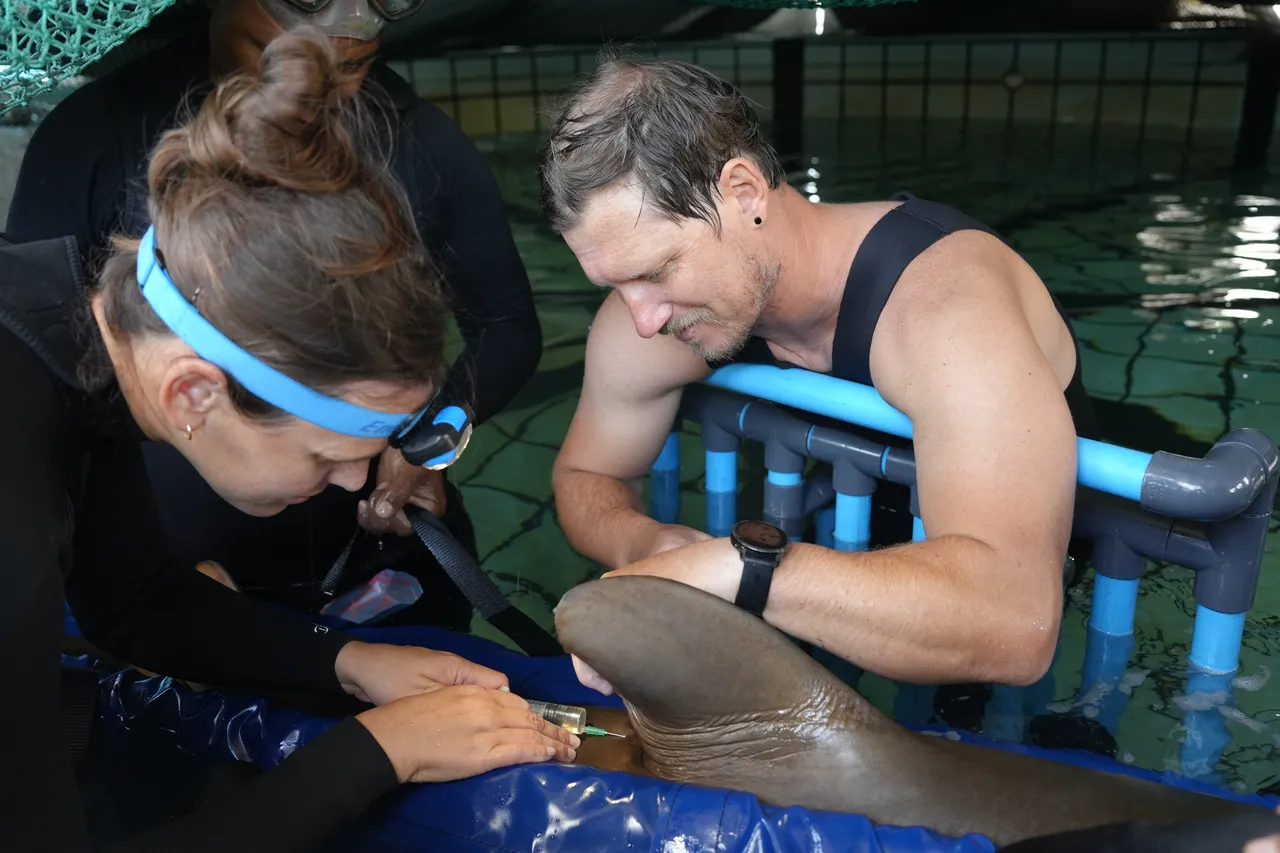
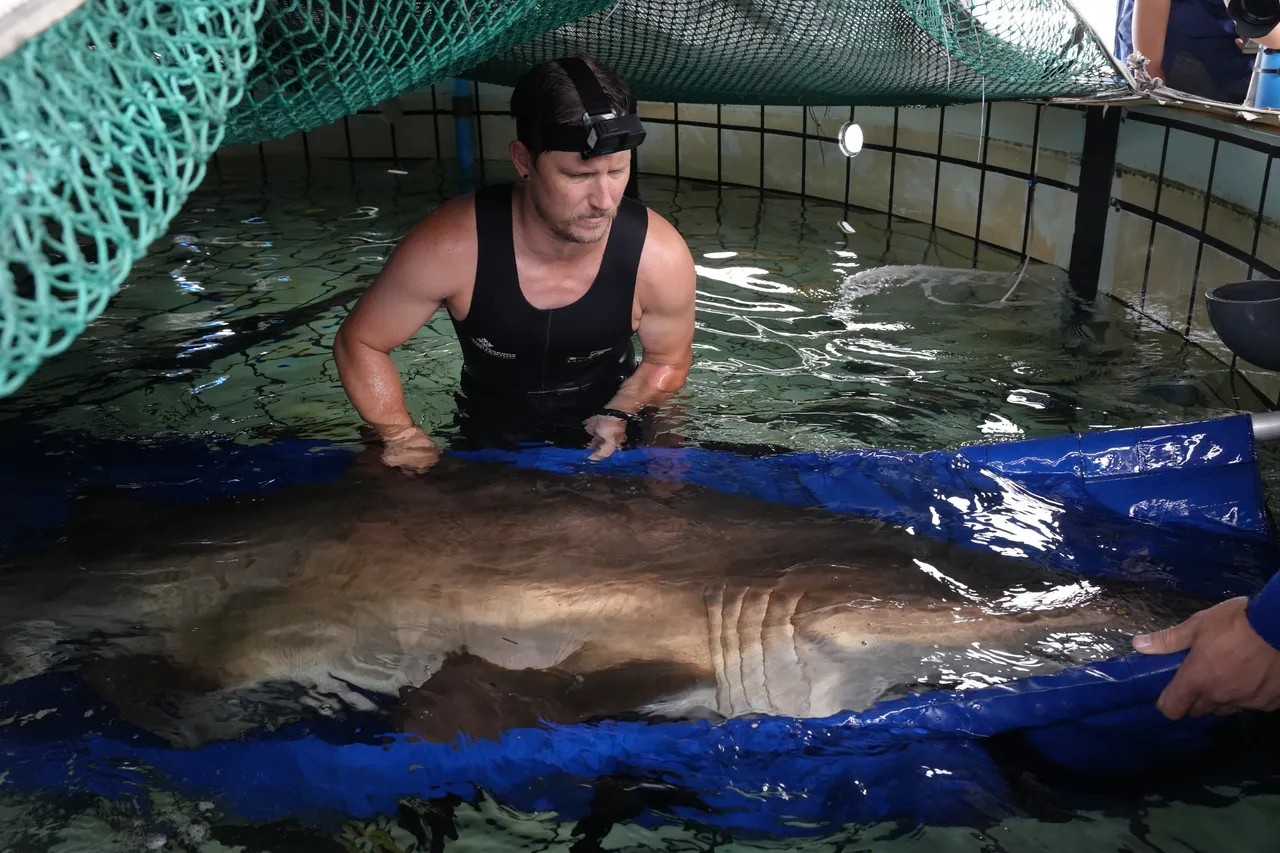
On the same day, Dr Ilse fitted Blue with two types of tags. An acoustic tag, surgically inserted just under the skin, emits a high-frequency sound that is picked up by receivers placed all along the coastline. These receivers will record the sound signals with the date, time, and her unique ID code. Acoustic tags can last up to 10 years and collect crucial information on the movements and migrations of inshore marine animals.
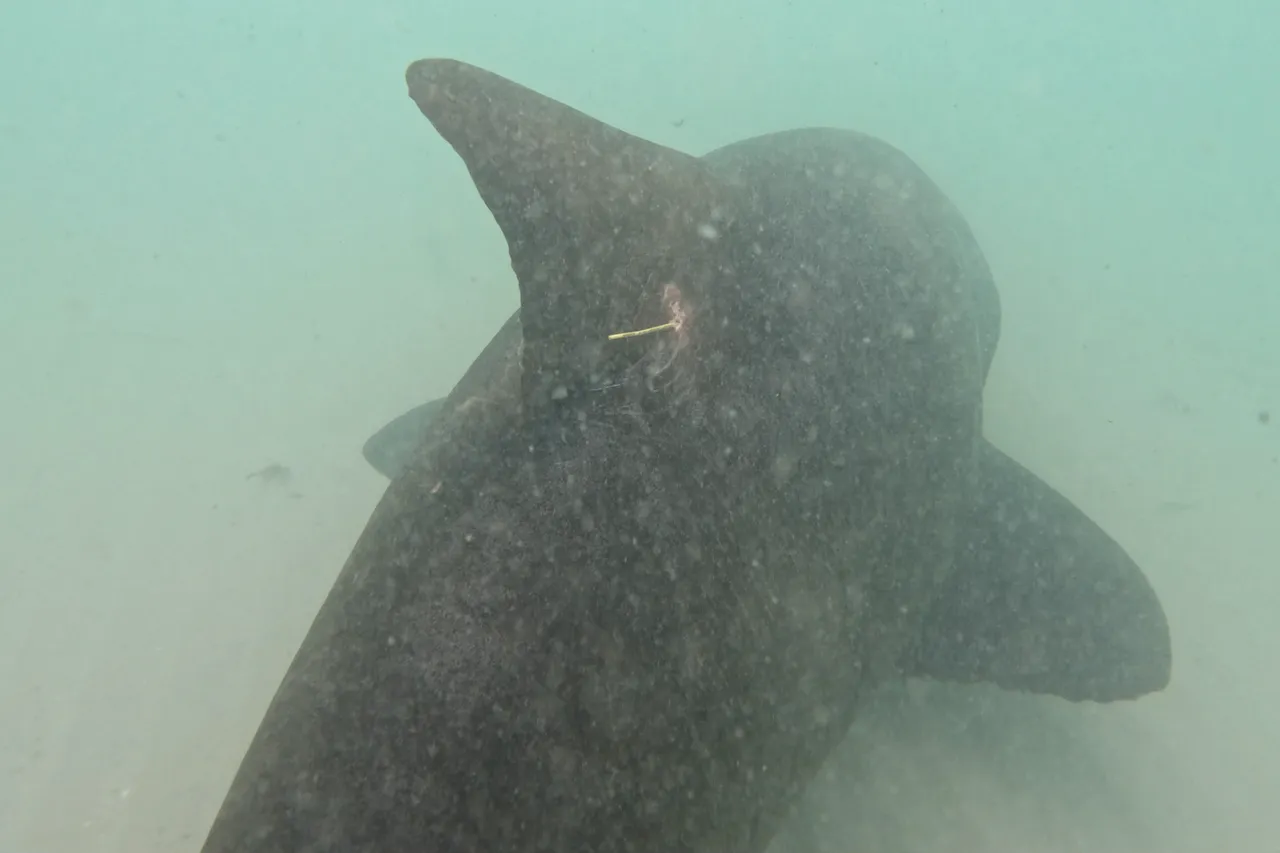
Blue was also fitted with an external spaghetti tag, attached below the dorsal fin that displays a unique number and contact details. These tags allow fishers to record and report the tag number, location, date, and length if the shark is caught and released.
Together, these tags provide valuable insights into ragged-tooth sharks’ growth, migration, and habitat use. These insights help us better understand how to conserve the species. Kevin Spiby, Aquarium Curator, says: “Tagging also raises awareness about sharks in an ocean increasingly impacted by human activity.”
Blue’s release into the big blue…
Finally, on 19 March 2026, the day of Blue’s release arrived. Struisbaai was selected as the release site due to its existing population of ragged-tooth sharks and its connection to migration routes along the Agulhas Bank.
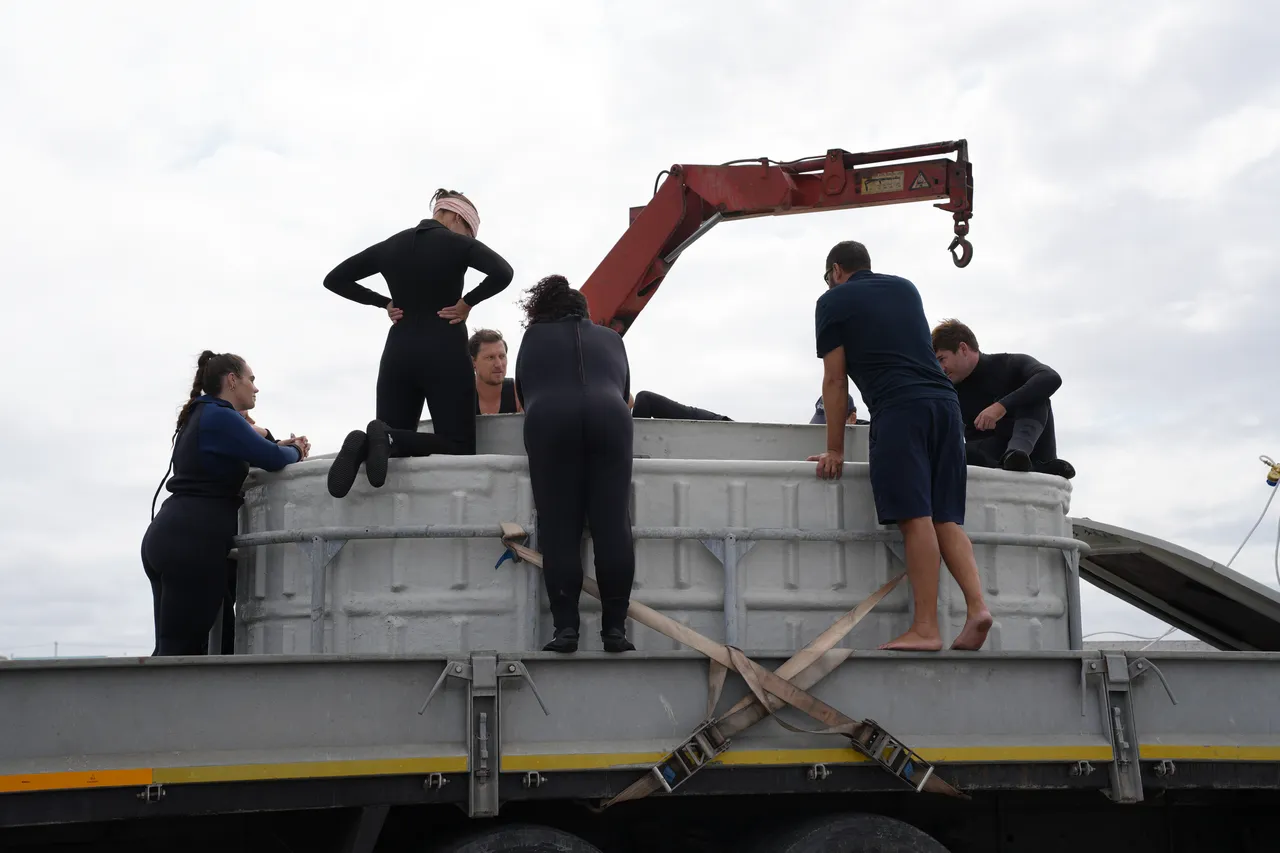
For transport to Struisbaai, the Aquarium team carefully placed Blue in a secure, oxygenated chamber on a flatbed truck and monitored her throughout the journey.
“All precautions were taken, including continuous medical monitoring,” says Dr Ilse. “On arrival in Struisbaai, we recorded final observations and vital signs before she was moved to the water’s edge”.
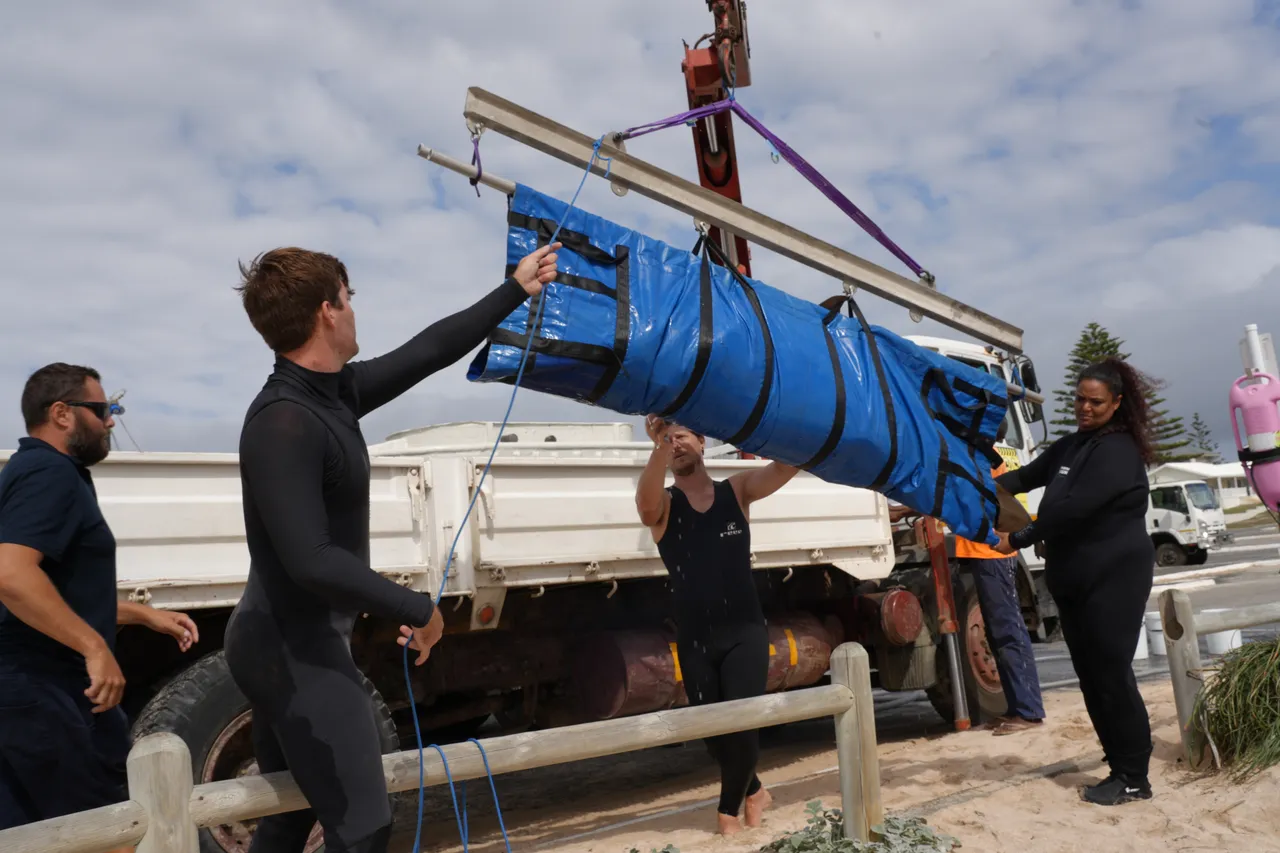
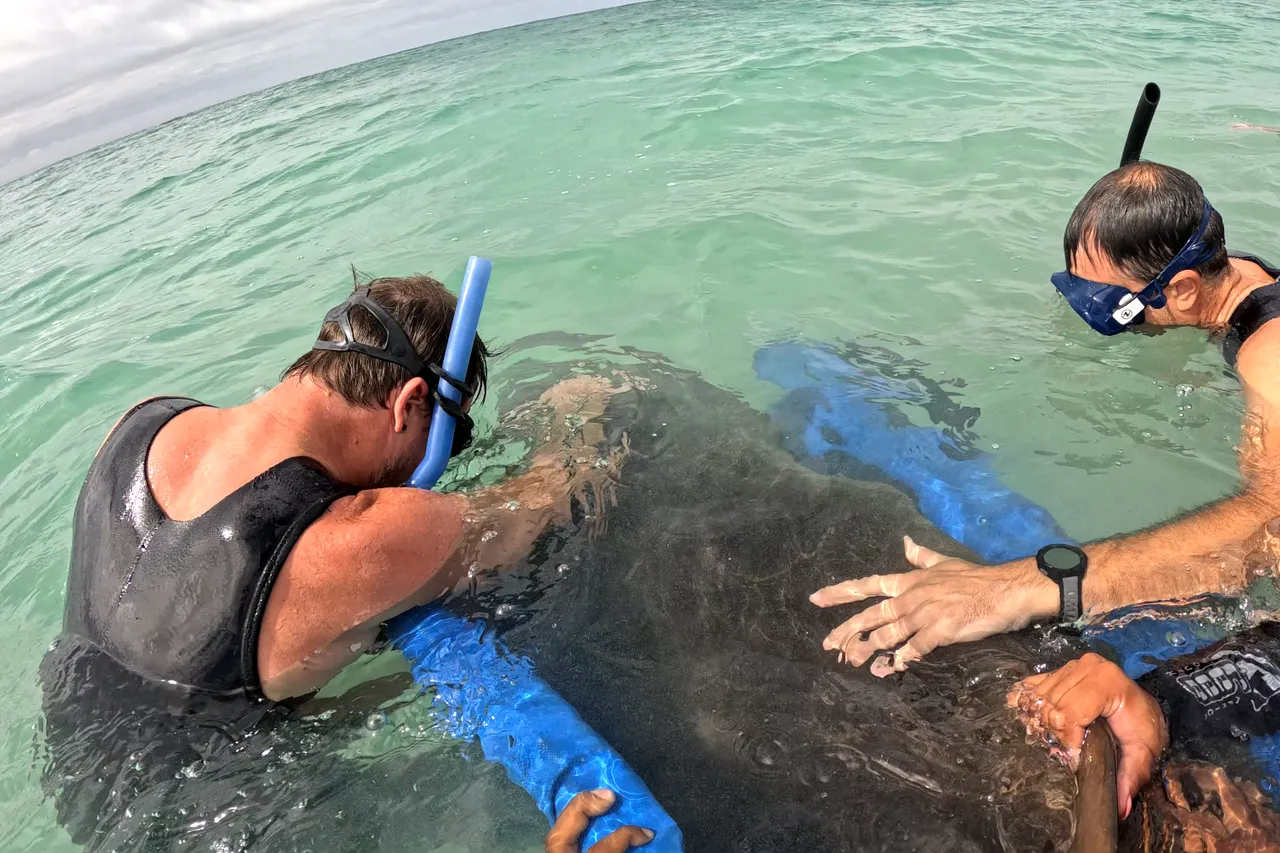
With a small group of onlookers gathered to witness Blue’s momentous return to the ocean, the Aquarium Curatorial team walked Blue into the surf on a specially designed stretcher. As soon as the water touched her gills, Blue started to show signs of readiness to return to her wild home.
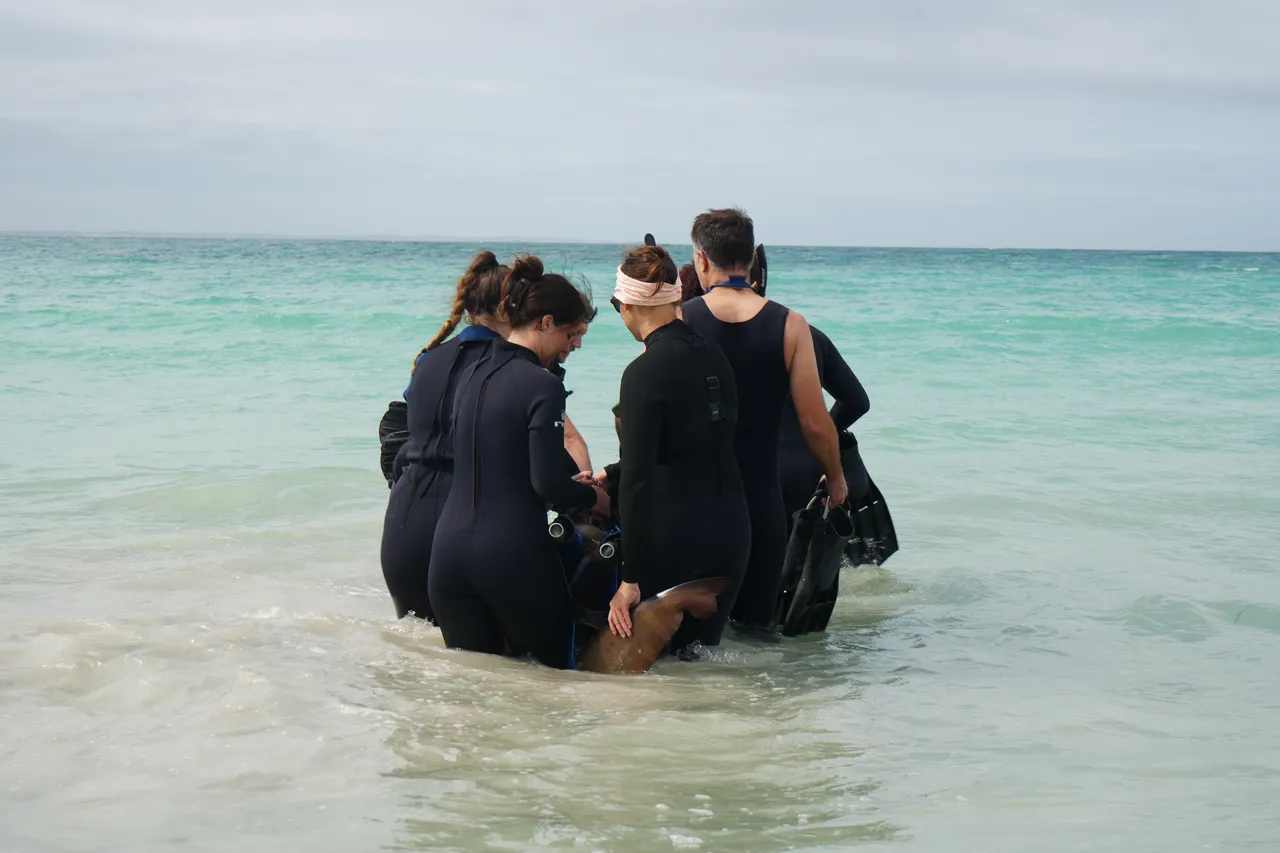
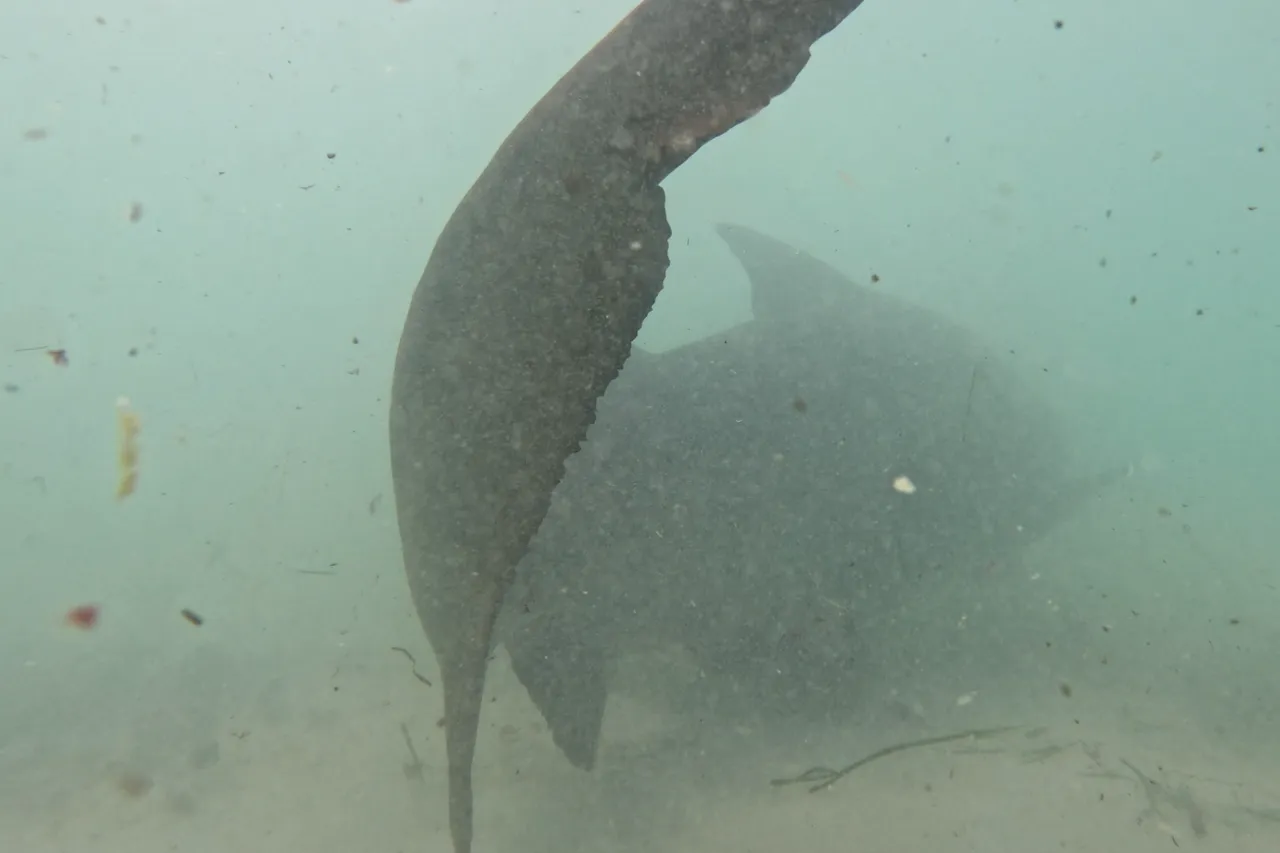
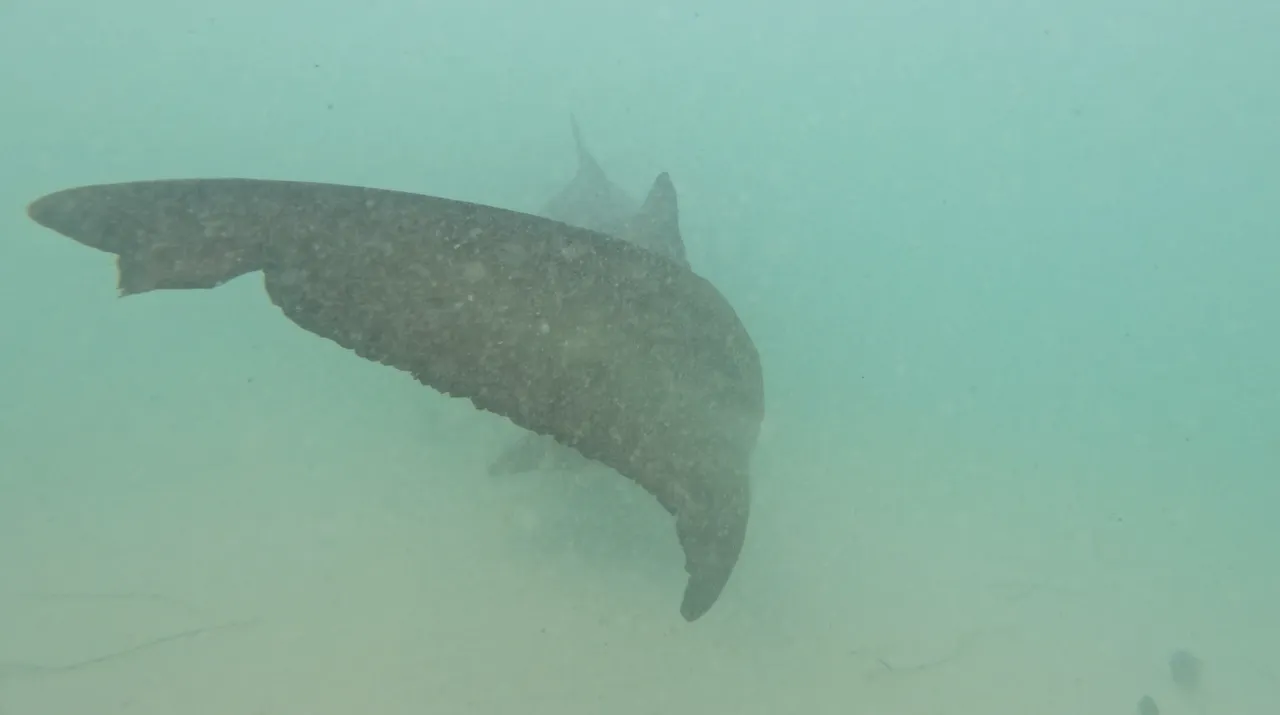
Taking their cue from Blue, the team released her. She swam off steadily and strongly, with three team members accompanying her to monitor her initial behaviour in the open ocean.
For the team, this was an emotional, “full circle” moment, many of whom had cared for Blue since her arrival at the Aquarium.
“It was a privilege to return one of our largest ragged-tooth sharks to the big blue. Blue spent eight years with us, serving as a powerful ambassador for her species and educating thousands of visitors,” says Kevin Spiby.
Dr Jenkinson confirmed the success of the release: “Blue showed healthy vitals during the quarantine period. The transport went smoothly, and she had a good, strong response before being released.”
We are grateful to the Struisbaai community for their enthusiasm in welcoming Blue home, and to our awesome staff for their hard work and dedication.
Blue’s impact beyond her release
While our journey with Blue may have come to an end, her acoustic and spaghetti tags will allow us to “tag along” on her ocean travels. Long after release, Blue will continue to contribute valuable information to marine science.
Data collected through the acoustic monitoring network will help researchers from multiple institutions better understand how ragged-tooth sharks move along the coast, how quickly they grow, and which habitats are most important to them.
This information is critical for protecting ragged-tooth sharks and the spaces they call home. Despite their wide distribution, raggies are vulnerable to population decline due to their slow reproductive rate – females mature late and typically only give birth to two pups after a long gestation. Combined with their preference for shallow coastal areas and nearshore habitats, this makes raggies especially susceptible to fishing pressure, habitat disturbance, and accidental capture.
By releasing Blue as a mature female into an ecologically important area, the Aquarium hopes that she may contribute to future generations of ragged-tooth sharks.
Blue’s story is a powerful example of science-driven conservation in action. From rescue to release, she inspired people to care about the ocean, contributed valuable data to support her endangered species, and helped shine a light on the challenges facing ragged-tooth sharks.
Related News
Sign up to our Newsletter
Receive monthly news, online courses and conservation programmes.