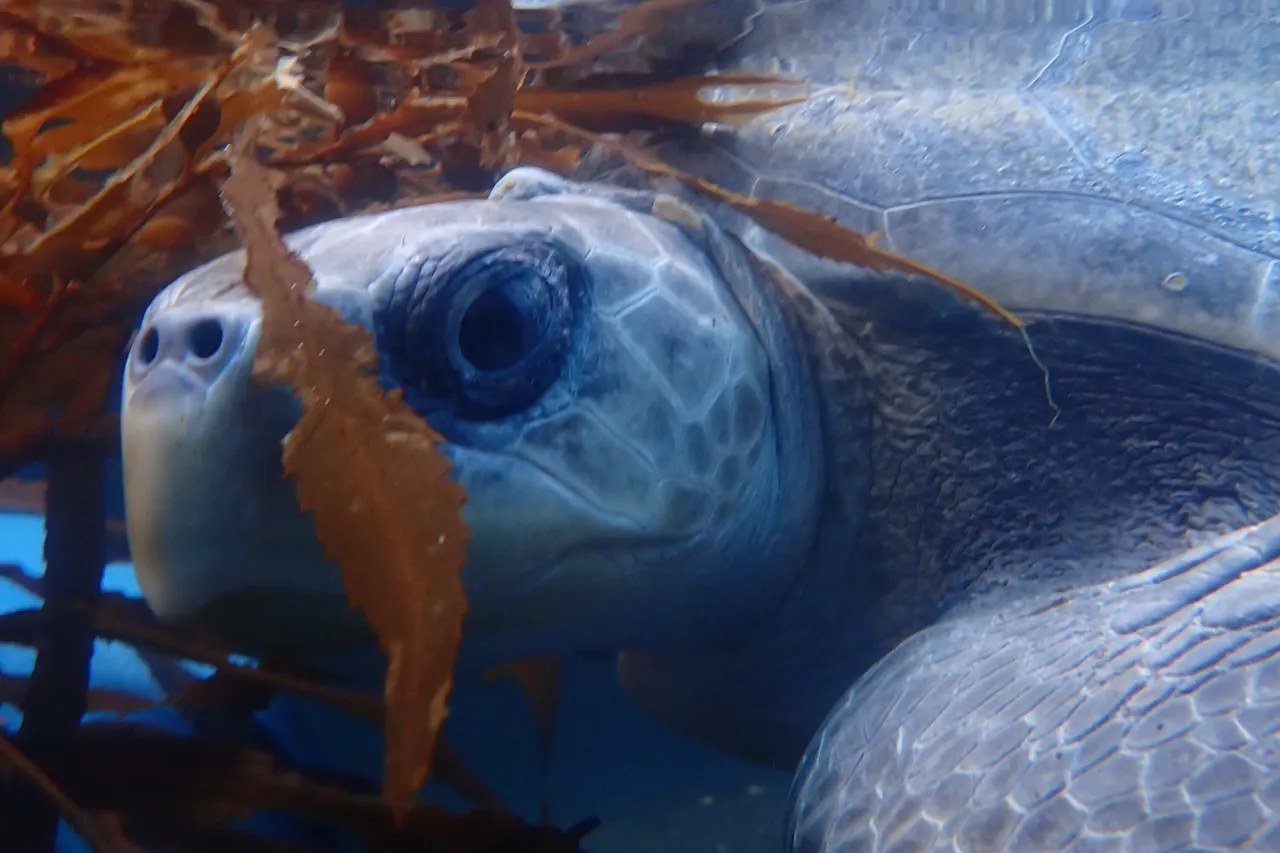
Meet Sage, a rare olive ridley turtle at the Turtle Conservation Centre
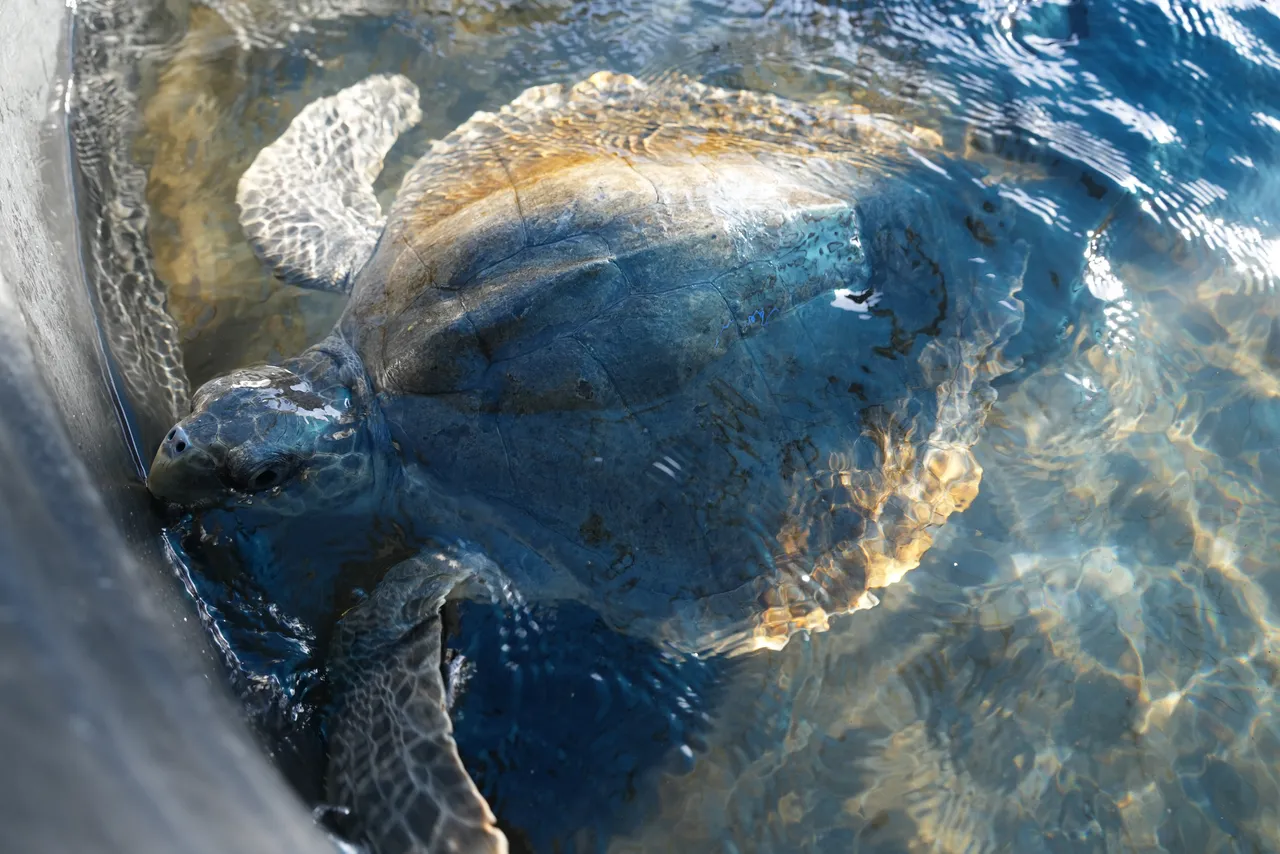
When our Turtle Rescue Network received a call about an injured turtle stranded in the De Hoop Marine Protected Area, we did not expect that the turtle in question would be a rare olive ridley - a species not often seen by the rehabilitation team at the Two Oceans Aquarium!
Sage's rescue
On 26 December 2025, Corné Lamprecht, Marine Ranger at Morukuru De Hoop, learned that a member of the public had found the turtle stranded in an enormous ghost fishing net. The well-meaning beachgoer had disentangled the turtle and returned it to the water, without realising that this action could have had dire consequences for the already weak animal. As air-breathing reptiles, an exhausted turtle may drown if put back into the ocean after a traumatic stranding. Thankfully, this turtle had restranded before it could succumb to its injuries.
Corné safely retrieved the turtle from the beach, wrapping it in a soft towel to protect it from the elements before beginning the long walk back to the main camp. Then, the turtle was gently placed on thick padding in the back seat of a car, and the three-hour journey to the Turtle Conservation Centre began.
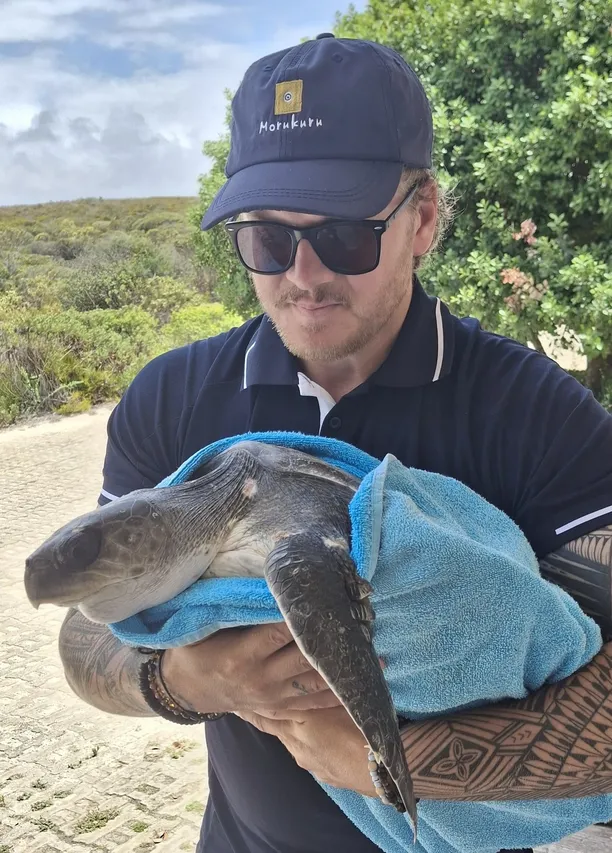
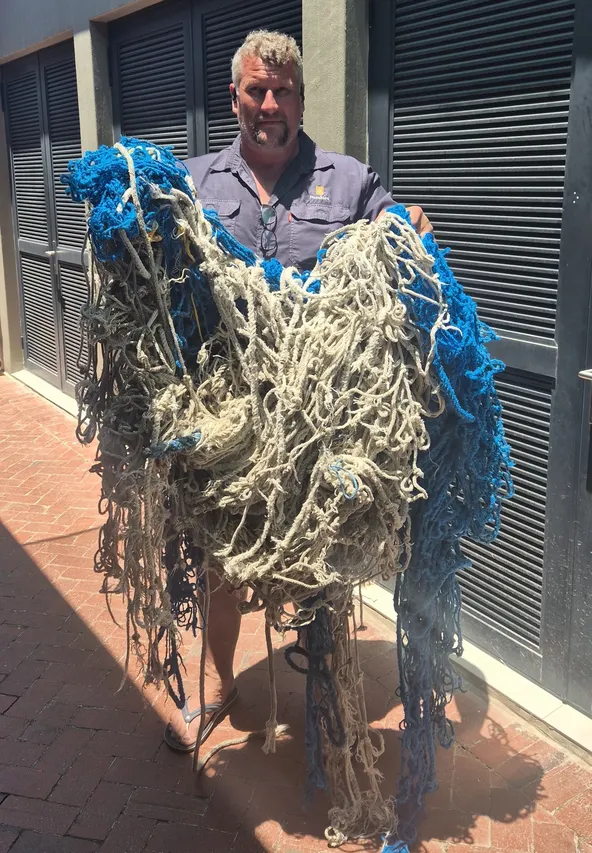
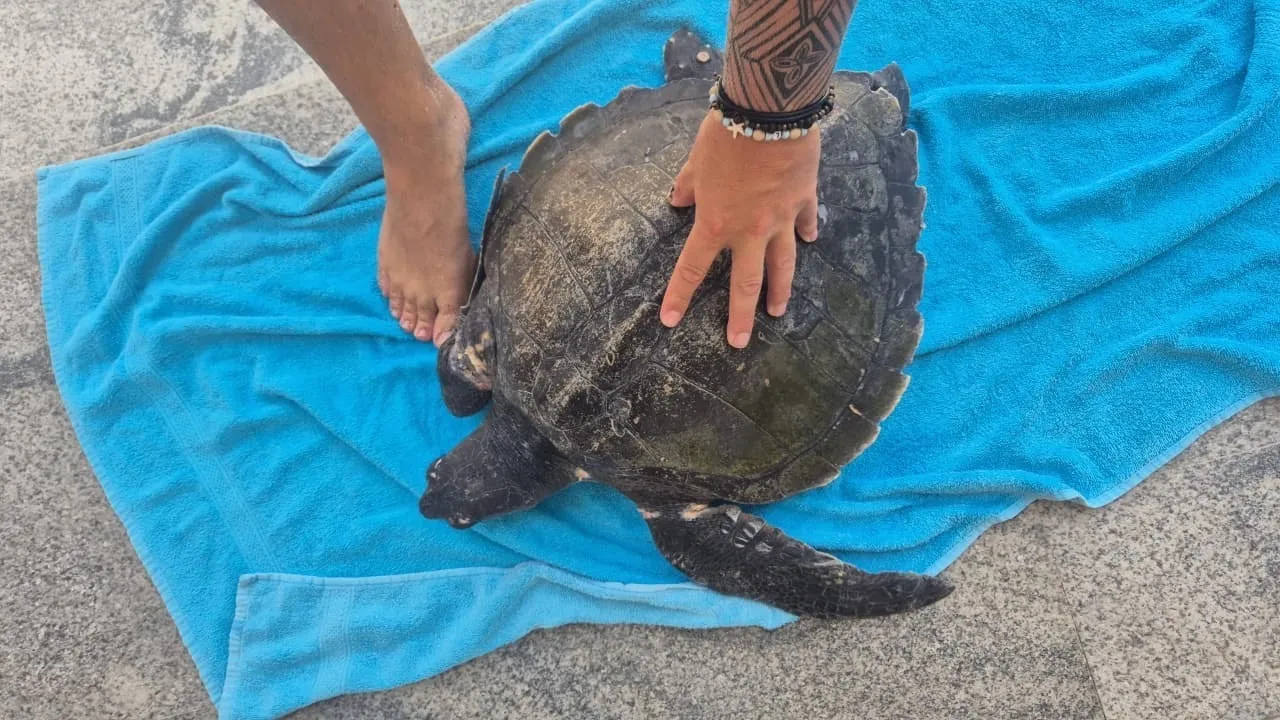
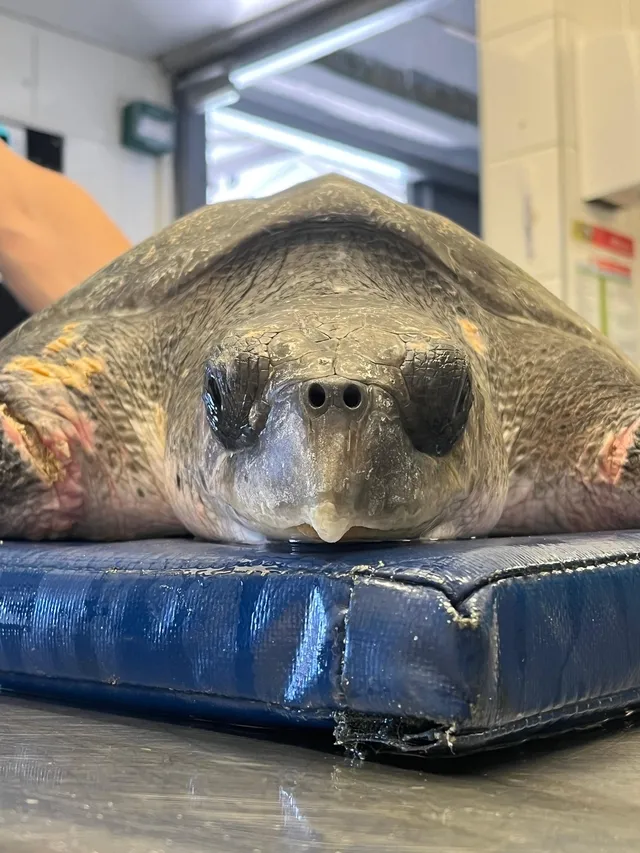
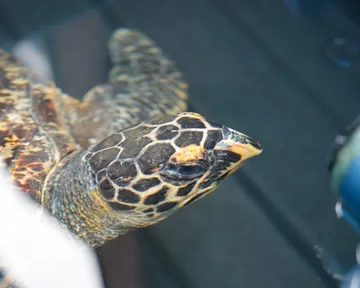
When our waiting turtle team received photos of the rescued turtle, they immediately noticed that it had seven lateral scutes (shell plates); a feature commonly seen in olive ridley turtles! These turtles are rarely seen in South Africa, as they do not nest here but sporadically visit our waters to feed. They are also the smallest turtle species in our country. This exciting discovery made the rescue and the community effort involved even more meaningful.
One of our turtle ambassadors, Mike Bayer, transported the turtle most of the way to Cape Town. Mike said that he was encouraged as the turtle took deep breaths and moved around during the journey.
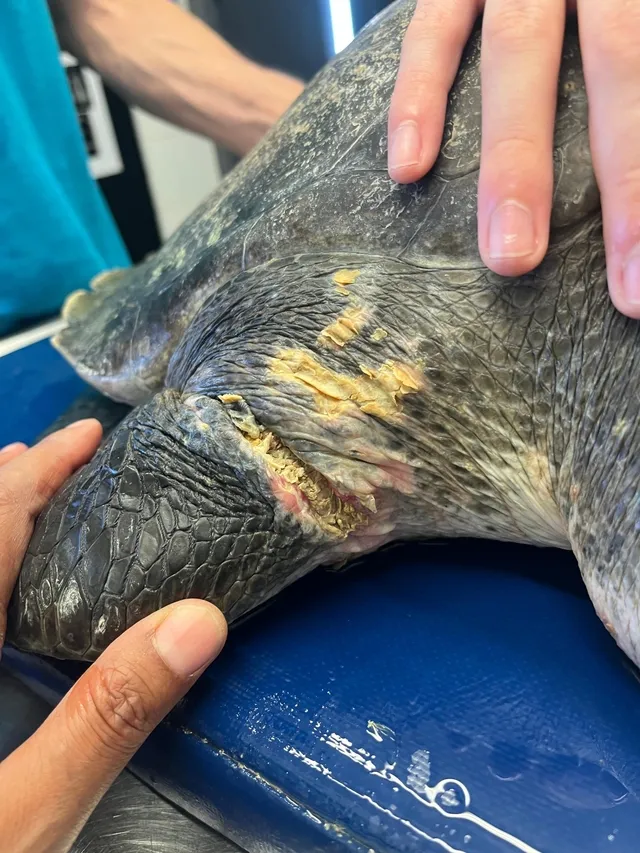
Upon arrival at the Turtle Conservation Centre, Aquarist Razaan conducted an initial health check, examined the turtle's wounds, and gave it a freshwater bath to rehydrate. Despite the deep wounds from her entanglement, the team was thrilled when the olive ridley appeared perky with a good appetite. Once the turtle had stabilised, the team gave her the name Sage for her greenish colouring.
We are super grateful for Corné, the Morukuru Family team, and Mike’s efforts in rescuing Sage. Olive ridley turtles are listed as Vulnerable on the IUCN's Red List of Threatened Species, with the main threats to their populations being bycatch, loss of nesting sites, and poaching. This, and the fact that olive ridleys are rare visitors to South Africa, makes Sage's story a poignant reminder of how critical timely human intervention can be in giving every turtle species a second chance at survival.
Sage's rehabilitation
Soon, it became clear that Sage had some deeper-rooted health issues – she was very buoyant in the water and struggled to dive. Dr Bernice van Huyssteen, our turtle vet, suspected that Sage was suffering the effects of being entangled for an extended period; something our team has observed in many rescued turtles. During her traumatic stranding experience, Sage may have been hyperventilating, which resulted in her lung lining being torn. Air from her lungs leaked from this tear into the body cavity, causing an air pocket, or pneumocoelom, to develop.
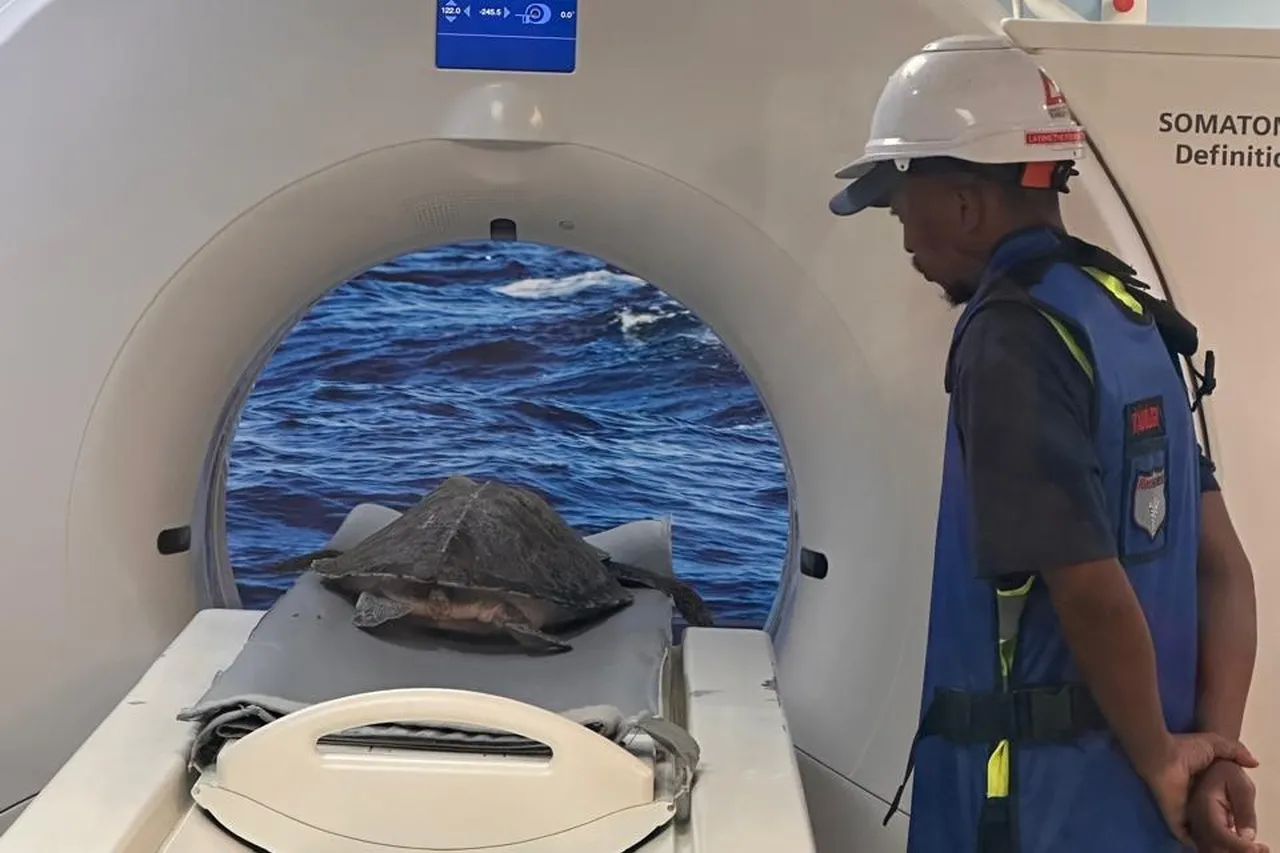
Dr Bernice conducted X-rays at our on-site clinic and later sent Sage to Winelands Radiology for a CT scan, both of which confirmed that Sage had an ongoing lung infection and a pneumocoeloem.
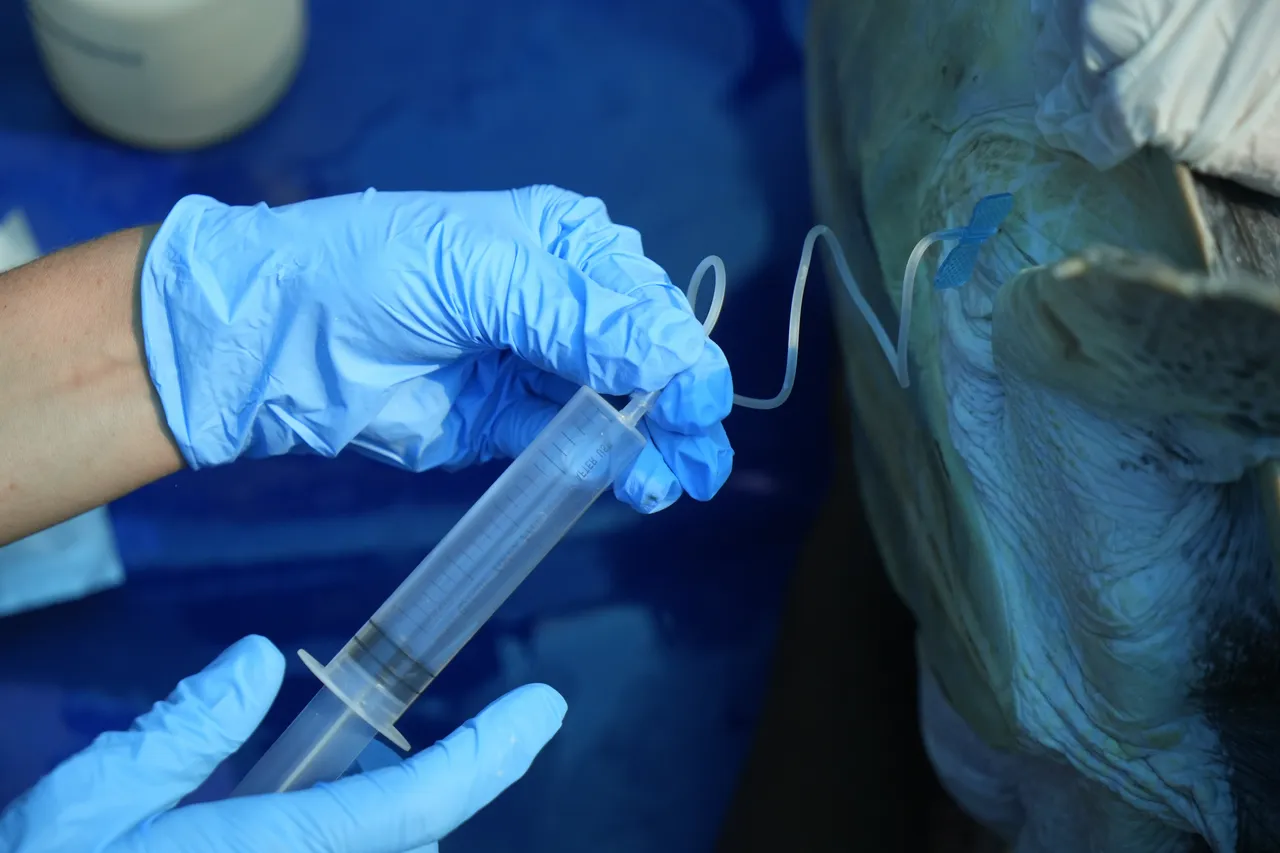
Sage’s medical treatment has included a course of antibiotics to help her lungs heal, as well as regular aspiration procedures. This is a delicate process in which Dr Bernice uses a syringe to remove trapped air from Sage’s body cavity, effectively relieving pressure on her system and alleviating her buoyancy issues.
Enrichment is the magic word
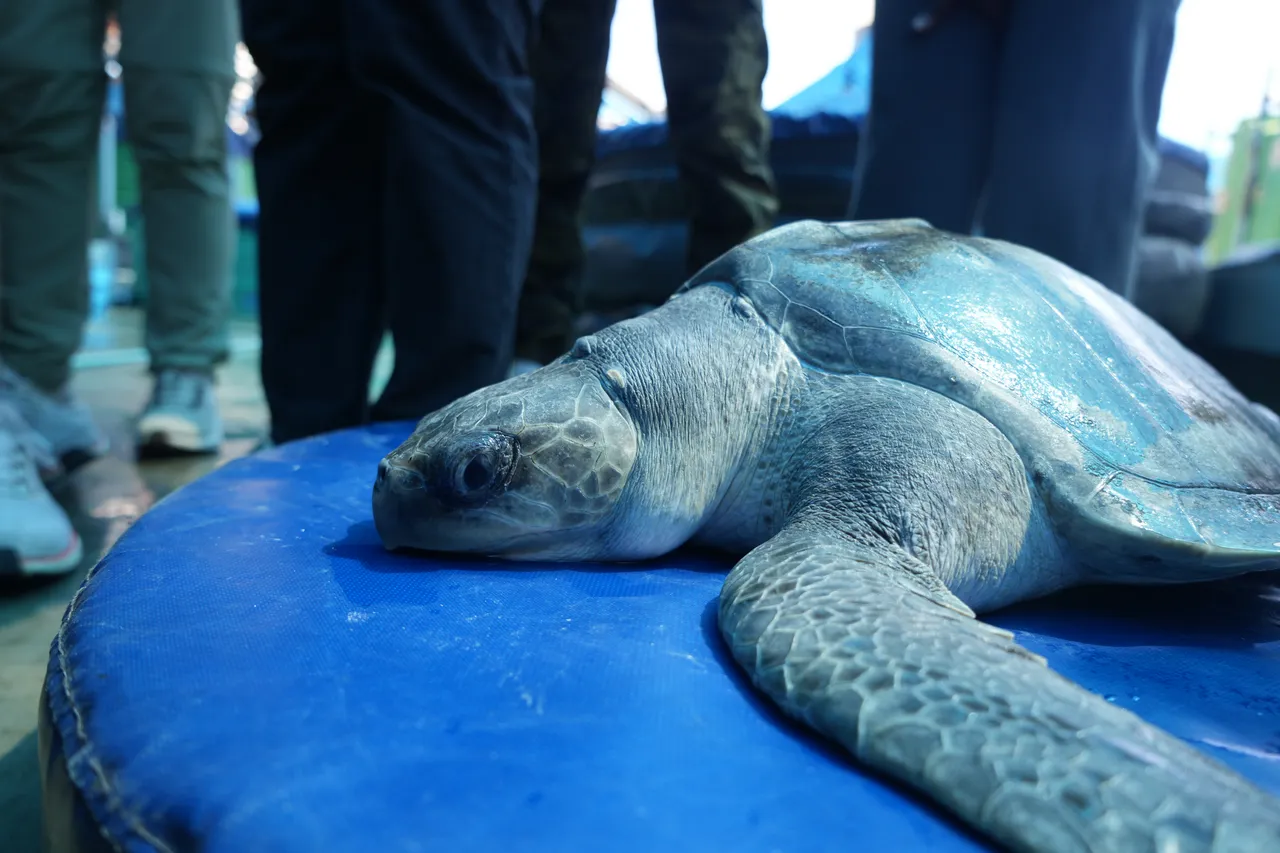
Enrichment is a powerful tool that helps the turtles undergoing rehabilitation at the Turtle Conservation Centre maintain their wild behaviours. Activities such as food towers and frozen enrichment encourage problem-solving behaviours that turtles use every day, living in the wild ocean. These enrichment activities keep our turtles mentally and physically stimulated, making the transition to release that much smoother.
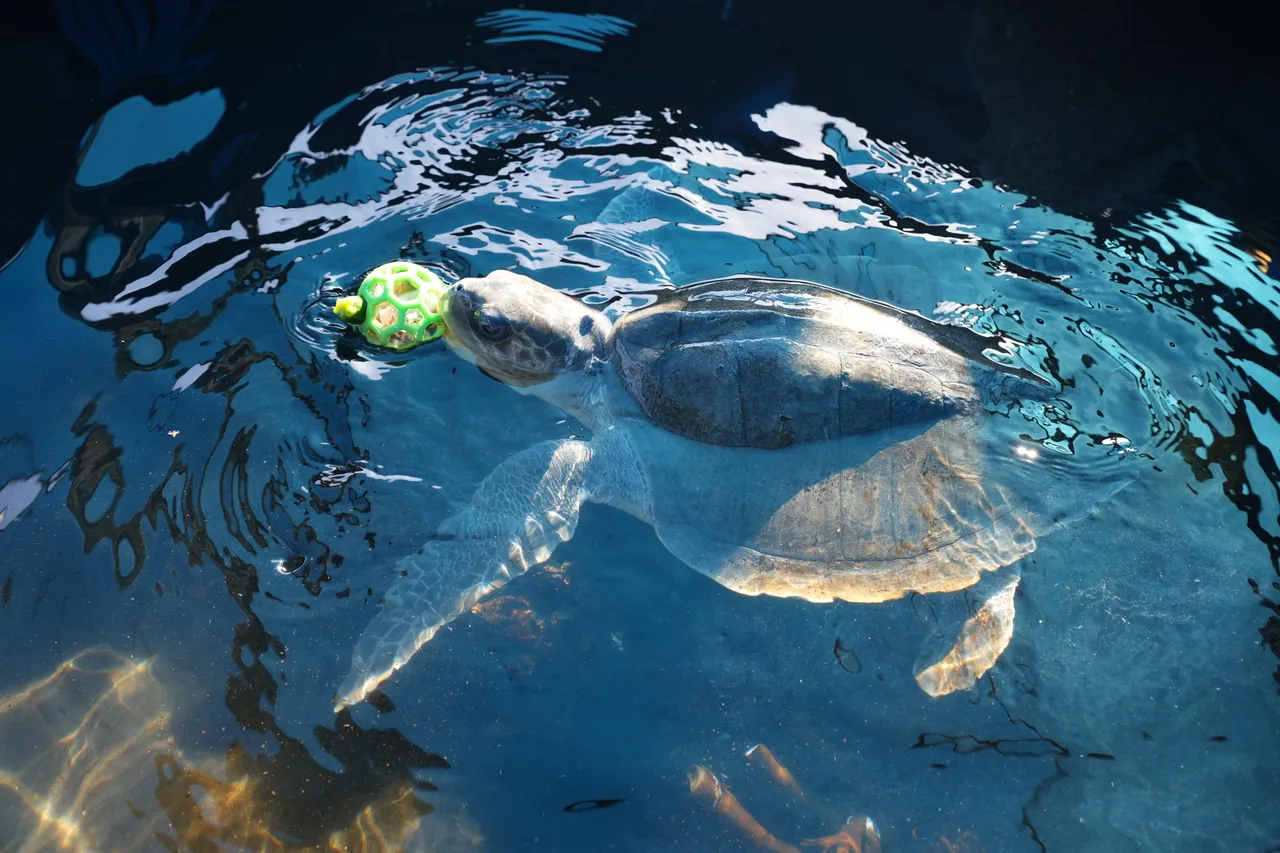
Food ball
The "food ball" activity mimics how turtles forage in the ocean. The turtle team hides all Sage's favourite foods inside a holey ball to encourage natural foraging behaviours, boost movement and exercise, and provide plenty of sensory stimulation. By working to get the food out, she’s practising the exact skills she’ll need in the wild - like getting a crunchy crab out of a rock crevice!
Target practice
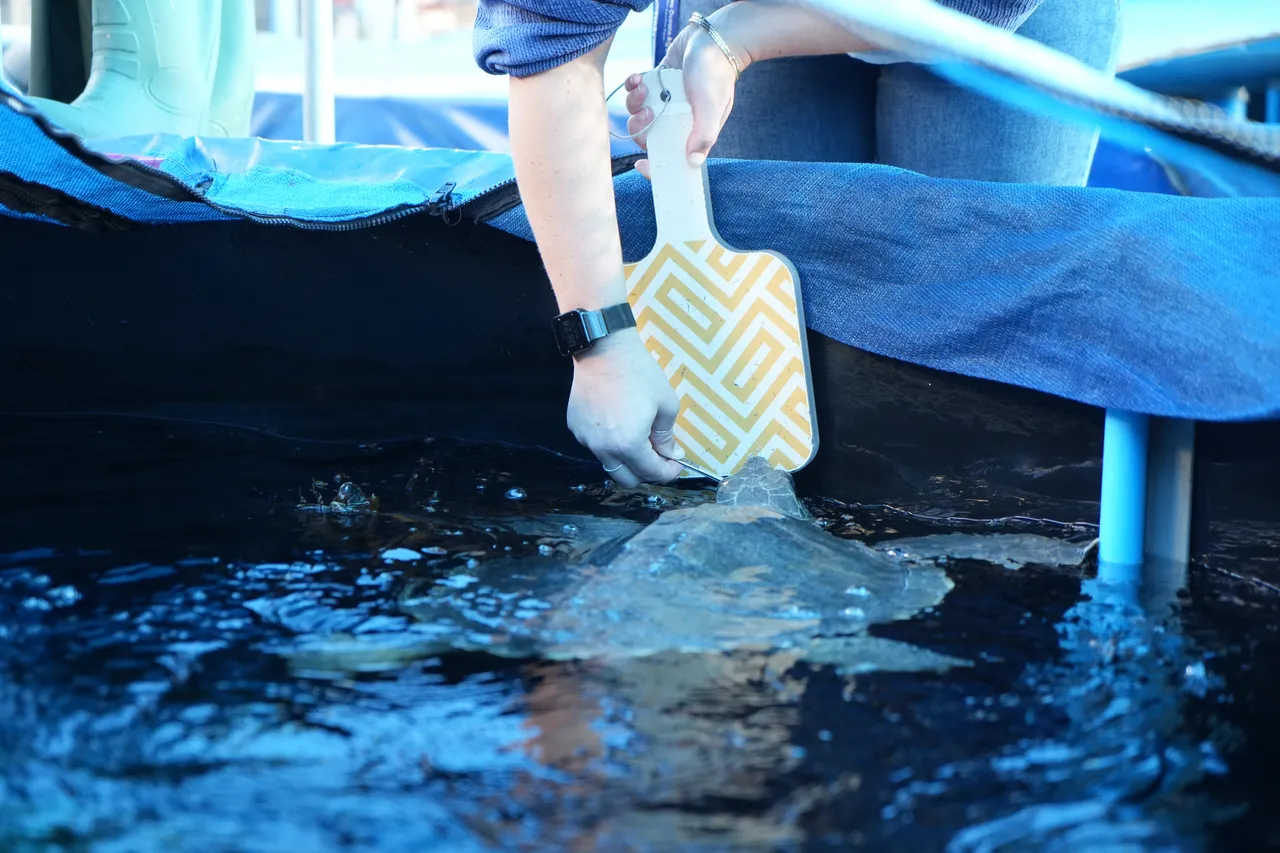
All the subadult turtles at the Turtle Conservation Centre are target-trained with a uniquely coloured and patterned target. This allows the team to create a feeding routine that will not be repeated in the wild - the turtles learn that their targets, and not our Aquarists, mean food. This means that, once Sage is released, she is less likely to associate humans with food.
Frozen food
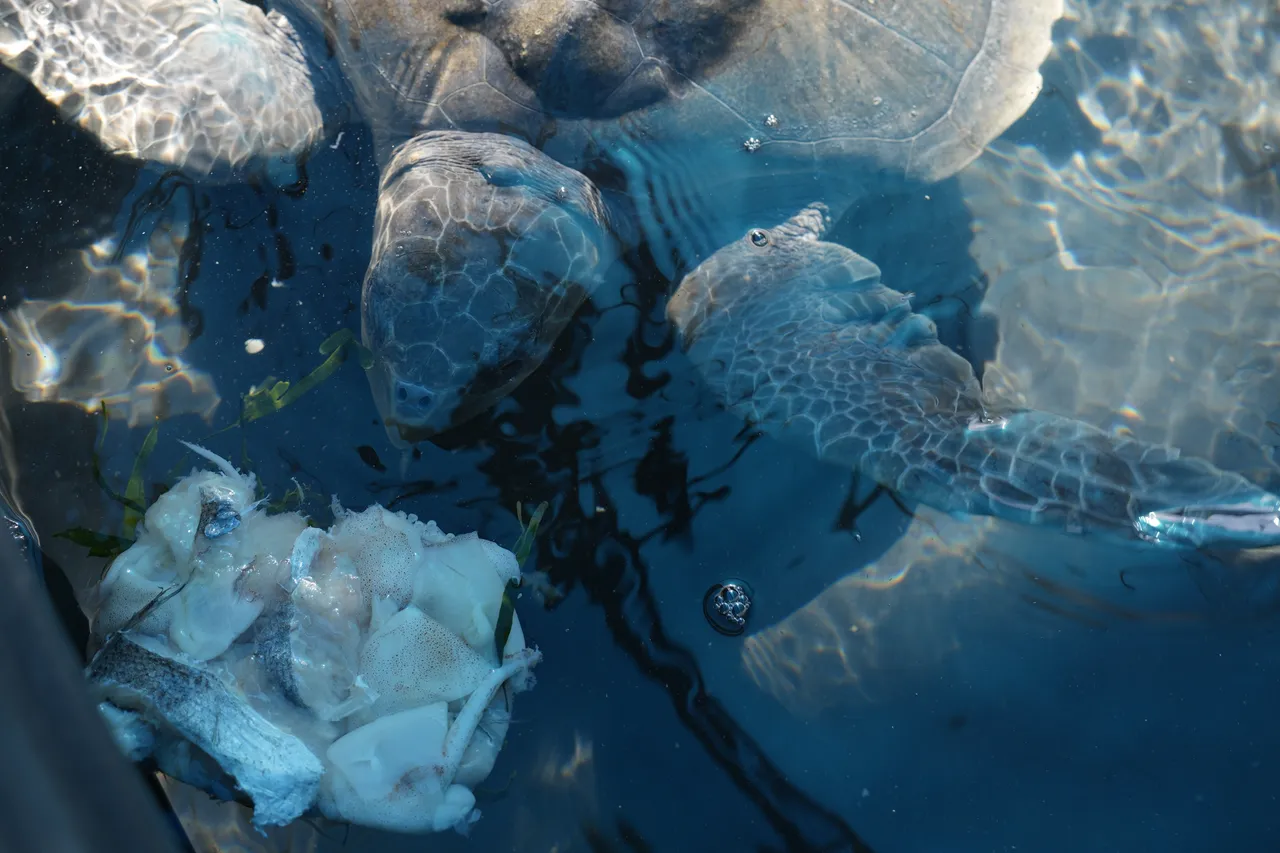
Frozen enrichment is another activity that simulates problem-solving behaviour. The turtle team freezes Sage's favourite foods, like squid, pilchard, and hake, into ice blocks to encourage natural foraging. By working to break apart the ice, she stays active, maintains her beak, and gets important mental stimulation.
Sage is well on her way to a full recovery; over the next phase of her rehabilitation, she will continue to receive good nutrition, regular medical check-ups, engaging enrichment activities, and excellent life support. At the Turtle Conservation Centre, the goal for Sage and all our patients is to return them to the ocean when they are ready.
Related News
Sign up to our Newsletter
Receive monthly news, online courses and conservation programmes.