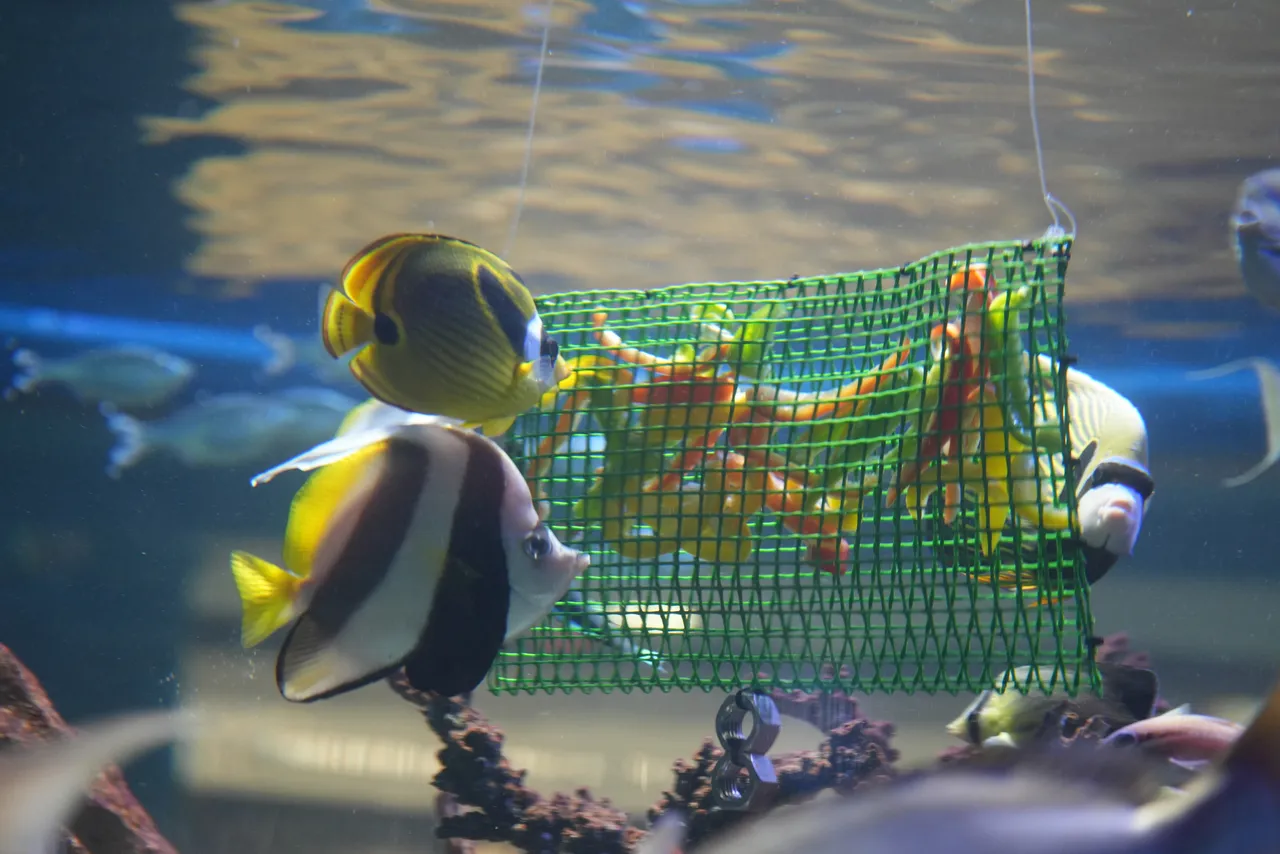
The colourful Coral Reef Exhibit is immediately eye-catching when visitors come face-to-face with the diversity of fish and corals. As you explore, you’re instantly surrounded by flashes of movement and an abundance of life made up of a wide variety of fish, invertebrates, and corals – from curious wrasses and grazing surgeonfish to shy reef dwellers.
Having a beautiful exhibit is only one part of caring for animals. To achieve the vibrant ‘underwater city’ experience of exhibits such as the Coral Reef Exhibit, the Two Oceans Aquarium’s aquarists have to tap into a large range of different skills. At the Two Oceans Aquarium, aquarists focus not only on water quality and nutrition, but also on animal enrichment, which is an essential part of supporting wellbeing and encouraging natural behaviours.
So, what does enrichment look like in the Coral Reef, Biodiversity and I&J Ocean Exhibit?
What is animal enrichment?
Animal enrichment refers to activities, objects, or environmental changes that encourage the animals natural behaviours and support physical and mental wellbeing.
In the wild, marine animals spend their days foraging, grazing, exploring, competing, hiding, and interacting with one another. An exhibit, no matter how thoughtfully designed, cannot perfectly replicate the complexity of the ocean. Enrichment helps bridge that gap by creating opportunities for animals to behave in ways that are familiar and purposeful.
When animals can feed, move, and interact in more natural ways, they’re more likely to stay active, engaged, healthy and socially balanced.
Our enrichment: Simple ideas with a big impact
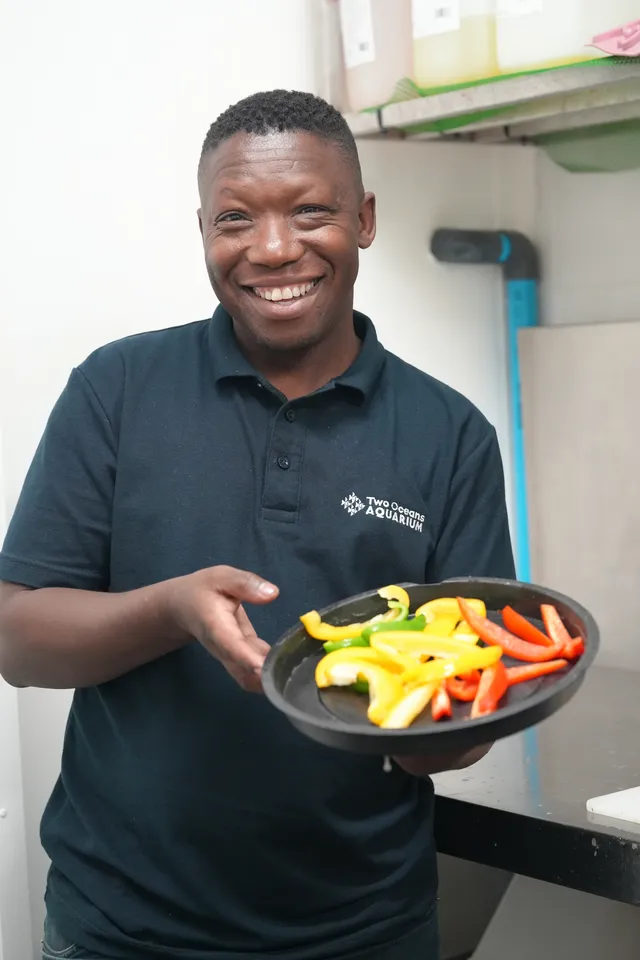
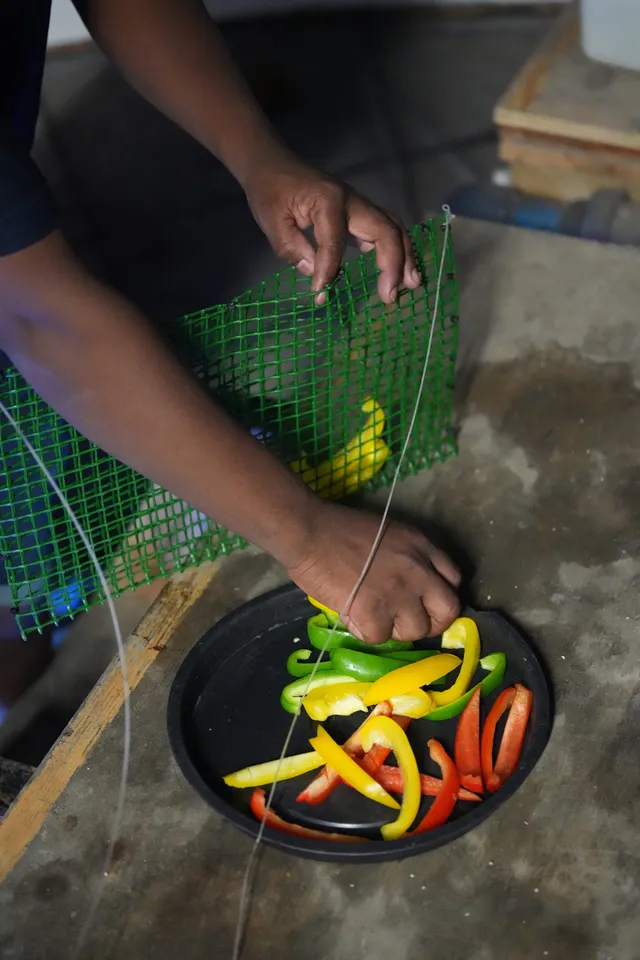
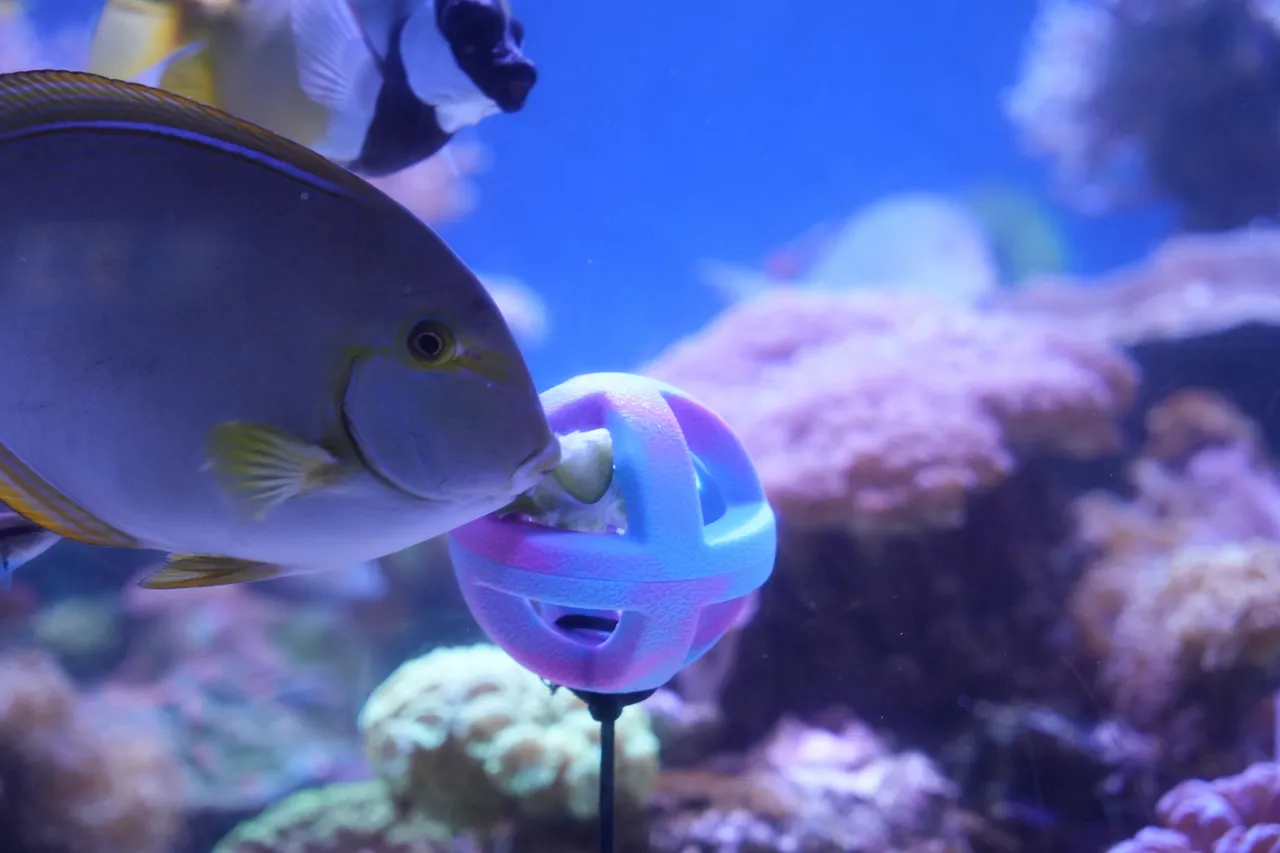
Some of the most effective enrichment tools in our exhibits are surprisingly simple: A rock fitted with elastic bands that holds leafy greens, netted feeding pouches filled with bell peppers and an enrichment ball allowing fish to nibble at their food over time.
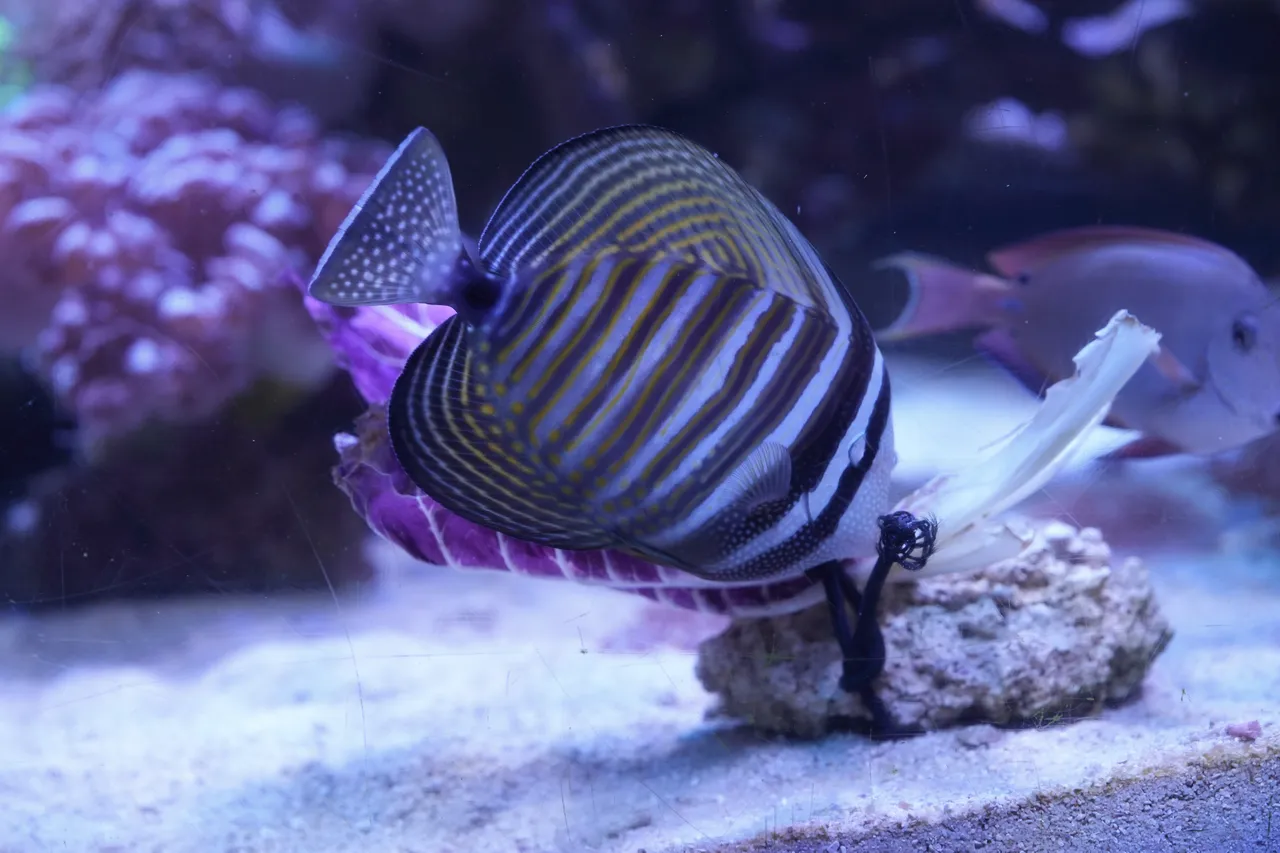
Many of the fish species in our exhibits are grazers. On a natural reef, they can spend hours nibbling algae that grows on reef surfaces. Grazing isn’t just about eating – it’s a behaviour that forms part of their daily routine.
At the Aquarium, our advanced life support systems help maintain excellent water quality, and managing algae growth is an important part of ensuring these systems function properly. While this supports animal health and keeps the exhibit clear for visitors, it also means there is less natural algae available for grazing fish.
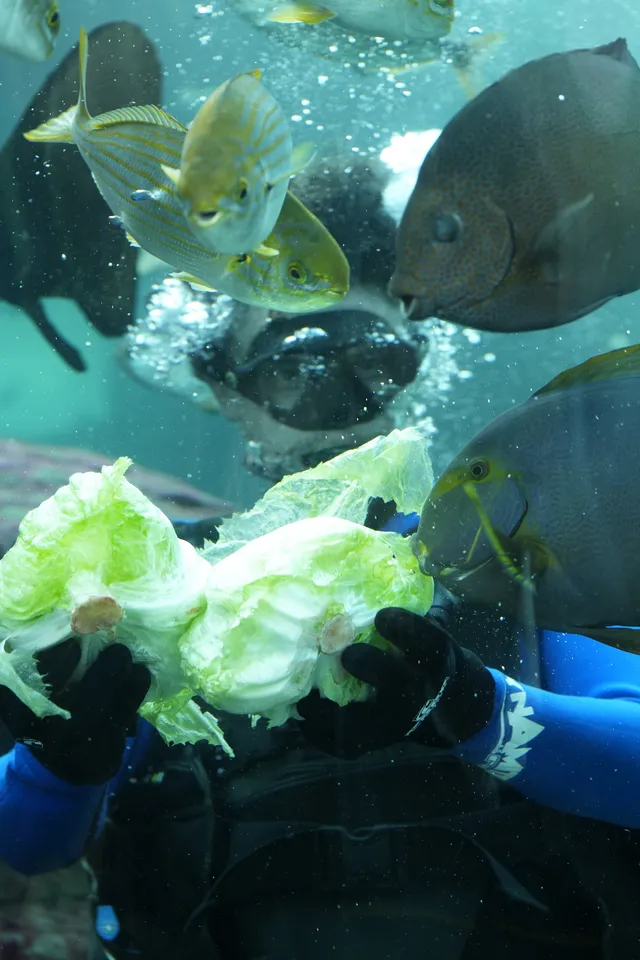
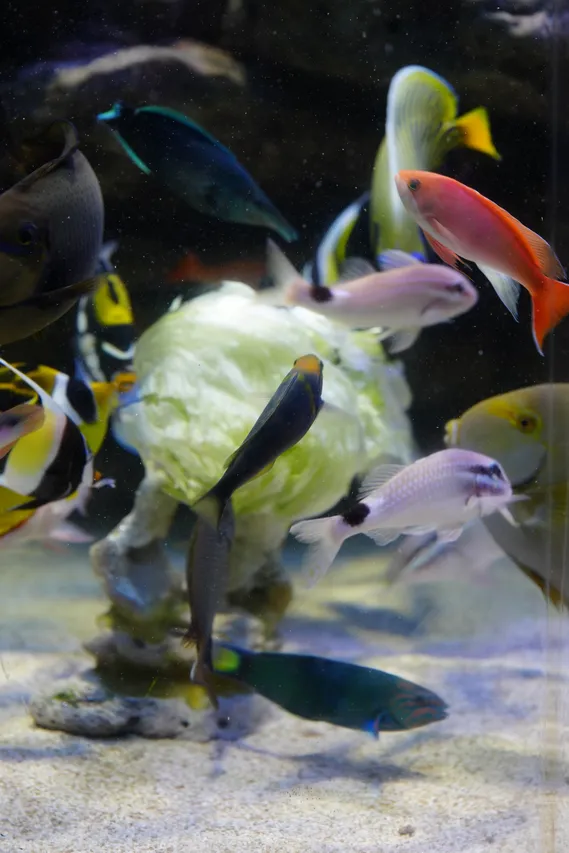
To make up for this and support natural grazing behaviours, aquarists provide fish with fresh leafy greens such as lettuce and cabbage, as well as vegetables like bell peppers. These are secured to enrichment rocks, placed in enrichment balls, or offered in netted pouches. These feeding methods mimic the topography of natural reef surfaces, and the vegetables act as a stand-in for the algae the fish would normally graze on in the wild.
Enrichment isn’t only about what animals eat – it’s also about how they eat.
Why grazing matters
You might wonder: Why not simply feed the animals chopped vegetables or pellets?
The answer lies in behaviour. If food is delivered in one quick feed, it can be consumed in minutes. But when greens are secured for enrichment, fish must approach the feeding station, compete gently with other grazers and nibble repeatedly over time
This more closely mirrors natural grazing. It encourages movement, supports social interaction, and extends feeding time – all of which contribute to an animal’s physical and psychological wellbeing.
Grazing can also support dental and digestive health for species adapted to scraping and picking food from surfaces.
Supporting biodiversity through enrichment
Because our exhibits are teeming with biodiversity, enrichment strategies must account for different feeding styles and behaviours.
While grazers enjoy picking at leafy greens, other species may prefer planktonic foods drifting through the water, meaty items placed strategically to simulate foraging, or hidden food that encourages exploration.
This layered approach helps ensure each species – from bold, active fish to more reserved reef inhabitants – has opportunities to express natural behaviours.
Enrichment can also help prevent dominant individuals from monopolising food sources. By placing multiple enrichment rocks or feeding stations around the exhibit, aquarists promote fair access and reduce stress within the community.
More than just feeding time
Enrichment isn’t only about nutrition. It’s also about stimulation, variety, and giving animals choice within their environment. It’s a reminder that coral reef animals are behaviourally complex, with specific needs.
Our exhibits may be known for their colour and beauty, but behind that beauty lies careful planning, dedication, and a deep commitment to animal wellbeing. Enrichment is one of the ways the Two Oceans Aquarium helps ensure that life beneath the waves continues to thrive.
Related News

Sign up to our Newsletter
Receive monthly news, online courses and conservation programmes.