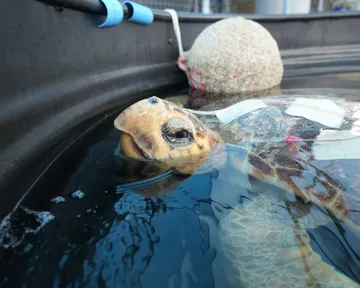
Meet Nutmeg, a loggerhead turtle undergoing rehabilitation
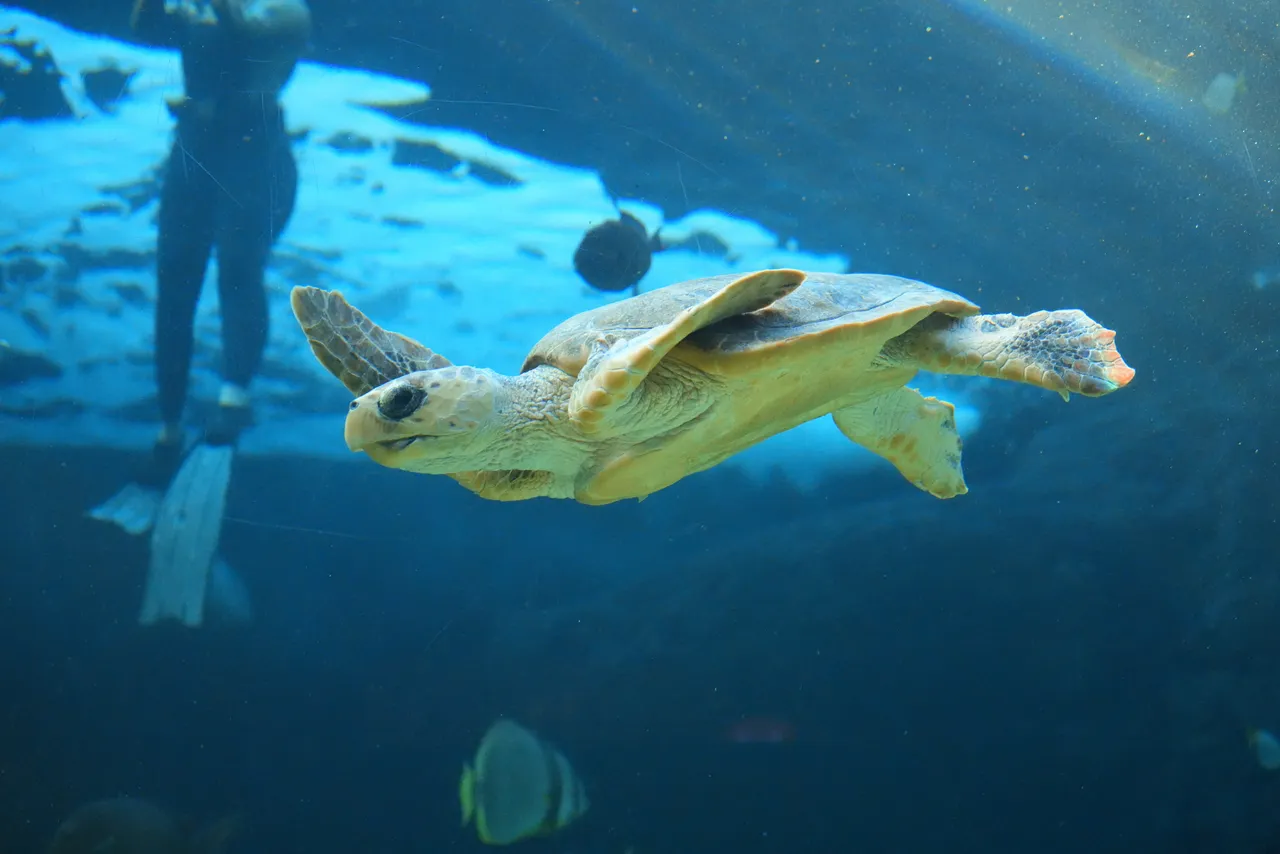
This week, our Turtle Conservation Centre introduced a new turtle into the I&J Ocean Exhibit at the Two Oceans Aquarium! Nutmeg, a female loggerhead turtle undergoing rehabilitation at our turtle hospital, has made wonderful progress since her rescue last year and is ready for the next step in her journey.
Let’s learn more about Nutmeg’s rehabilitation…
Nutmeg’s story in a nut(meg)shell
On the morning of 28 February 2025, a loggerhead turtle washed up on Langezandt Beach in Struisbaai – emaciated, injured, and covered with algae and barnacles. The turtle was exhausted and barely clinging to life.
Thankfully, our Turtle Rescue Network conducted a remarkable rescue effort, involving a coordinated response by the NSRI, local police, trusted turtle rescuer Leon Volker, and turtle ambassador Mike Beyer. Thanks to this quick-thinking team and a strong community network, the turtle arrived at the Turtle Conservation Centre by midday – a powerful example of collaboration in action.
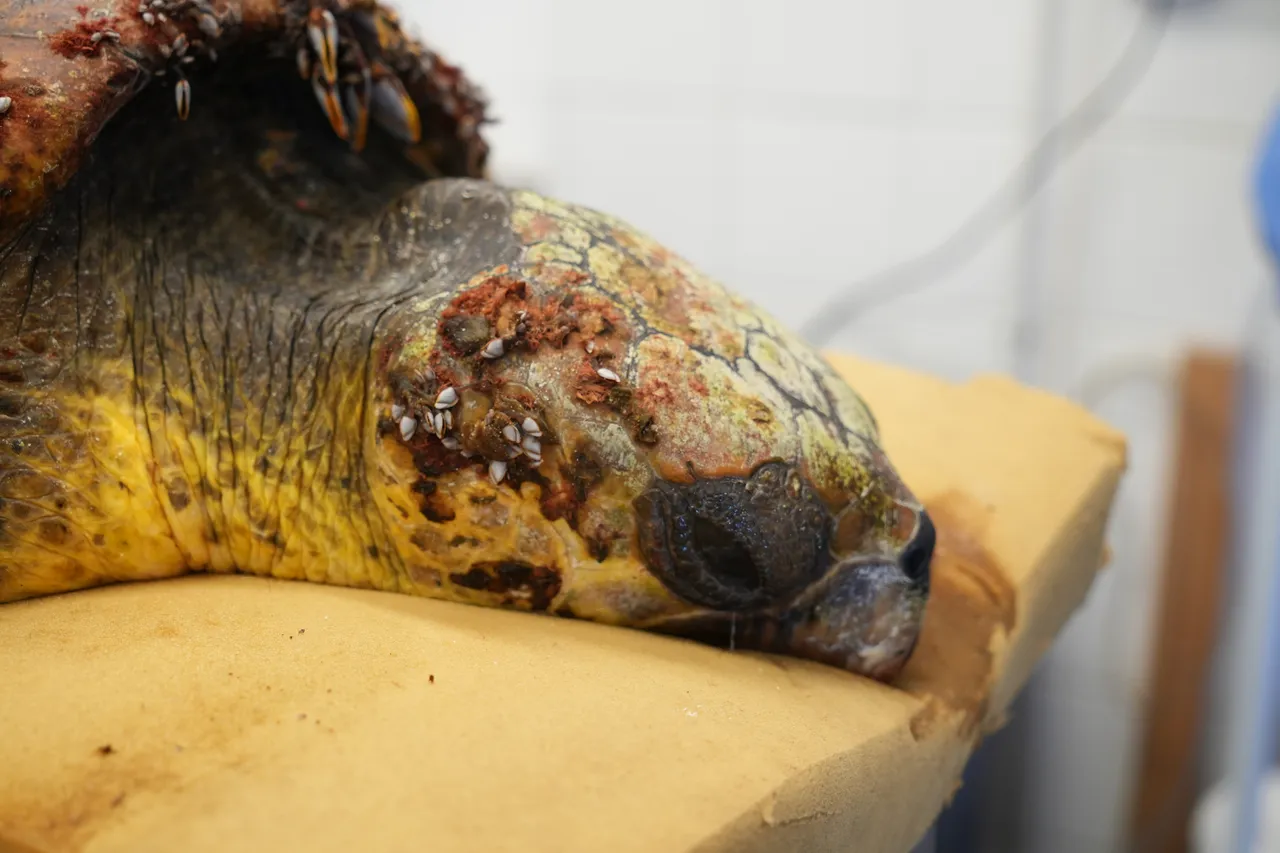
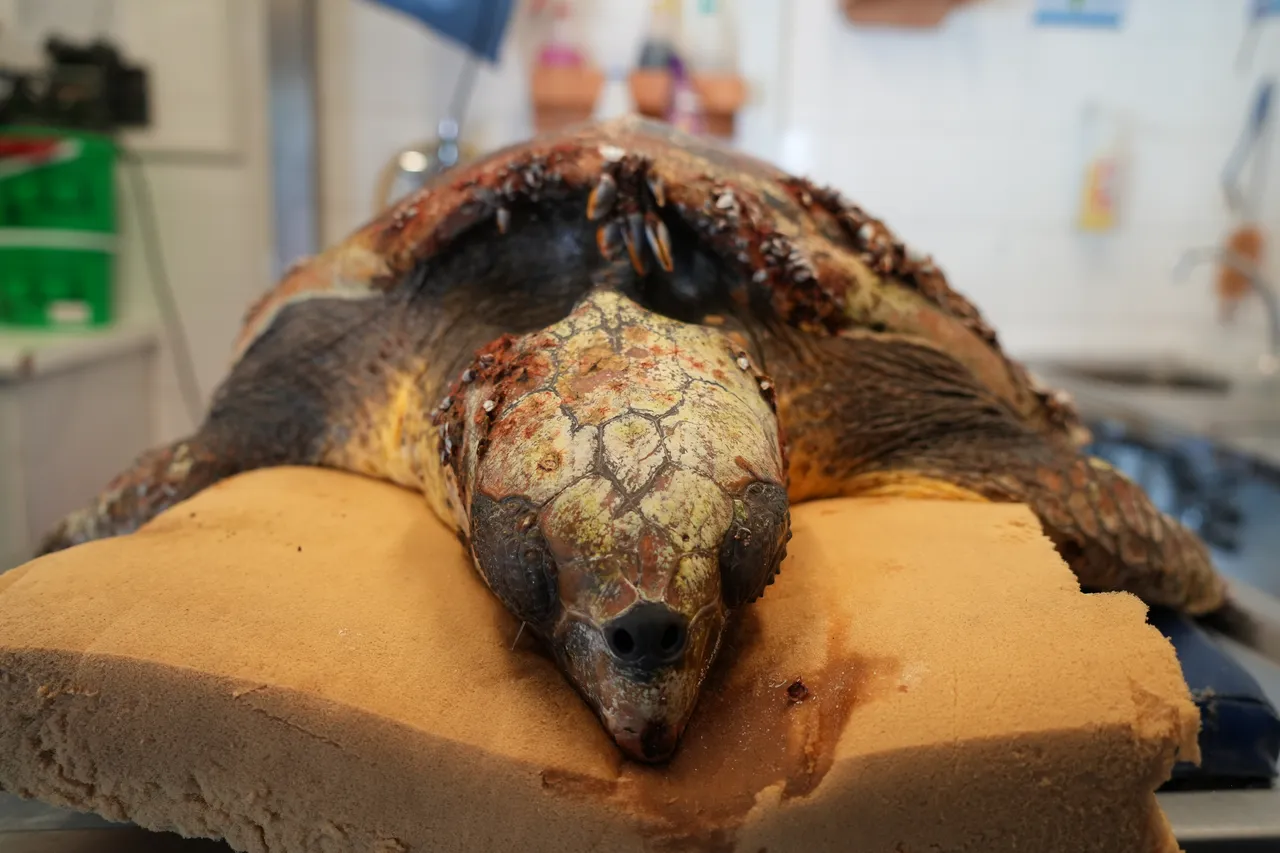
As the turtle team assessed the turtle’s condition on arrival, they immediately noticed that many of her scutes (shell plates) were blackened, leathery, and severely damaged. Some were so eroded that bone was exposed. The turtle was barely responsive but, thankfully, perked up after she was given some intravenous fluids and electrolytes. After taking her measurements, the team placed the turtle in a shallow freshwater bath to help her rest and rehydrate. In line with the year’s naming theme of “herbs and spices”, Mike Beyer suggested the turtle be named Nutmeg.
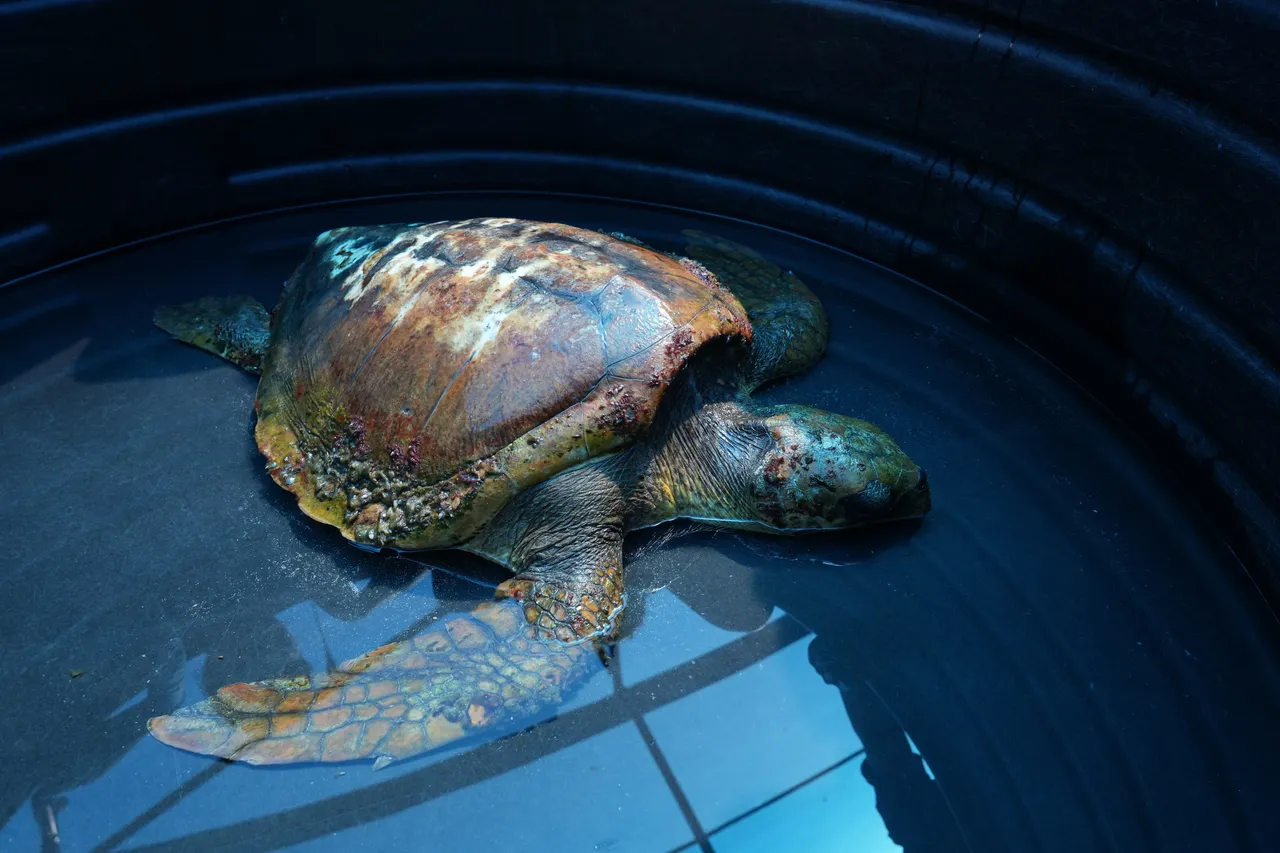
And so, Nutmeg’s rehabilitation journey began.
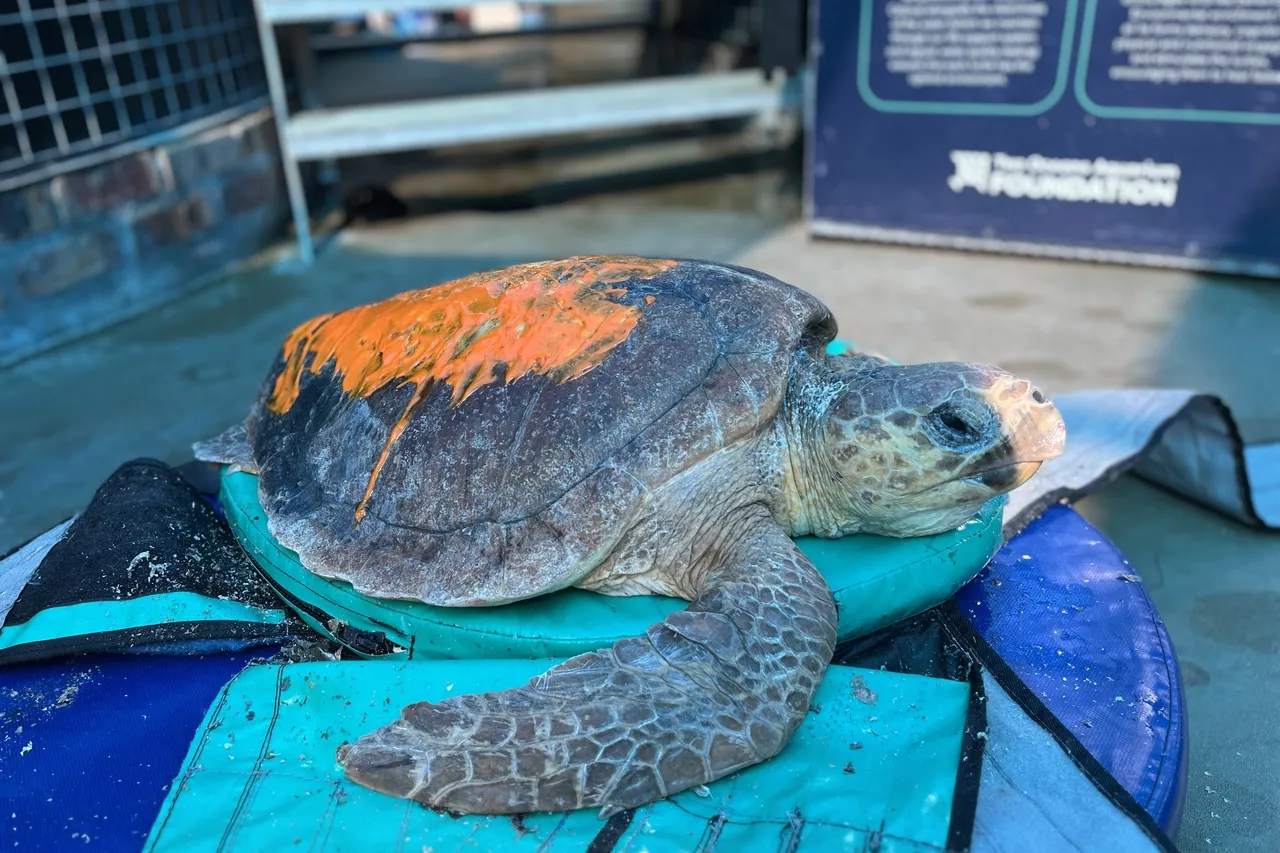
It was clear that immediate veterinary intervention was critical. Led by turtle vet Dr Bernice van Huyssteen, Nutmeg was started on a course of antibiotics and pain relief. Regularly, Dr Bernice debrided the necrotic tissue from her shell, reducing the risk of bacterial infection and allowing new shell tissue to regenerate. Her wounds were also treated with the turtle team’s go-to: A powerful mix of raw honey, turmeric, and veterinary-grade disinfectant. With careful observation, quality nutrition, and regular veterinary check-ups, Nutmeg slowly but surely began to regain strength.
Once she had progressed beyond critical care, Nutmeg was moved into a deeper holding pool, where a new challenge emerged. She struggled to swim; her body tilted asymmetrically in the water, and she could not dive. A diagnostic checkup revealed a build-up of air inside her body cavity (pneumocoeloem), caused by leakage from damaged lungs. To relieve the pressure, Dr Bernice carefully aspirated some of the trapped air from Nutmeg’s body cavity. The result was immediate: Nutmeg could swim and dive again!
A follow-up CT scan, however, revealed a lung infection that would require long-term antibiotic treatment, physiotherapy, and advanced veterinary support. Along with the severe lung infection, Nutmeg’s shell would also take months to regenerate and regain its former durability. The team had begun to worry about Nutmeg’s recovery – her appetite was poor, and she had been on months of treatment for lung and shell infection.
However, just when it seemed Nutmeg had no hope, she showed us exactly how resilient turtles can be. She suddenly showed a change: “Her eyes seemed brighter, she was more interested in her surroundings, and her appetite gradually improved to the point where she was eating everything offered to her!” says Dr Bernice. Follow-up radiographs even showed that her lungs were slowly but steadily healing.
Finally, in early March, Nutmeg reached a weight that our veterinary team was happy with. This was one of the signs that Dr Bernice and the team were waiting for – while improving at her own pace, Nutmeg was fighting back!
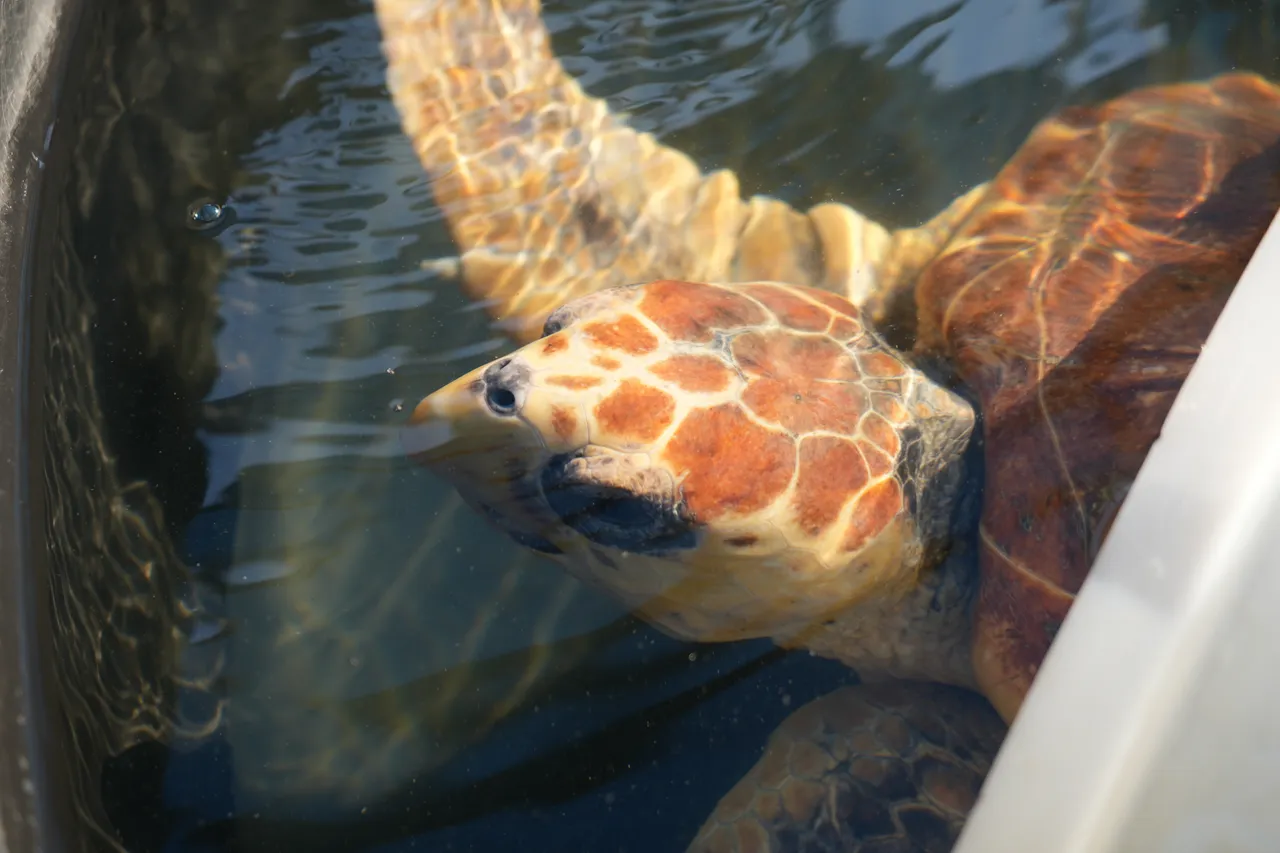
What are the next steps for Nutmeg?
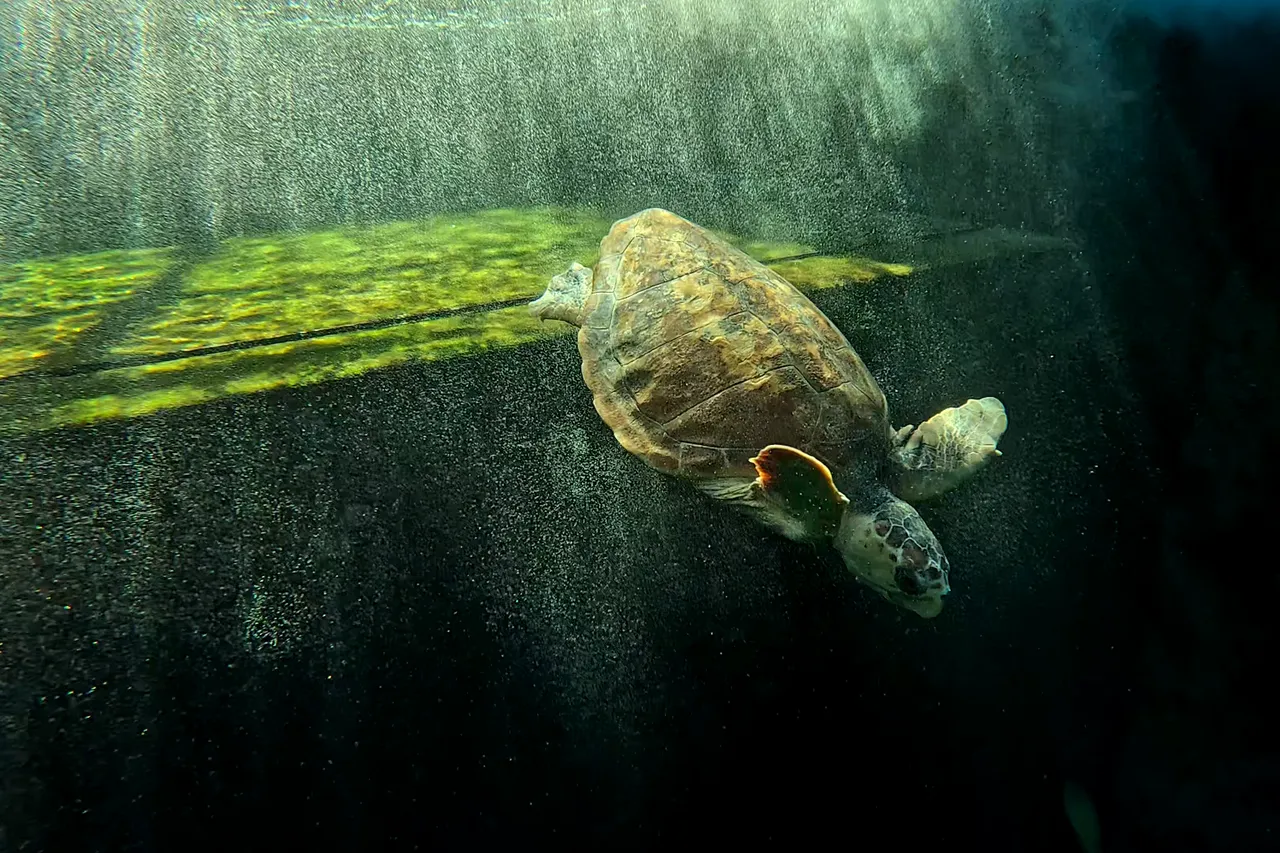
On 10 March 2026, it was time for Nutmeg to be introduced into the Two Oceans Aquarium’s I&J Ocean Exhibit! Carried from the rehabilitation space in a specially designed stretcher, Nutmeg was gently placed into the I&J Ocean Exhibit's medical pool. She was then removed from her stretcher and guided into the exhibit by two team members who swam alongside her as she acclimated to the space and the animals with which she would be sharing it. One such animal is Kai, a loggerhead turtle also undergoing rehabilitation with the Turtle Conservation Centre. On entry into the exhibit, Nutmeg seemed to find her flippers quite quickly, exploring the sandy bottom, doing a few laps, and checking out the caves. She and Kai will be closely monitored as they get to know each other.
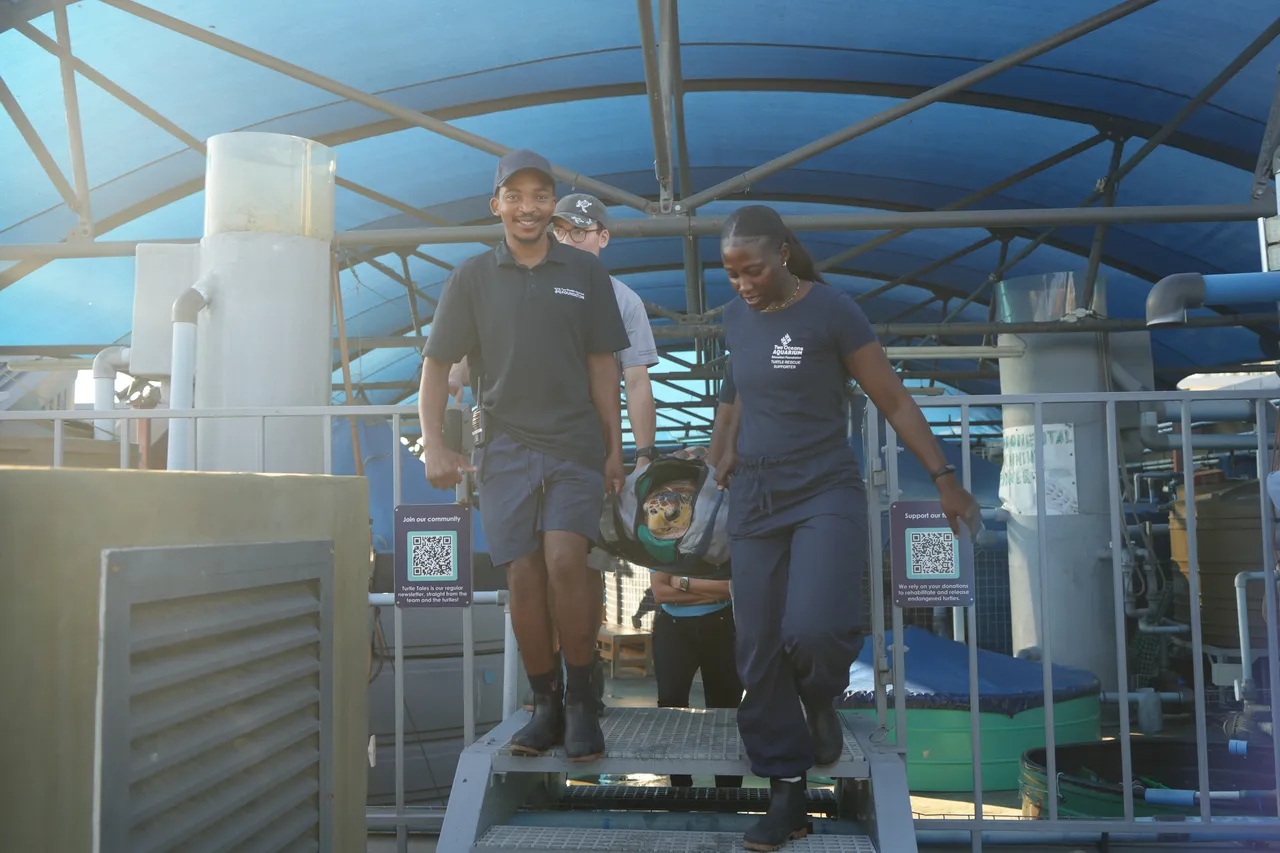
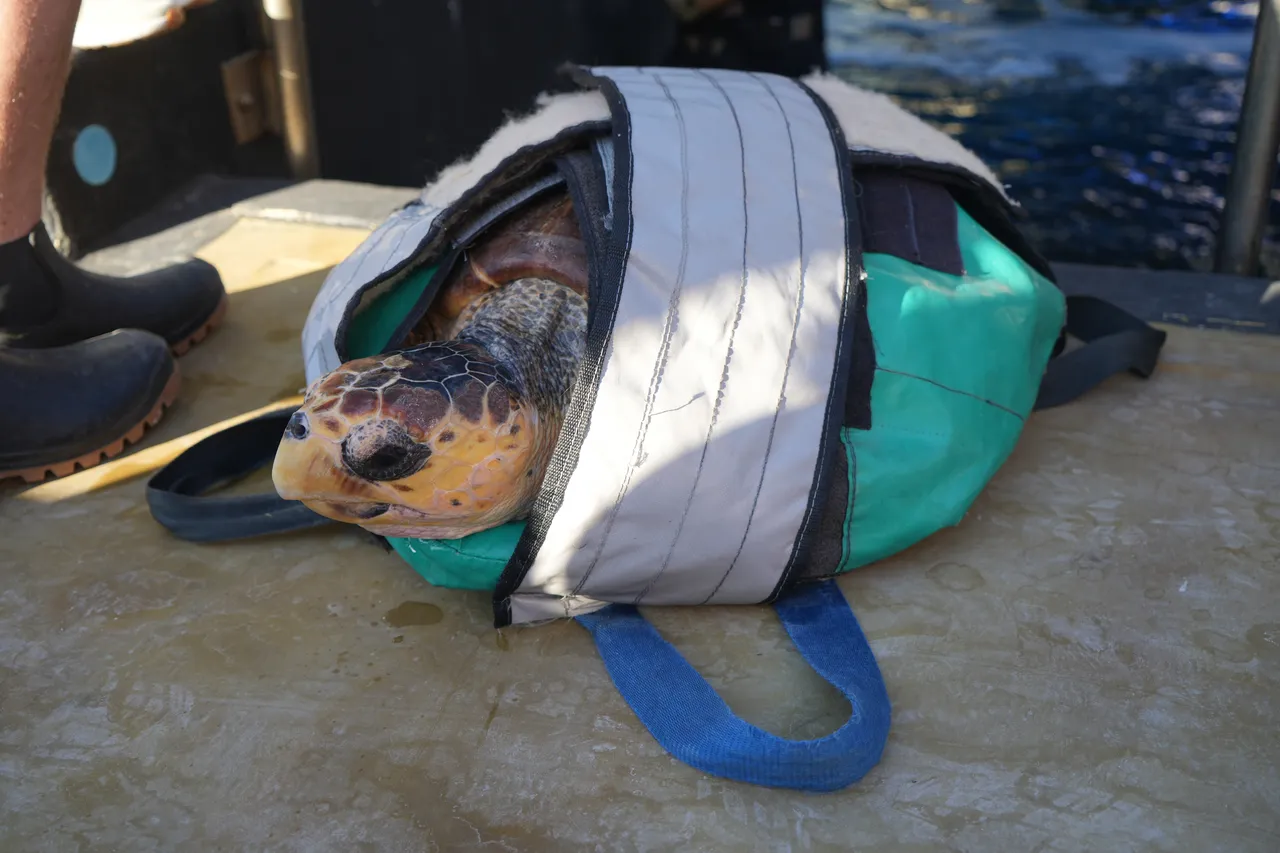
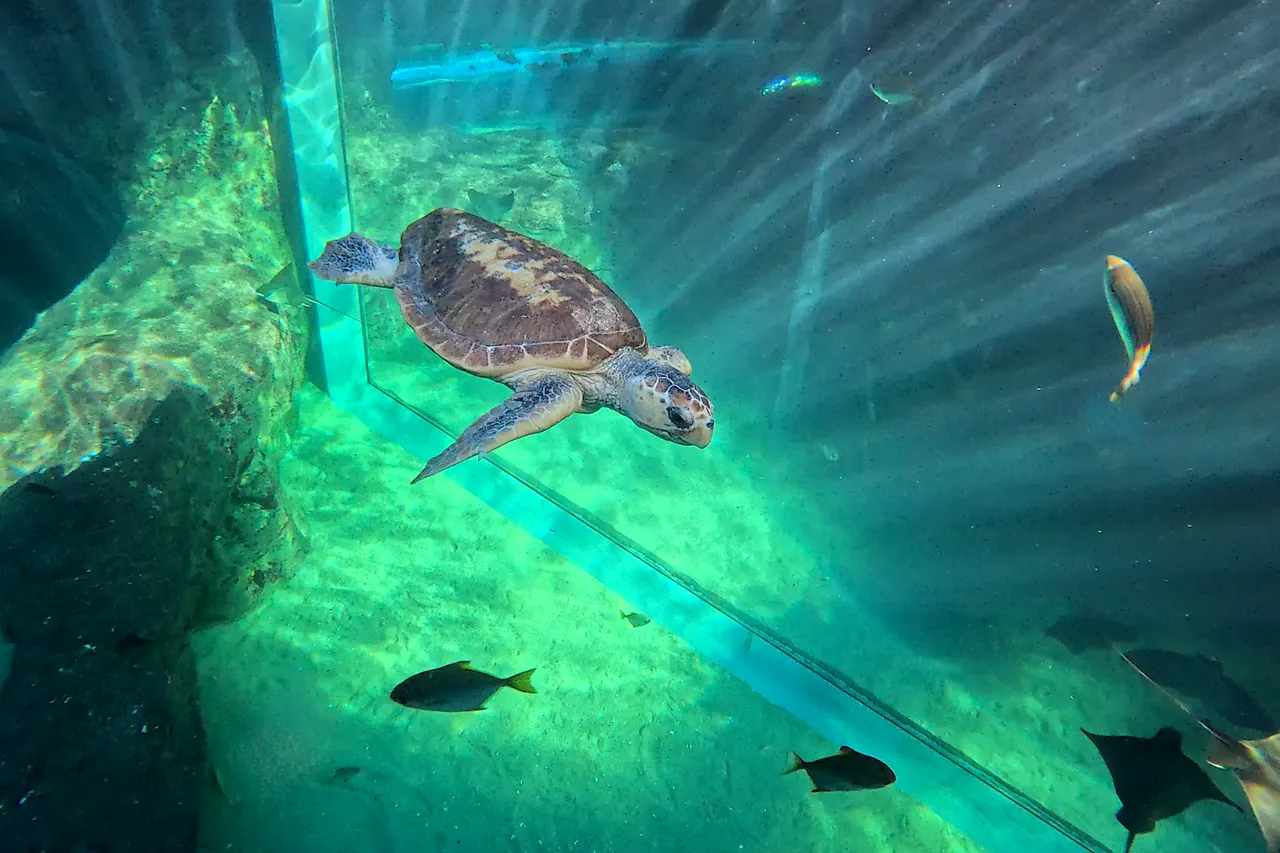
Nutmeg’s move into the Two Oceans Aquarium’s I&J Ocean Exhibit is a big milestone in her rehabilitation journey. This move allows her time to gain strength and weight, engage in natural turtle behaviours, and receive enrichment activities. This is a crucial step that helps our turtle team to monitor Nutmeg’s improvement and, eventually, gauge her readiness for release.
“We wanted Nutmeg to experience the ‘natural ocean’ environment after a year of rehabilitation. Her lung health and weight are going to be under continuous observation, as she is not yet cleared for release,” says Dr Bernice. “We have seen how long and hard she has been fighting back, so we are enthusiastically celebrating this move alongside her.”
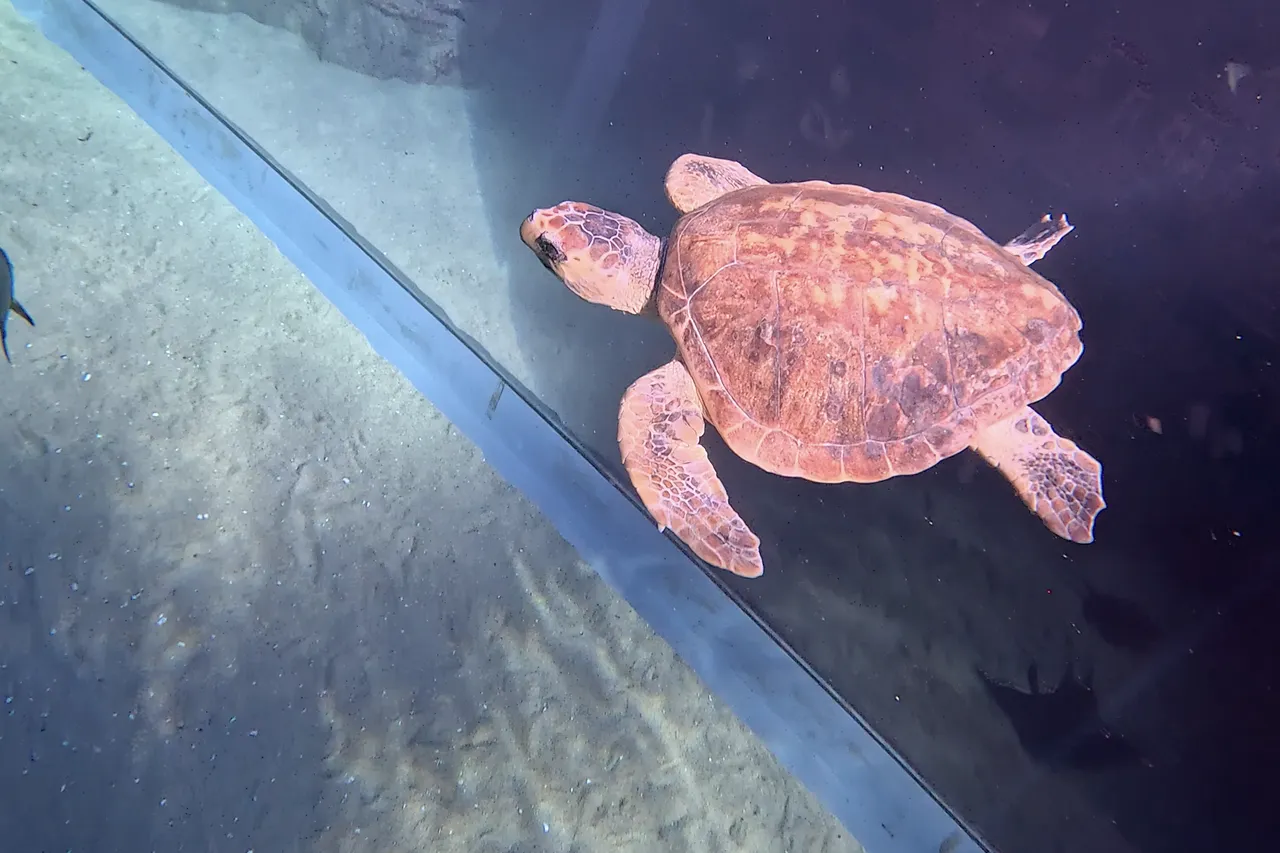
Each turtle’s journey to recovery is different. Some, like Nobomvu, have a rollercoaster rehabilitation that involves moving between the I&J Ocean Exhibit and the rehabilitation space before being ready for release. Others, like Nori, have a relatively linear journey, spending a few months in the I&J Ocean Exhibit before being given the go-ahead. For every patient, the team tailors a unique approach to getting them back on their flippers – for every patient, the goal is for them to return to their ocean home. Nutmeg’s move into the I&J Ocean Exhibit is a huge moment for her, and the team is optimistic for her continued recovery.
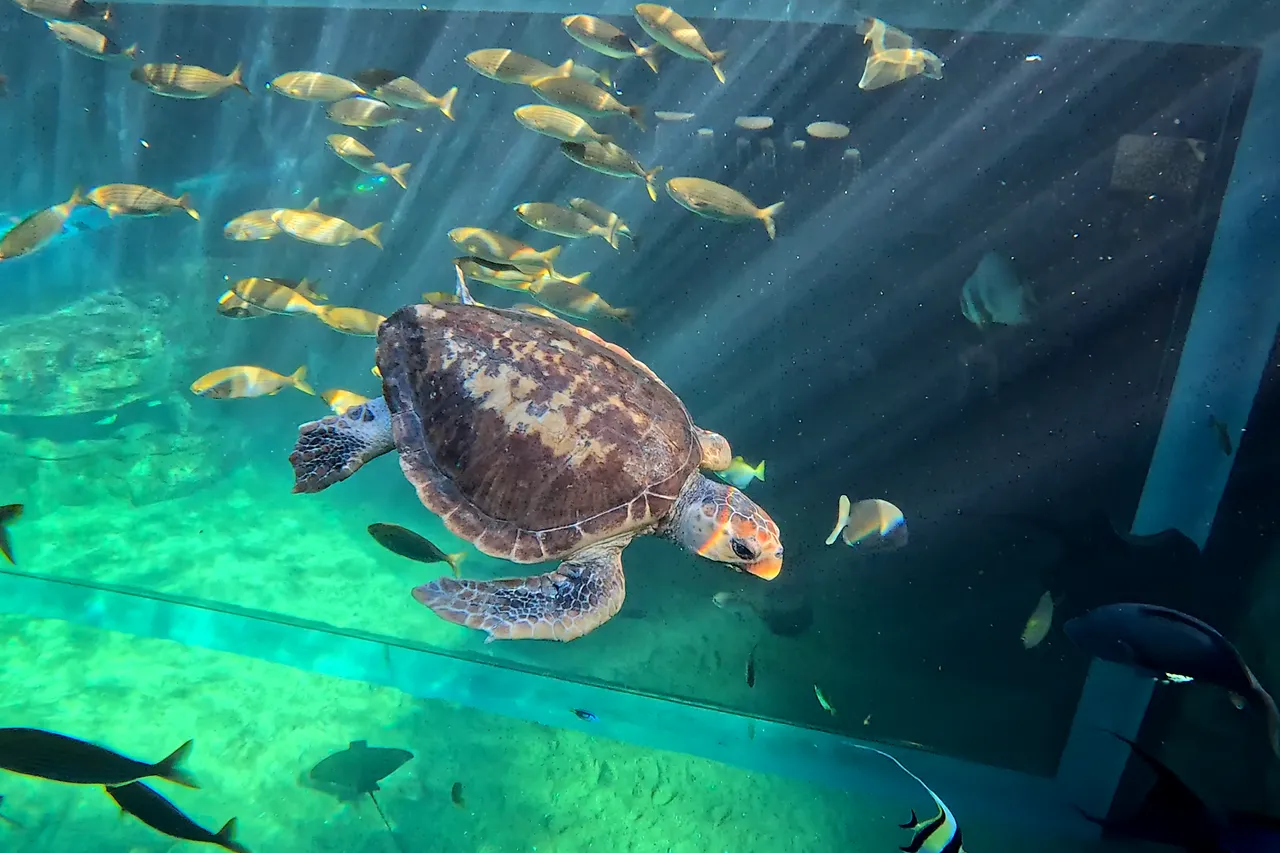
While Nutmeg settles into the open space of the I&J Ocean Exhibit, we invite our turtle community and Aquarium family to come and visit her. Stop by to meet Nutmeg as she glides through her temporary home alongside Kai, the ribbontail stingrays, and the musselcrackers.
Related News
Sign up to our Newsletter
Receive monthly news, online courses and conservation programmes.