Rescued loggerhead turtle Kai is released after six years of rehabilitation at our Turtle Conservation Centre
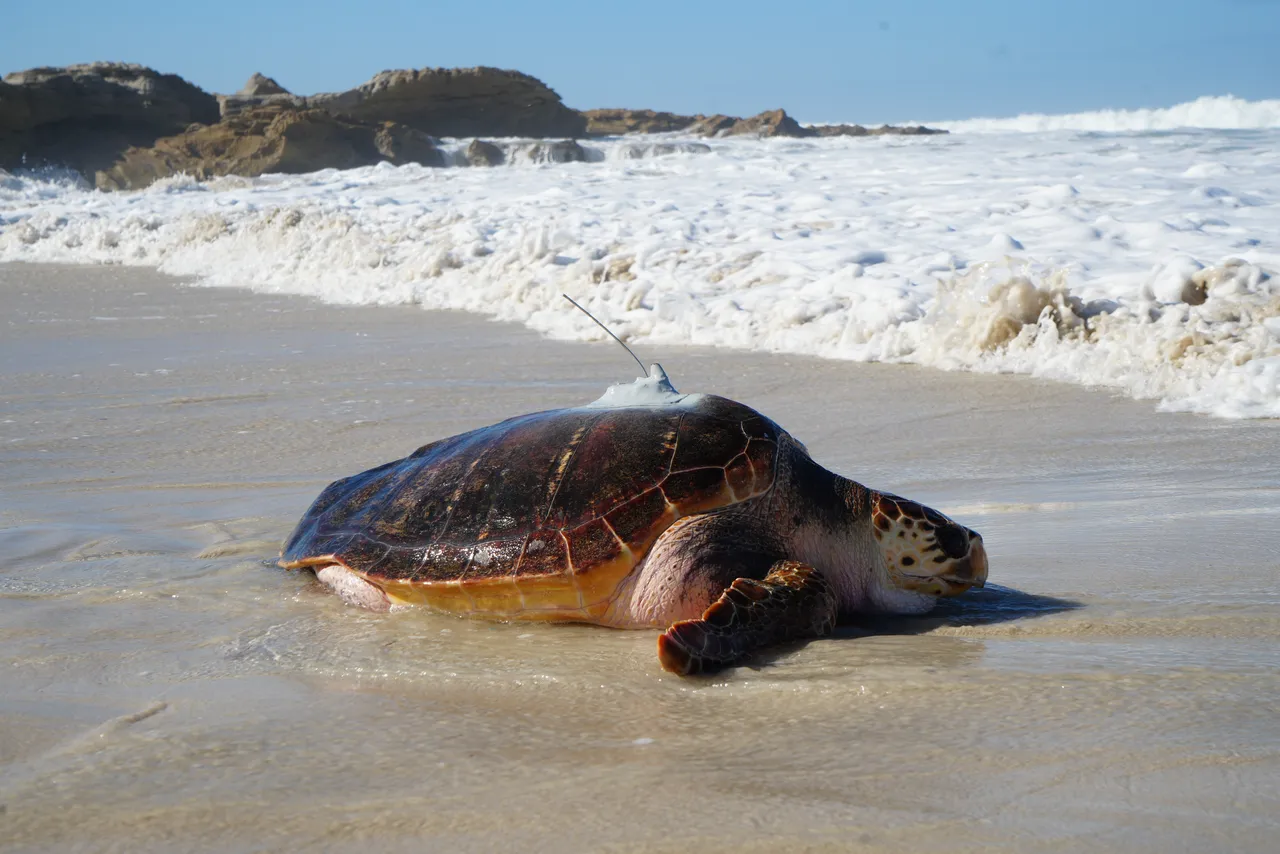
The Turtle Conservation Centre at the Two Oceans Aquarium recently celebrated a poignant milestone for one of our long-term rehabilitation patients. Kai, a juvenile loggerhead turtle rescued as a fragile hatchling in 2020, has finally returned to his ocean home!
When he was rescued in Struisbaai in November 2020, Kai weighed just 533g and was struggling with severe lung and buoyancy issues. Upon his release into the waters of De Hoop Marine Protected Area (MPA), strong and well-balanced, he weighed a very impressive 100kg.
“Kai’s story is one of resilience, innovation, and hope,” says Talitha Noble-Trull, Conservation Manager at the Two Oceans Aquarium Foundation. “Watching him swim back into the ocean after such a long journey was deeply emotional for everyone who played a role in his recovery.”
Only one or two in every 1 000 turtle hatchlings survive to adulthood, so Kai’s release is truly a milestone moment: He overcame these odds, and many more, to return to the ocean where he belongs. His remarkable recovery is the result of years of specialised medical treatment, rehabilitation, and unwavering dedication from the Turtle Conservation Centre team, as well as Kai’s indomitable spirit.
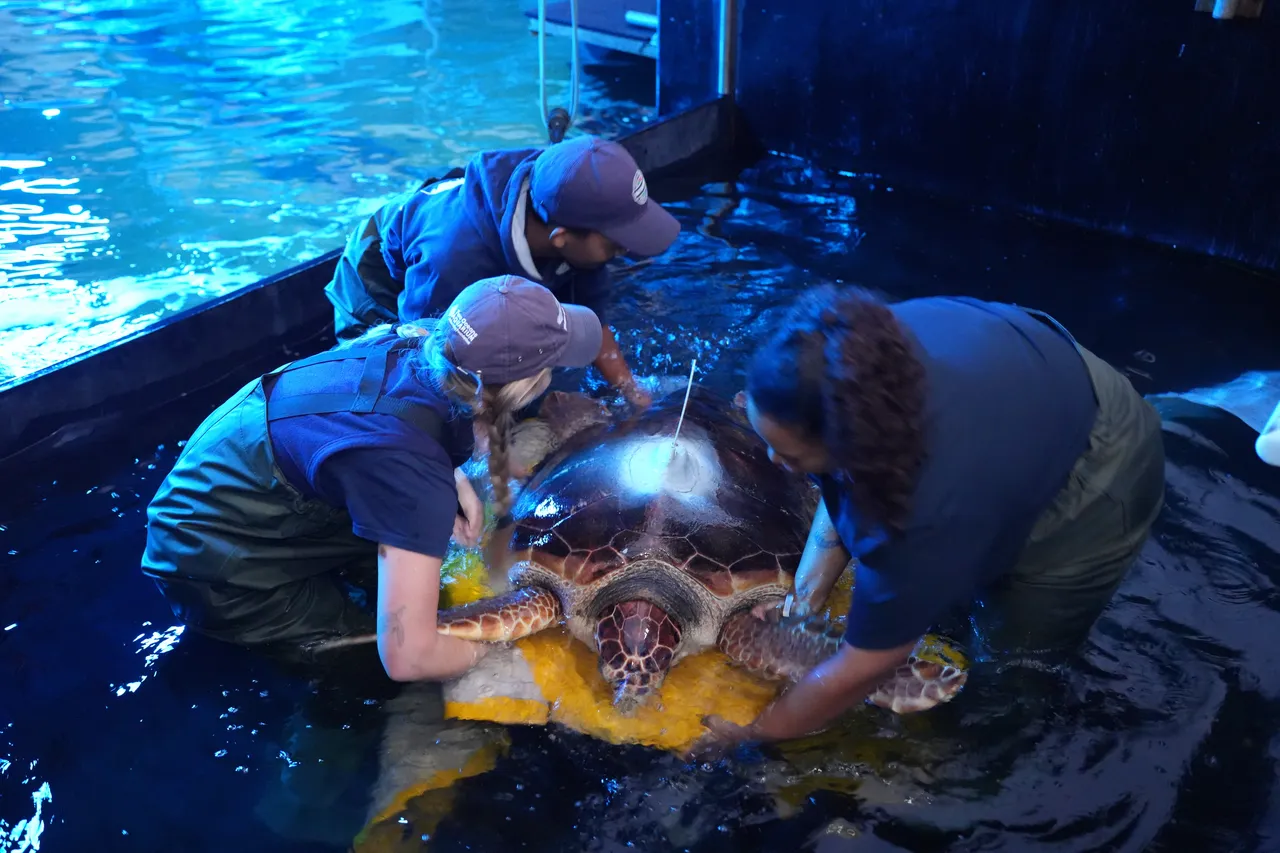
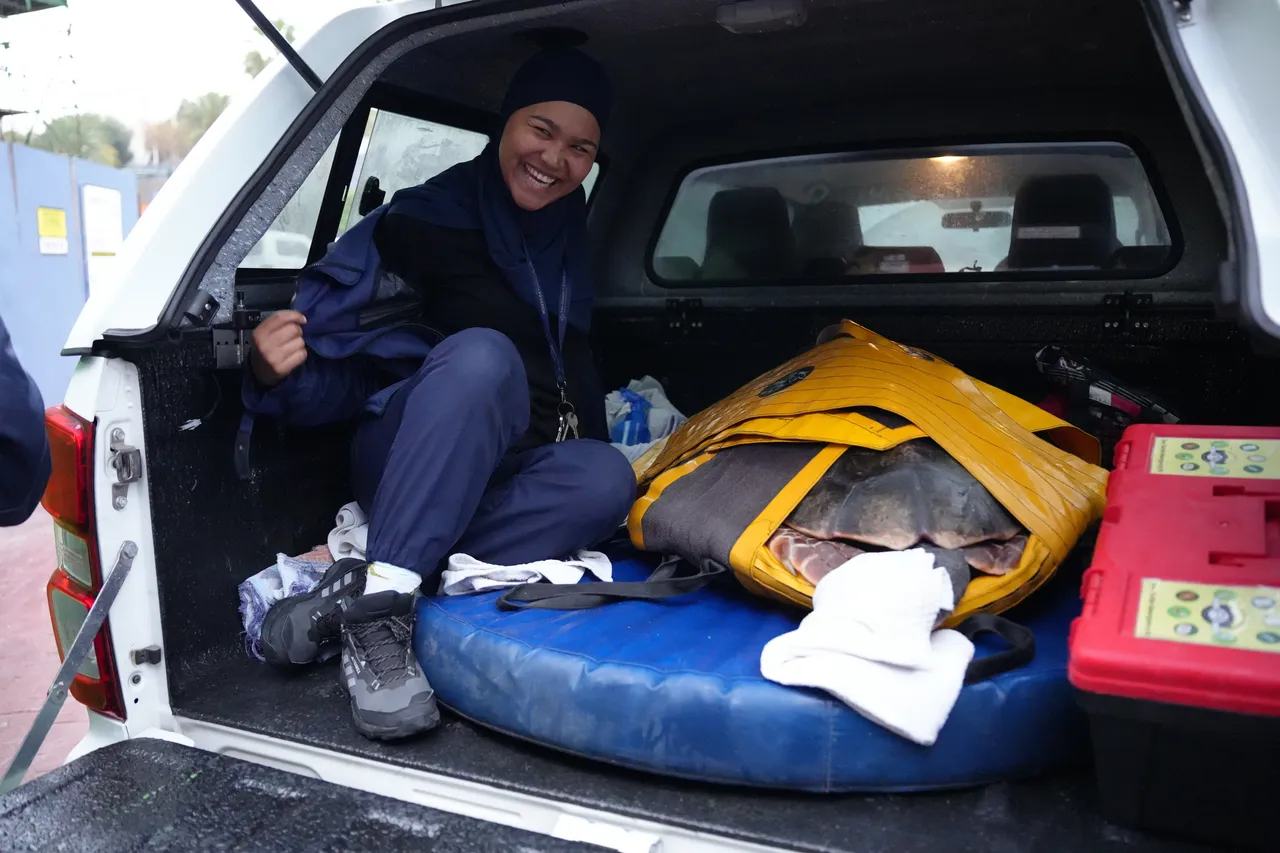
On the morning of release, 14 May 2026, Kai was carefully removed from his temporary home in the I&J Ocean Exhibit at the Two Oceans Aquarium, wrapped in a specially designed stretcher to keep him comfortable and safe, and placed on a soft mattress in the back of the bakkie. He was accompanied in the vehicle by Turtle Aquarist Razaan Samuels, who monitored him throughout the journey.
The De Hoop Marine Protected Area is a tried-and-tested release site for our Turtle Conservation Centre. Known for its rich marine biodiversity and warmer coastal waters, it provides an ideal environment for juvenile and subadult turtles transitioning back into the ocean.
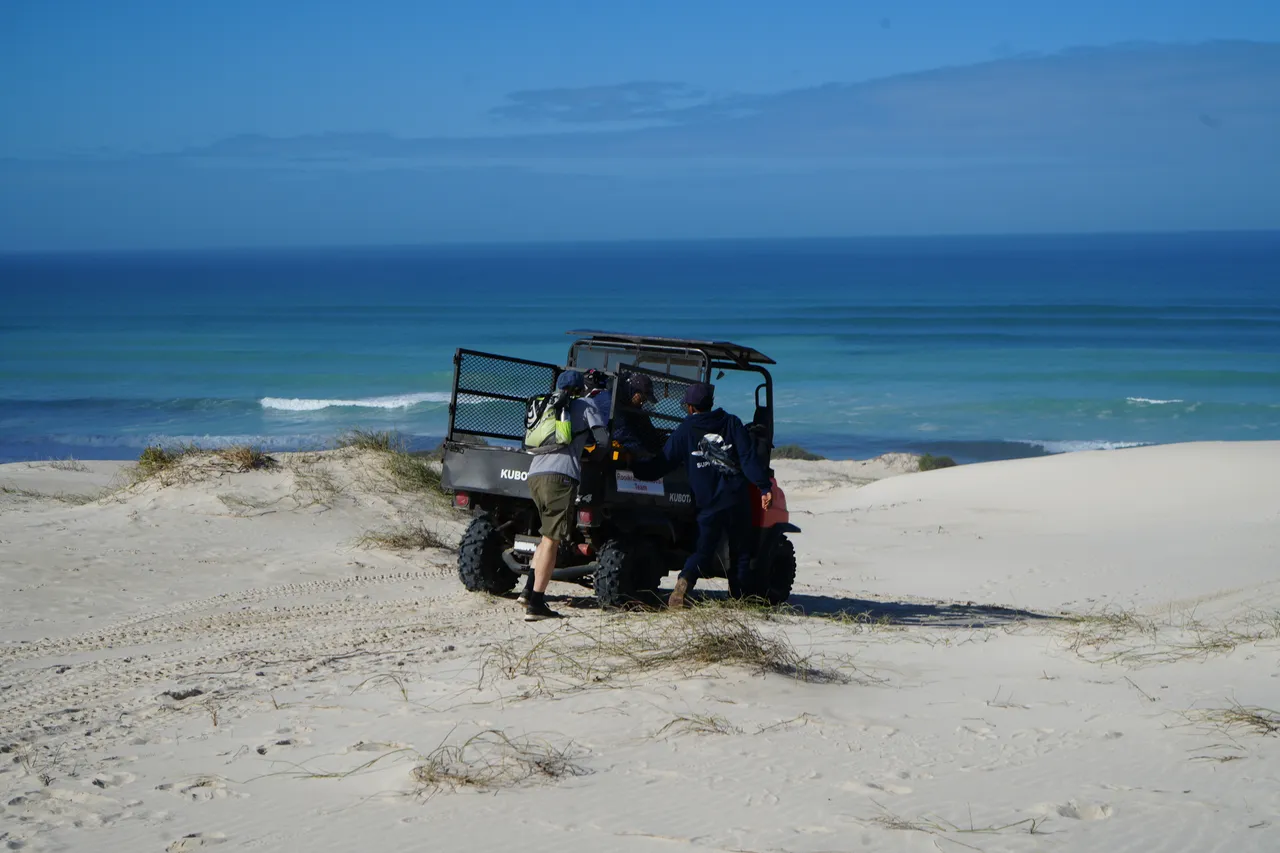
Upon arrival in De Hoop Nature Reserve, Kai and the team were welcomed by staff from Morukuru Family De Hoop, representing his adopters at Morukuru Goodwill Foundation, and several CapeNature rangers. Helping hands lifted Kai from the bakkie onto his second mode of transport for the day: A buggy that would carry him from the parking lot over the sand dunes! When the buggy reached a point where Kai’s weight would cause them to sink into the sand, he was transferred onto his third and final vehicle – the back of a quadbike – for the slow trip down the dune. Team members from the Turtle Conservation Centre, Morukuru Family De Hoop, and CapeNature walked on either side to keep Kai steady as they made their way towards the release site.
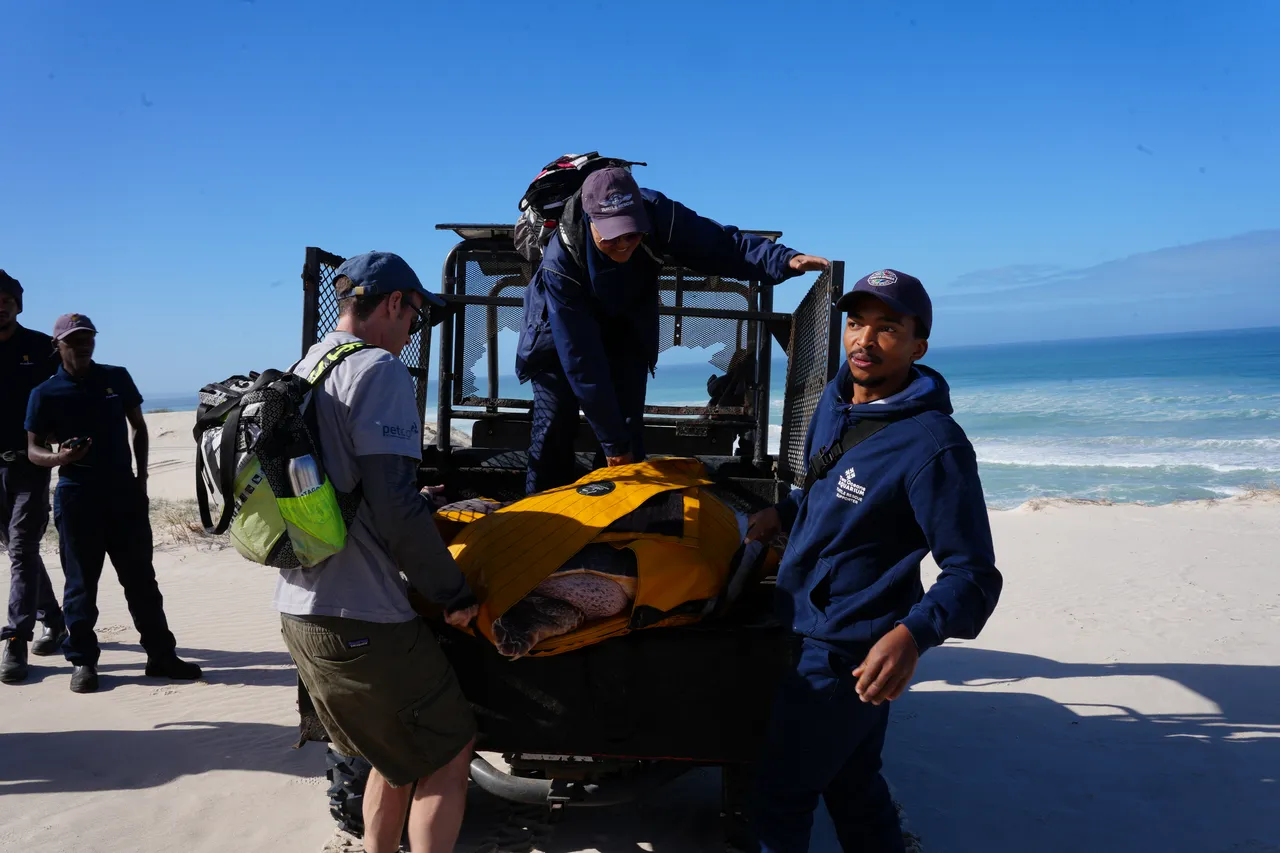
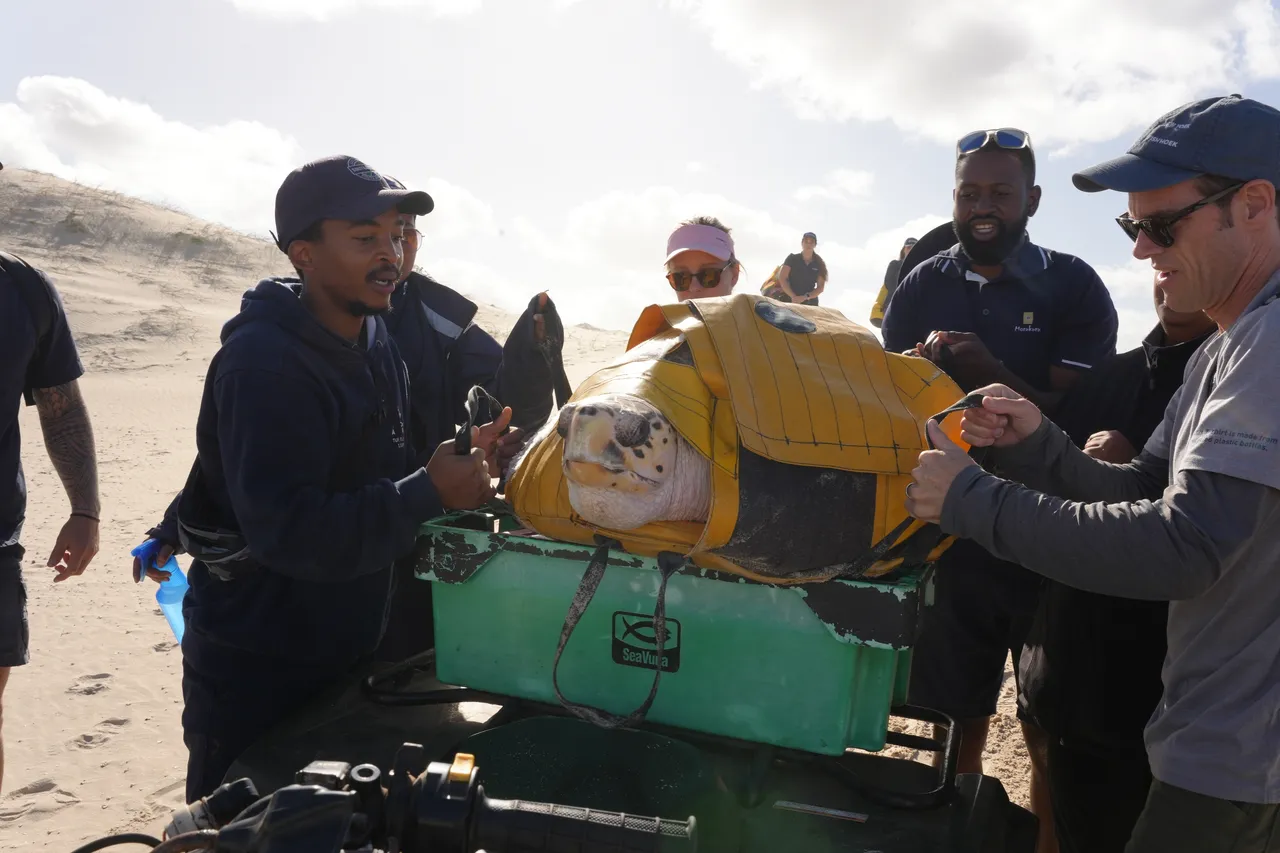
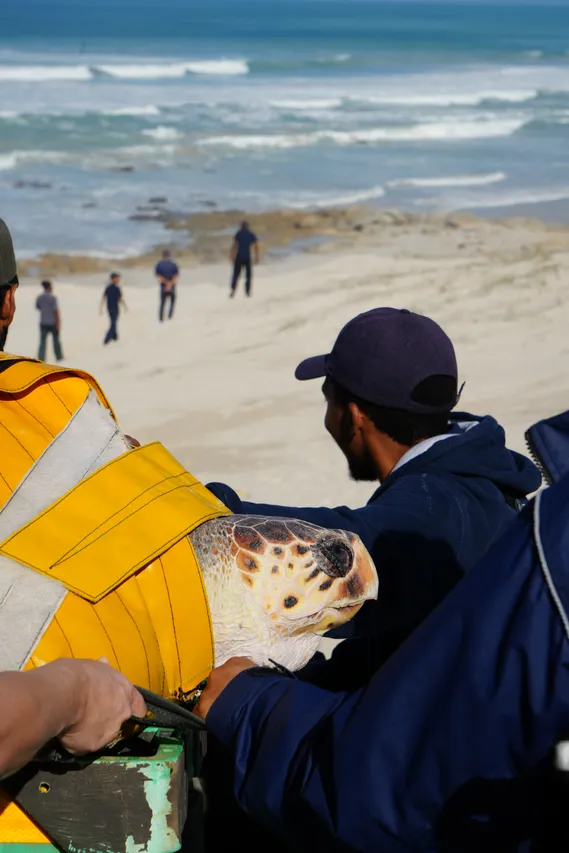
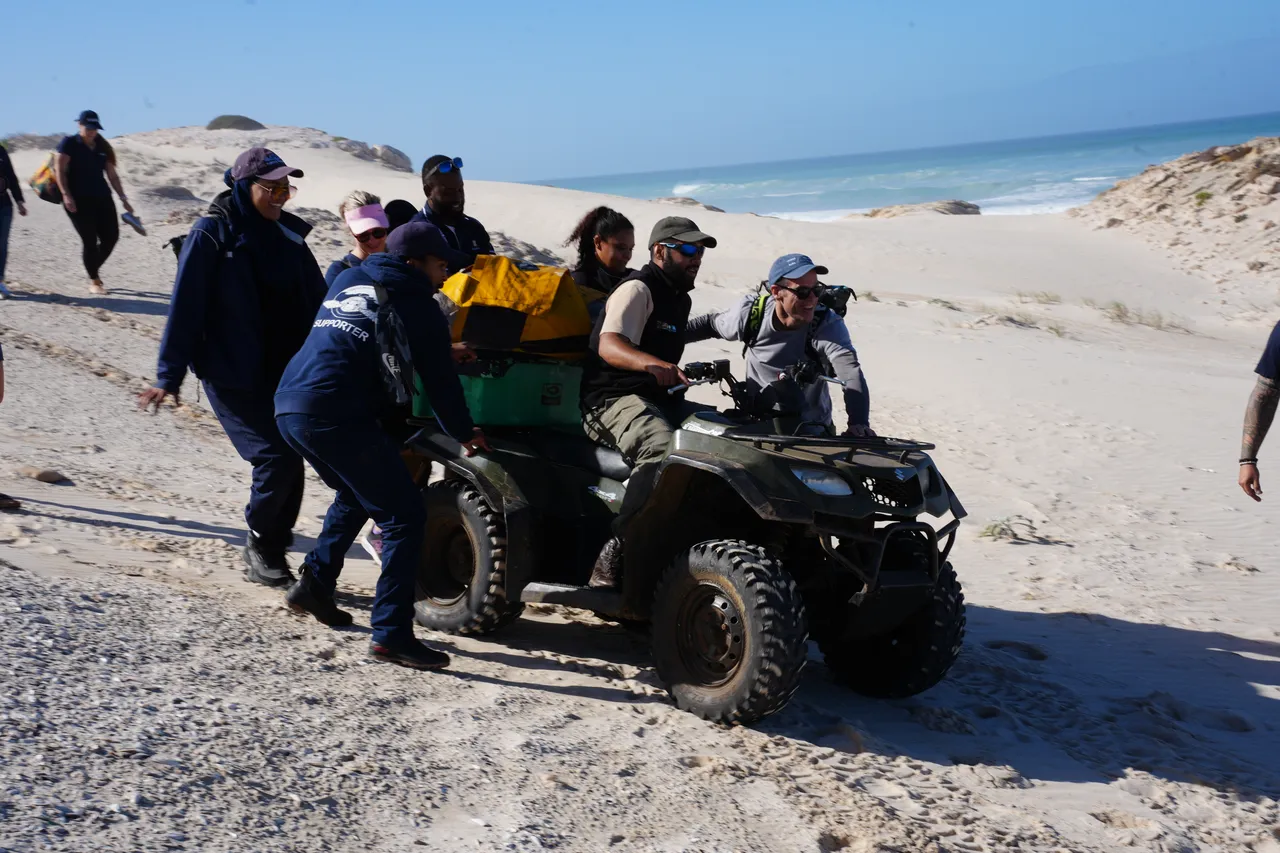
Once the group had reached the beach, Kai was gently placed on the sandy shore, watched by a small crowd of supporters. Nearly all the people in attendance had played a role in Kai’s recovery: From Turtle Rescue Network Coordinator Tracy Whitehead, who managed Kai’s rescue back in 2020, to dedicated physiotherapist Lorren Barham, who provided his physical therapy since 2023.
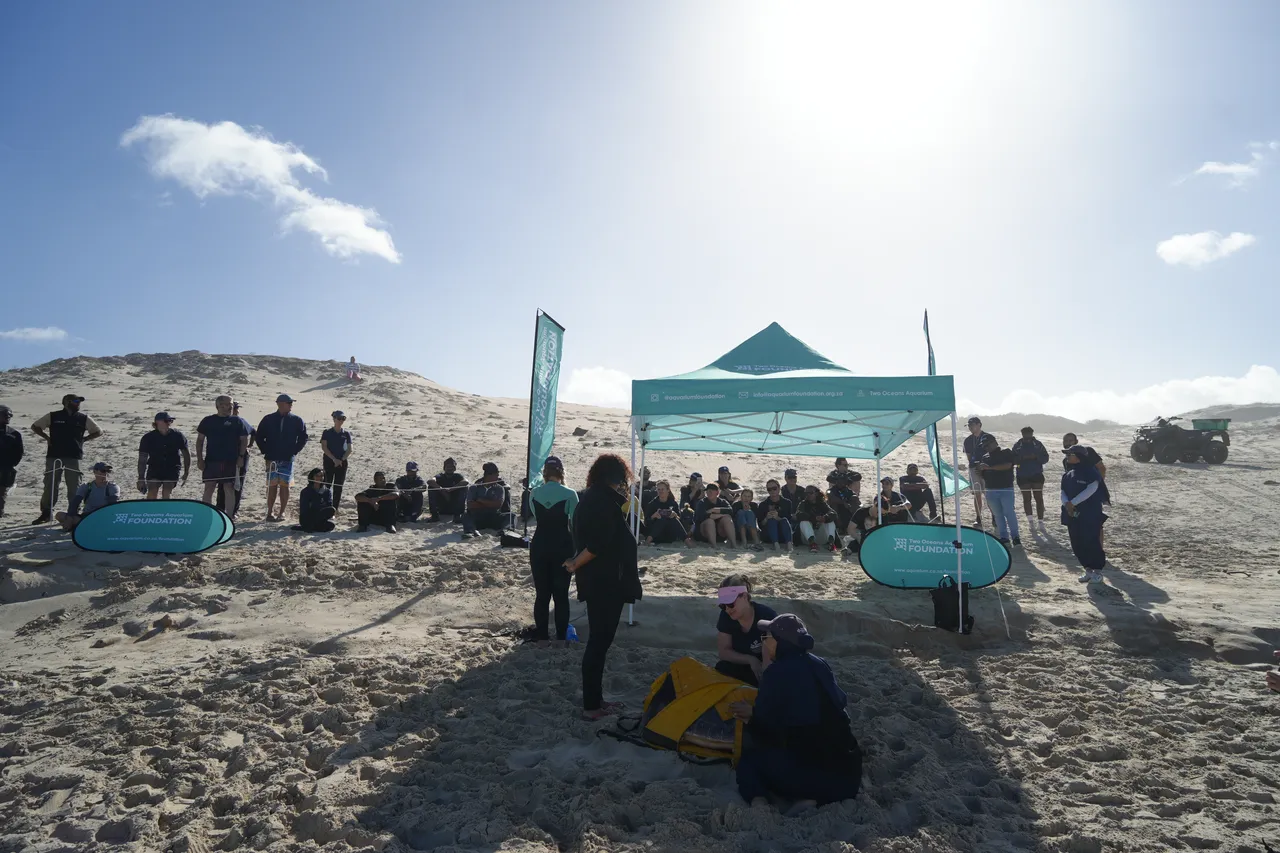
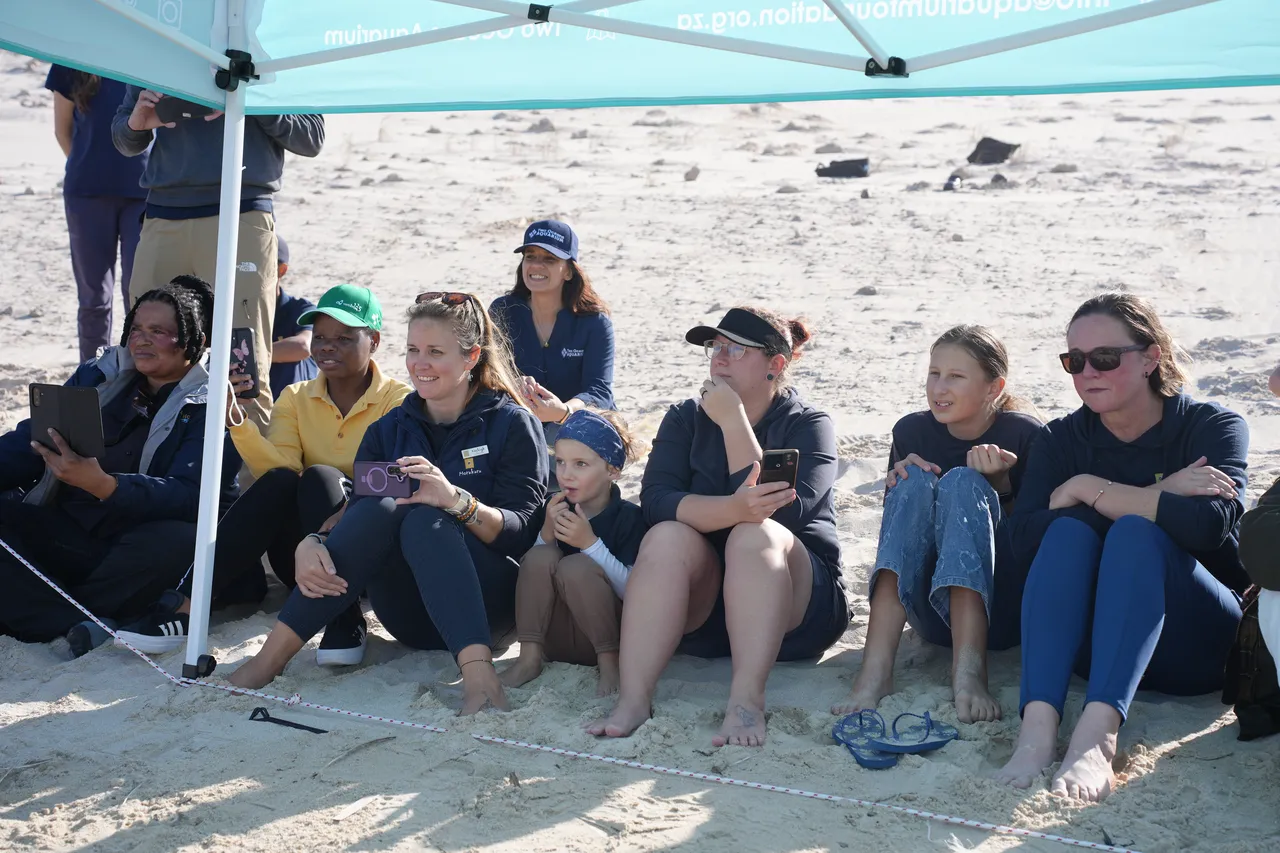
Addressing this special community of supporters, Talitha Noble-Trull, Ayesha Cornelius, and Laura du Toit from the Two Oceans Aquarium and Foundation reflected on Kai’s time in rehabilitation and his incredible impact. All the while, smelling the ocean, Kai began to push against his stretcher; he was ready to return home.
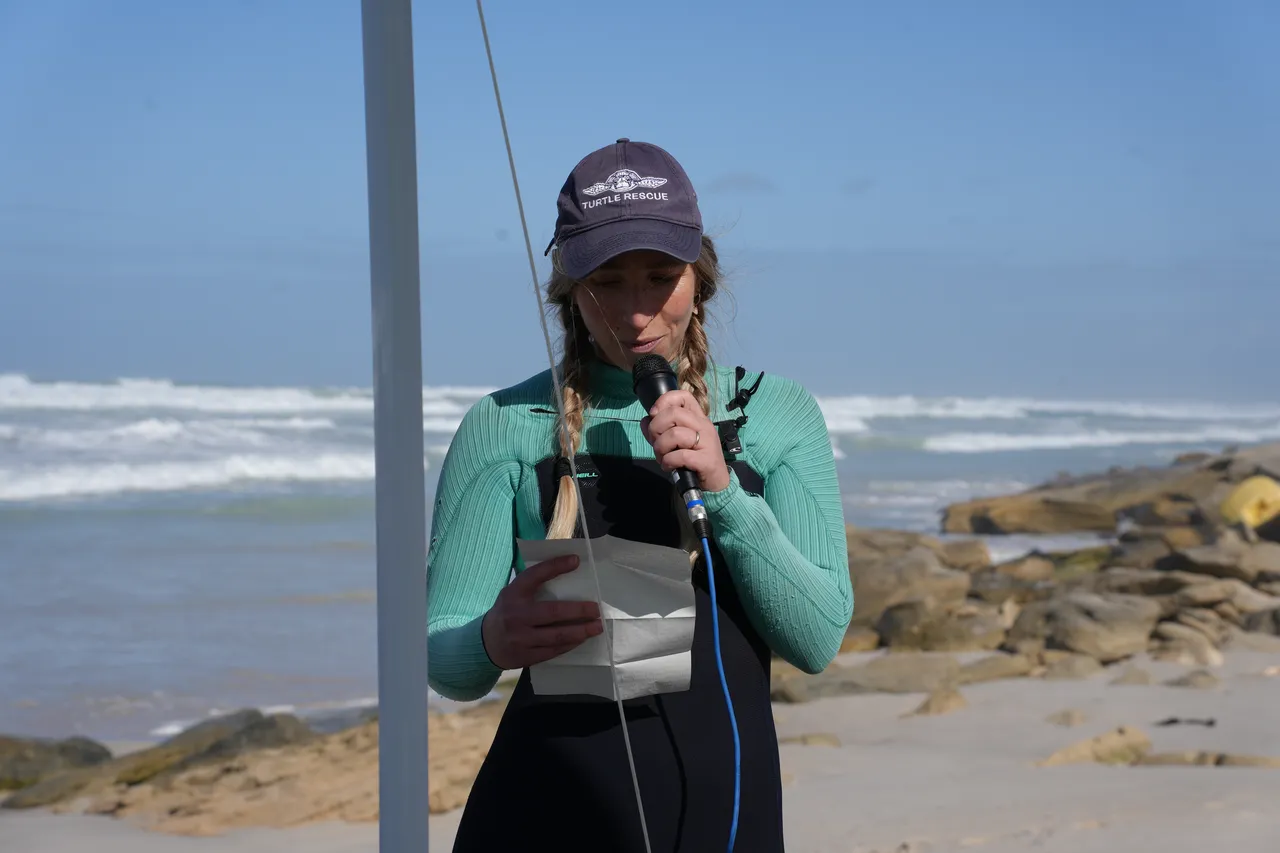
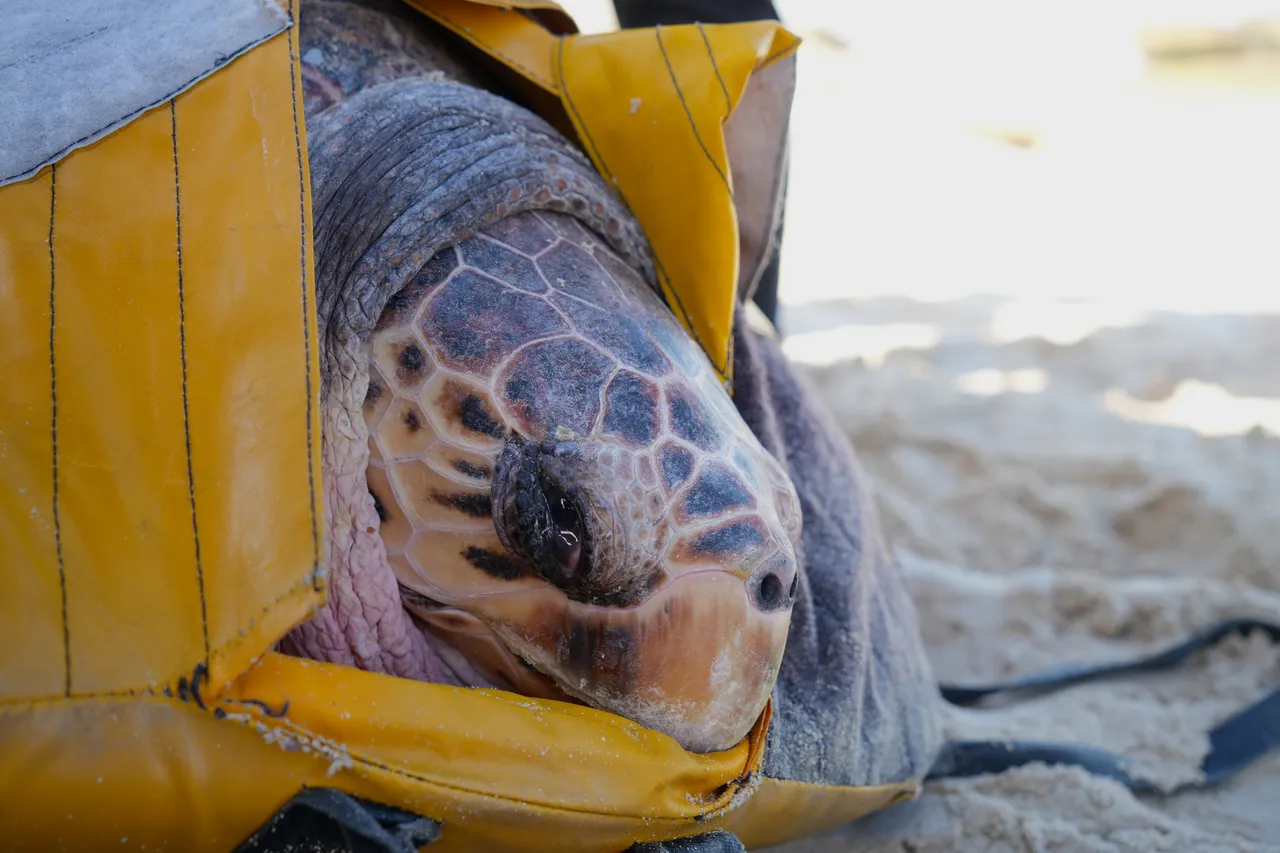
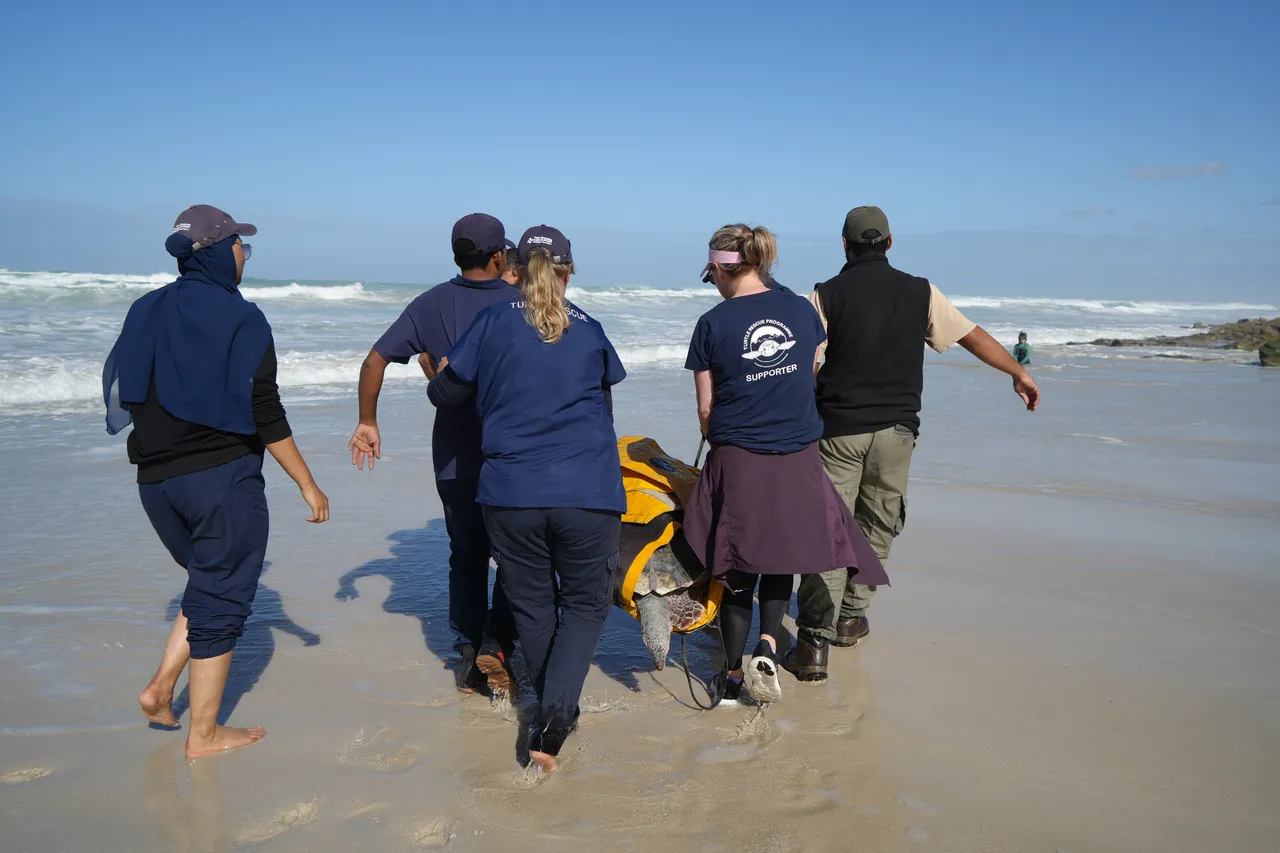
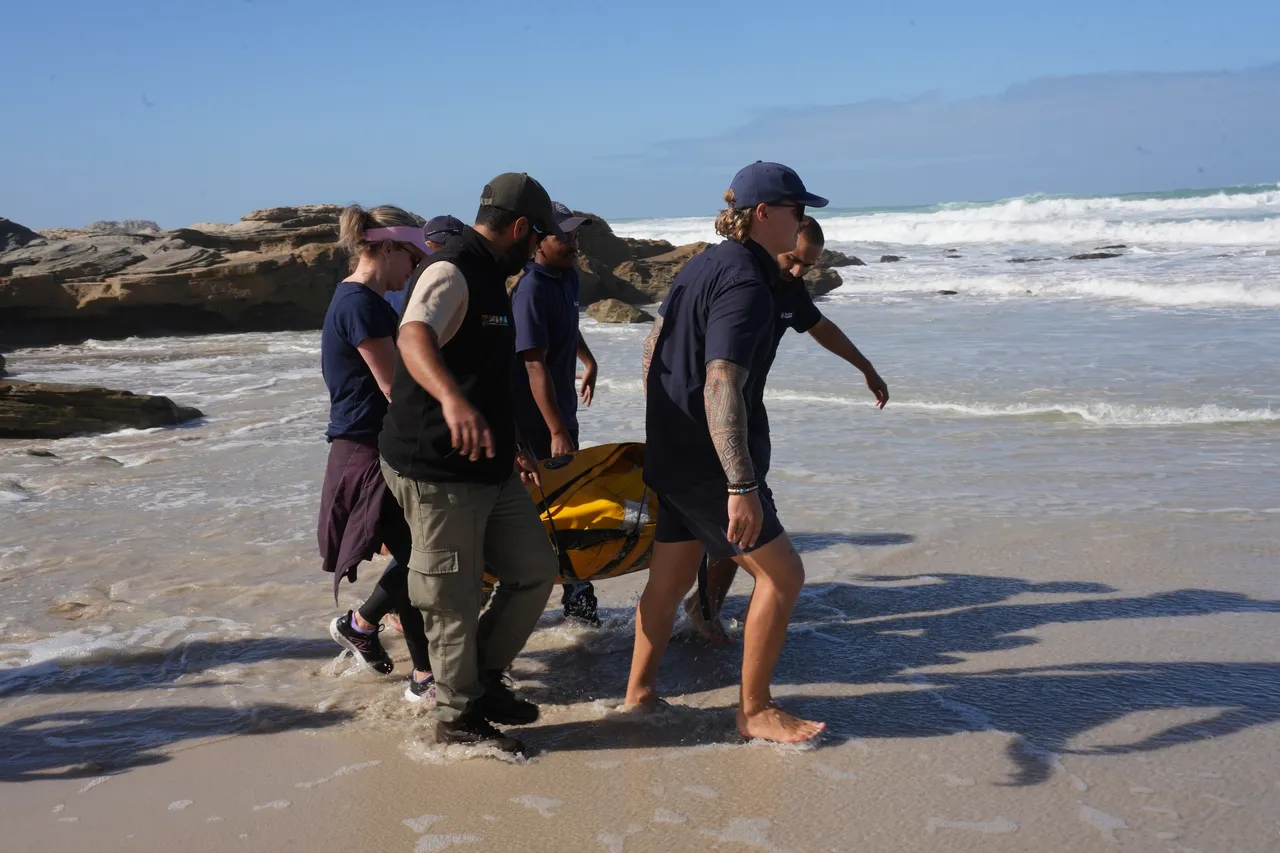
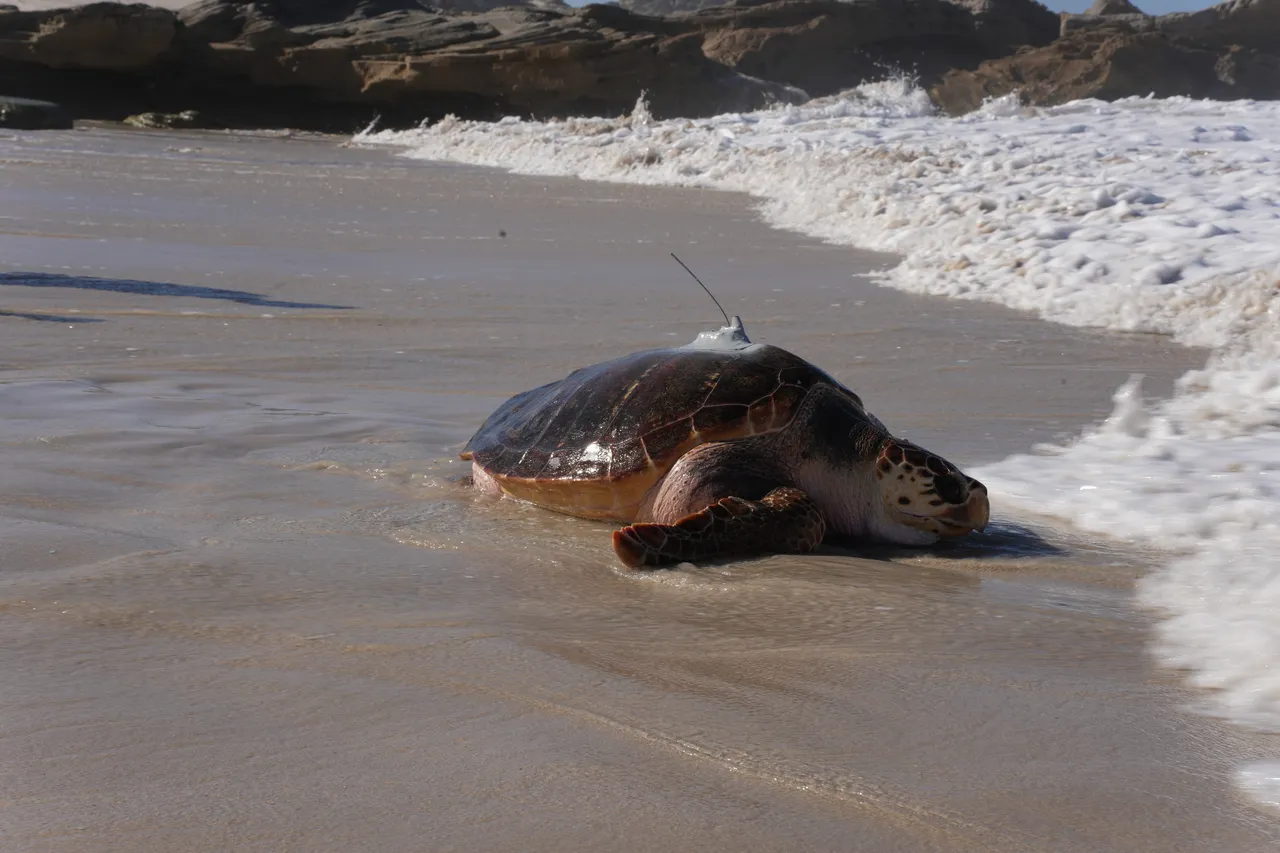
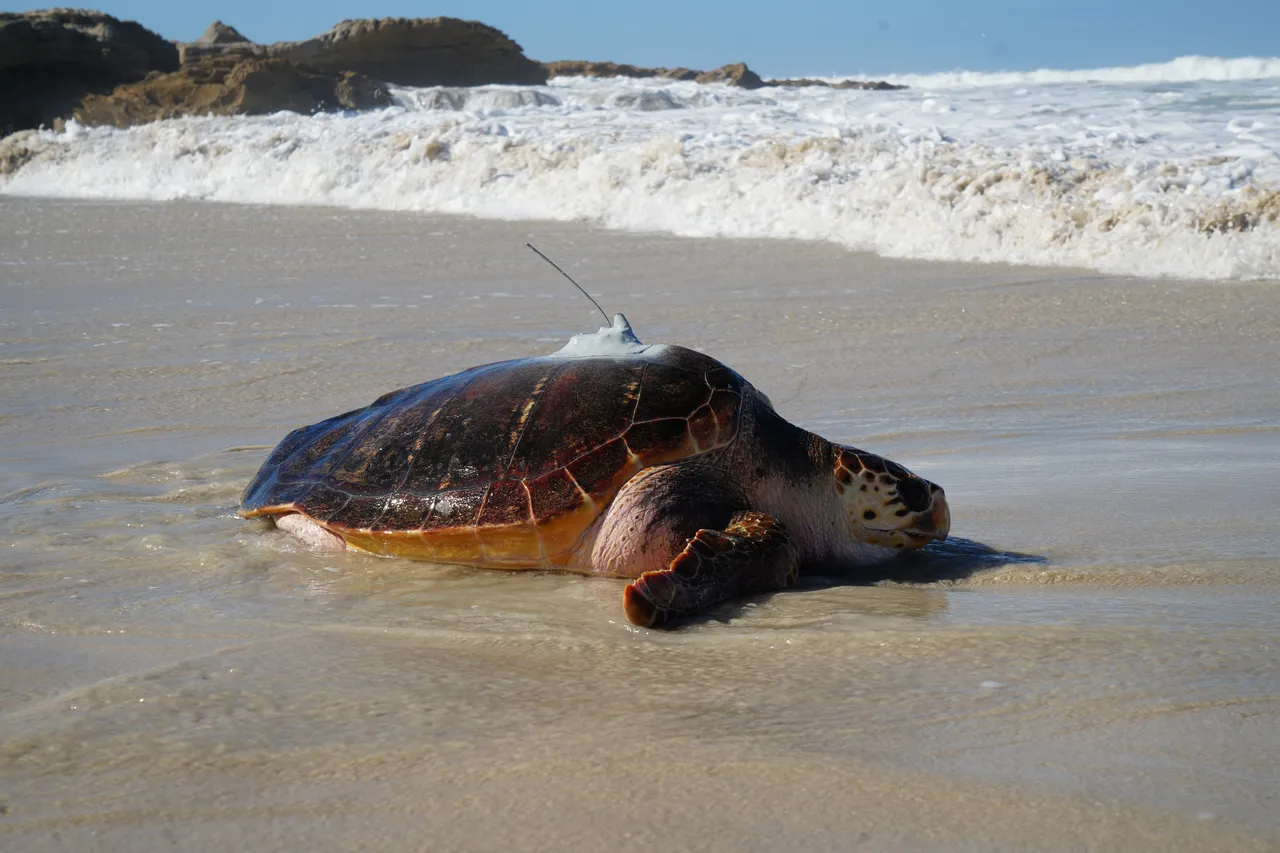
Lifting his stretcher, the team carried Kai closer to the waterline, where they unstrapped him before stepping back as his flippers touched the ocean again for the first time in six years. Without hesitation, Kai surged forward and swam strongly into the open ocean, finally back where he belongs.
As Kai disappeared beneath the waves, the moment served as a poignant reminder that every turtle rescued and released contributes to the future health of our oceans.
As ocean travellers, turtles play an important role in maintaining marine ecosystem balance by transporting nutrients between habitats. For the Turtle Conservation Centre team, Kai’s return to the wild represents more than the successful rehabilitation of a single turtle; it is an investment in the future of an endangered species. Once he reaches adulthood, we hope that Kai will contribute to future generations of loggerhead turtles, helping sustain wild populations for years to come.
His release also highlights the impact of collaborative marine conservation efforts.
Thanks to the support of his adopters, the Morukuru Goodwill Foundation, Kai was fitted with a satellite tag before his release. The tag will allow the Turtle Conservation Centre team to track his movements and gather valuable data on how rehabilitated turtles adapt after returning to the wild. Insights gained from Kai’s journey will contribute to ongoing sea turtle conservation and research along the South African coastline.
“We are hugely excited to see where Kai ventures first, considering that he was last in the wild ocean six years ago as a young hatchling,” says Talitha Noble-Trull.
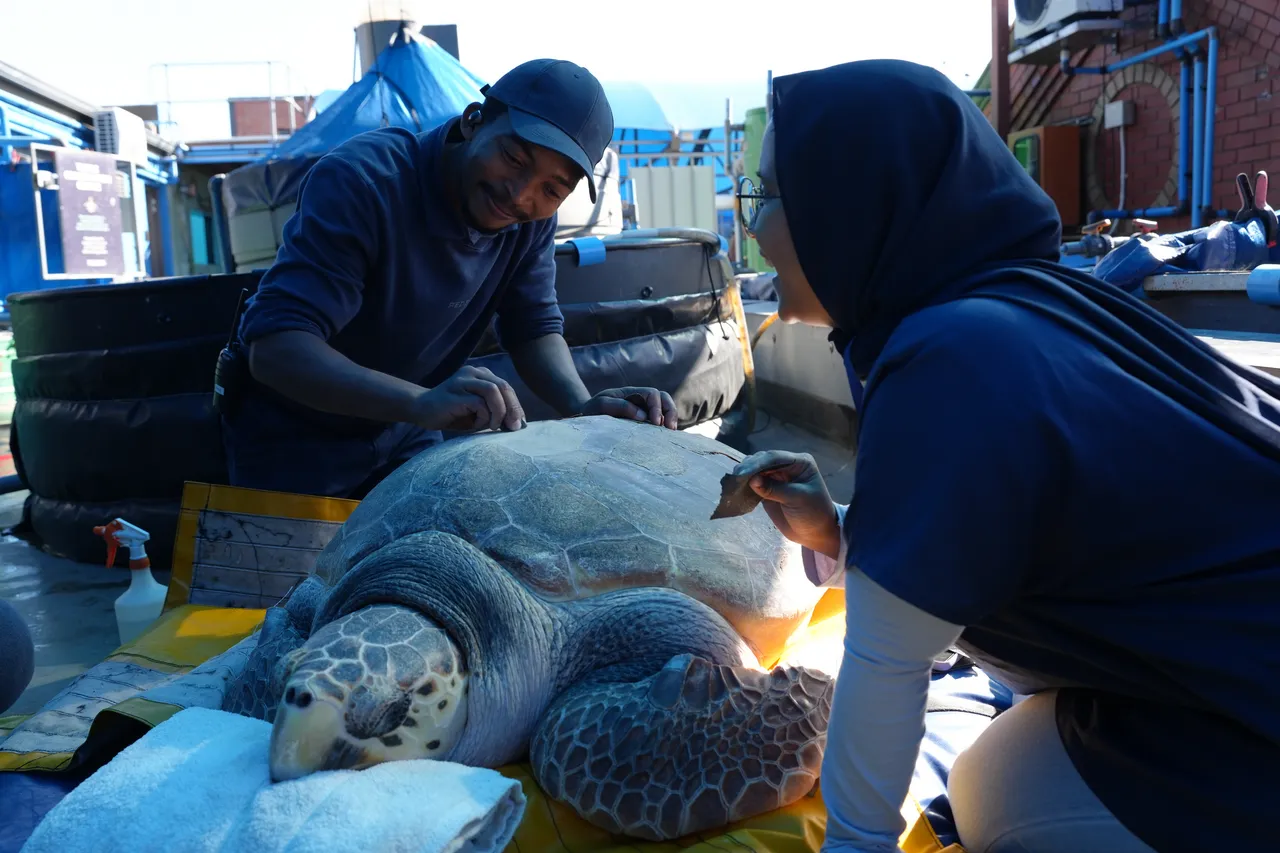
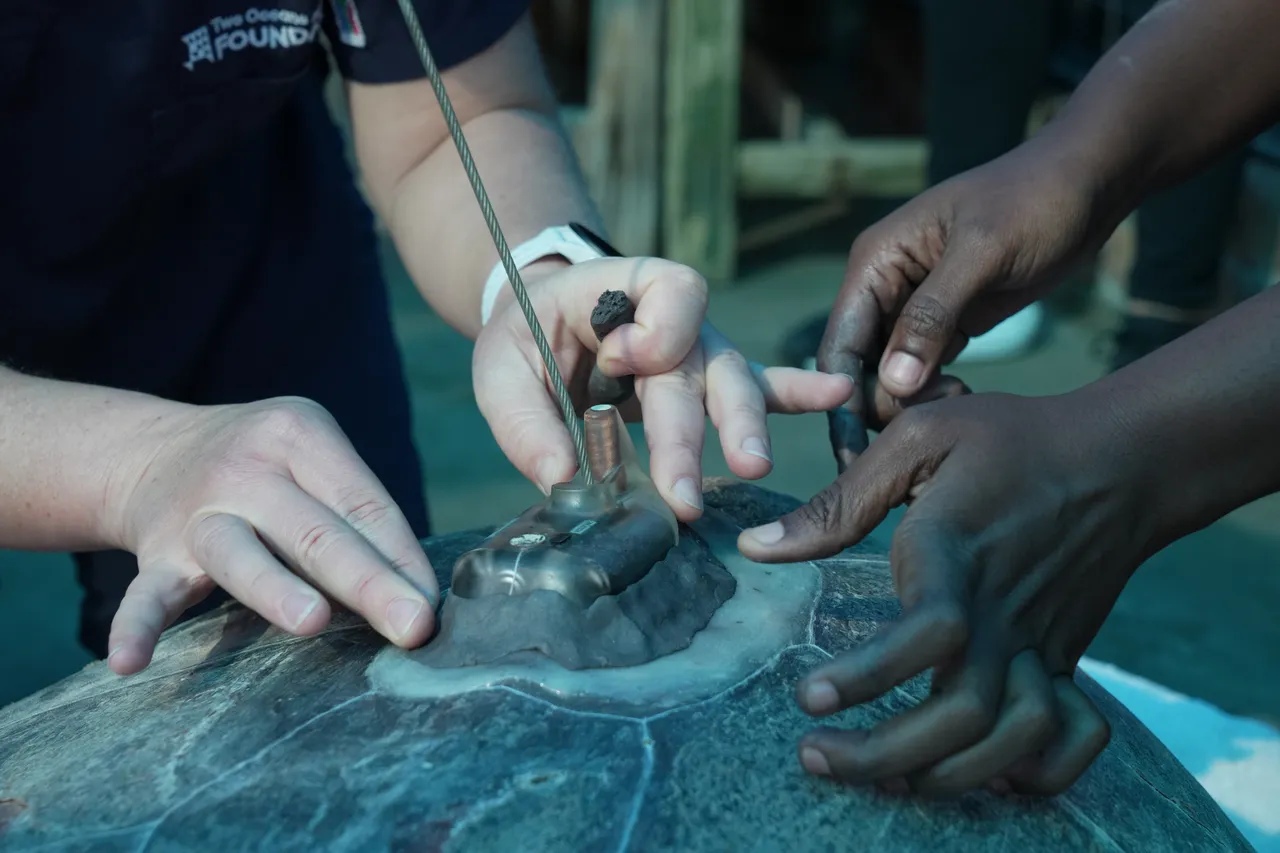
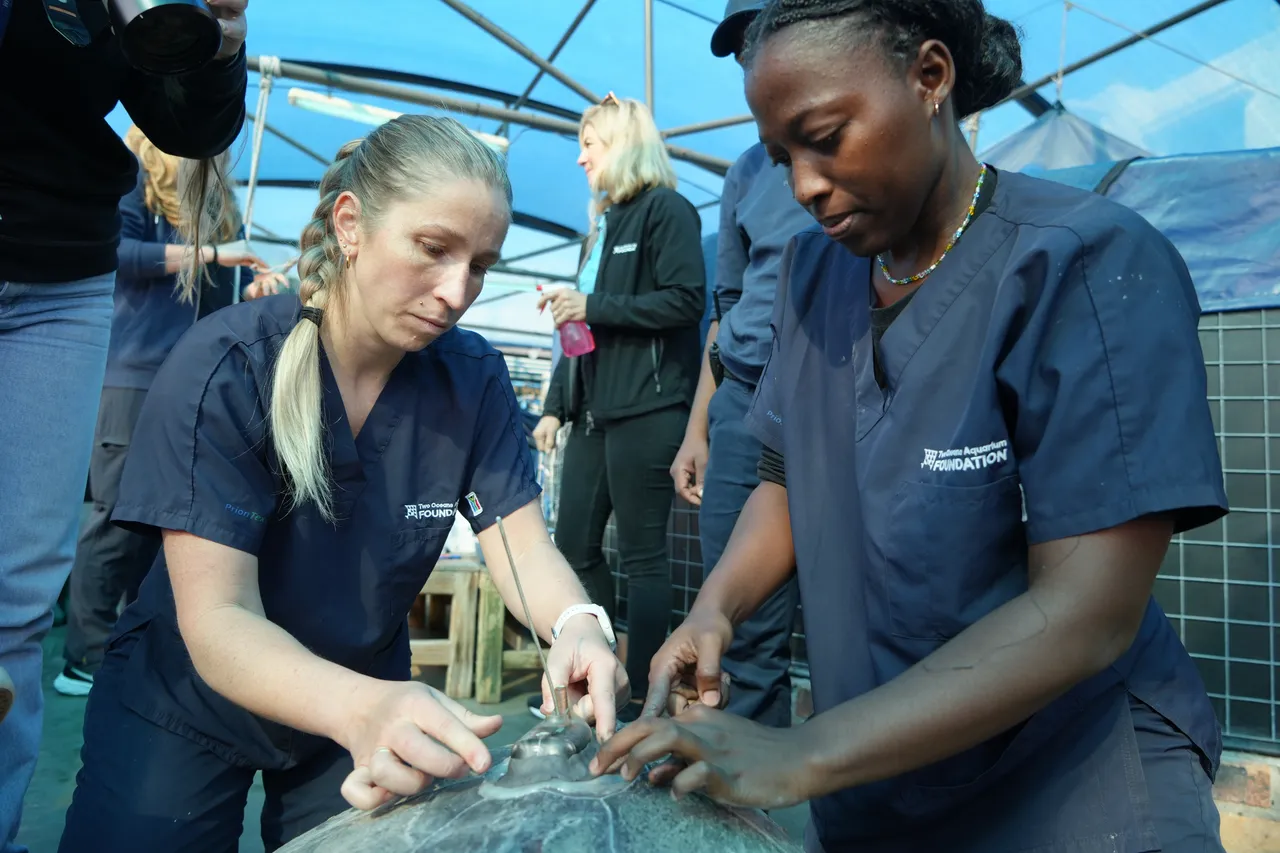
The entire turtle team got involved in the satellite tagging process.
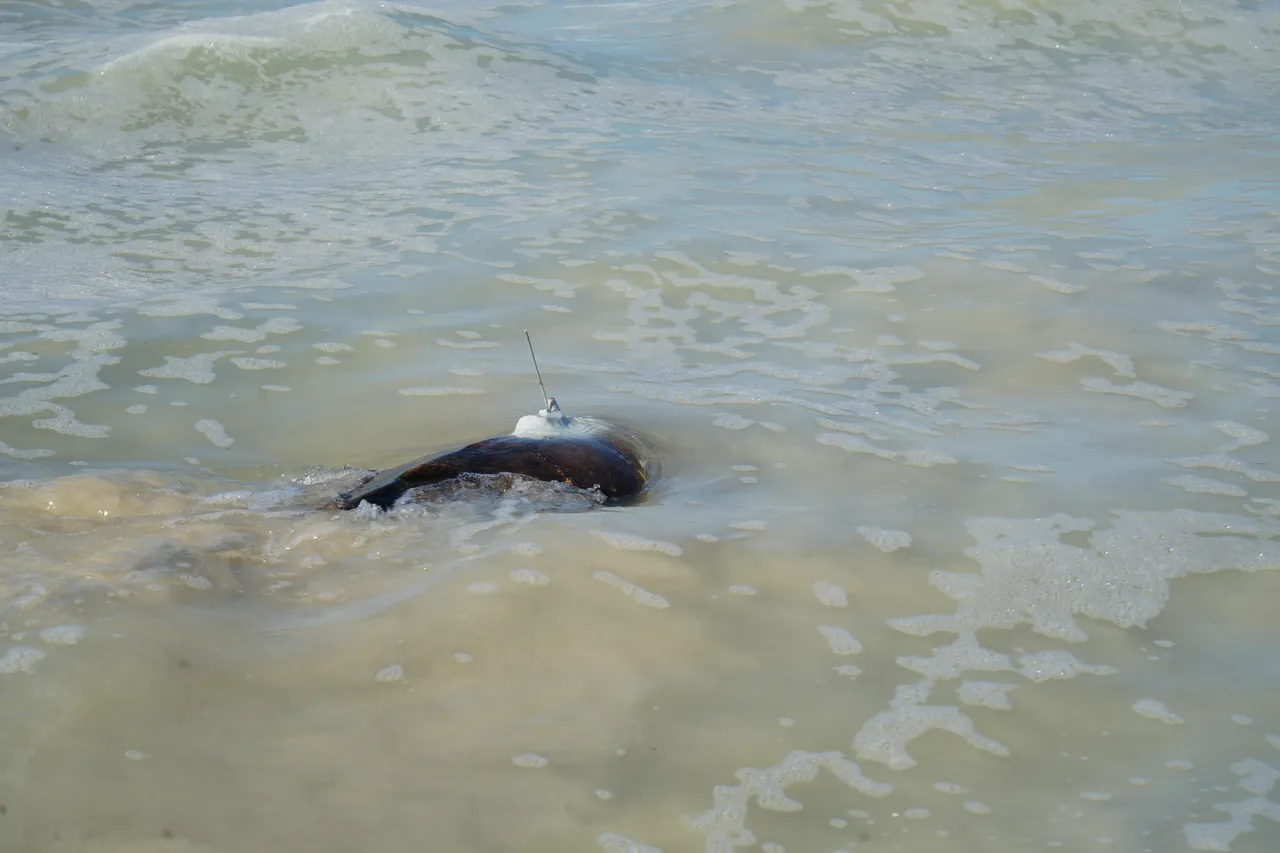
Kai’s journey to release
Kai’s rehabilitation journey was unlike any other. When he arrived at the Turtle Conservation Centre as a hatchling, it was immediately clear he was different. He struggled intensely with balance, often floating nearly vertically in the water.
Initial diagnostic scans revealed severe buoyancy issues caused by uneven lung development and recurring infections, leaving him unable to swim or dive normally. Although our turtle vet, Dr Bernice van Huyssteen, successfully treated the infection, the difference in Kai’s lung sizes remained an ongoing challenge. This little turtle needed serious intervention over and above our routine rehabilitation practices, which include quality nutrition, expert medical care, and regular enrichment activities to stimulate wild behaviours.
Over the years, Dr Bernice and the Turtle Conservation Centre team worked tirelessly to develop innovative solutions to improve Kai’s mobility and quality of life. The first of these interventions was fitting specially designed ballast weights to his right side, reducing the need for his stronger lung to compensate and allowing the weaker lung to strengthen. Kai’s treatment also included regular physiotherapy, which reduced stress on his lungs, improved movement and stability, and increased blood flow to compromised tissues.
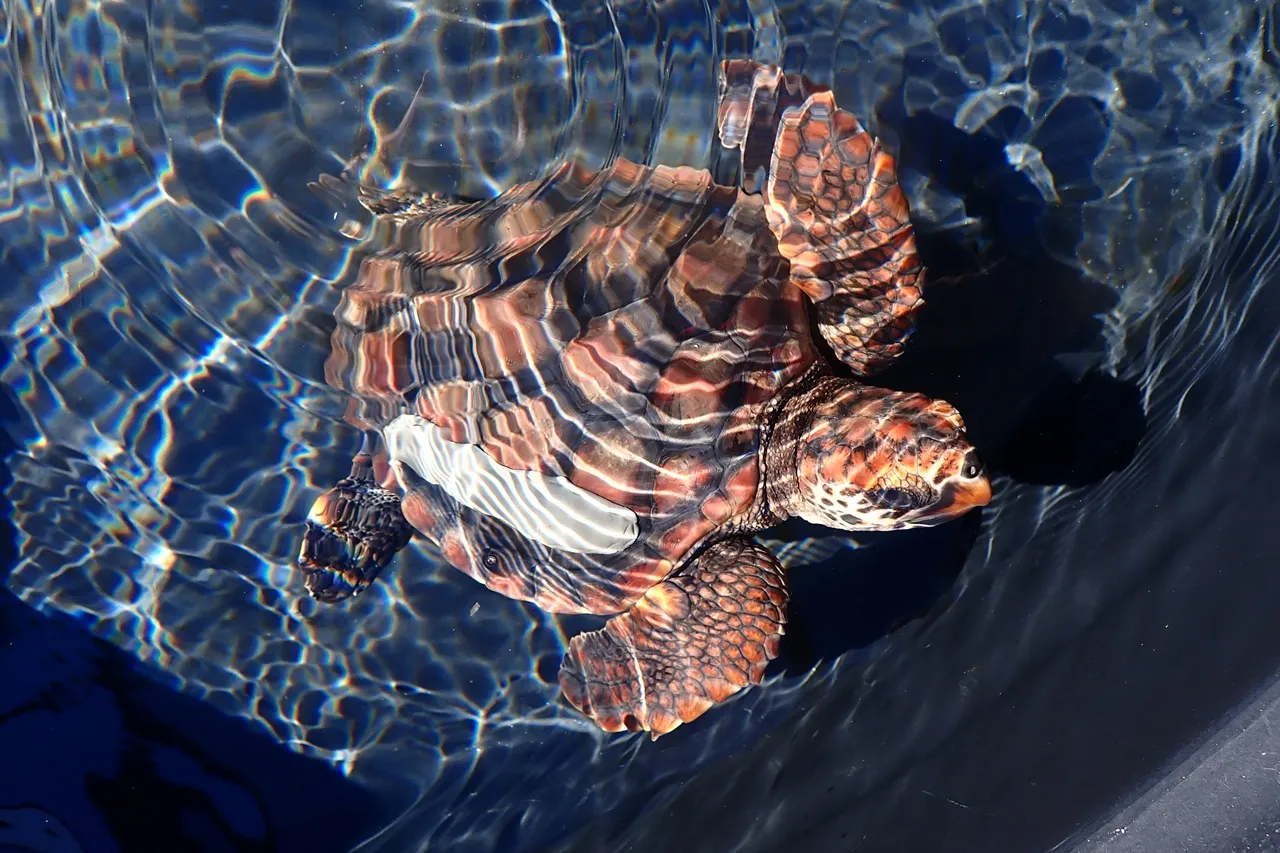
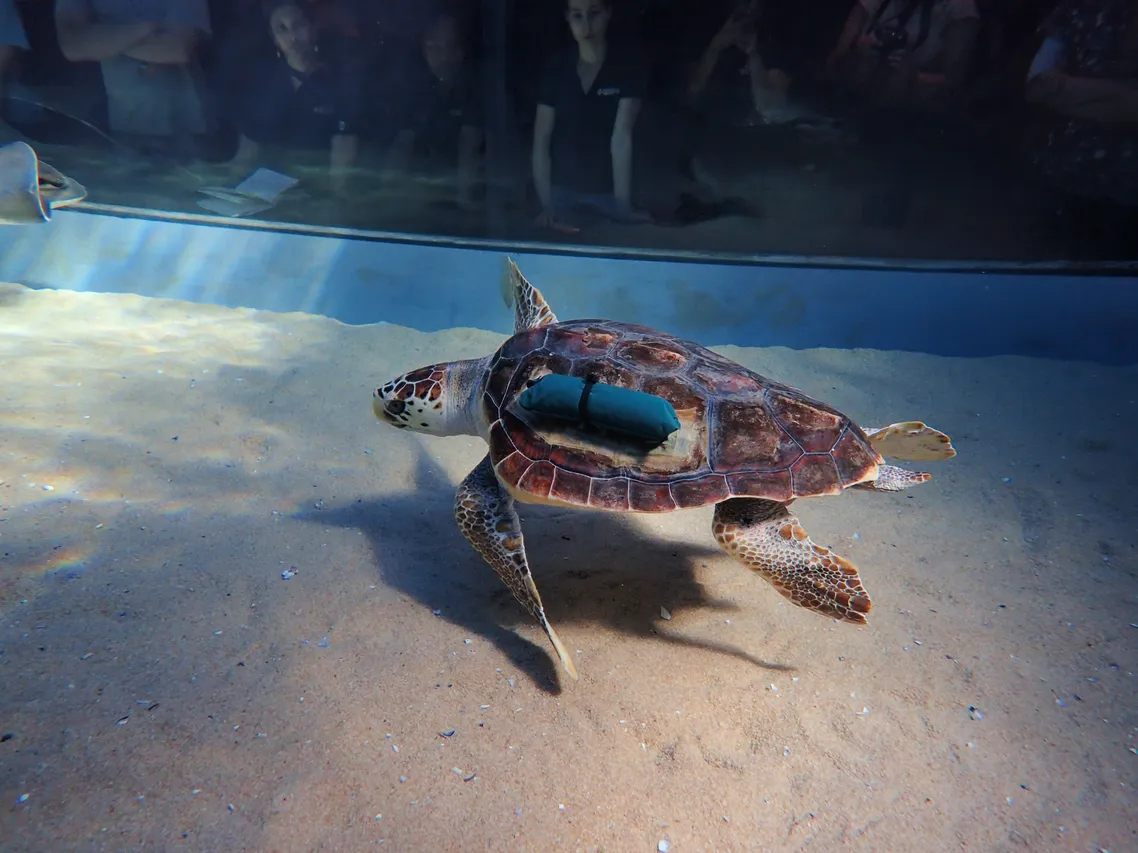
Later along on his rehabilitation journey, physiotherapist Lorren suggested adding a “floaty” to Kai’s weaker side instead of weighing down the stronger one. A modified pool noodle fitted to Kai’s carapace (top shell) improved his equilibrium and stability without drag, and his buoyancy noticeably improved.
In 2025, an animal prosthetics specialist from Animotion created a custom buoyancy device designed to mirror the shape of Kai’s stronger side. Made from high-density foam encased in a durable outer shell, the device improved water flow, compensated for the weaker side, and ensured comfort without damaging his carapace. The breakthrough device dramatically improved Kai’s balance in the water and paved the way for his release.
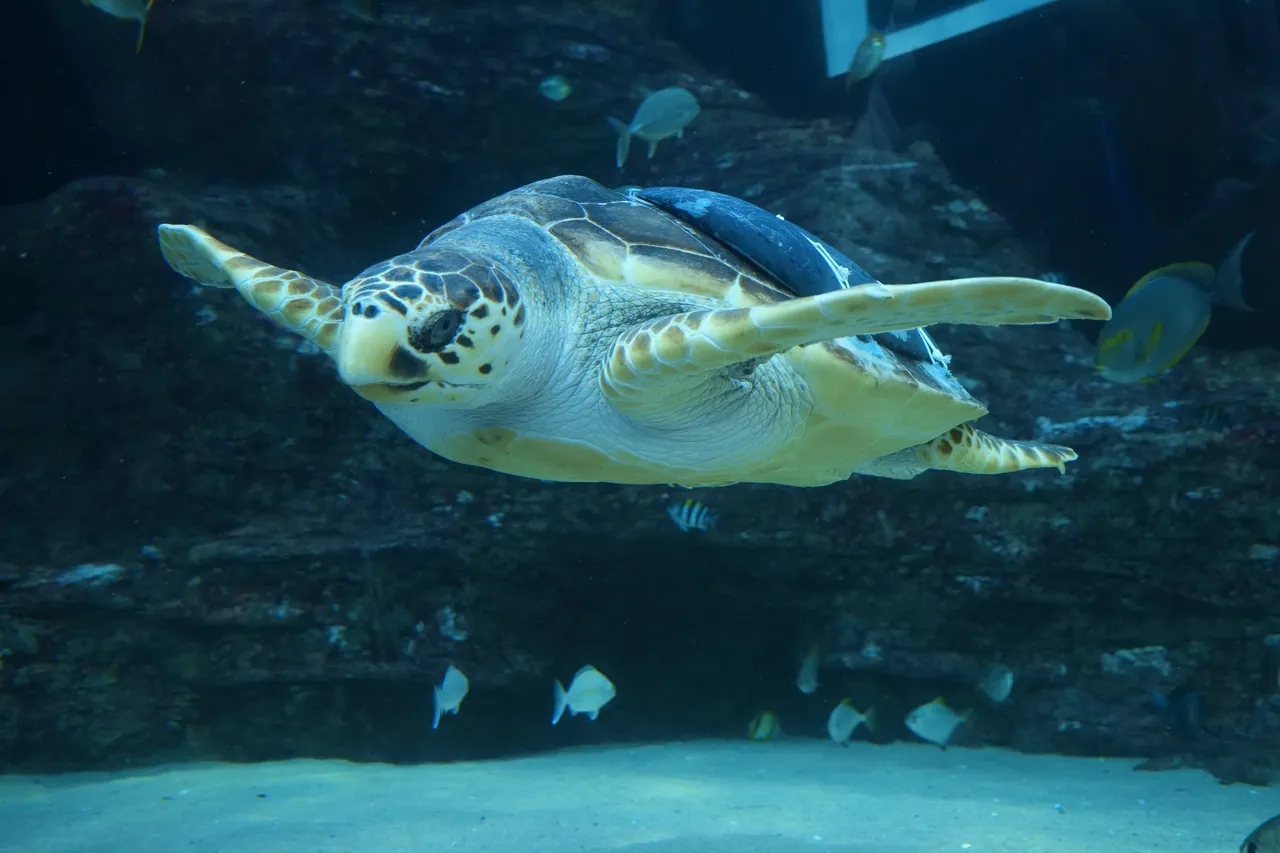
Finally, Kai was able to swim independently without the use of a buoyancy or weighted device; an incredible win for him and the Turtle Conservation Centre. For some time, the team monitored his swimming closely to ensure that he steadily improved and did not regress. When Dr Bernice was completely happy with Kai’s progress – he reached a solid weight, balanced well in the water, had a good appetite, and retained his wild instincts, to name a few – she declared him ready for release in early 2026.
Where is Kai going?
Since Kai’s release on 14 May 2026, the team at the Turtle Conservation Centre has been on tenterhooks as his first satellite tag transmissions began coming through. So far, he's made encouraging progress!
In his first week back in the ocean, Kai has travelled 76km, averaging around 11km a day. "This is very suitable for a turtle recalibrating to life in the wild after six years in rehabilitation," says Talitha Noble-Trull. There’s still a lot for Kai to get used to again, and for now, he seems to be taking things slowly and steadily.
During his first few days at sea, Kai explored the eastern side of the De Hoop MPA before moving slightly deeper offshore near Infanta. From there, he continued along the coastline past Vermaaklikheid and is currently making his way towards Jongensfontein. This coastline is abundant in subtidal reefs and incredible marine life, so Kai is certainly getting a warm welcome back to the ocean.
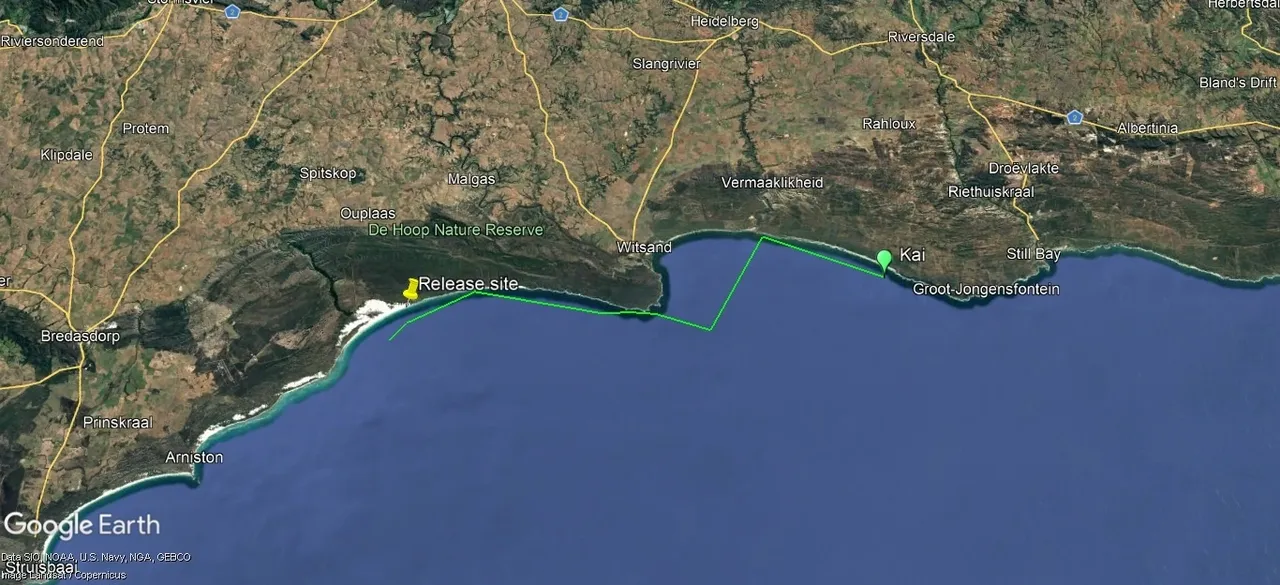
We're confident that Kai will approach life back in the ocean with the same tenacious spirit he showed throughout his rehabilitation, and we’ll be following every step of his journey.
Sign up for the Turtle Tales newsletter to stay updated on Kai’s latest adventures and all the turtle news from the Turtle Conservation Centre.
Related News
Sign up to our Newsletter
Receive monthly news, online courses and conservation programmes.