Two Oceans Aquarium releases three turtle species into De Hoop Marine Protected Area
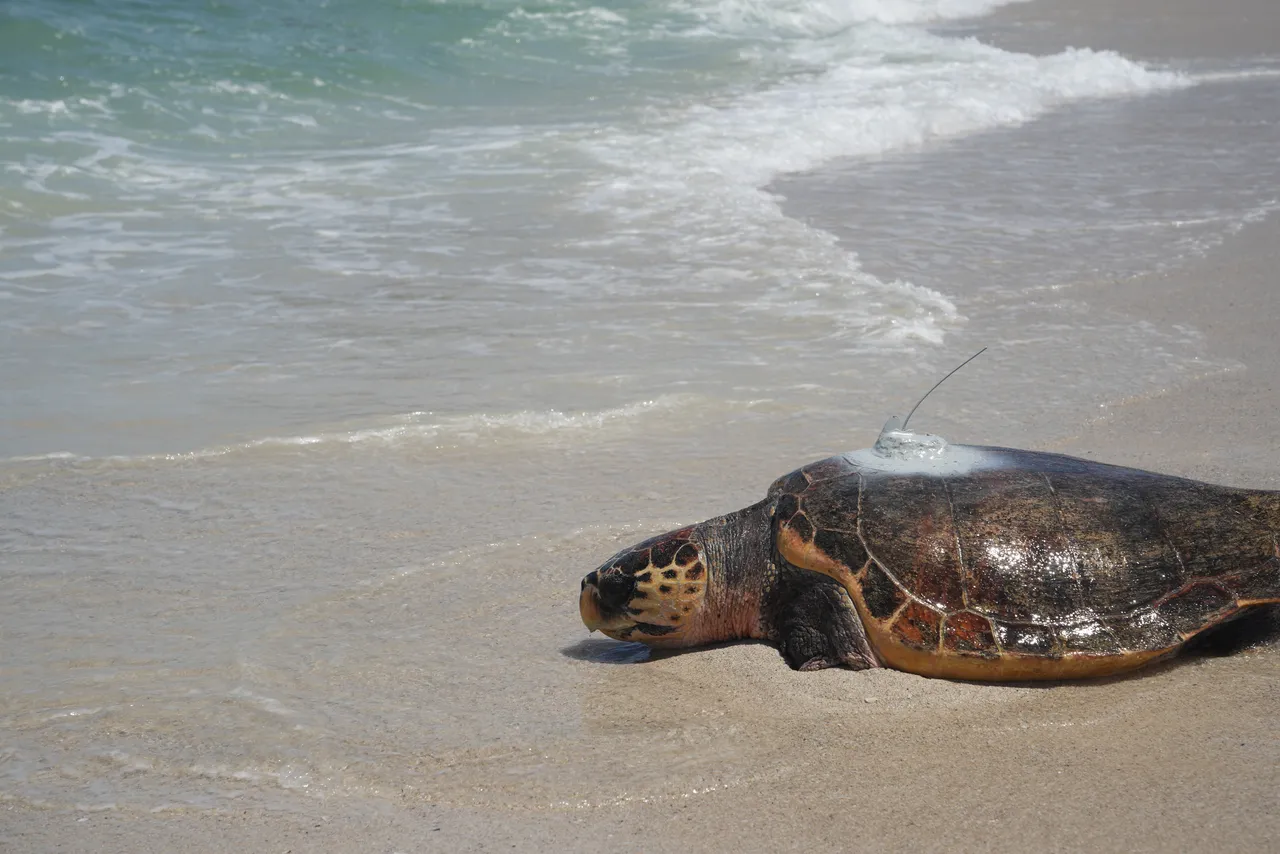
On 19 November 2026, the Two Oceans Aquarium Foundation's Turtle Conservation Centre team released four turtles, Habanero, Sage, Amber, and Bellatrix, into the De Hoop Marine Protected Area (MPA)!
Returning these four turtles to their ocean home was an incredible milestone, not only for the turtles themselves but also for the team who cared for them throughout their rehabilitation journeys. Timed to coincide with the warming of De Hoop MPA's coastal waters, this release was particularly special as it marked the first time that the Turtle Conservation Centre has released an acoustically tagged olive ridley turtle!
Olive ridley turtle Sage was released alongside amputee loggerhead turtle Habanero and hawksbill turtles Amber and Bellatrix. Each turtle's journey is a testament to the power of rehabilitation in giving endangered species a second chance at life in the wild.
All four turtles were fitted with tags that will allow our team to gain valuable insights into their movements after release. Sage, Amber, and Bellatrix's acoustic tags were generously donated by the Southern African Polar Research Institute (SAPRI), while Habanero's adopters, Morukuru Goodwill Foundation, sponsored his satellite tag.
From rescue to recovery, each turtle has a fascinating story to tell. Let's dive into their rehabilitation journeys and relive the excitement of release day…
Habanero’s story
In February 2025, our Turtle Rescue Network was alerted to a large loggerhead turtle washed ashore in Witsand. Guided by our Turtle Network Coordinator, CapeNature and Mike Beyer worked together to get the turtle to the Turtle Conservation Centre.
Upon his arrival in Cape Town, the team noticed an unusual barnacle on his shell. Further investigation revealed that the barnacle originated from the Gulf of Mexico, inspiring his name, Habanero! Despite weighing 75kg, Habanero was severely anaemic due to the hundreds of marine leeches covering his body.
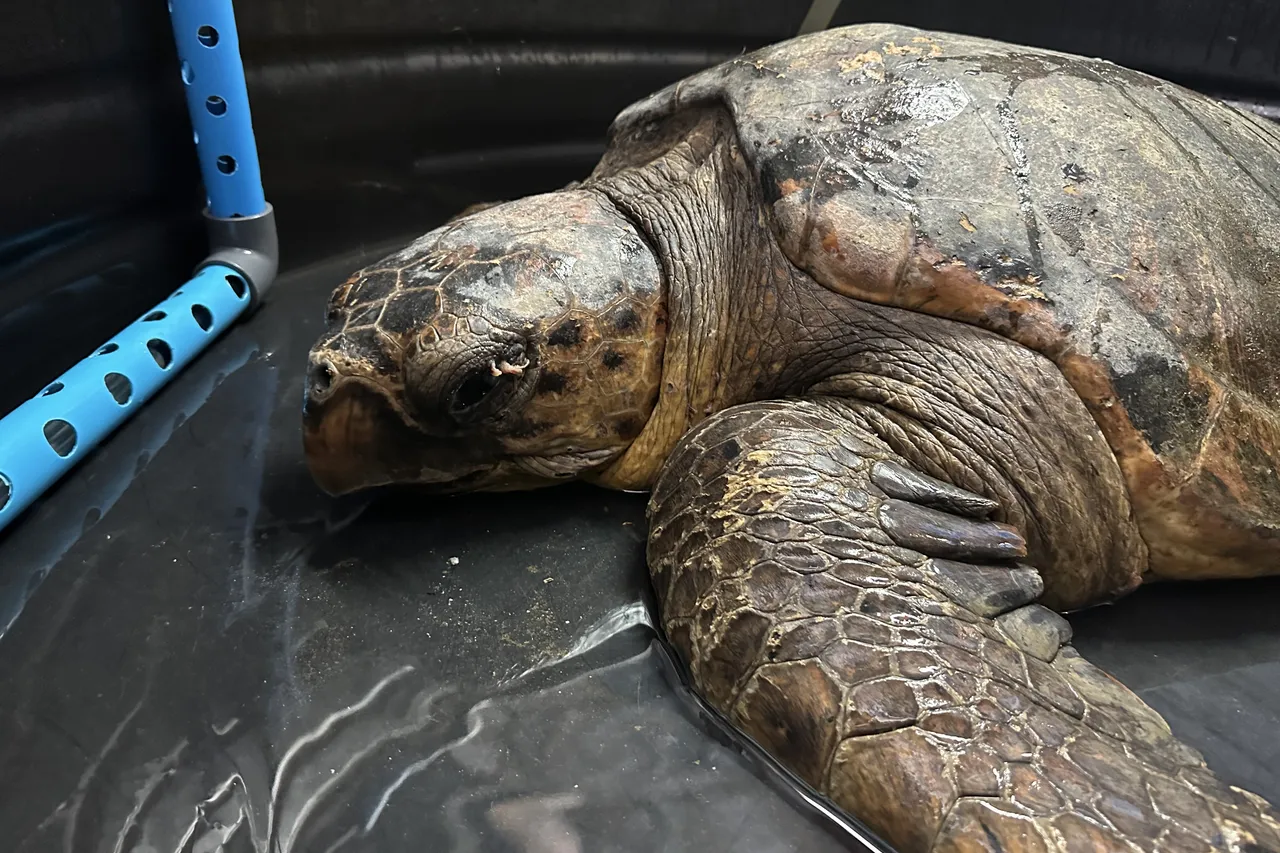
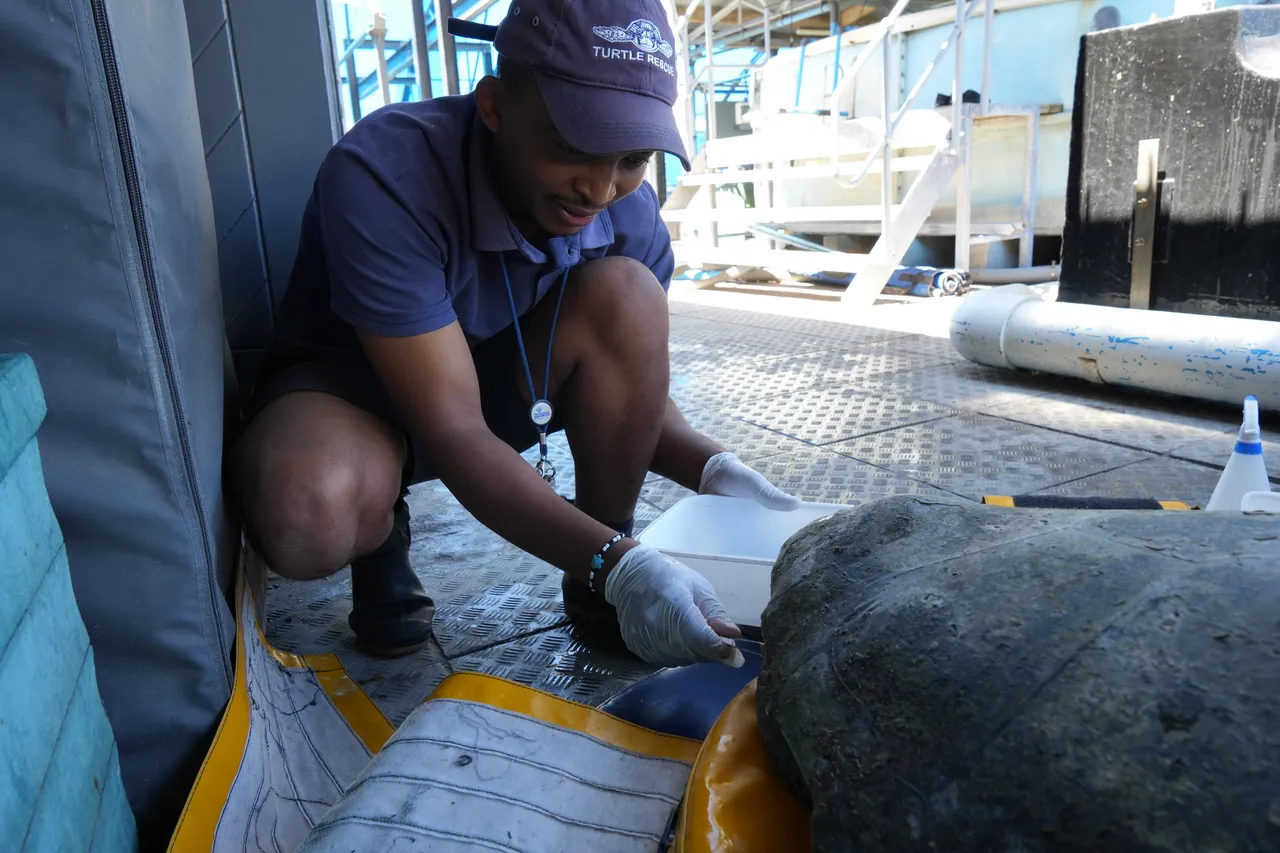
Even more concerning, our veterinary team discovered a severe bone infection in Habanero's left elbow. Months of targeted antibiotics, joint debridement, and intensive treatment failed to clear the infection, leading the team to make the difficult but hopeful decision to amputate Habanero’s flipper in December 2025.
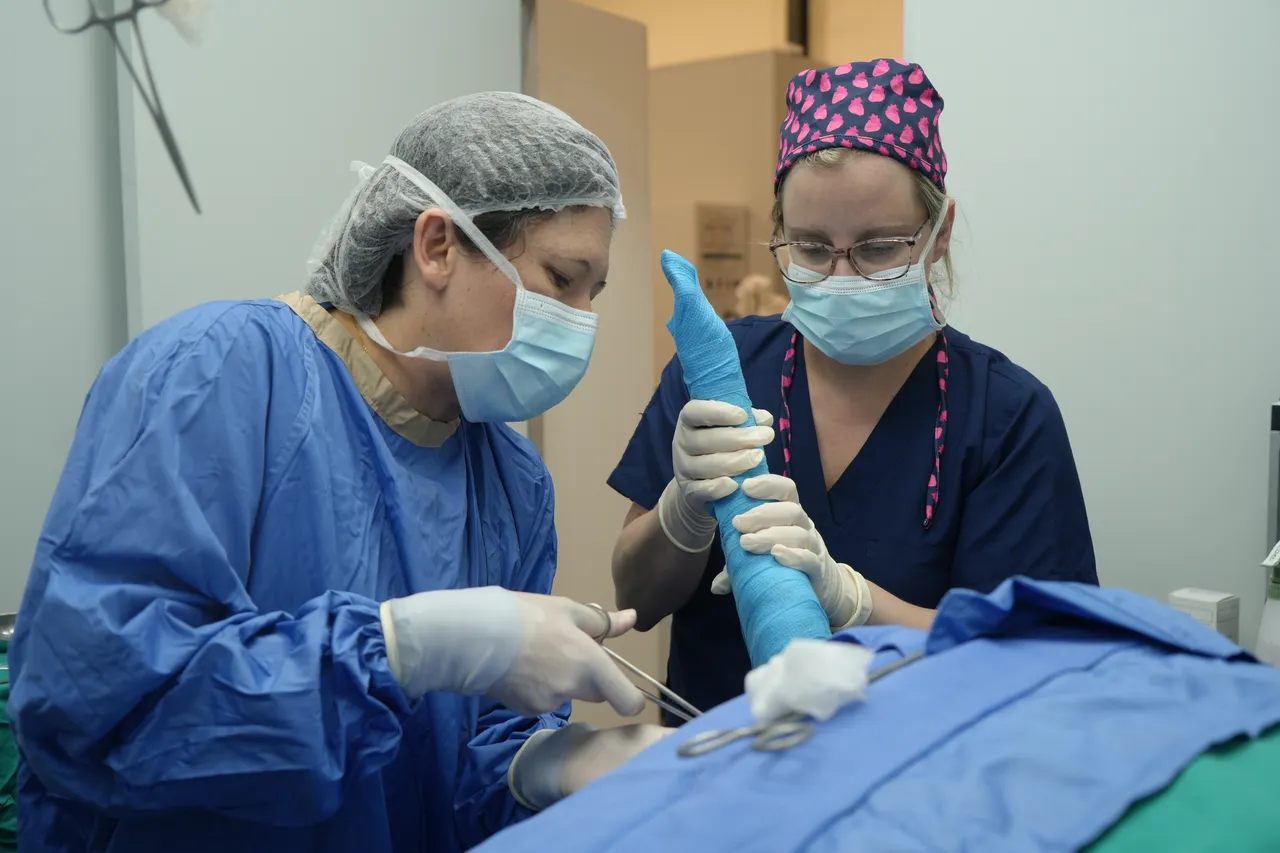
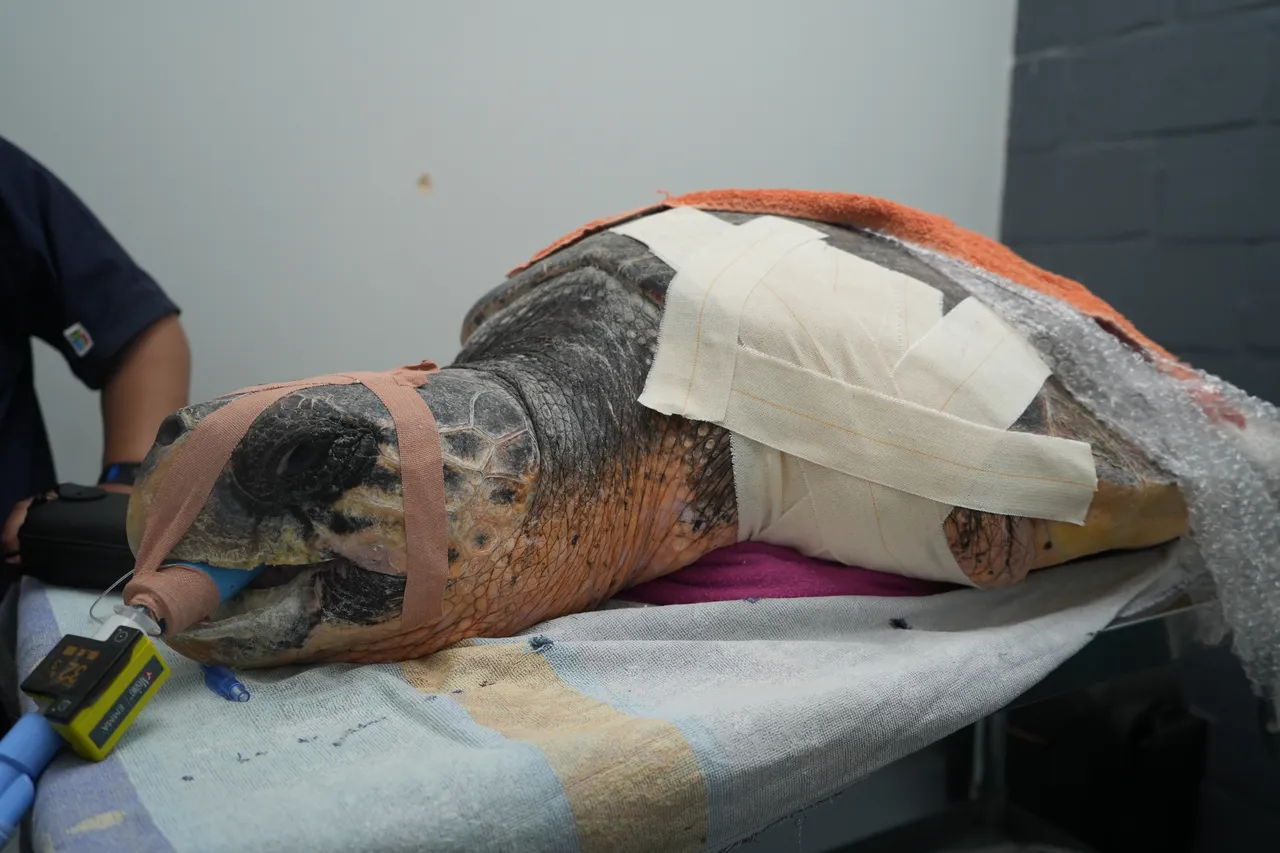
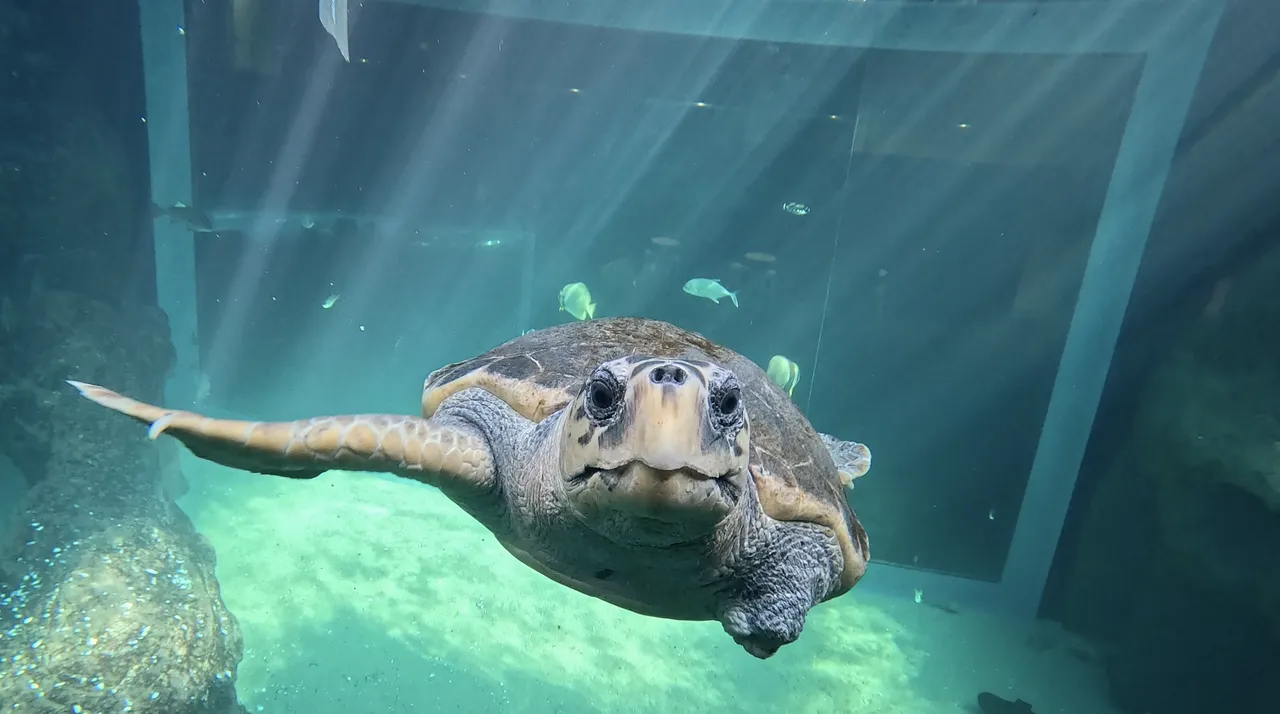
With the support of Habanero's adopters, Morukuru Goodwill Foundation, Turtle Veterinarian Dr Bernice van Huyssteen successfully performed the surgery. Habanero spent the following months recovering under the close watch of our veterinary and rehabilitation teams. Once his amputation site had fully healed, he was ready to return to the I&J Ocean Exhibit! Here, he could interact with other marine animals in a stimulating environment while rebuilding the strength and agility needed to navigate life with one fewer flipper.
In September 2026, Habanero's final CT scan showed no signs of infection, and Dr Bernice declared him ready for release. This was an extraordinary milestone for a turtle who had overcome so much. From a severely anaemic, injured 75kg turtle to a healthy 100kg ocean explorer, Habanero's journey is a remarkable testament to the power of dedicated rehabilitation!
Sage’s story
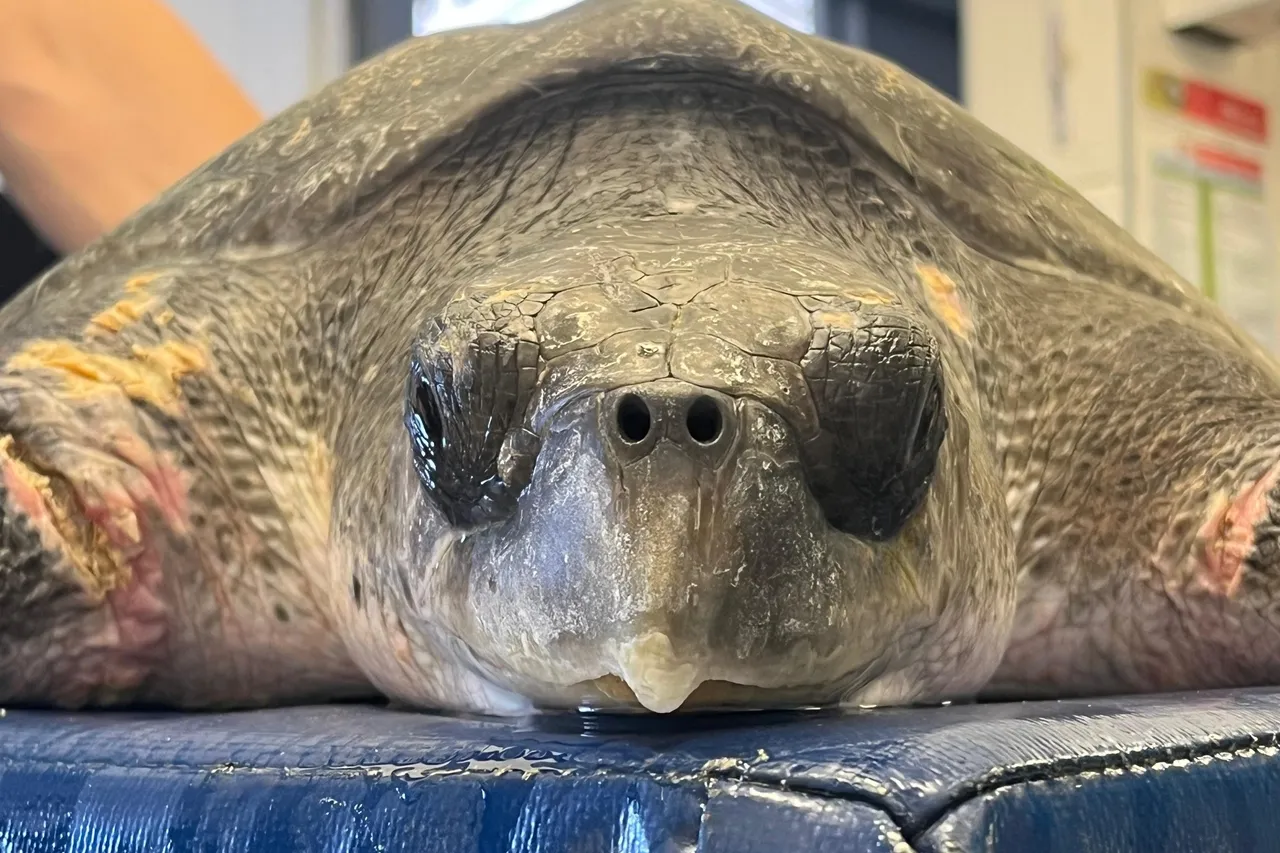
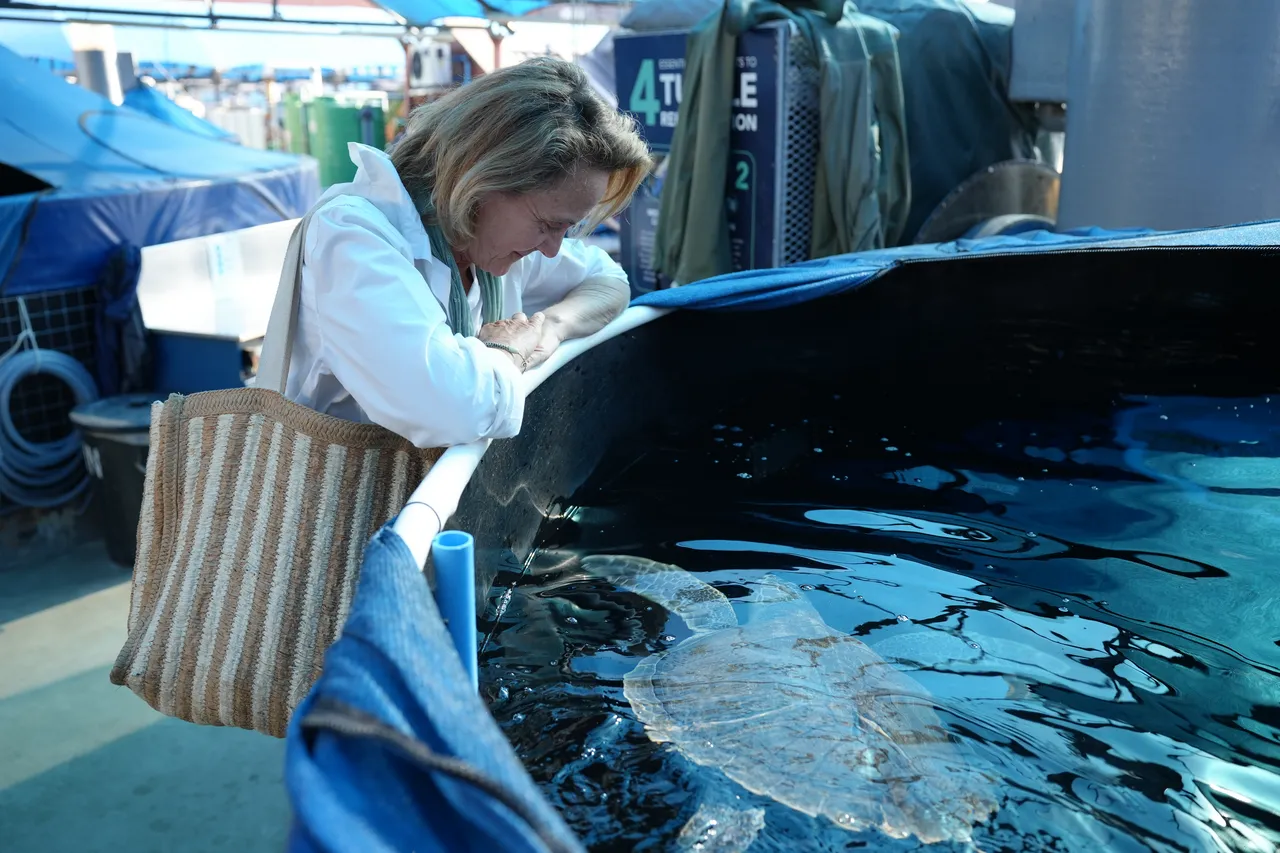
In December 2025, an olive ridley turtle was found entangled in a large ghost fishing net on a beach in the De Hoop Marine Protected Area. A well-meaning beachgoer freed the turtle and returned her to the water, but she soon restranded, allowing Morukuru De Hoop's Marine Ranger Corné Lamprecht to retrieve her before she drowned. Corné carried her to safety from her rescue site, a distance of several kilometres, before arranging her transport to the Turtle Conservation Centre.
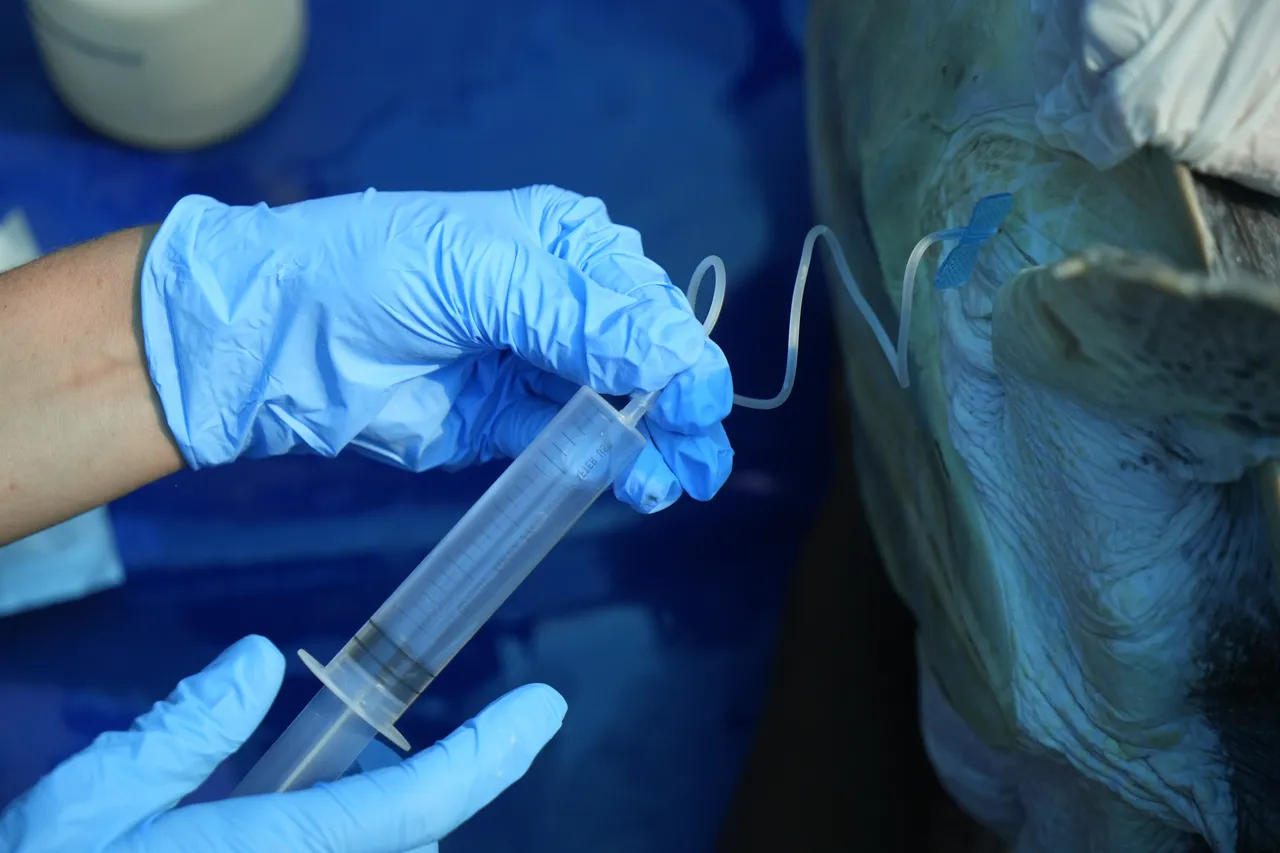
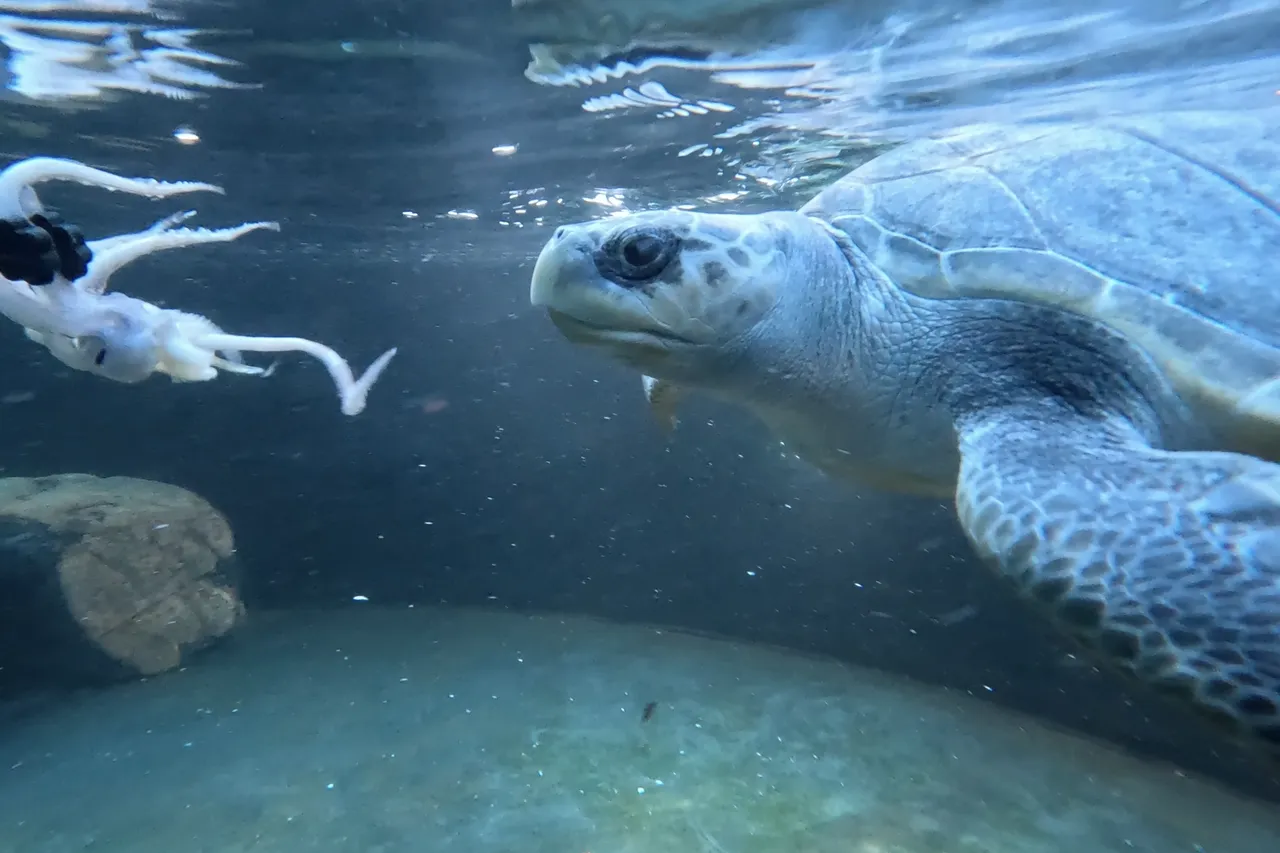
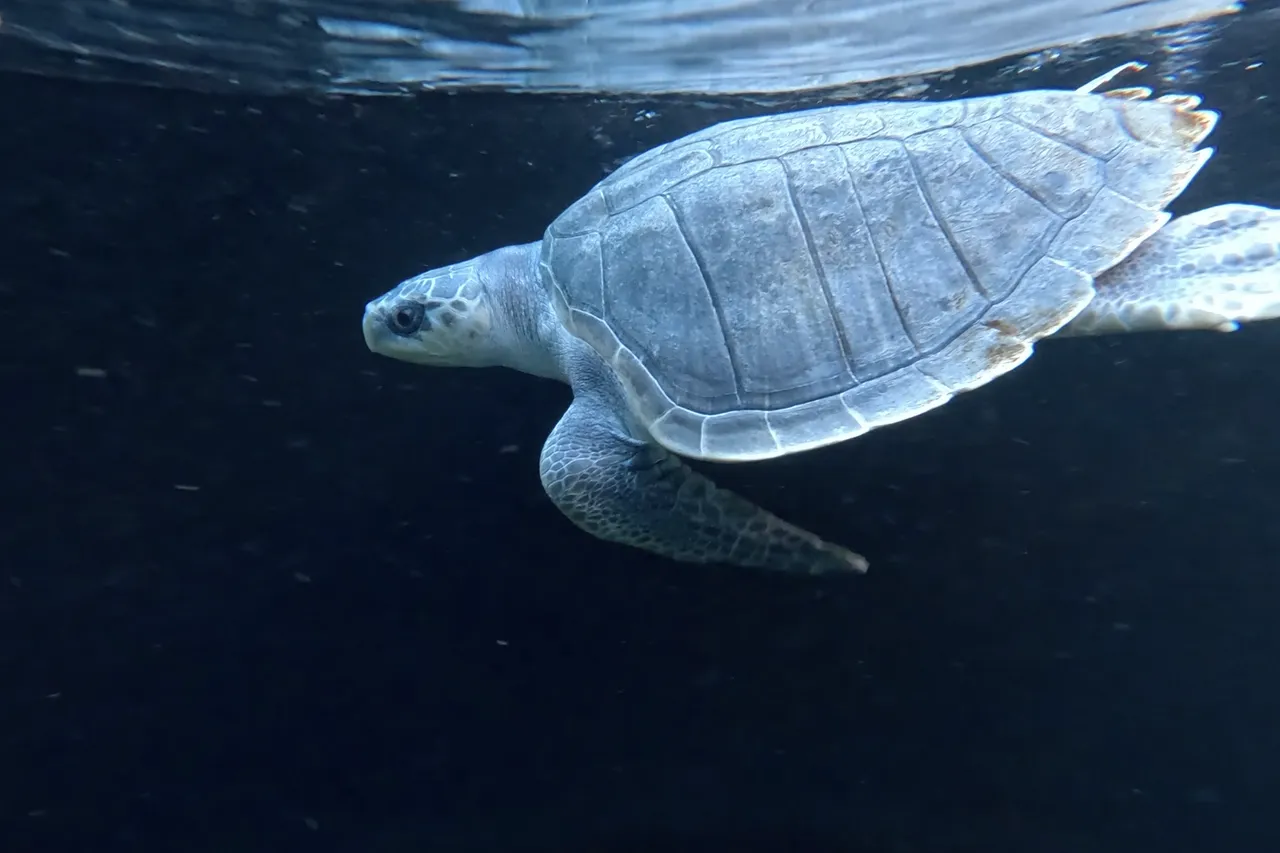
Named Sage for her greenish colouring, the turtle had deep wounds where the ghost net had cut into her shoulders. However, it soon became clear that her ordeal had caused more serious internal injuries. A tear in the lining of her lung allowed air to leak into her body cavity, creating an air pocket that required antibiotics and regular aspiration procedures to treat.
Sage's story inspired Karoline Hanks to take on the equivalent of three Peninsula Ultra Fun Run (PUFfeR) races to raise funds for her rehabilitation. Over two days, Karoline ran a whopping 194km back and forth between Cape Point Nature Reserve and Green Point Rugby Club, surpassing her fundraising goal of R80 000!
This extraordinary show of support made a huge contribution towards Sage's recovery. With dedicated care from the rehabilitation team, the plucky turtle made remarkable progress, gradually revealing the feisty personality that our team came to know so well.
From just 9.6kg on arrival to a healthy 15.9kg, Sage's transformation was incredible. After months of rehabilitation, this little fighter was finally ready to return to the ocean!
Amber’s story
In September 2026, a subadult hawksbill turtle with a missing right front flipper washed ashore in Betty's Bay. Thanks to the efforts of Michelle Watson from Kogelberg Wildlife Sanctuary, the turtle was safely transported to the Turtle Conservation Centre.
Upon closer inspection, our veterinary team discovered that her missing flipper had fully healed – a remarkable demonstration of turtles' resilience! However, Amber was initially weak and uninterested in food, so Dr Bernice administered intravenous fluids to rehydrate her, a glucose injection to stabilise her blood sugar levels, and a precautionary course of antibiotics.
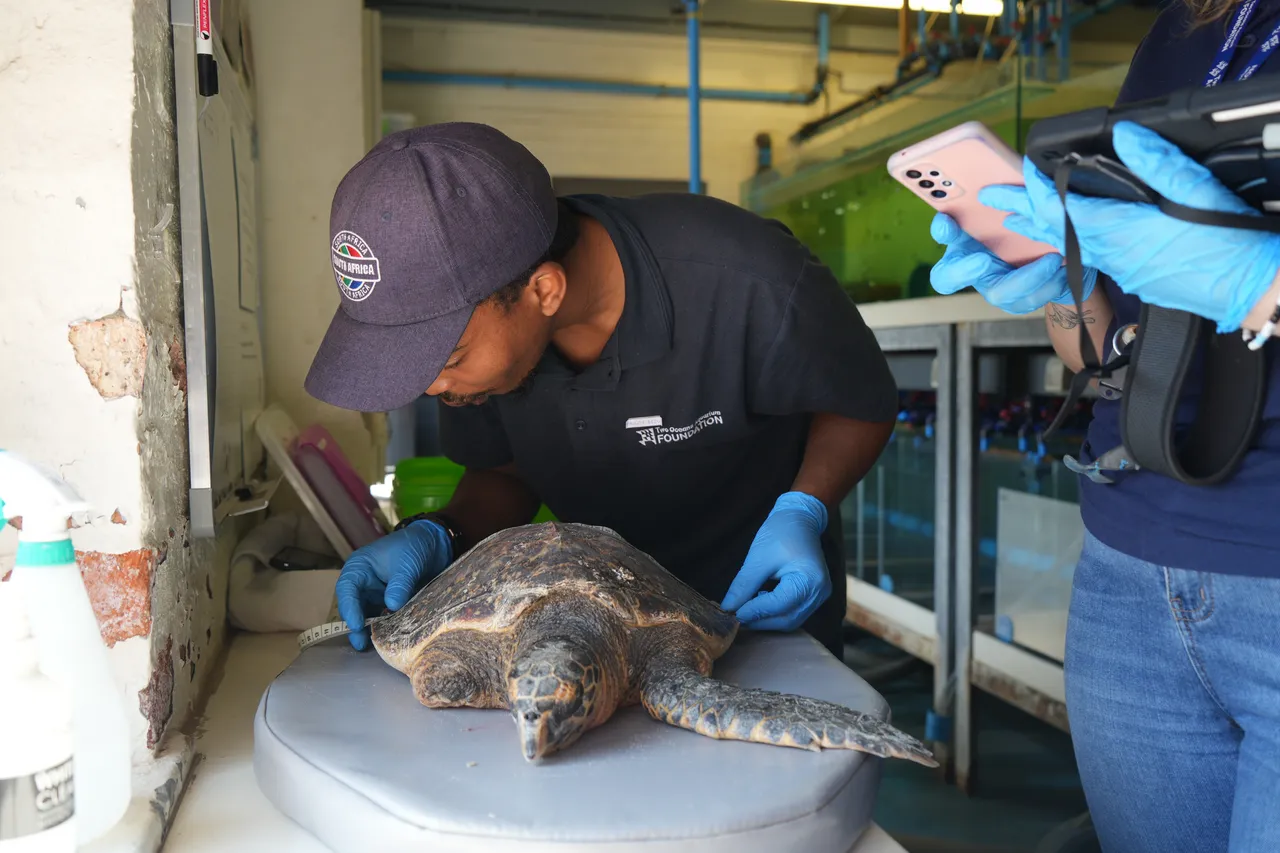
Her adopters, Morukuru Goodwill Foundation (who clearly have a soft spot for three-flippered turtles), named her Amber for her beautiful colouration. Hawksbill turtles can be particularly challenging rehabilitation patients, so our team was thrilled when Amber began diving confidently and eating with gusto just three weeks after her rescue!
After just over two months of dedicated care, Amber was declared ready for release. Weighing a healthy 8.3kg and showing all the right signs of recovery, this resilient little hawksbill was ready to return to the ocean.
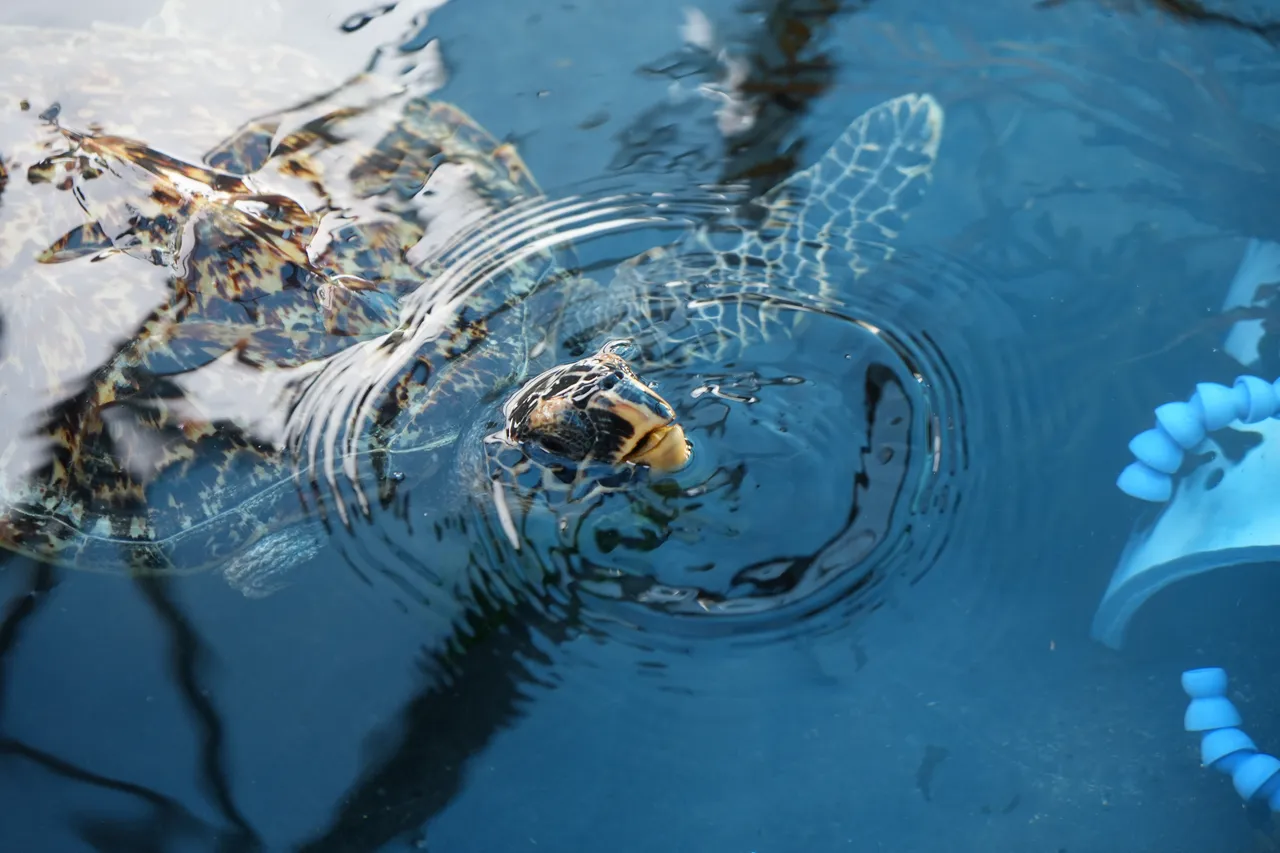
Bellatrix’s story
In April 2026, a juvenile hawksbill turtle was found in a tidal pool on Strand Beach. The turtle was weak and covered in algae, suggesting that she had been struggling for some time. She also had a large, fresh wound on her left shoulder.
The hawksbill was rescued by Kareema Salie and Lauren Abrahams from False Bay Underwater Club, who had previously rescued another of our hawksbill turtles. They transported this little turtle to the Turtle Conservation Centre, where she received first-response care and was started on a course of antibiotics and pain medication to treat her wound. Upon arrival, she weighed just 5kg!
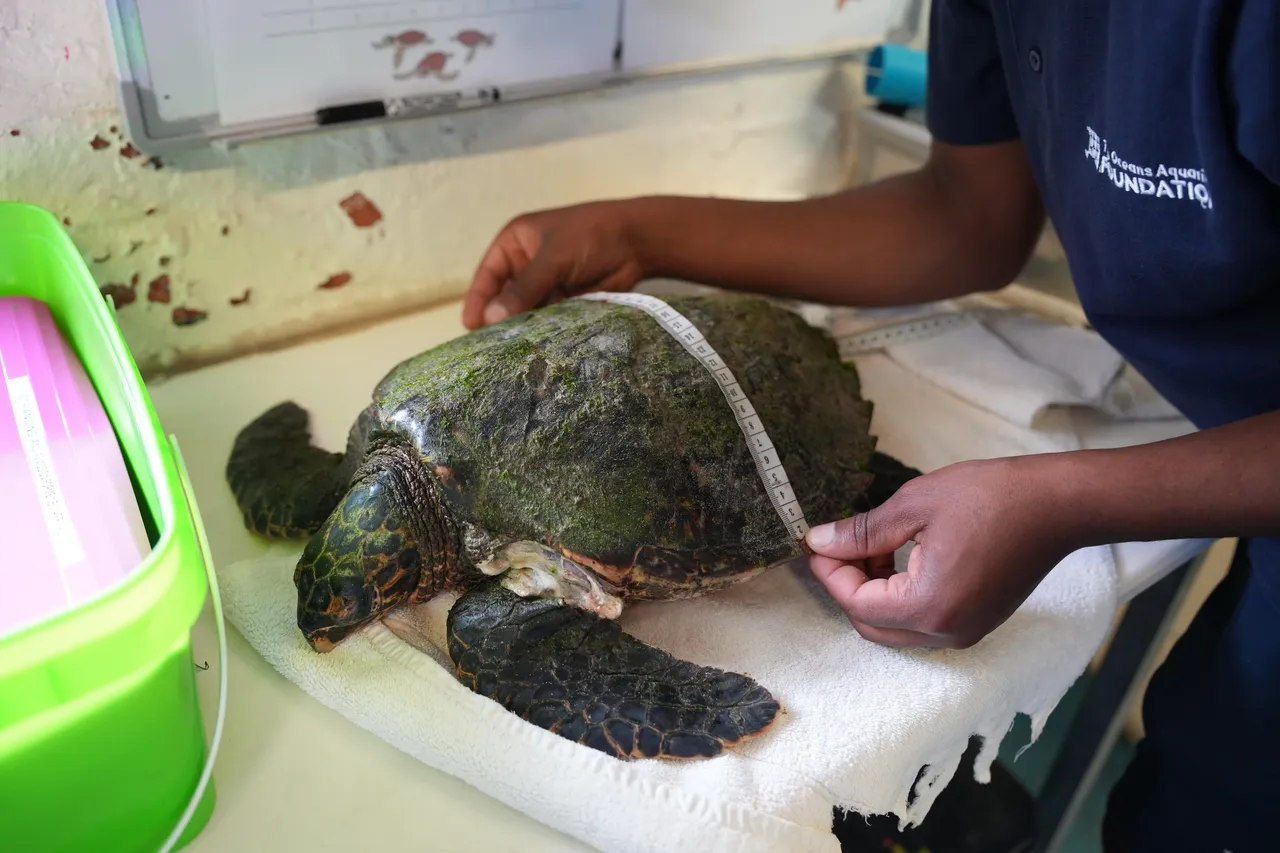
As longtime supporters of our Turtle Conservation Centre, the Grade 5 learners at St Cyprian's School adopted the hawksbill with funds raised through their annual swimathon. They named her Bellatrix, meaning "female warrior" – a fitting name for this turtle!
Bellatrix responded well to treatment, and her wound healed slowly but steadily. In true hawksbill fashion, she also enthusiastically participated in enrichment activities that involved hiding in caves and working to retrieve food from tricky spots!
After months of dedicated care, Bellatrix was finally ready to return to the ocean. Weighing a healthy 7.5kg at release, this little warrior had certainly lived up to her name!
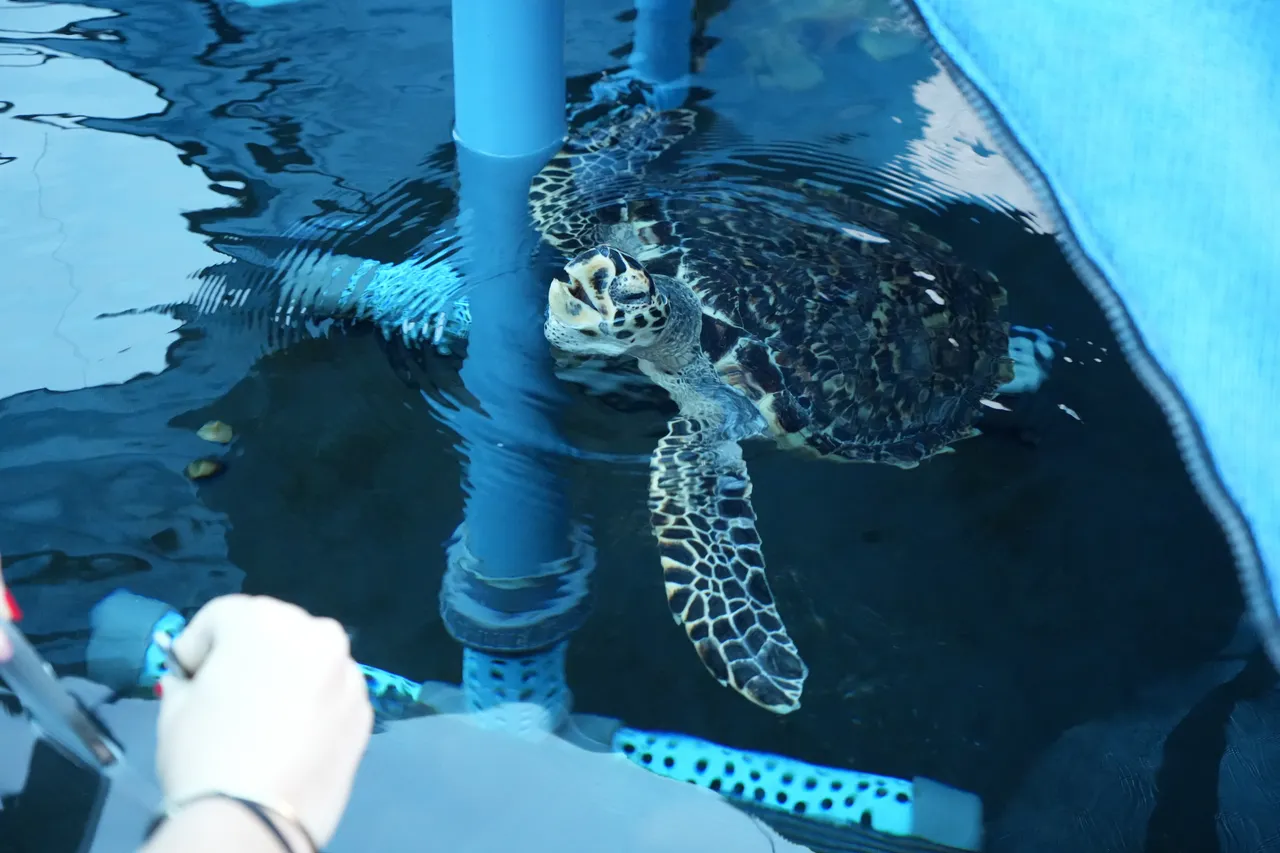
Release day dawned in De Hoop
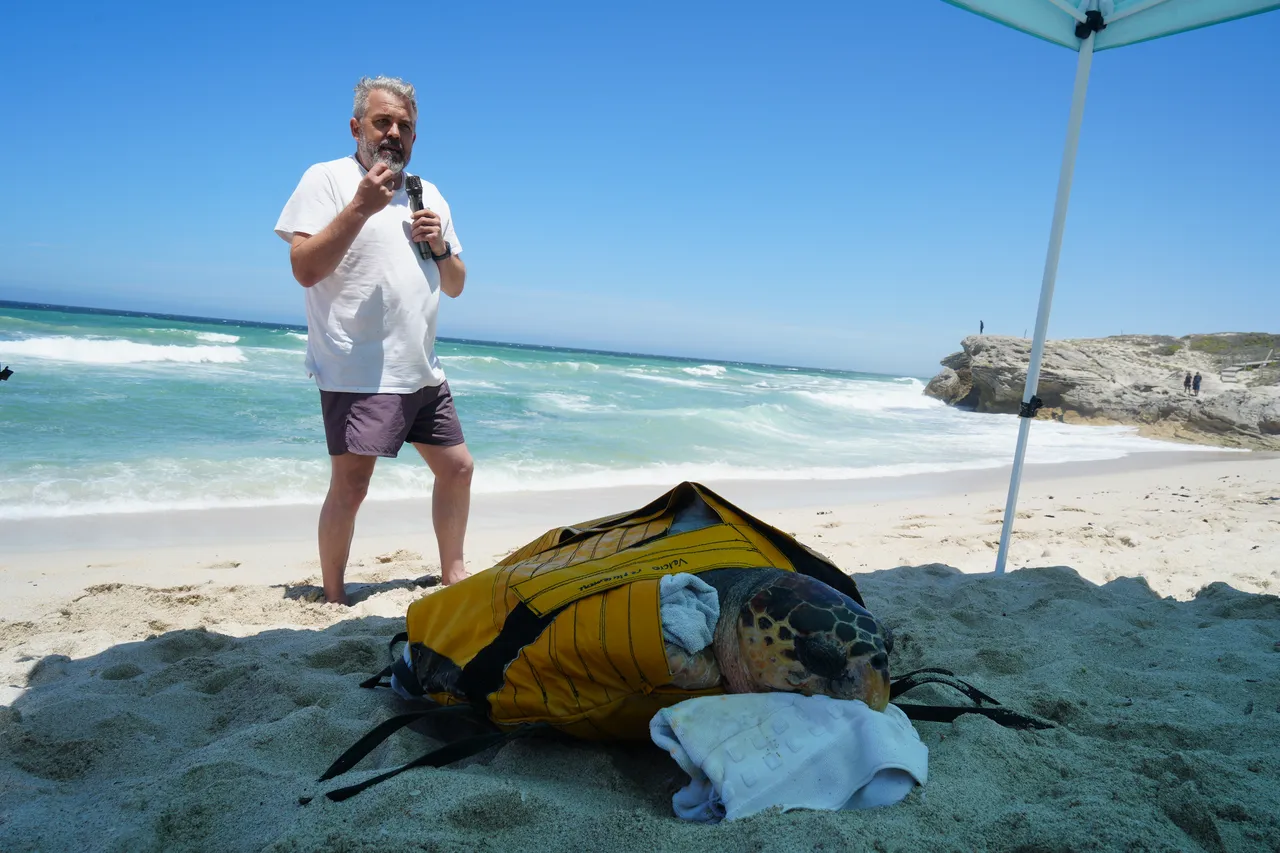
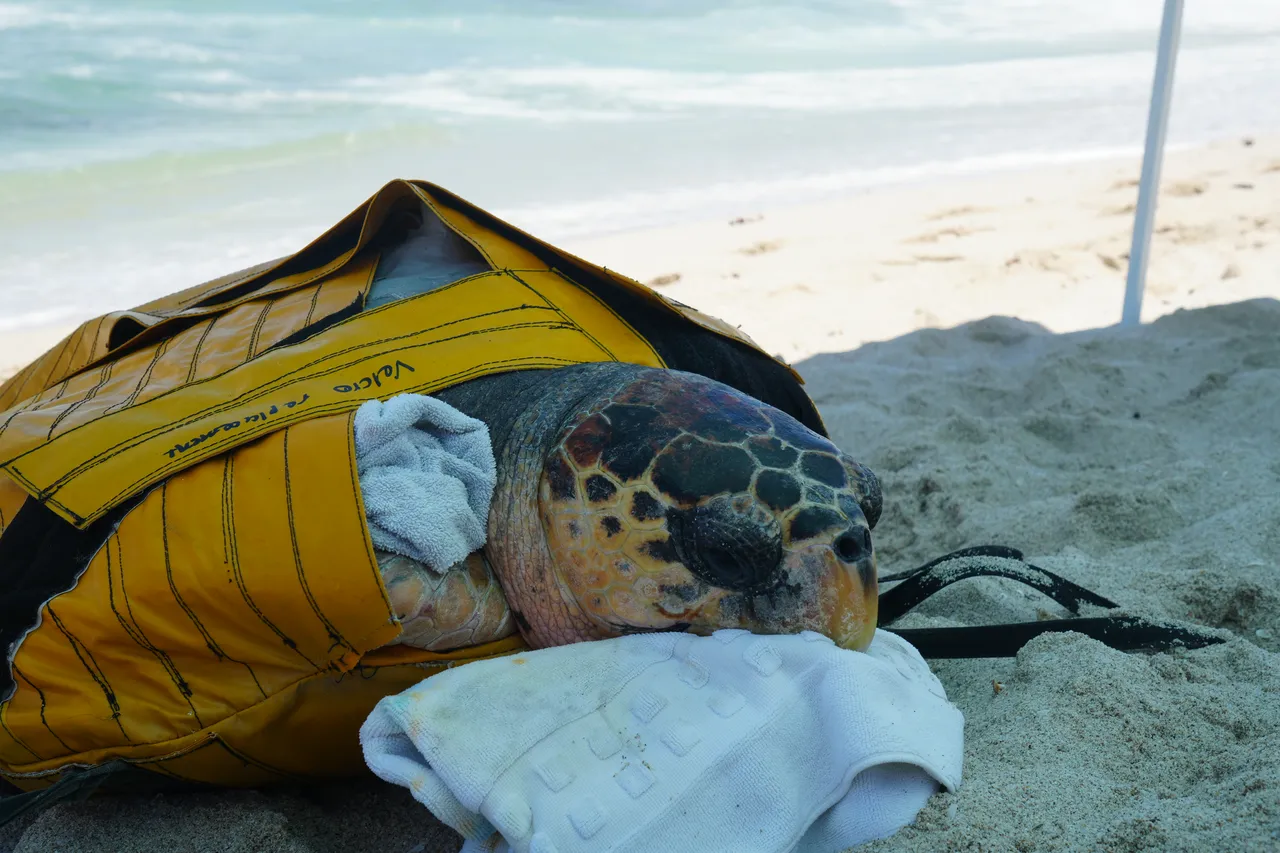
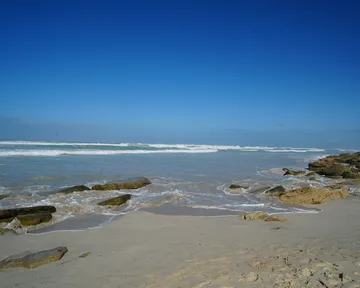
On the morning of 19 November 2026, the four turtles were carefully loaded into vehicles for the journey to De Hoop Marine Protected Area. Upon arrival, the team carried them onto the beach in specially designed stretchers and temperature-controlled containers, where the ocean awaited their return.
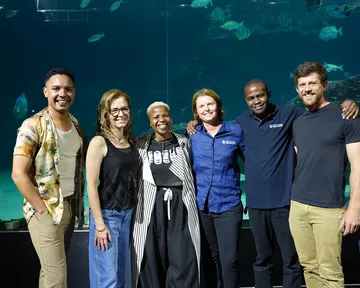
Joining the release were many dedicated members of our turtle community, from rescuers and adopters to the rehabilitation team and volunteers. Before each turtle returned to the ocean, members of the turtle team and those who had played meaningful roles in their journeys shared heartfelt reflections on their rescues, rehabilitation, and remarkable recoveries.
With turtle team members Sange Speelman and Tammy Godding stationed as lookouts on the cliffs overlooking the beach, the moment everyone had been waiting for finally arrived. One by one, the four turtles were carried to the water's edge.
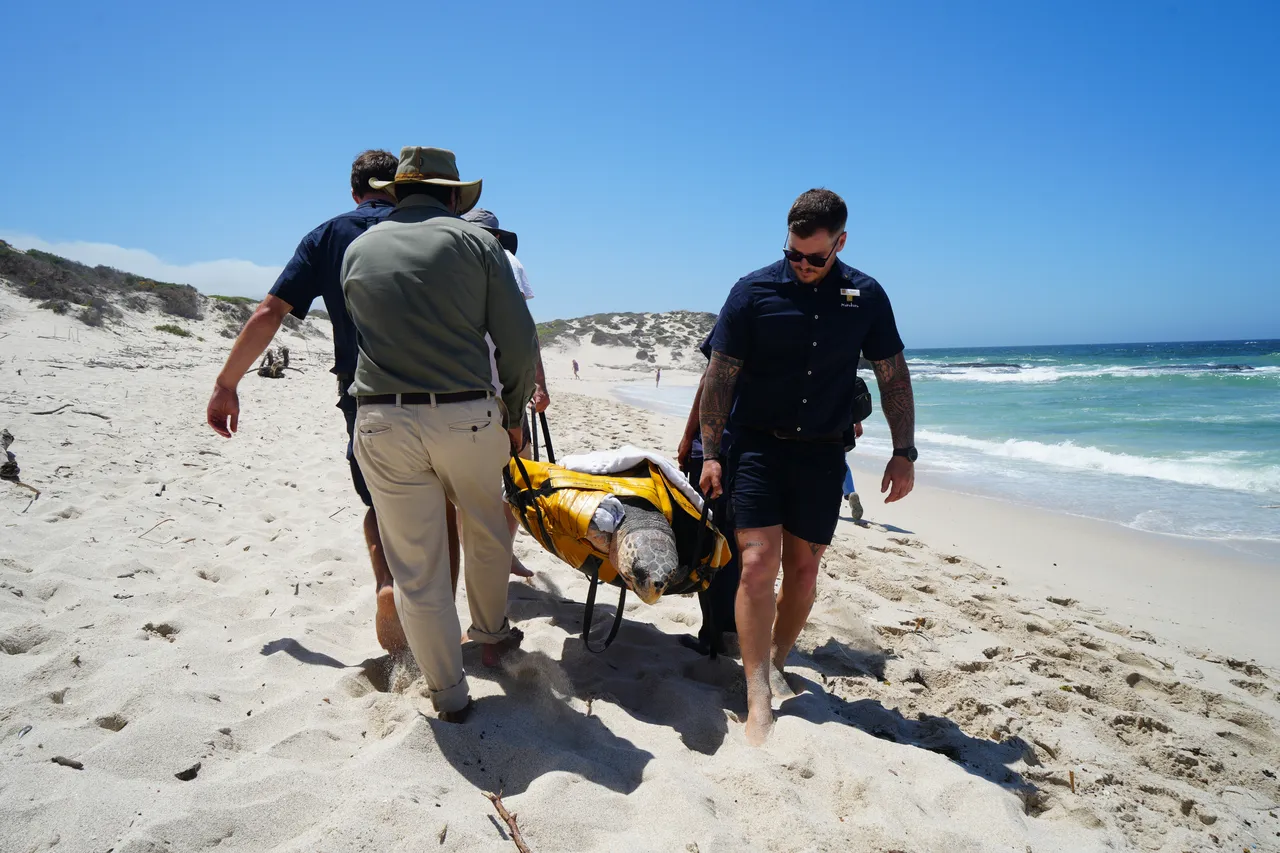
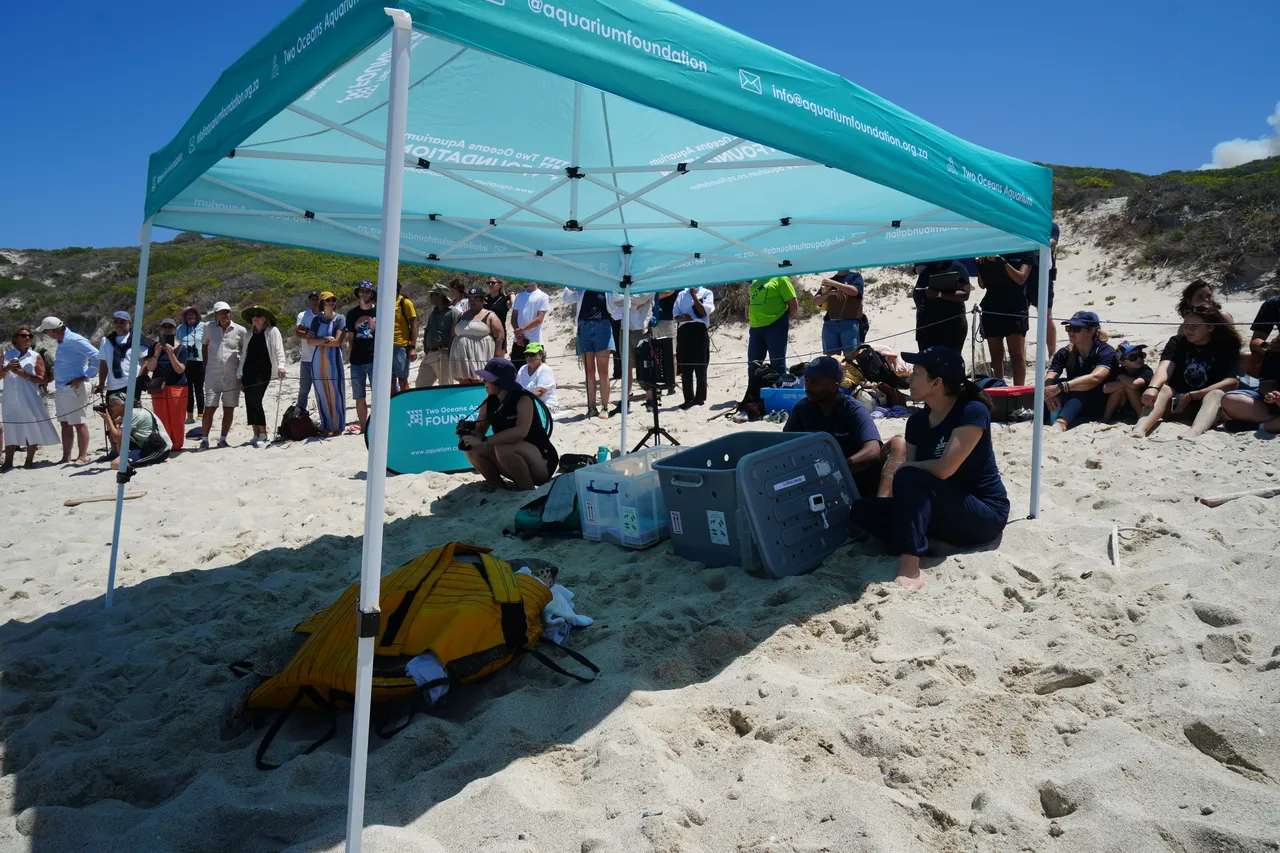
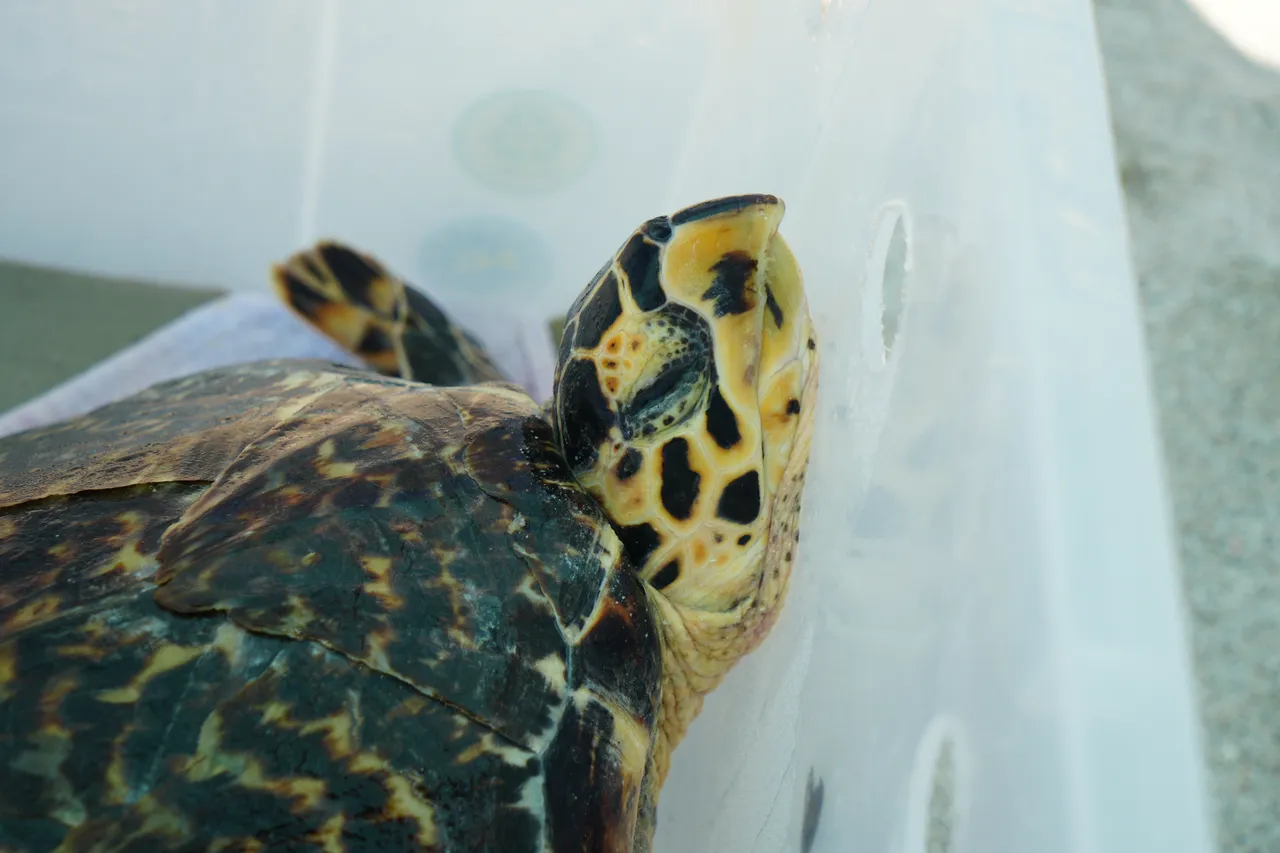
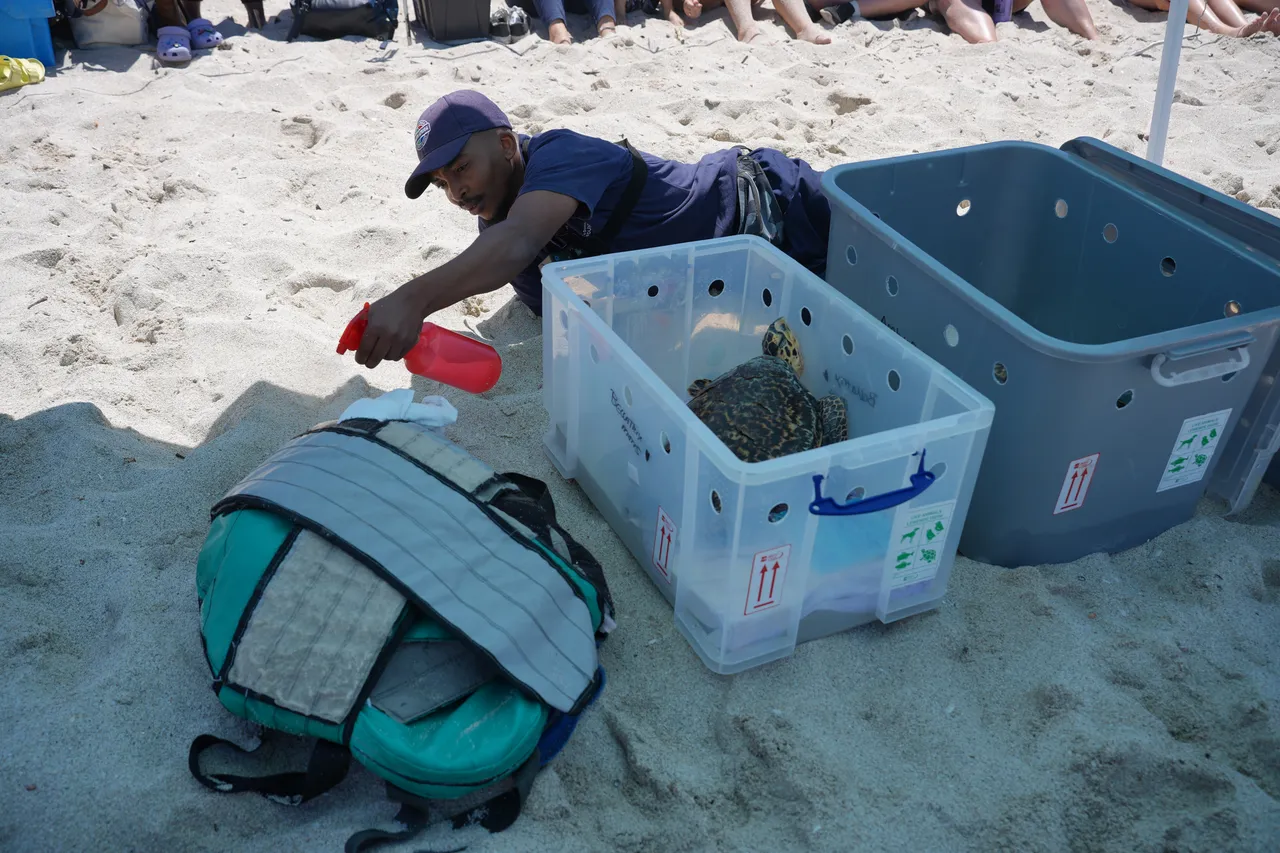
Hawksbill turtle Amber was sent off by Turtle Aquarist Siyolise Bezu, who spoke about her resilience and quick recovery. She was carried into the water by Corné, representing Morukuru Goodwill Foundation as her adopters, and Dr Bernice. Having just three flippers certainly didn't slow Amber down – she sped straight into the surf!
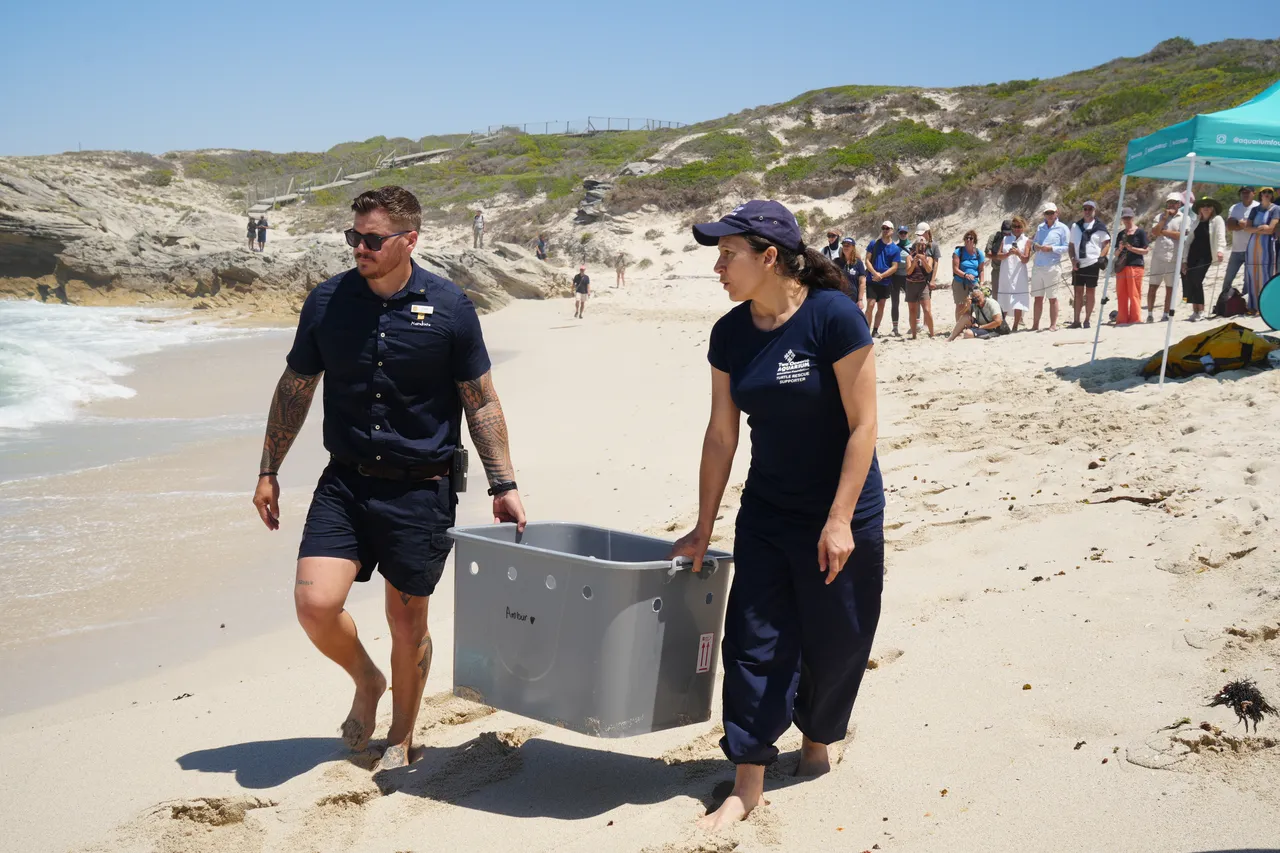
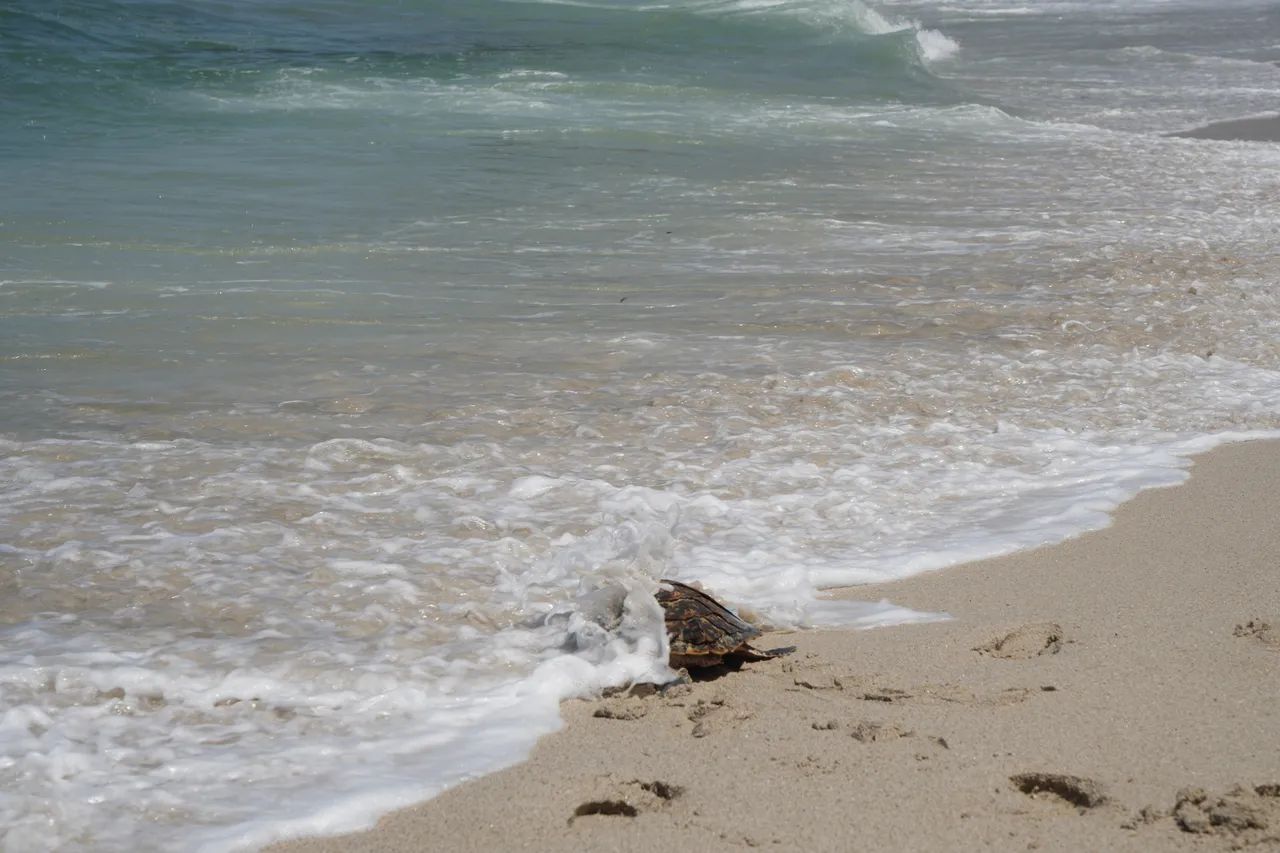
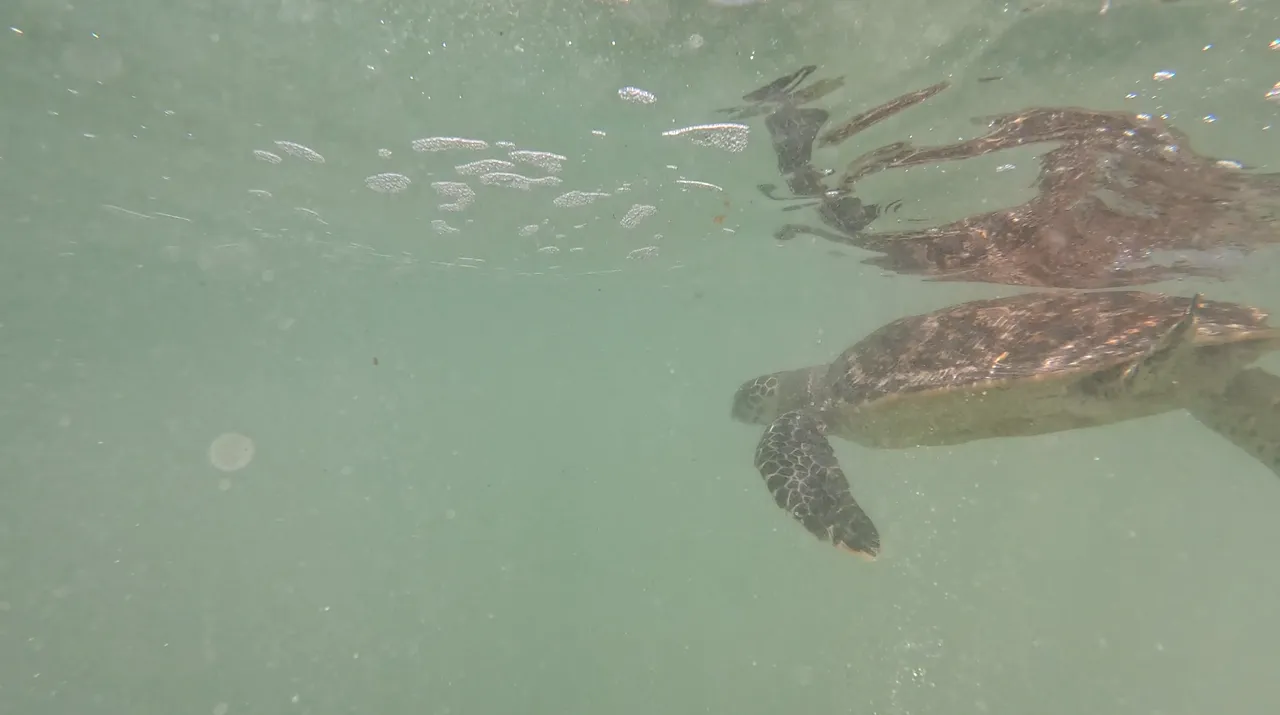
Bellatrix, our second hawksbill turtle, was bid farewell by St Cyprian’s teacher, Vicky Hyland. A few of the Grade 5 learners were even present to represent their grade, watching as Bellatrix took a moment to acclimatise to her surroundings before moving into the waves.
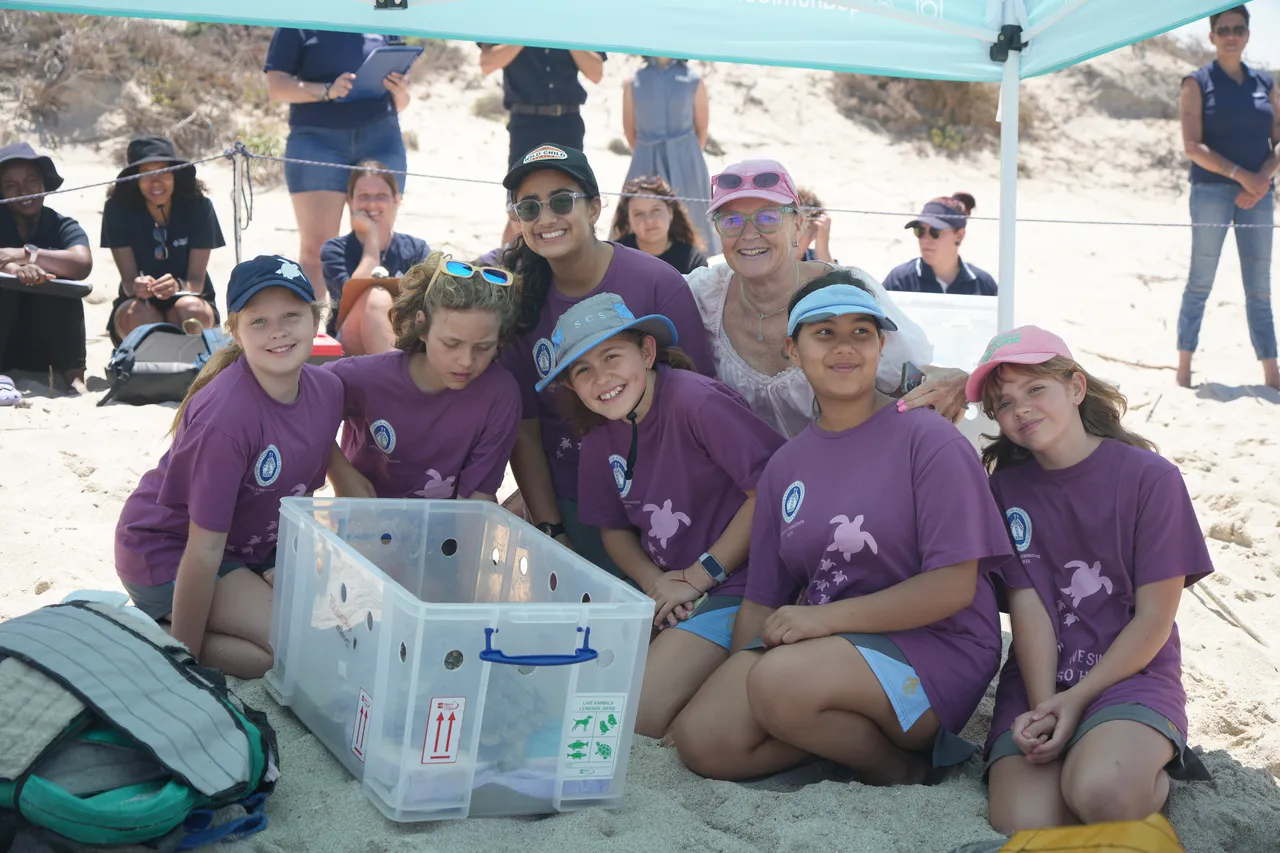
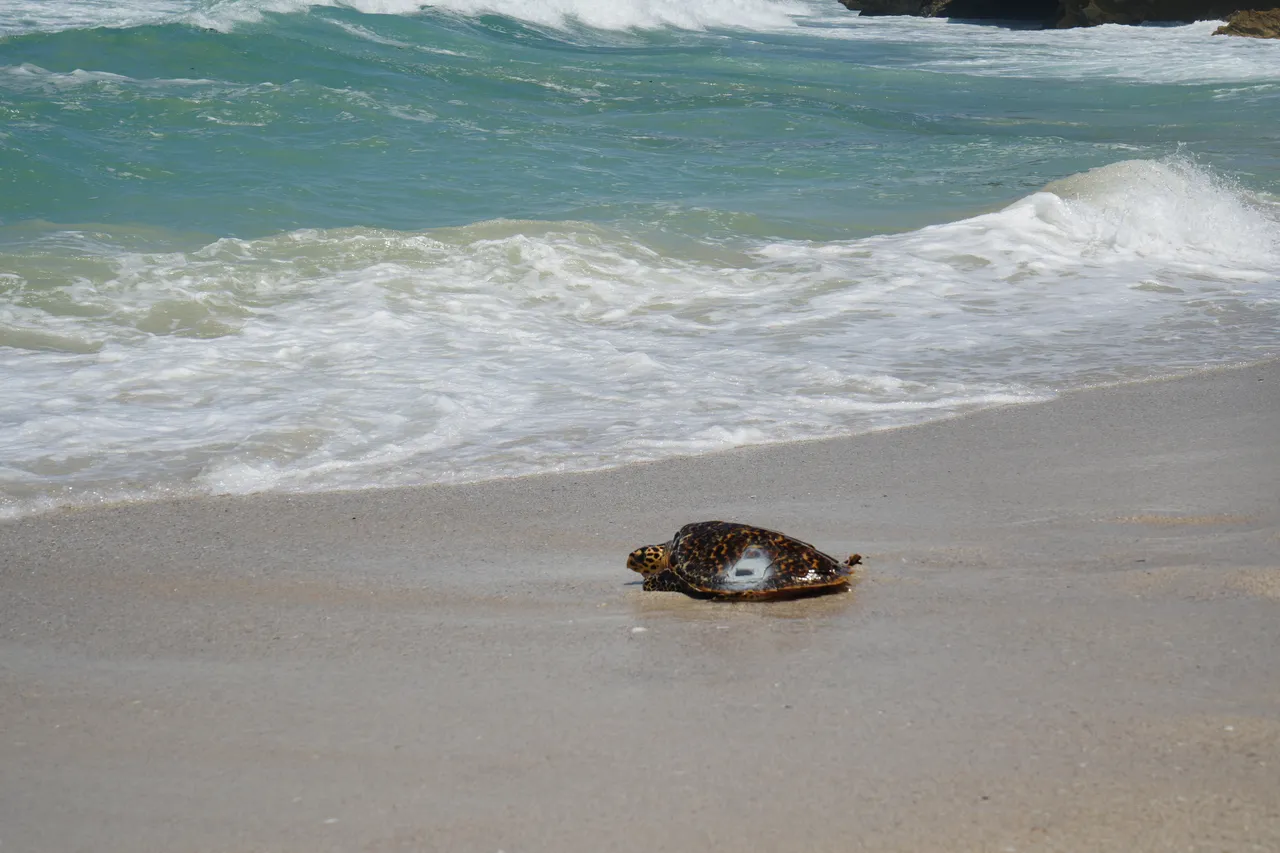
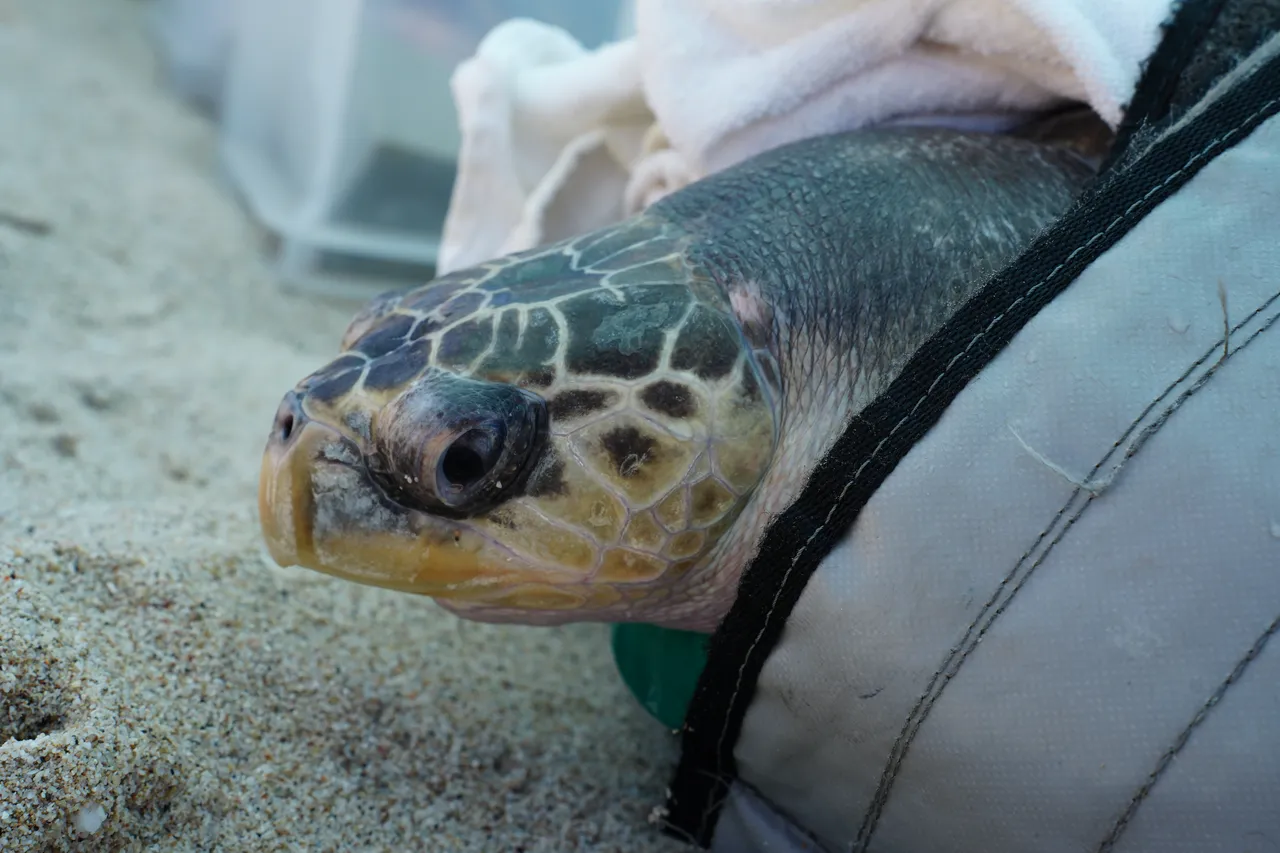
Next, it was Sage's turn. Her adopter, Karoline, could not attend the release, so her heartfelt words were read aloud by the Two Oceans Aquarium's Helen Lockhart. In a special full-circle moment, Sage was carried into the surf by Corné, the same Marine Ranger who had carried her several kilometres from her stranding site to reach transport nearly a year earlier. True to her feisty character, Sage made a beeline for the ocean, diving deep and disappearing into the current.
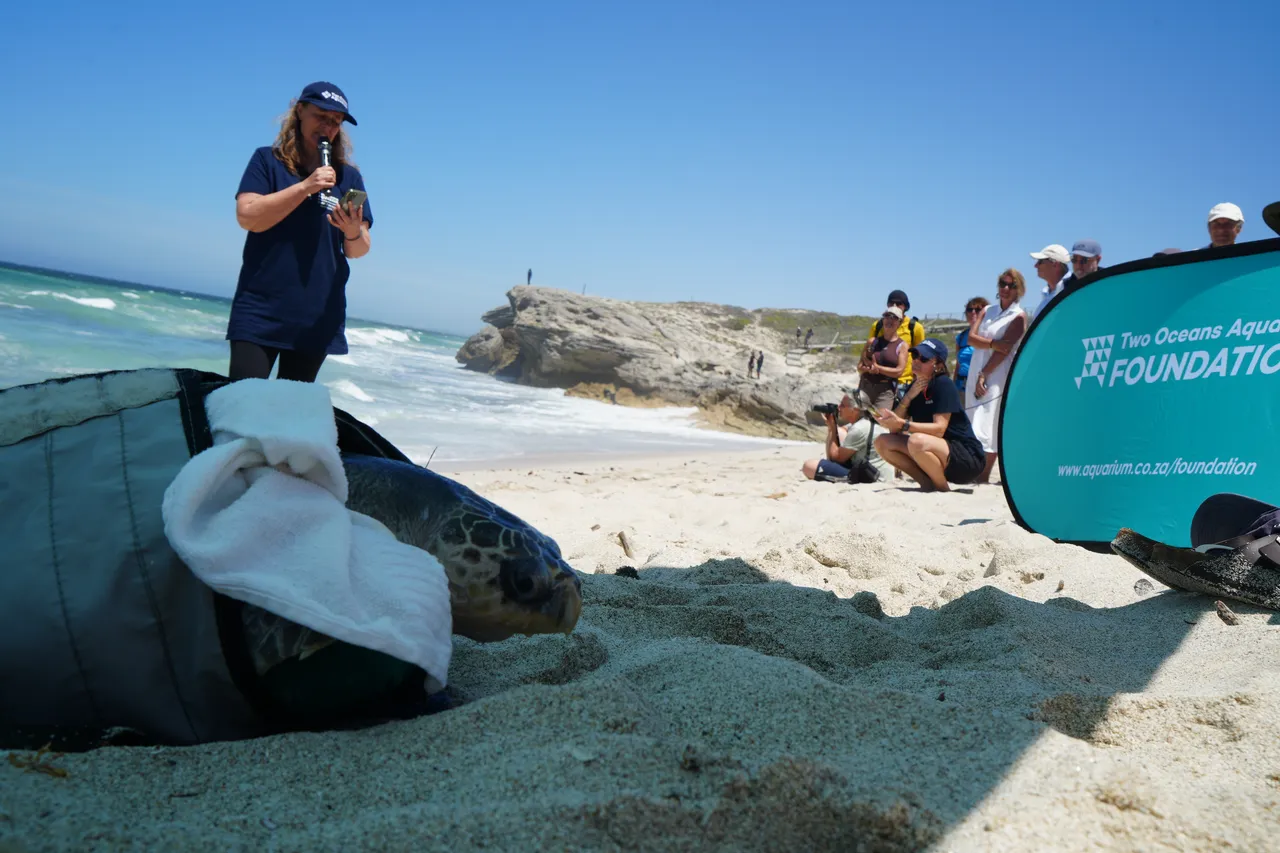
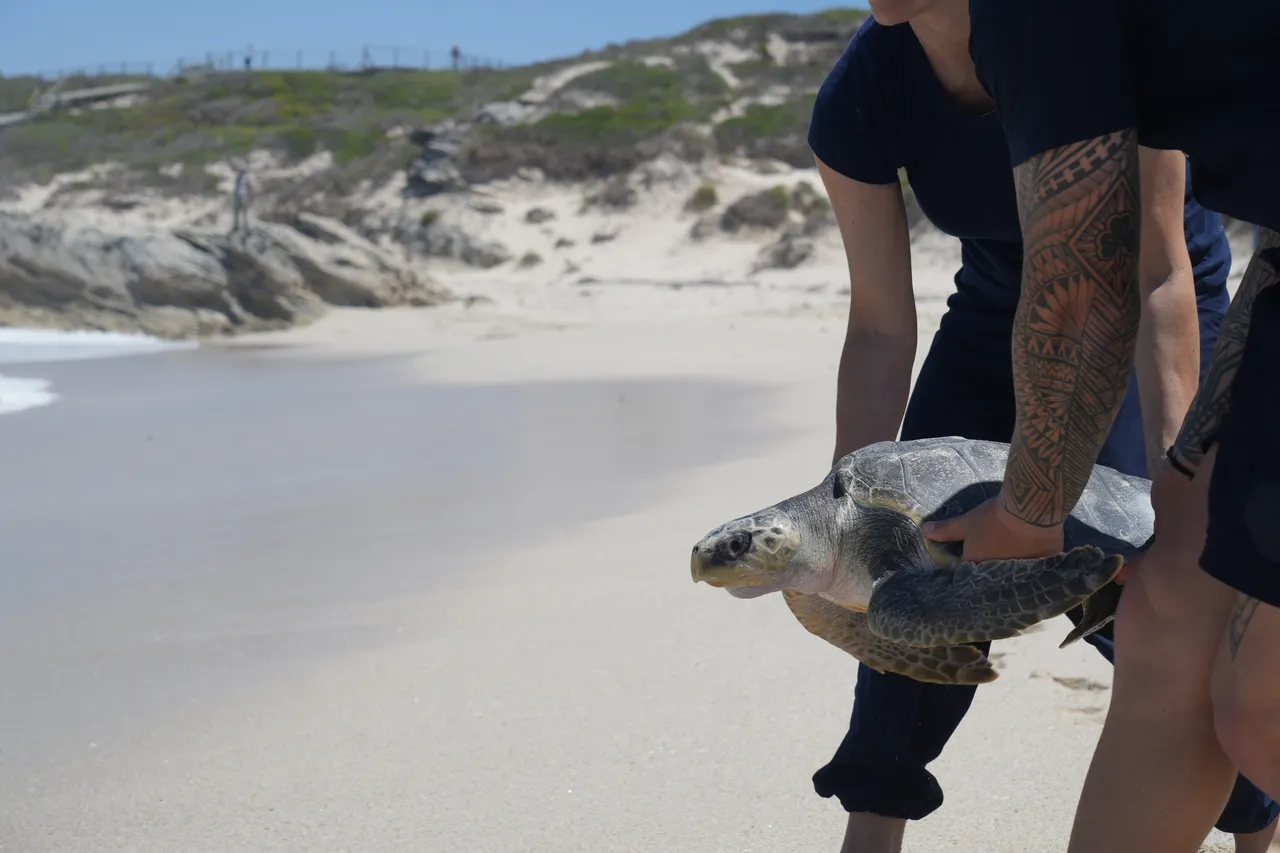
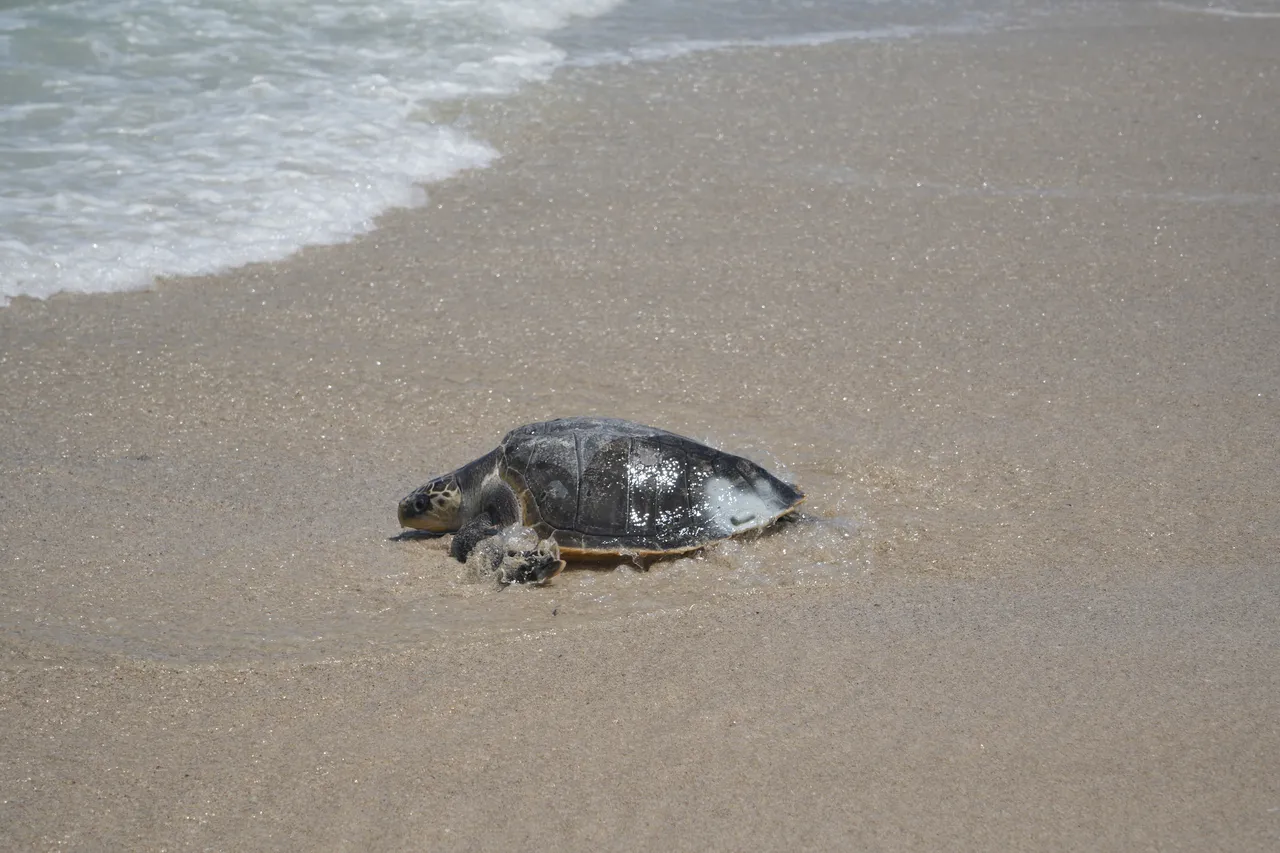
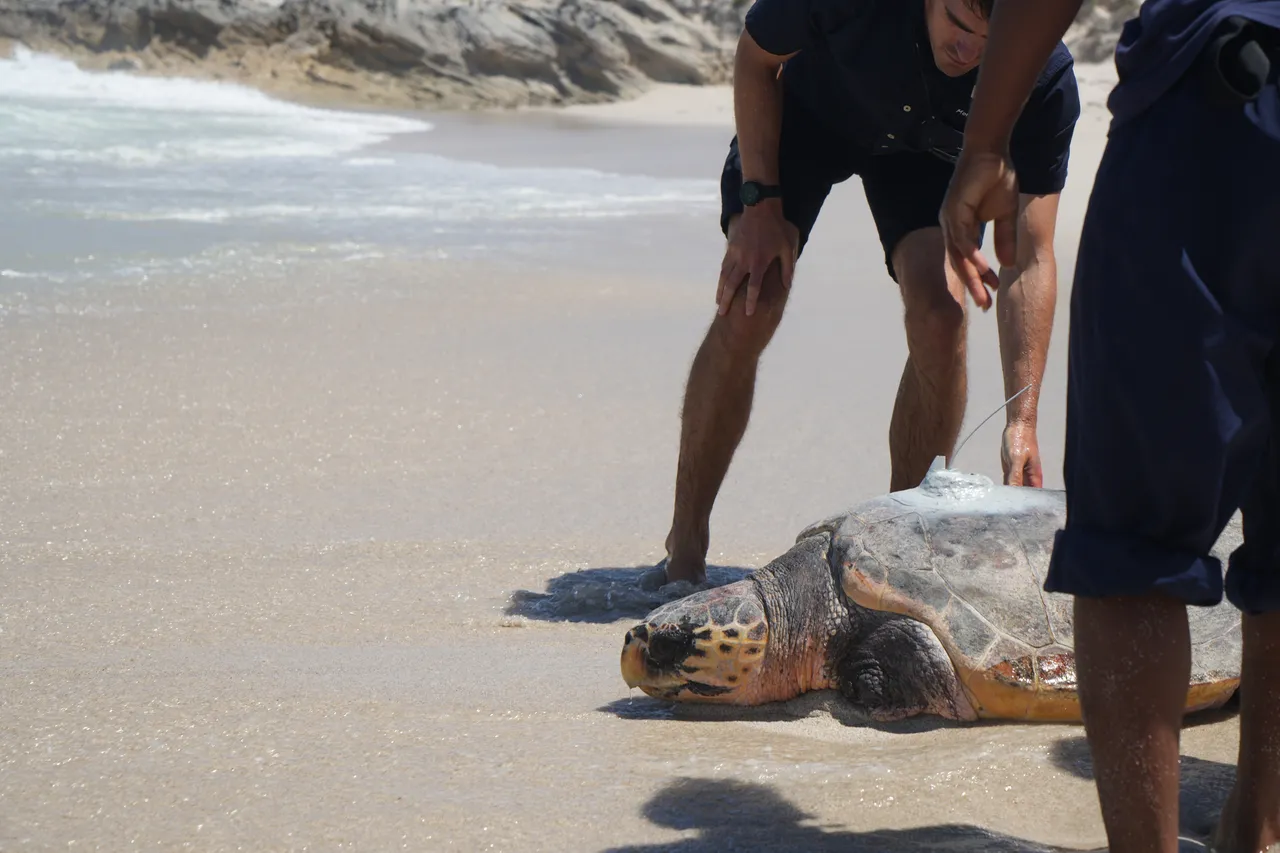
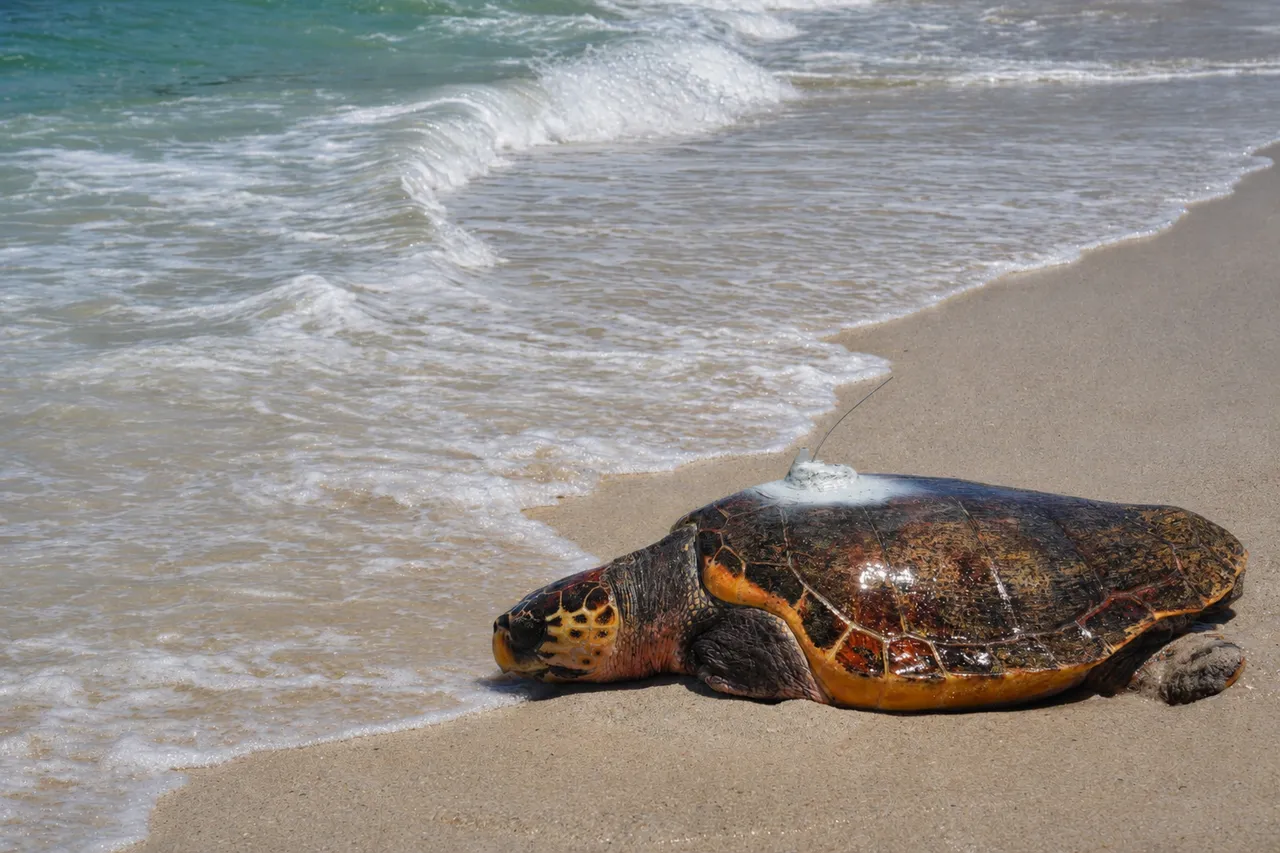
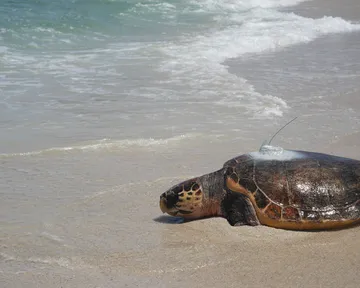
Finally, it was Habanero's turn. Rescue driver and turtle ambassador Mike Beyer said an emotional farewell before helping two Morukuru staff members and Siyolise to carry Habanero to the water. Because of his large size and missing left front flipper, Habanero needed a little extra help navigating the waves. But if there's one thing Habanero has taught us, it's that slow and steady wins the race. As soon as the waves touched his flippers, he was off!
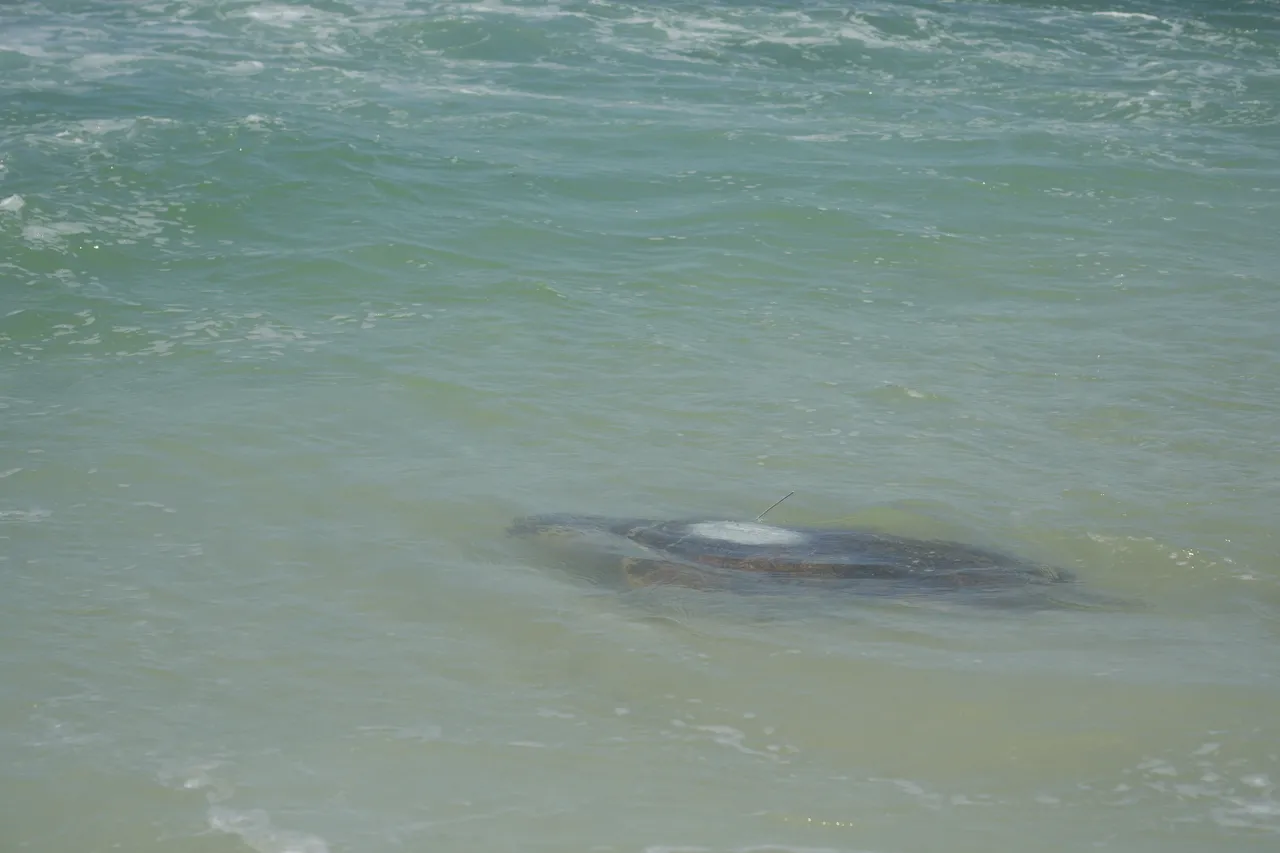
After months of dedicated care, countless hours of rehabilitation, and the support of an extraordinary community, all four turtles were finally back where they belonged.
A second chance and a brighter future for turtle conservation
We are incredibly fortunate to have De Hoop MPA as a trusted release site for our rehabilitated turtles. Declared a Marine Protected Area in 1985, De Hoop has long been recognised for its rich marine biodiversity. Its productive coastal ecosystems and seasonally warmer waters also make it a valuable release site for rehabilitated turtles, particularly juveniles and subadults.
For Amber and Bellatrix, returning to the ocean means another opportunity to contribute to the health of marine ecosystems. Hawksbill turtles feed largely on sponges, and in coral reef habitats, this feeding behaviour helps prevent sponges from outcompeting slow-growing corals for space, supporting reef biodiversity.
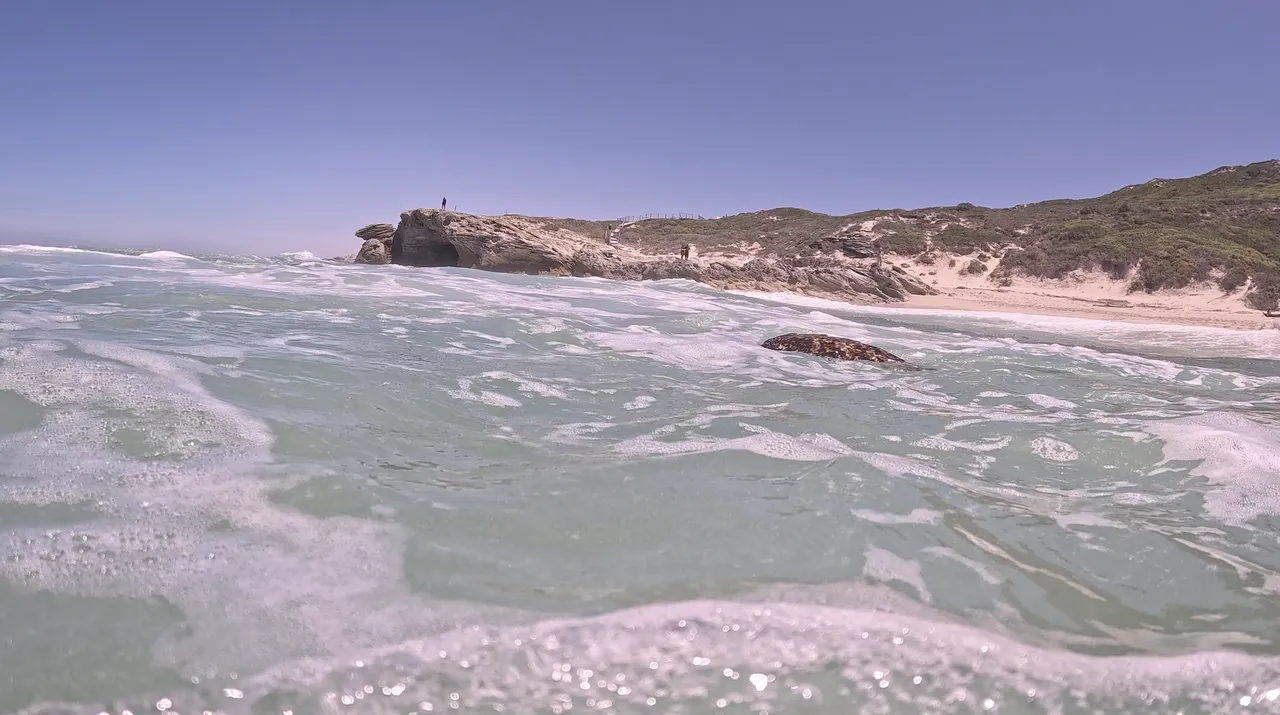
Sage's release marks a particularly exciting milestone: She is the first acoustically tagged olive ridley turtle released by our Turtle Conservation Centre! Her acoustic tag presents a valuable opportunity to learn more about the movements and habitat use of a subadult olive ridley turtle in southern African waters. While De Hoop MPA has already proven valuable for the release of green and hawksbill turtles at similar life stages, Sage's movements could provide new insights into how olive ridleys use this coastal environment.
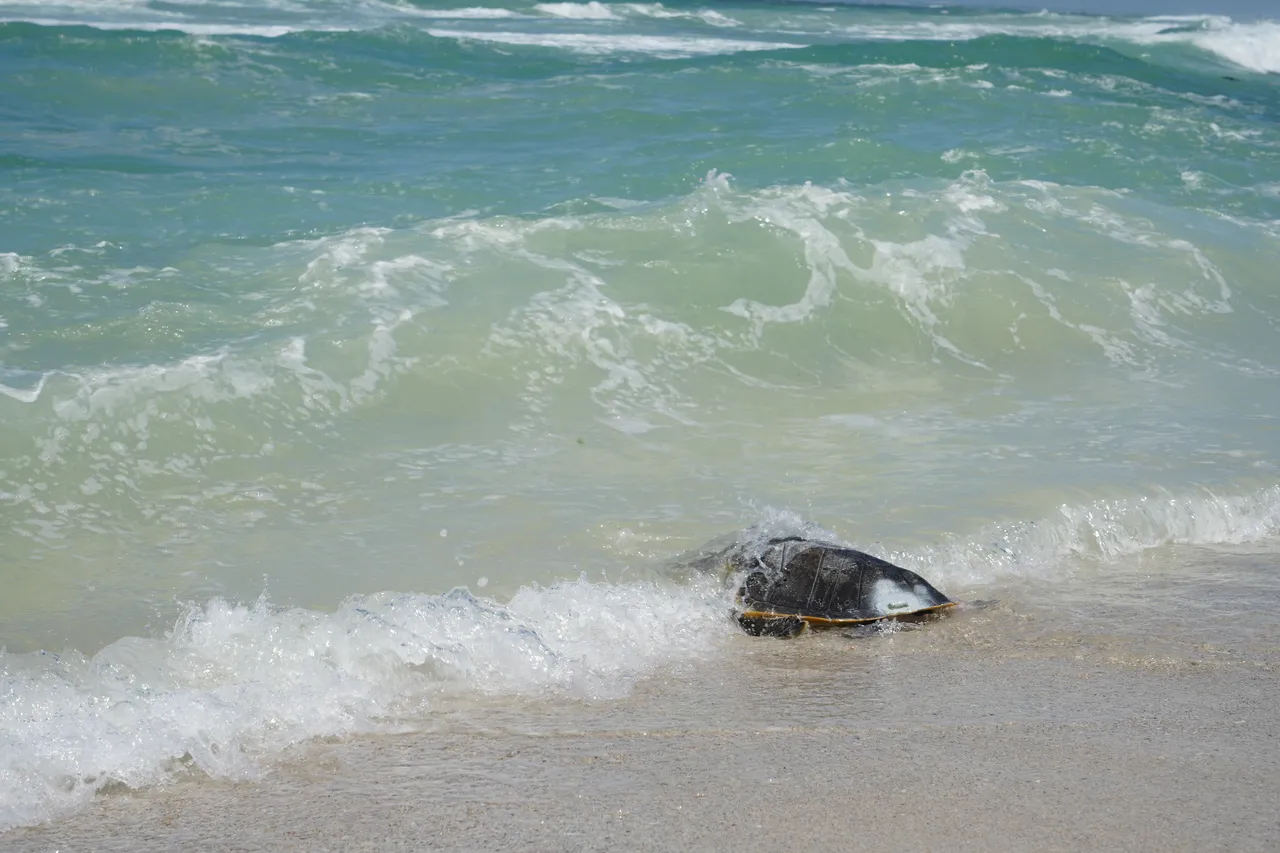
Habanero's return to the ocean is particularly significant given the extraordinary odds he has overcome. As an adult male loggerhead, he has the potential to contribute to the future of his endangered species by fathering the next generation of loggerhead turtles. Beyond his reproductive potential, loggerheads like Habanero also play important ecological roles, including regulating populations of bottom-dwelling invertebrates and contributing to nutrient cycling in marine ecosystems.
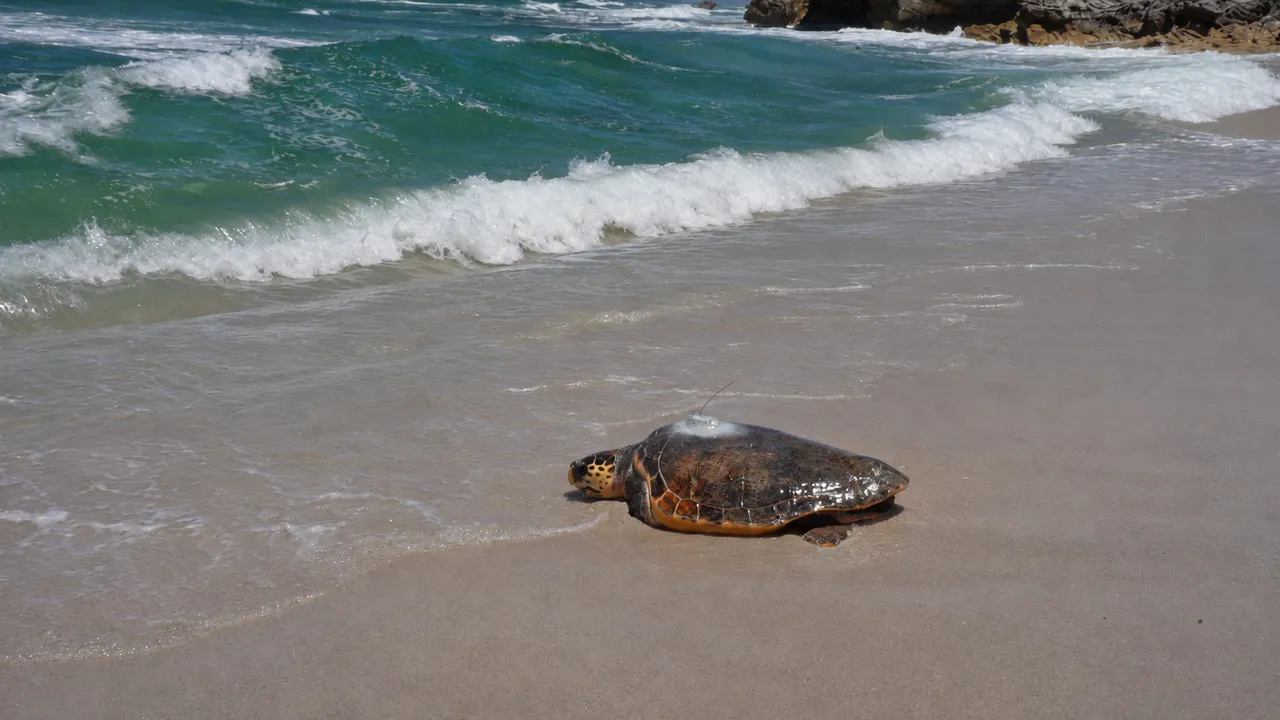
This release was made possible through the generosity and dedication of our turtle conservation community. We are especially grateful to Morukuru Goodwill Foundation, whose continued support of our turtle adoption programme helps us provide specialised rehabilitation care and track turtles after release. We also extend our heartfelt thanks to SAPRI for generously sponsoring three acoustic tags, which will help us gain valuable insights into the turtles' movements after release. Together, these contributions are helping us give rehabilitated turtles a second chance at life in the wild while advancing our understanding of these remarkable animals.
Ultimately, every successful release represents more than the end of a rehabilitation journey. It is an opportunity to return an important animal to its natural environment, contribute to scientific understanding, and strengthen our efforts to protect endangered sea turtles for generations to come.
Habanero’s first satellite tracking update is in
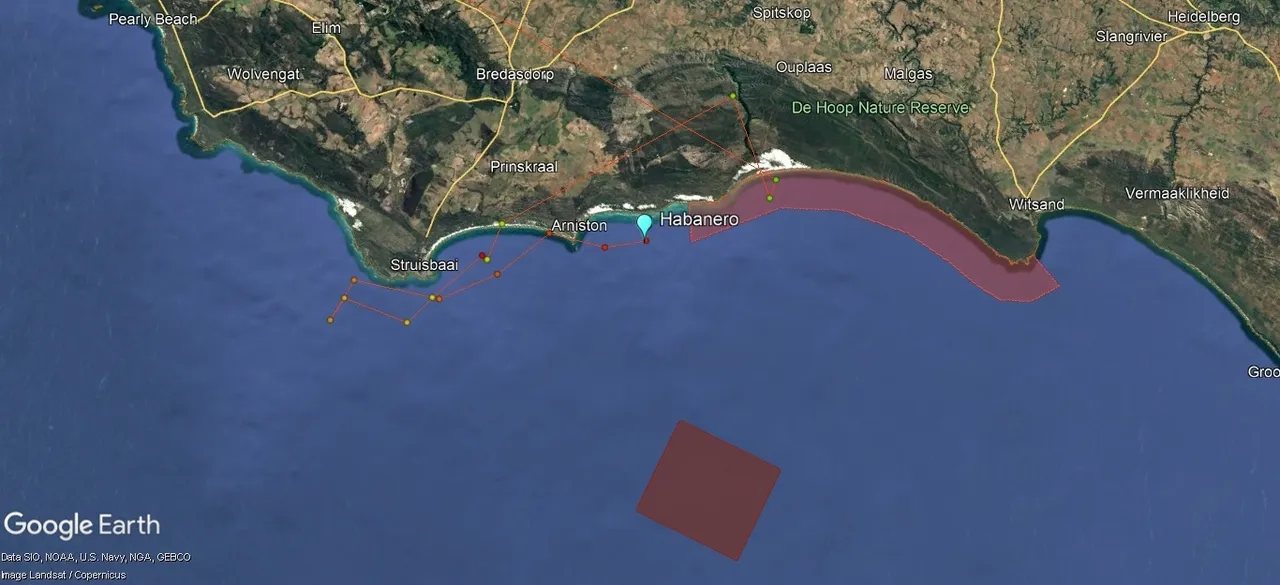
On his first day at sea, our gentle giant covered 10km, swimming towards the southern side of the bay near Skipskop. Soon after, Habanero began looping back towards De Hoop MPA. Just one week after returning to his ocean home, he has already travelled approximately 80km!
So far, Habanero has remained largely in coastal waters, which is to be expected as he readjusts to life in the ocean after nearly two years of rehabilitation.
Habanero’s satellite tag offers an exciting opportunity to learn more about the movements of a rehabilitated male loggerhead, contribute to global tracking data for his species, and gain insight into how a three-flippered turtle navigates life in the wild. Our Turtle Conservation Centre team is excited to see where his ocean adventures take him next!
Related News
Sign up to our Newsletter
Receive monthly news, online courses and conservation programmes.