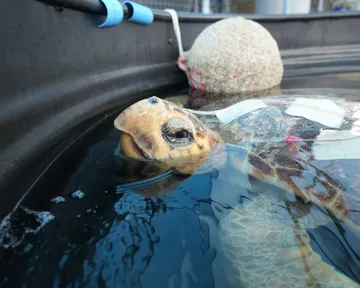
Meet Amber, a hawksbill turtle in rehabilitation at our Turtle Conservation Centre
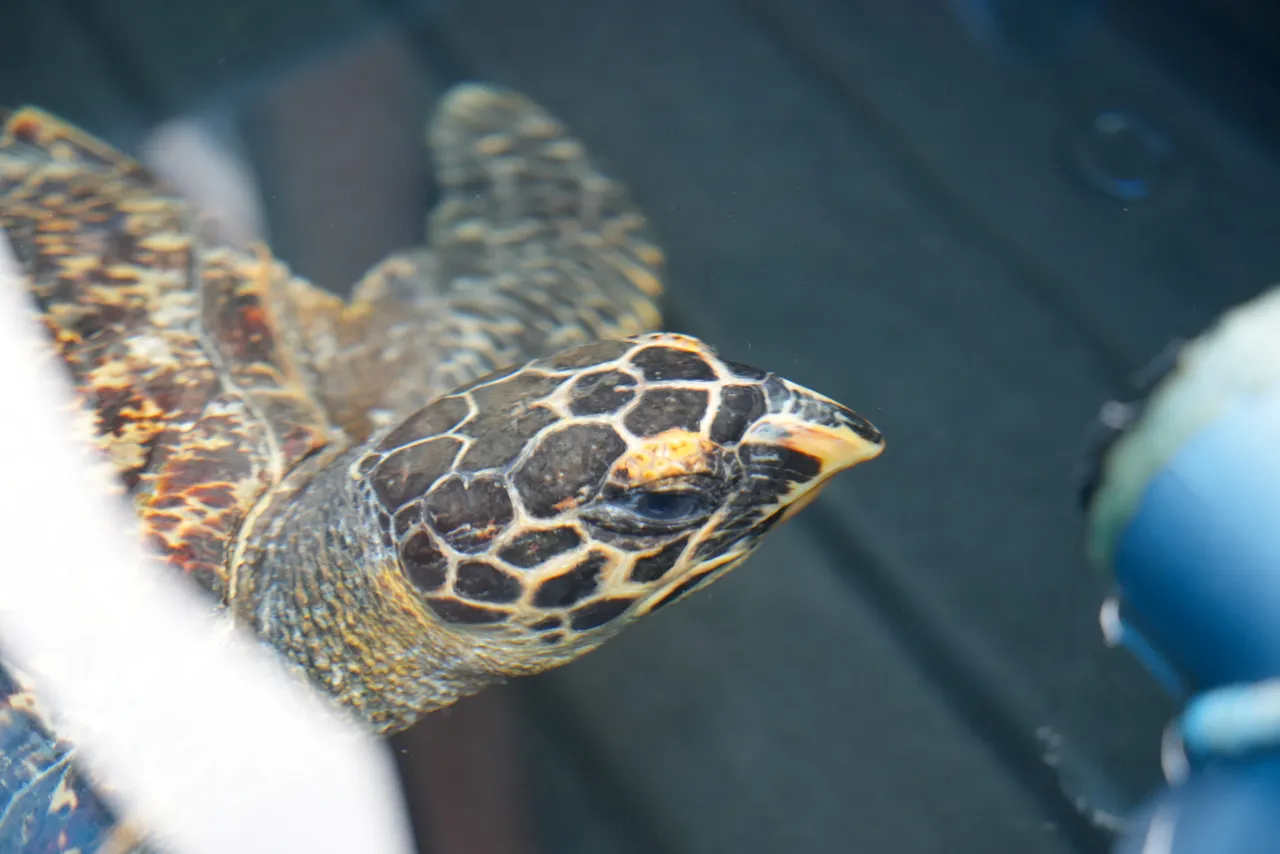
From September to February, our coastline sees an increase in subadult turtle strandings, and our Turtle Conservation Centre welcomes multiple new arrivals for rehabilitation. This period is dubbed “green season”: Just as the turtle community knows that loggerhead turtle hatchlings wash ashore at particular times of the year, subadult turtles follow a similar pattern. Although mostly green turtles strand during this time (hence the name), other species like hawksbill turtles are not far behind.
Right on schedule, on 7 September 2026, our Turtle Rescue Network was alerted to a subadult hawksbill turtle washed ashore on a beach in Betty's Bay, between Sea Farm and Silver Sands. The rescuers immediately noticed she was missing her front right flipper.
After alerting our Turtle Rescue Network, Michelle Watson from Kogelberg Wildlife Sanctuary got Amber safely off the beach and out of the elements. Then, cushioned in the backseat of Sam Marais’ car, the little turtle was transported to the Turtle Conservation Centre that same day.
Just after noon, Amber arrived in Cape Town, dehydrated after her long journey. She was received by Siyolise Bezu, one of our Turtle Aquarists, and Dr Bernice van Huyssteen, our turtle veterinarian. Immediately, Dr Bernice checked out Amber’s amputated right flipper and was heartened to find that it was an old wound and completely healed - another testimony to the remarkable capacity of sea turtles to survive. Together, Siyolise and Dr Bernice inspected Amber’s body condition, noting a few barnacles on her shell and a generally weak demeanour, before taking her measurements. She weighed a solid 7.1kg and her shell measured just under 42cm in length.
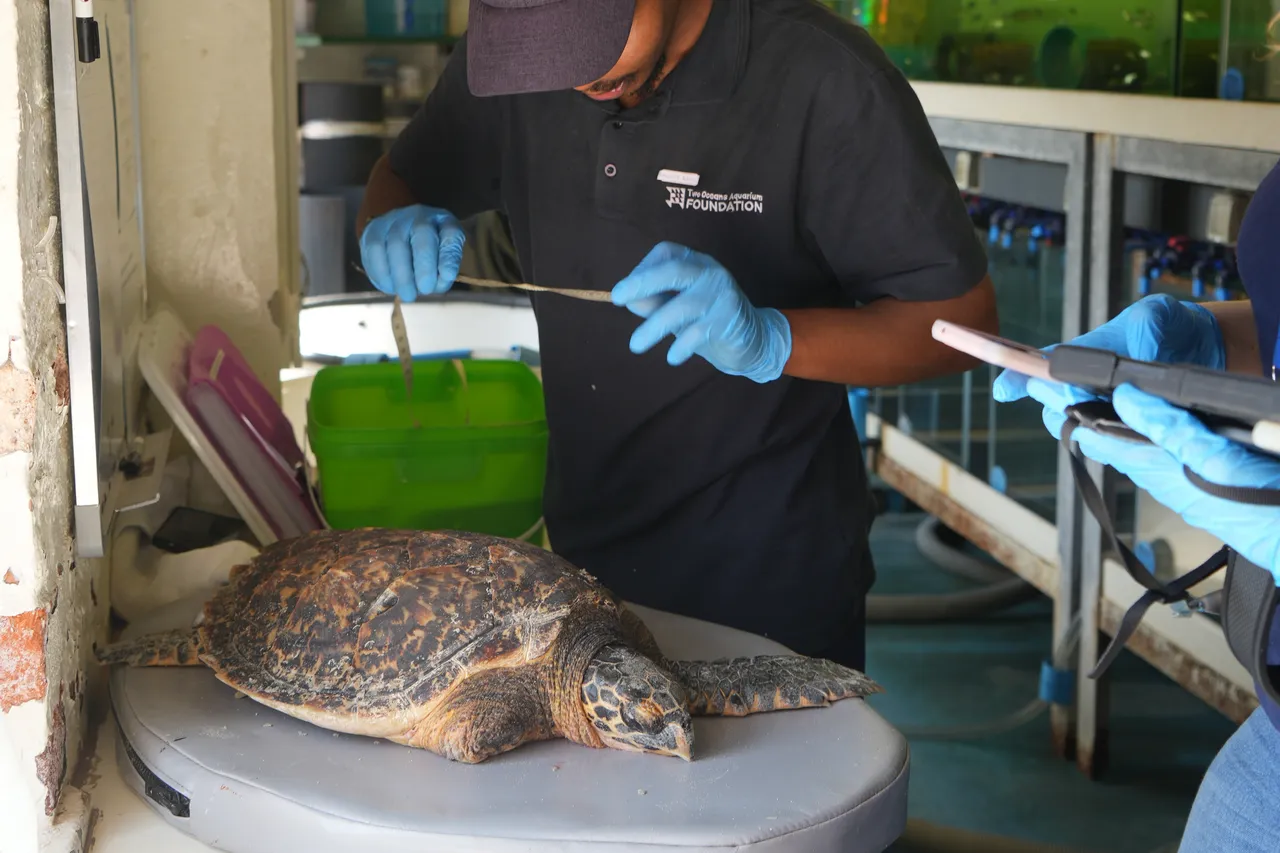
Finally, Dr Bernice gave her some intravenous fluids to help her rehydrate and a glucose injection to balance her blood sugar levels before Siyolise placed her in a freshwater bath.
The turtle was soon adopted by our longtime supporters, Morukuru Goodwill Foundation, who named her Amber for her beautiful colouration. As Habanero’s adopters, too, we’re starting to wonder if Morukuru Goodwill Foundation has a soft spot for our three-flippered turtles...
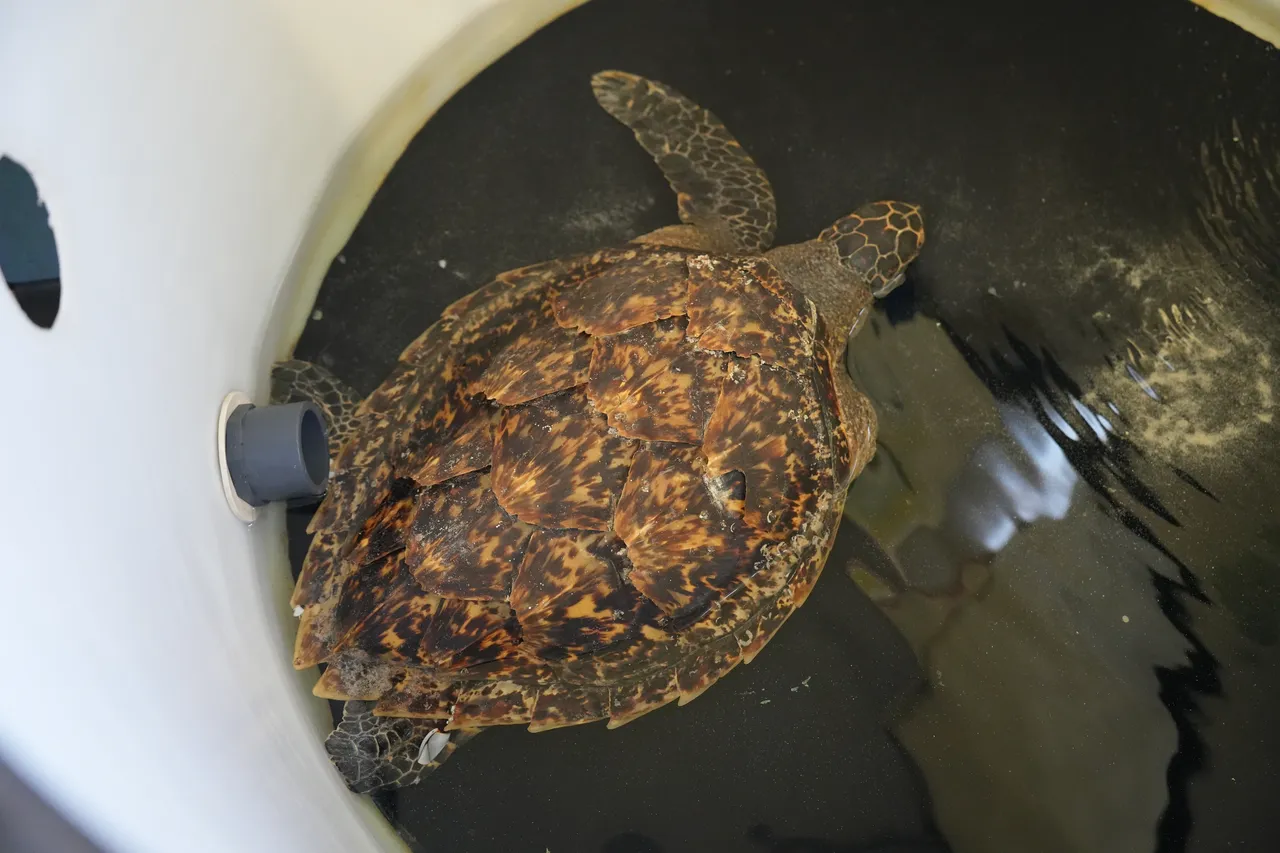
In the first few days after her rescue, Amber remained weak and uninterested in food, so Dr Bernice started her on a pre-emptive course of antibiotics. The team also kept the water levels in Amber’s tank low, so that she could easily lift her head to breathe. Thankfully, she responded positively to the supportive care and soon started eating, after which she coped well with elevated water levels. Amber quickly recovered from needing critical care, graduating to a larger holding tank in the main turtle rehabilitation space.
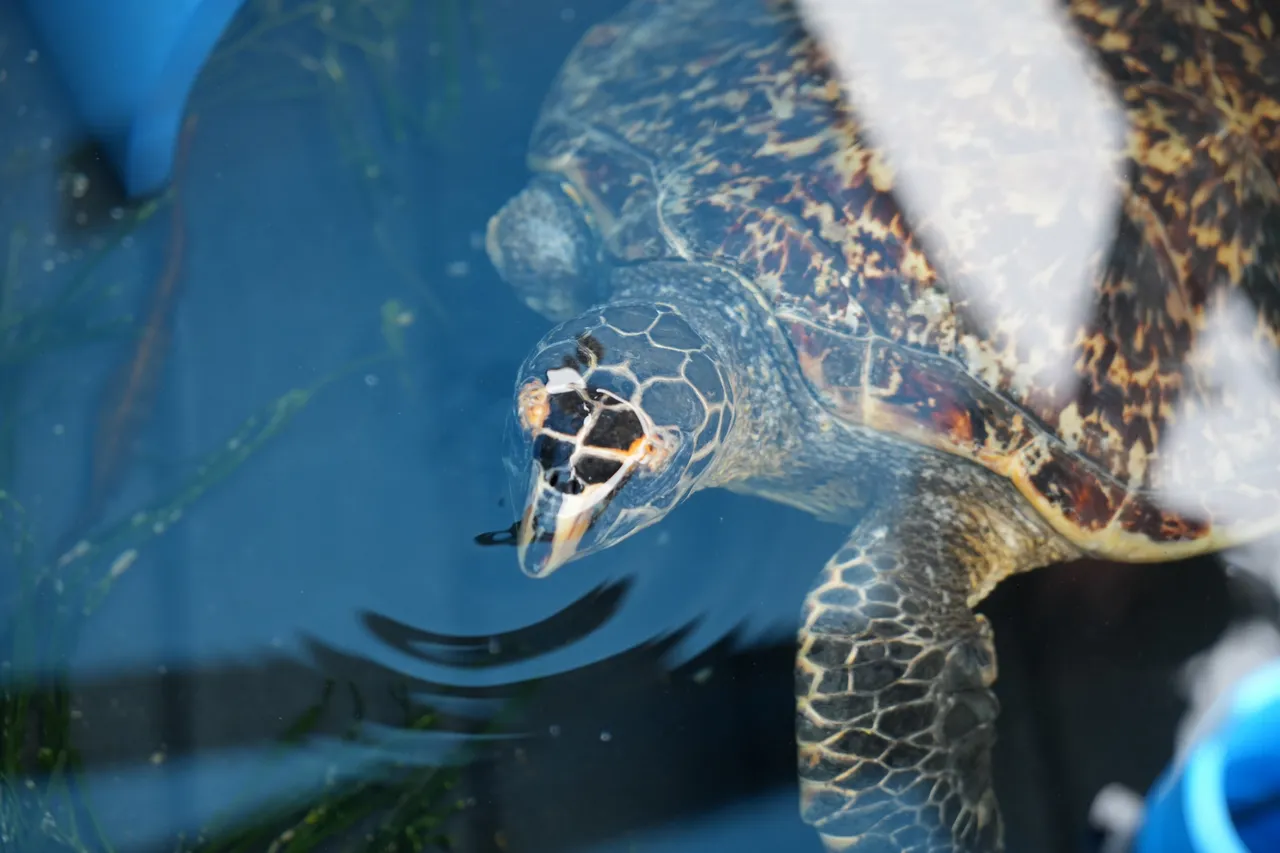
Three weeks after her rescue, she is diving and eating with gusto! After finishing her course of antibiotics, Amber had her first target training session in early October. One of our Turtle Aquarists, Razaan Samuels, placed a patterned "paddle" in the water with Amber's food in front of it. This teaches Amber to associate food with the target, and not with humans.
Target training is used across our Turtle Conservation Centre – with this method, our turtles will be less likely to approach humans for food once they are back in the wild ocean. So far, Amber has responded with ease to the introduction of a target and engaged with it enthusiastically.
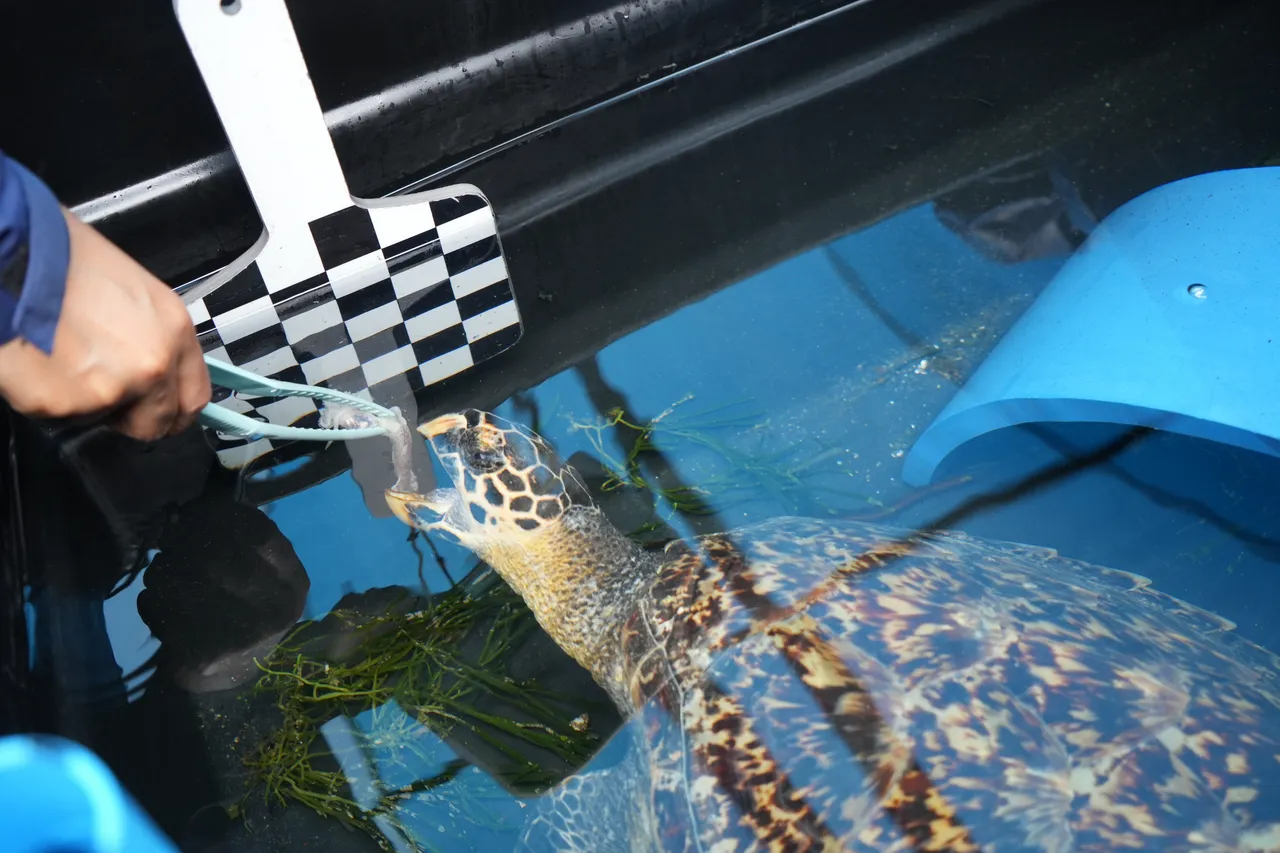
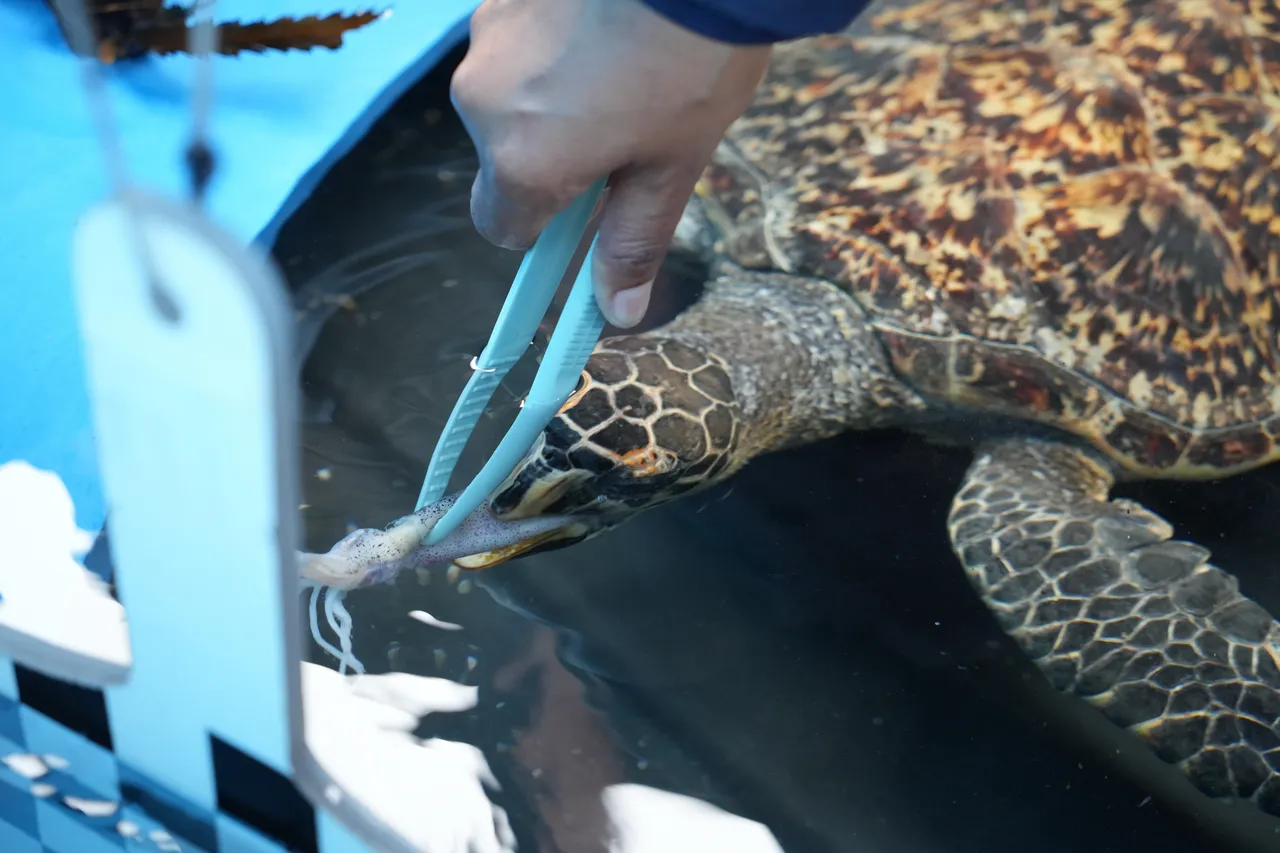
The turtle team is feeling positive that Amber’s journey to a full recovery will be speedy and smooth! As a juvenile hawksbill turtle, Amber has the potential to play an important role in healthy coral reef ecosystems once she is released. Hawksbills’ diet consists largely of sponges, and their feeding habits help prevent sponges from outcompeting slow-growing corals for space, supporting the diversity and health of the reefs they call home.
Hawksbill turtles are listed as Critically Endangered on the IUCN Red List, so every individual matters. With Morukuru Goodwill Foundation’s support, our Turtle Conservation Centre is giving Amber a second chance at life and the opportunity to return to the ocean, where she can contribute to the health and resilience of marine ecosystems.
Related News
Sign up to our Newsletter
Receive monthly news, online courses and conservation programmes.