Tracking our turtles: Nori, the green turtle's last update
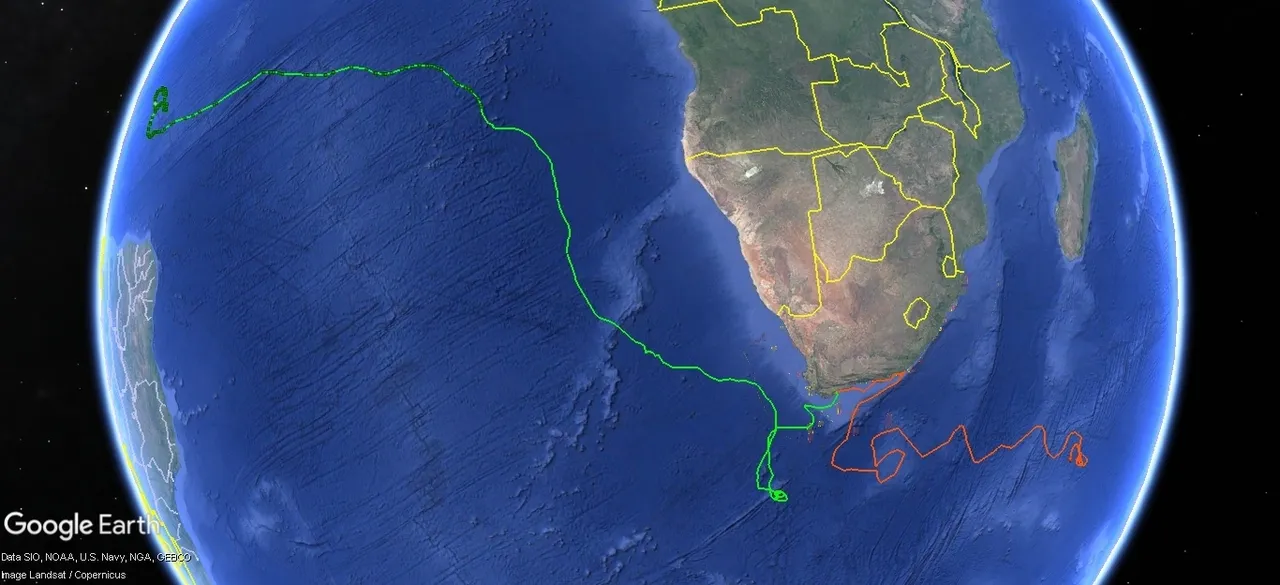
Our Turtle Conservation Centre has been following the adventures of two special rehabilitated turtles: Kai, a juvenile loggerhead turtle, and Nori, a subadult green turtle. Although both were released into the De Hoop Marine Protected Area, their journeys since returning to the ocean couldn't have been more different!
Thanks to their satellite tags, we've been able to follow Kai and Nori’s movements across thousands of kilometres of open ocean, gaining fascinating insights into how rehabilitated turtles adapt to life back in the wild.
This month, we have an exciting update from Kai, who continues to make incredible progress across the Indian Ocean, and a bittersweet farewell to Nori's satellite transmissions after more than ten months of remarkable tracking.
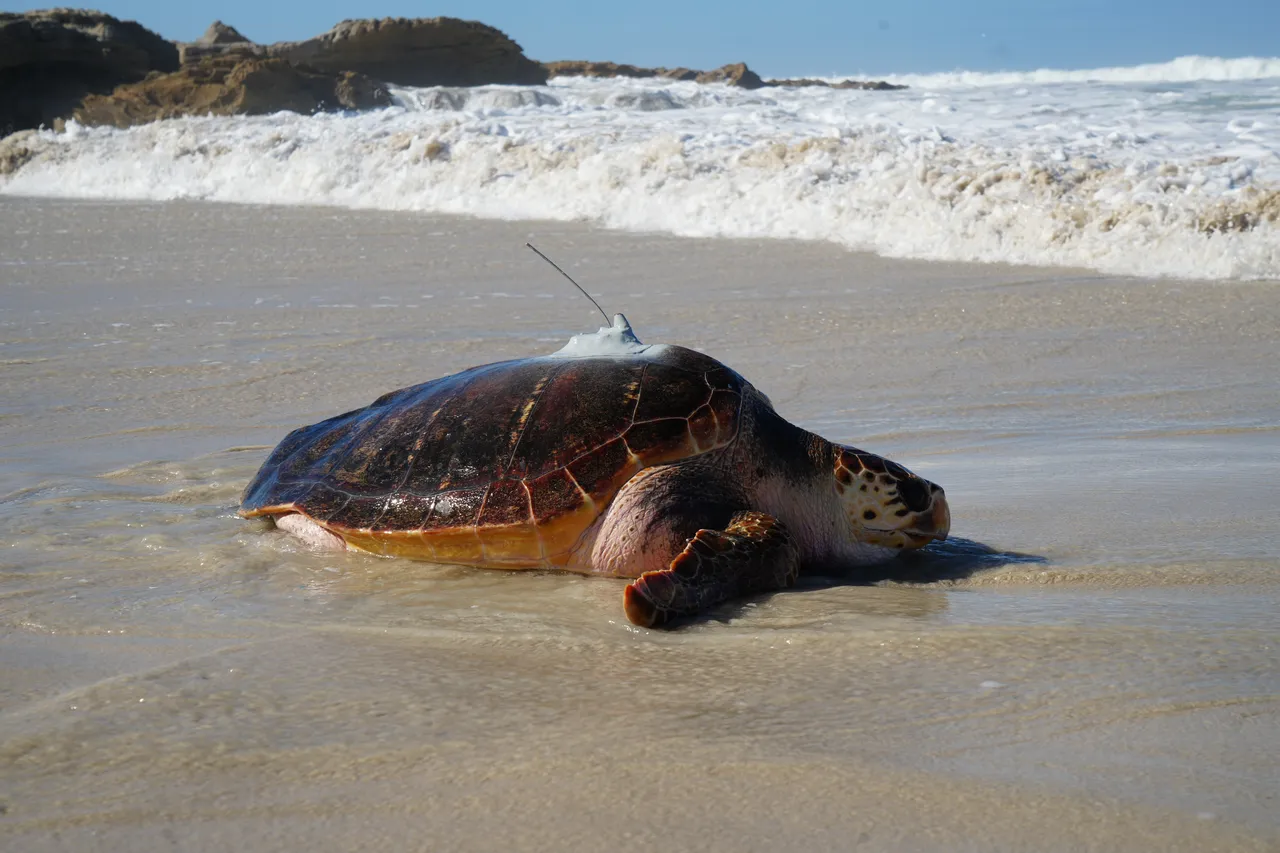
Kai, the loggerhead turtle
Our special loggerhead turtle, Kai, was released into the De Hoop Marine Protected Area on 14 May 2026, after nearly six years of rehabilitation at our Turtle Conservation Centre.
When he finally returned to the ocean, he was strong, healthy, and weighed an impressive 100kg – an incredible achievement for a turtle who had spent almost his entire life in rehabilitation!
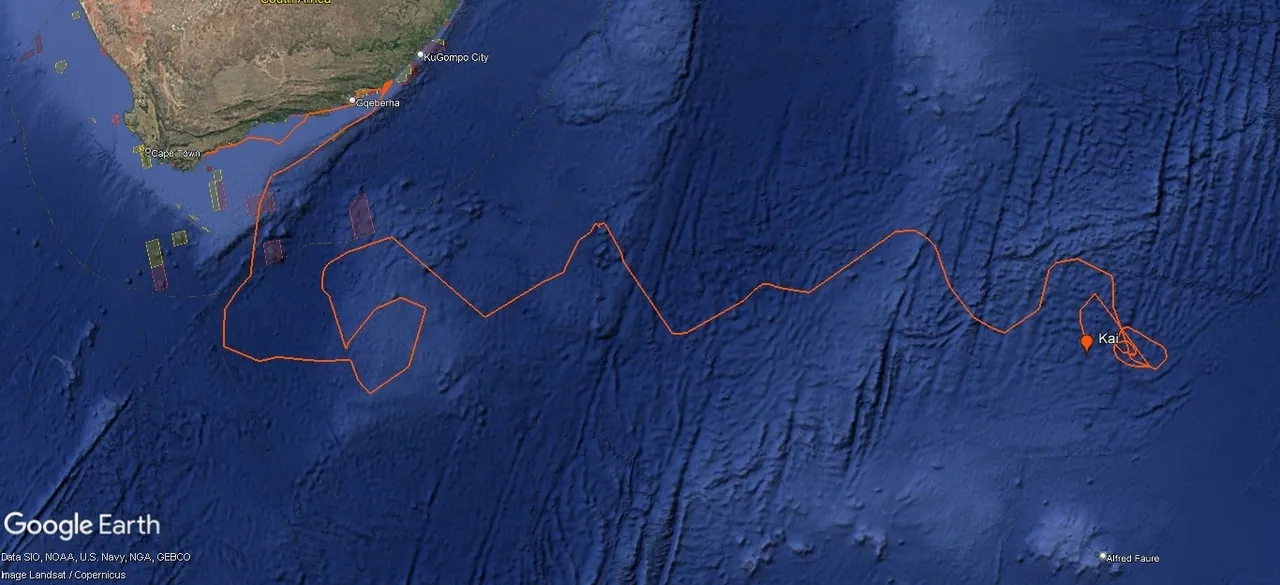
Now, just over five months (157 days) since his release, Kai is showing us how well he has readjusted to life in the big blue. He has travelled an astounding 7 830km, averaging 49.9km per day.
After an initial coastal adventure along the Garden Route and into the Eastern Cape, Kai headed offshore and joined the warm, fast-moving Agulhas Current at the end of June. Since then, he has been making the most of this powerful ocean highway!
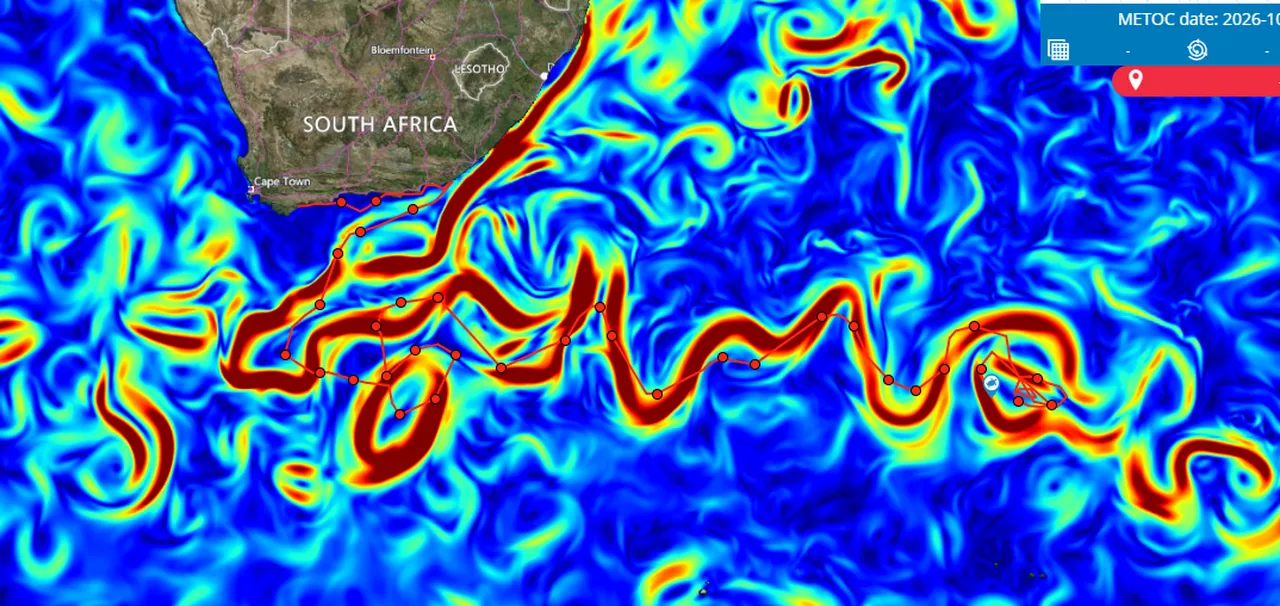
The Agulhas Current flows southwards along the east coast of Africa, carrying warm tropical water towards the southern tip of the continent. Here, much of the current turns back on itself in a process known as retroflection, flowing eastwards into the Indian Ocean.
Kai has followed the current's pathway almost to a T! Along the way, he has even crossed the Southwest Indian Ridge, a vast underwater mountain range stretching across the Indian Ocean floor.
Ocean currents play an important role in turtle migration, helping them cover enormous distances while conserving energy. It has been astounding to watch Kai make such effective use of the Agulhas Current, particularly after spending nearly six years in rehabilitation.
Will Kai continue to "go with the flow", or will we soon see him break away from the current and begin some more intentional, directional swimming? We are so excited to find out!
Nori, the green turtle
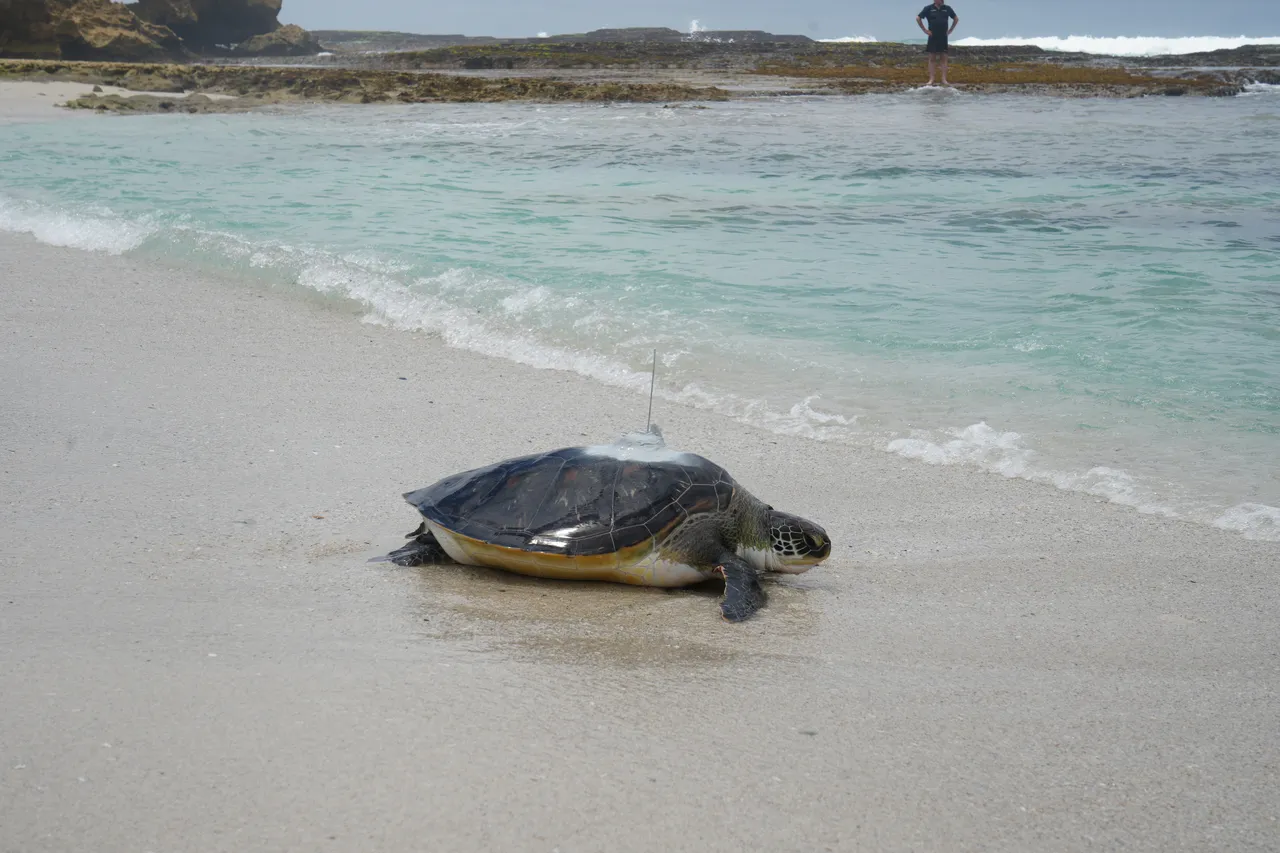
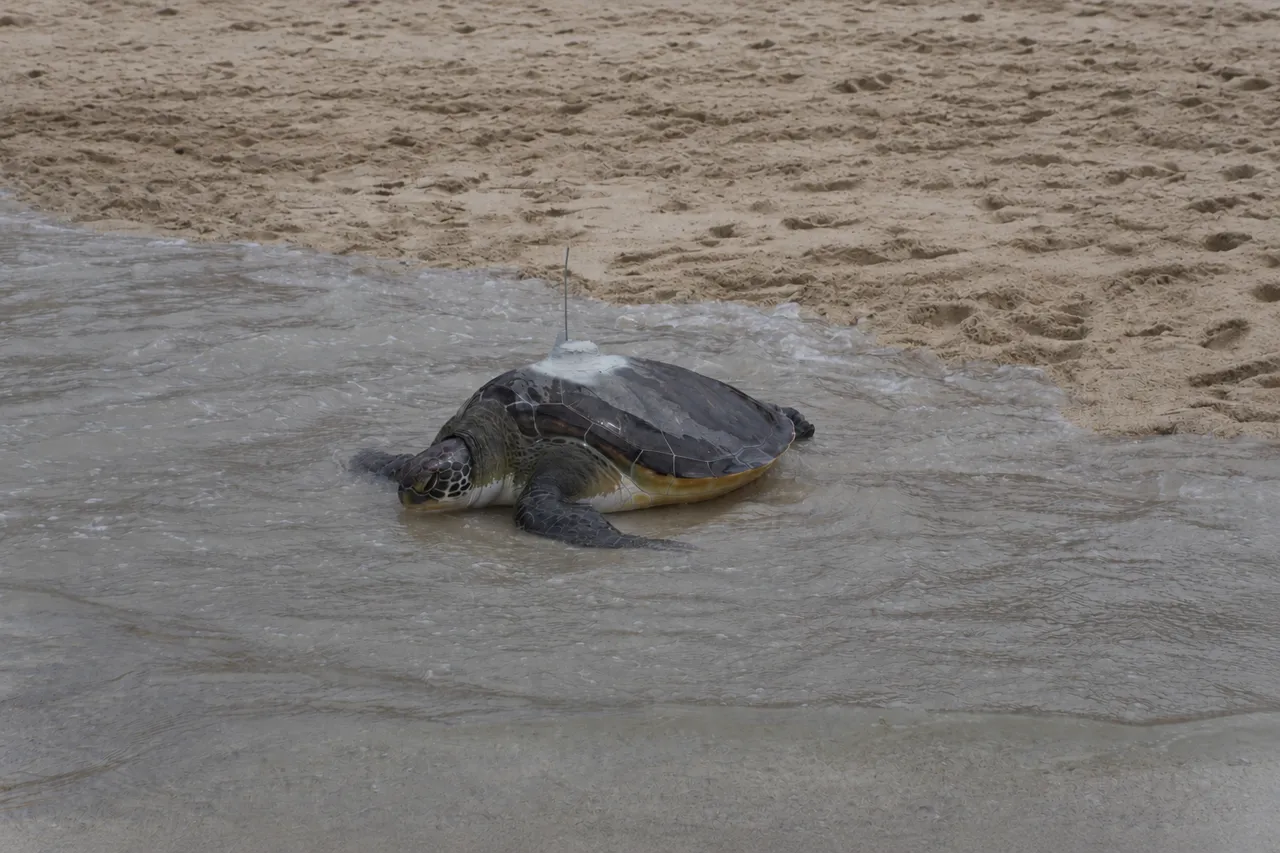
Our adventurous green turtle, Nori, was released into the De Hoop Marine Protected Area on 26 November 2025, after two years of rehabilitation at the Turtle Conservation Centre.
Nori was rescued in Witsand in 2023 with neurological and eyesight issues. Her recovery involved an extensive environmental enrichment programme designed to encourage her natural behaviours, stimulate her mind, and help her regain the skills needed to thrive in the wild. And she certainly did thrive…
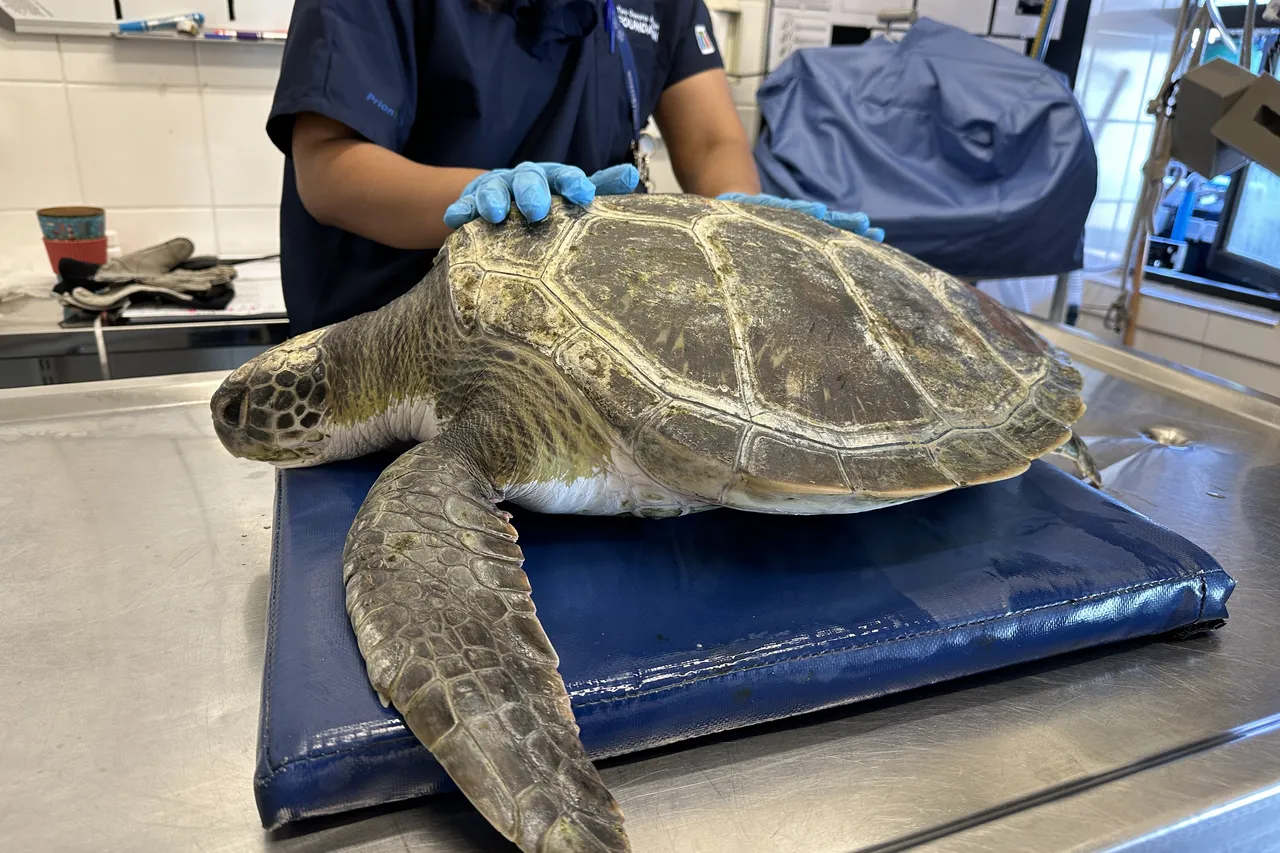
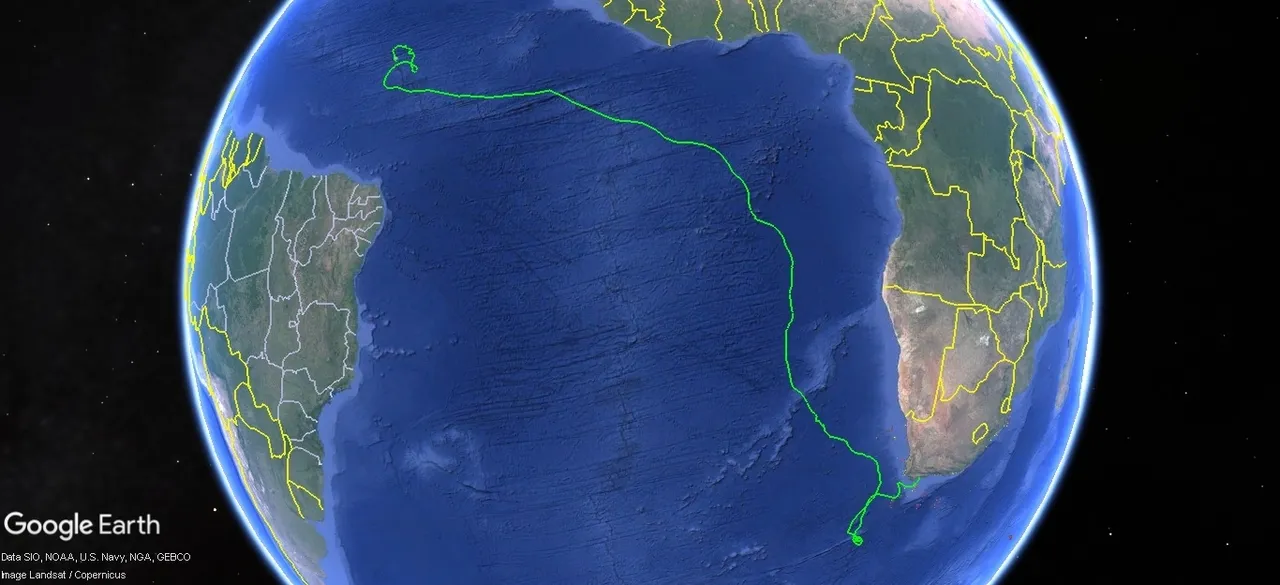
Over 309 days of satellite tracking, Nori travelled an extraordinary 12 540km, averaging 40.5km per day! With this weekend's Nelson Mandela Marathon activities fresh in mind, covering these distances day after day for more than ten months seems like a proper feat!
Unfortunately, after more than ten months of fascinating travels, Nori's satellite tag has stopped transmitting.
Importantly, the loss of a satellite signal does not necessarily indicate that anything negative has happened to Nori. Satellite tags have a lifespan of up to three years, so it is most likely that the battery on Nori's tag simply ran out.
The fact that Nori is a green turtle makes this achievement even more impressive. Green turtles have smoother, rounder, and oilier shells than some other turtle species, making it more difficult for satellite tags to remain securely attached for extended periods.
Shell growth can also loosen tags over time, particularly in favourable conditions where turtles may grow faster. The accumulation of algae and barnacles, known as biofouling, can interfere with signal transmission, while turtles rubbing their shells against rocks and reefs to scratch an itch can dislodge even securely attached tags.
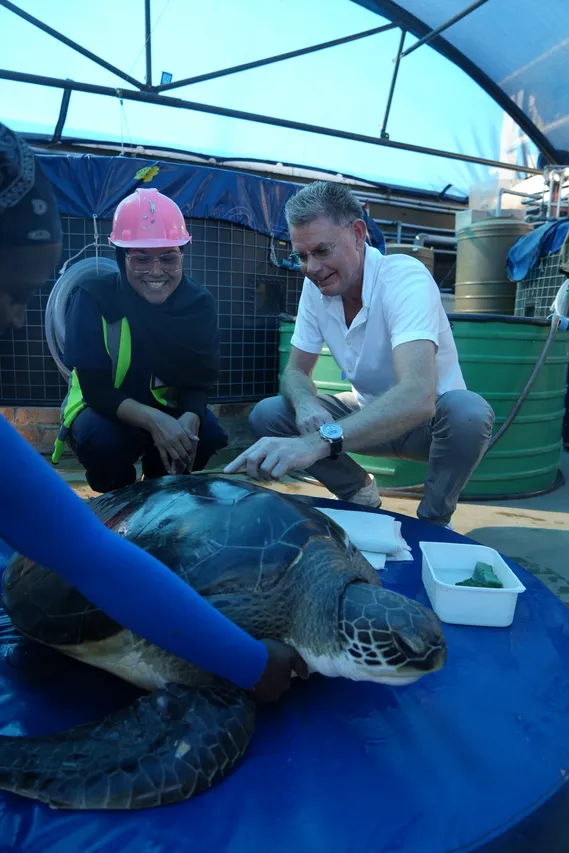
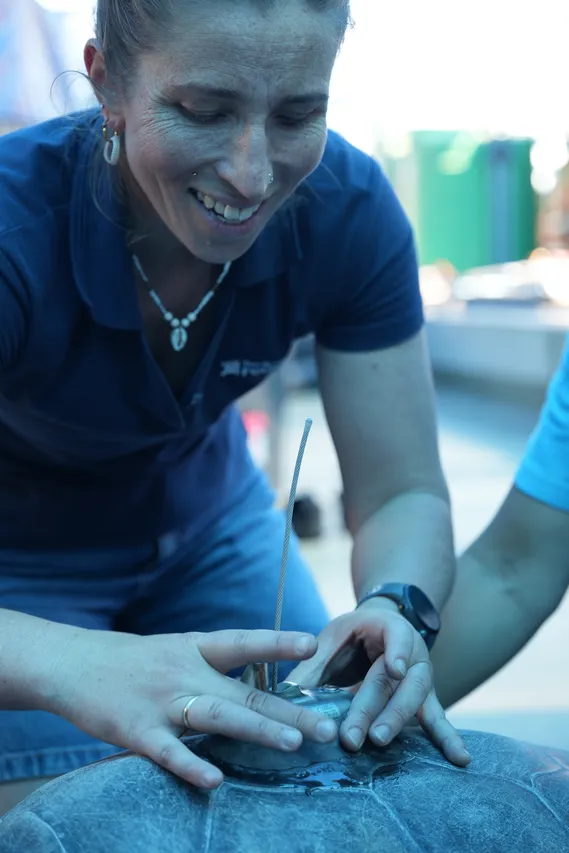
The Turtle Conservation Centre team, joined by Rinse Wassenaar from Morukuru Family, fitted Nori with a satellite tag just before her release.
Whatever the reason for the loss of transmission, the Turtle Conservation Centre is thrilled to have been able to track Nori's movements for nearly a year. And what a fascinating one it's been!
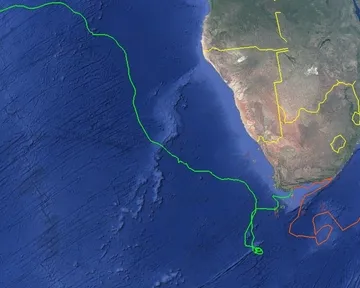
In the days following her release, Nori initially travelled southwards, making big loops through the surface currents and eddies associated with the Agulhas Current. However, she soon changed direction and began what would become an extraordinary northward journey through the Atlantic Ocean.
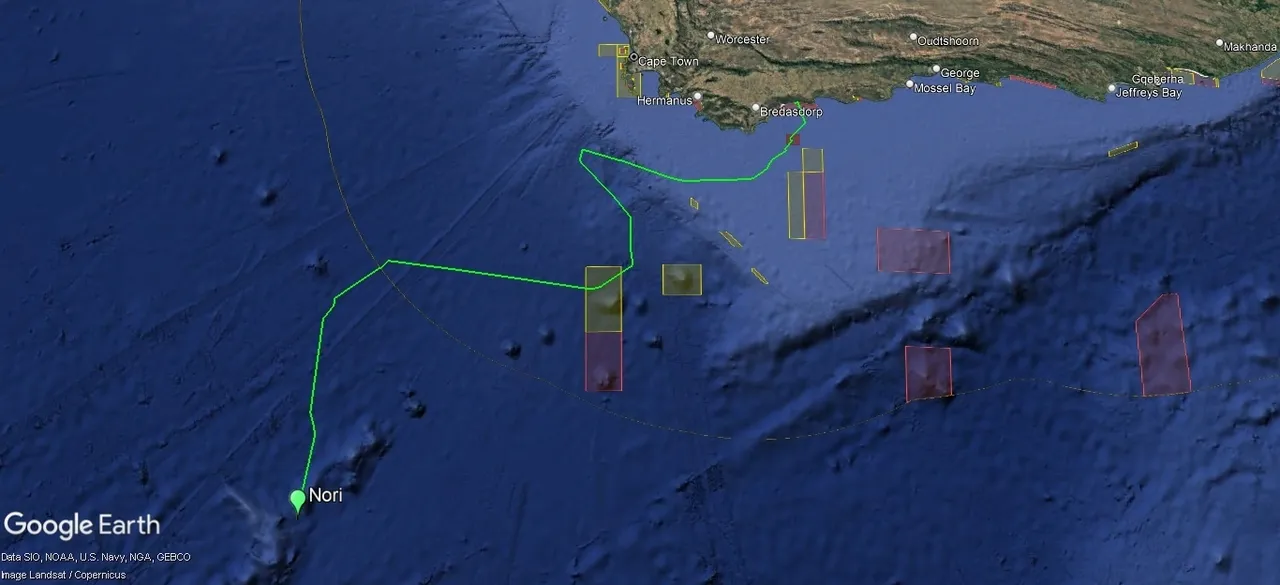
Nori's earlier transmissions after her release in November 2025.
Unlike Kai, who has made extensive use of the Agulhas Current, Nori spent much of her journey swimming with remarkable intention, often travelling independently of the prevailing surface currents. She journeyed northwards past Namibia and Angola, crossed the Walvis Ridge, an enormous underwater chain of ancient volcanic mountains, and continued into the tropical Atlantic.
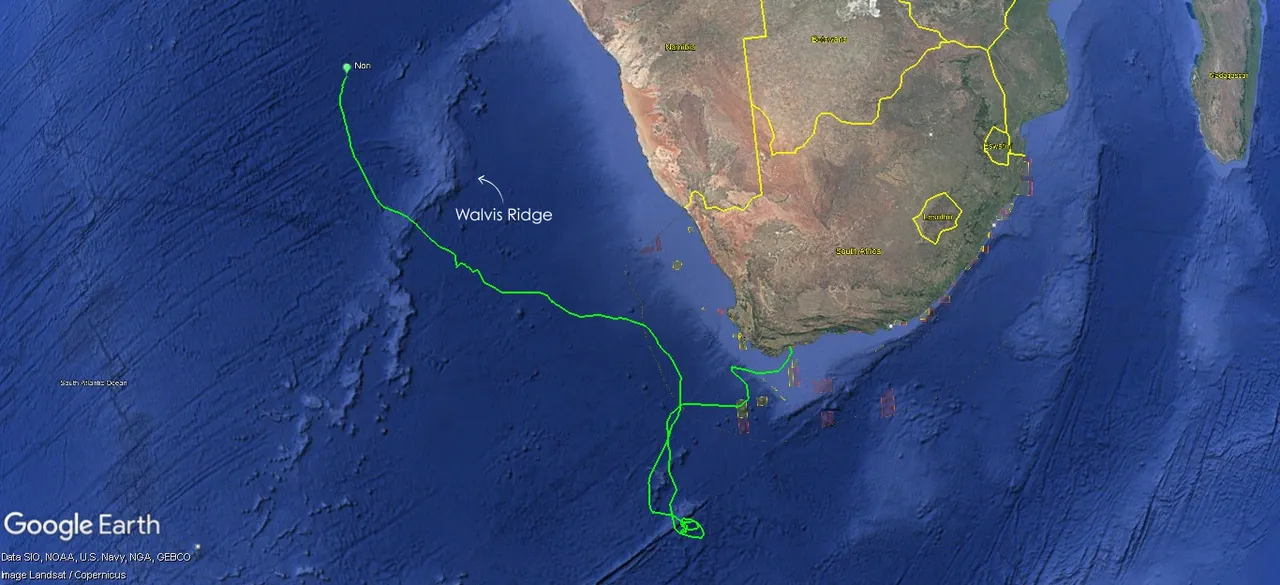
Along the way, Nori passed through waters associated with important green turtle foraging and nesting regions. Like most other turtle species, green turtles are highly migratory and can travel enormous distances between feeding and breeding habitats, so we were fascinated to see whether Nori might eventually settle in one of these areas.
But she kept us guessing, and after months of purposeful northward travel, her movements began to change. Nori turned away from her previous route and, in recent weeks, started following the surface currents between South America and Africa, once more making beautiful loops across the open North Atlantic Ocean. Her tag's last transmission came from these warm tropical waters, where seasonal changes in ocean currents and nutrient availability create pockets of productivity within the vast open ocean. At this time of year, sea surface temperatures in the area range between 28°C and 29°C, so we're ending our chapter with Nori knowing she's exploring some lovely warm waters!
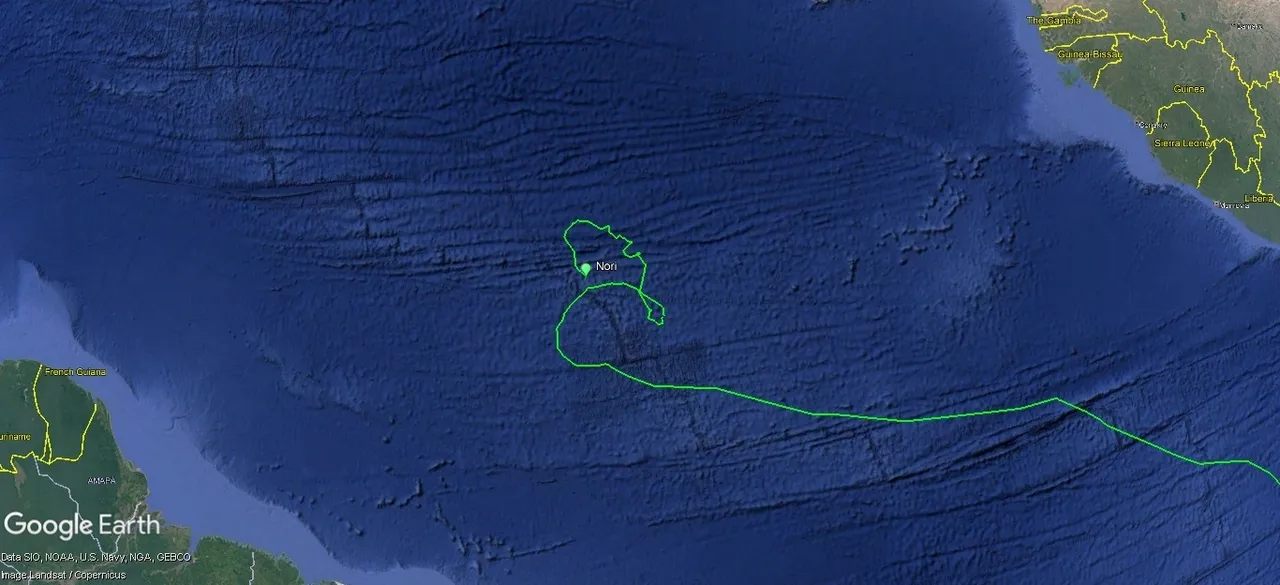
It is fascinating to consider how much of Nori's journey has been driven by her own directional swimming and how much has been influenced by the currents she encounters. Her tracks have offered us a glimpse into the complex movements of a rehabilitated green turtle, while reminding us that there is still a lot to learn about these ocean travellers.
Although Nori's satellite tag has stopped transmitting, her journey certainly hasn't ended. Somewhere out in the vast Atlantic Ocean, we hope she is continuing to explore, forage, and thrive in her wild home.
The world is at Nori's flipper tips, and we wish her well on this next, untracked chapter of her adventure!
Making these journeys possible
The Turtle Conservation Centre is incredibly grateful to Kai's and Nori's adopters, Morukuru Goodwill Foundation, who generously sponsored their satellite tags. These tags provide a window into the lives of rehabilitated turtles after release, helping us understand how they adapt to the wild, which ocean habitats they use, and how they interact with the currents that connect these environments. Ultimately, this information contributes to ongoing turtle research and conservation, helping us better understand these remarkable animals and how best to protect them.
Although our ability to follow Nori's journey has come to an end, there is still plenty we can do to help ensure that the ocean remains a safe place for her and other turtles. From ditching single-use plastics like straws and plastic bags to choosing sustainable seafood and supporting ocean conservation initiatives, our everyday choices can make a difference.
A heartfelt thank you to everyone who has followed and celebrated Kai and Nori's ocean adventures with us. While we say goodbye to Nori's satellite transmissions, we look forward to seeing where Kai's journey takes him next!
Related News
Sign up to our Newsletter
Receive monthly news, online courses and conservation programmes.