Ragged-tooth shark trafficking: Blue’s journey back to the wild ocean
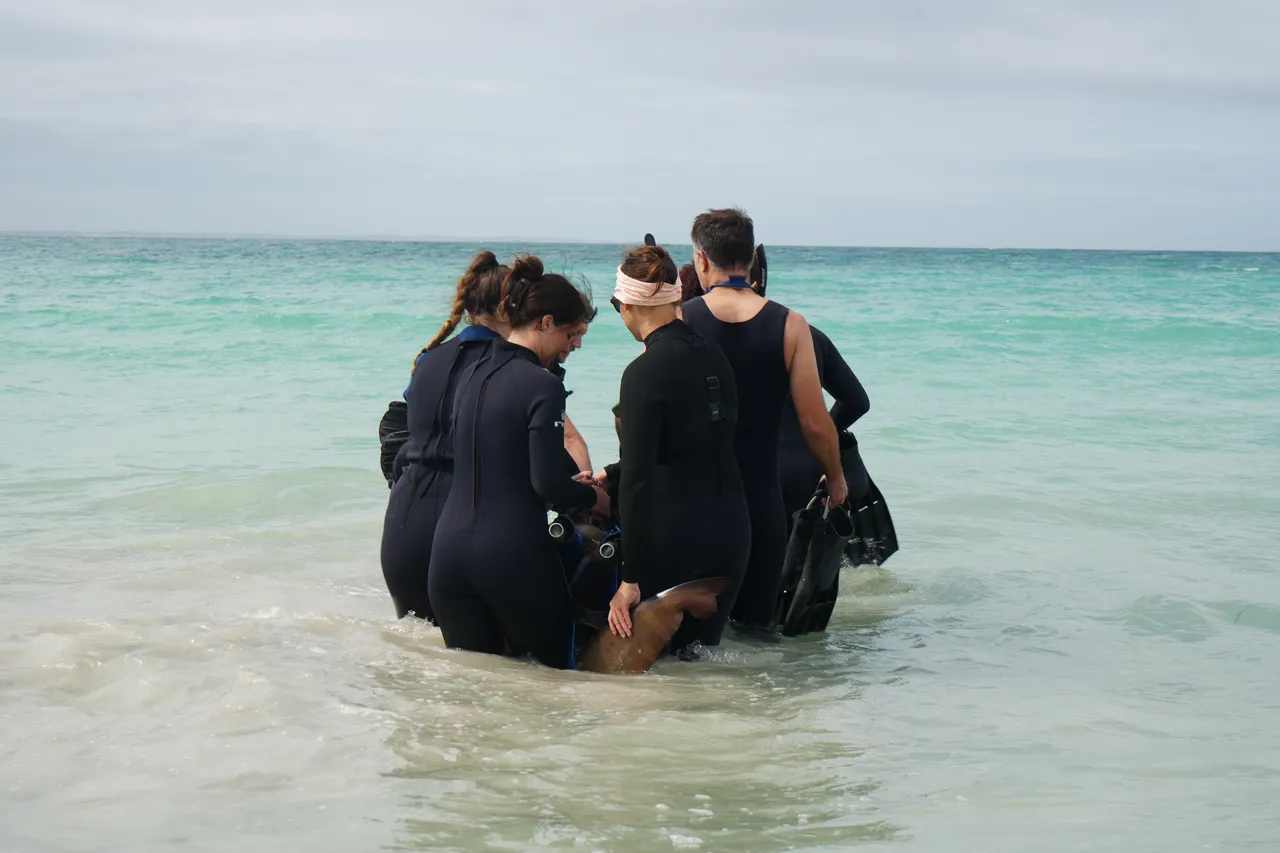
In March 2026, a 201kg ragged-tooth shark was walked into the surf at Struisbaai, where she was released. She swam off confidently and strongly, with three Two Oceans Aquarium staff alongside her. Eight years earlier, the same shark had been confined in an illegal containment unit, bound for the Netherlands. That shark was Blue.
What happened in 2018?
On 3 May 2018, South African authorities intercepted an illegal shipment of four ragged-tooth sharks at Cape Town International Airport. The sharks were destined for export to the Netherlands, but their journey was cut short when they were unexpectedly discovered during a routine inspection.
The four sharks, who later found a home at the Two Oceans Aquarium, had originally been captured in Port Alfred in the Eastern Cape. According to the Department of Forestry, Fisheries and Environment (DFFE), authorities discovered that they were being exported without the required permits.
Ragged-tooth sharks are protected under South African law, with their capture, possession, transport, and export strictly controlled. They are also classified as non-saleable recreational species and are excluded from the list of exploitable elasmobranchs. While certain activities may be permitted for purposes such as science, veterinary care, rehabilitation, and management, the necessary permits are required. The DFFE explicitly stated that the four sharks intercepted in 2018 did not have the permits required under either the Marine Living Resources Act framework or the Marine TOPS Regulations.
When the sharks were intercepted in 2018, ragged-tooth sharks were not yet listed under the Convention on International Trade in Endangered Species of Wild Fauna and Flora (CITES). In other words, Blue’s attempted export was not illegal because her species was CITES-listed; the offence concerned South Africa’s own marine-protection and permitting requirements.
The recovery of Blue and the other sharks was listed as one of Operation Thunderstorm’s main successes. Initiated by the INTERPOL Wildlife Crime Working Group in 2018, Operation Thunderstorm was a global collaboration targeting the illegal trade in wildlife and timber. It involved the World Customs Organisation, the International Consortium on Combating Wildlife Crime, CITES, the United Nations Office on Drugs and Crime, and the World Bank. The operation also highlighted a lesser-known aspect of wildlife trafficking: The illicit international trade in live sharks.
The illegal trade in ragged-tooth sharks
The pervasiveness of the illegal shark fin and meat trade is widely acknowledged, but less well known is the trafficking of live sharks.
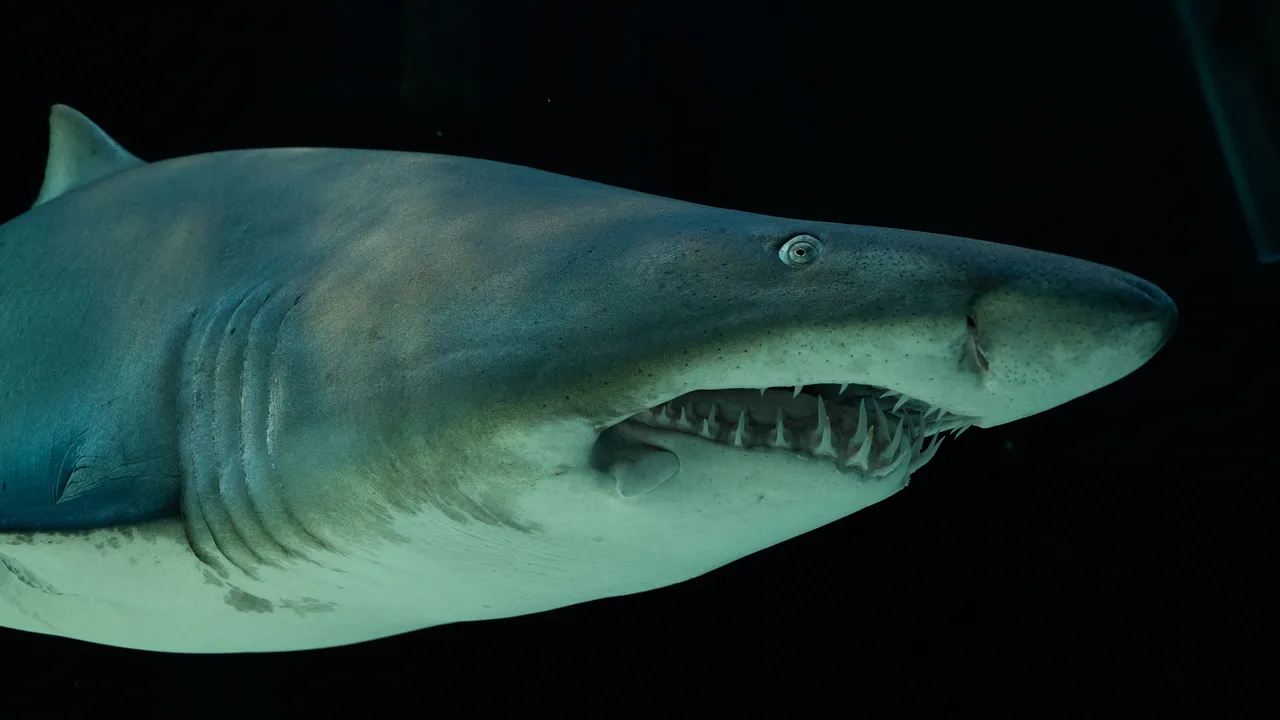
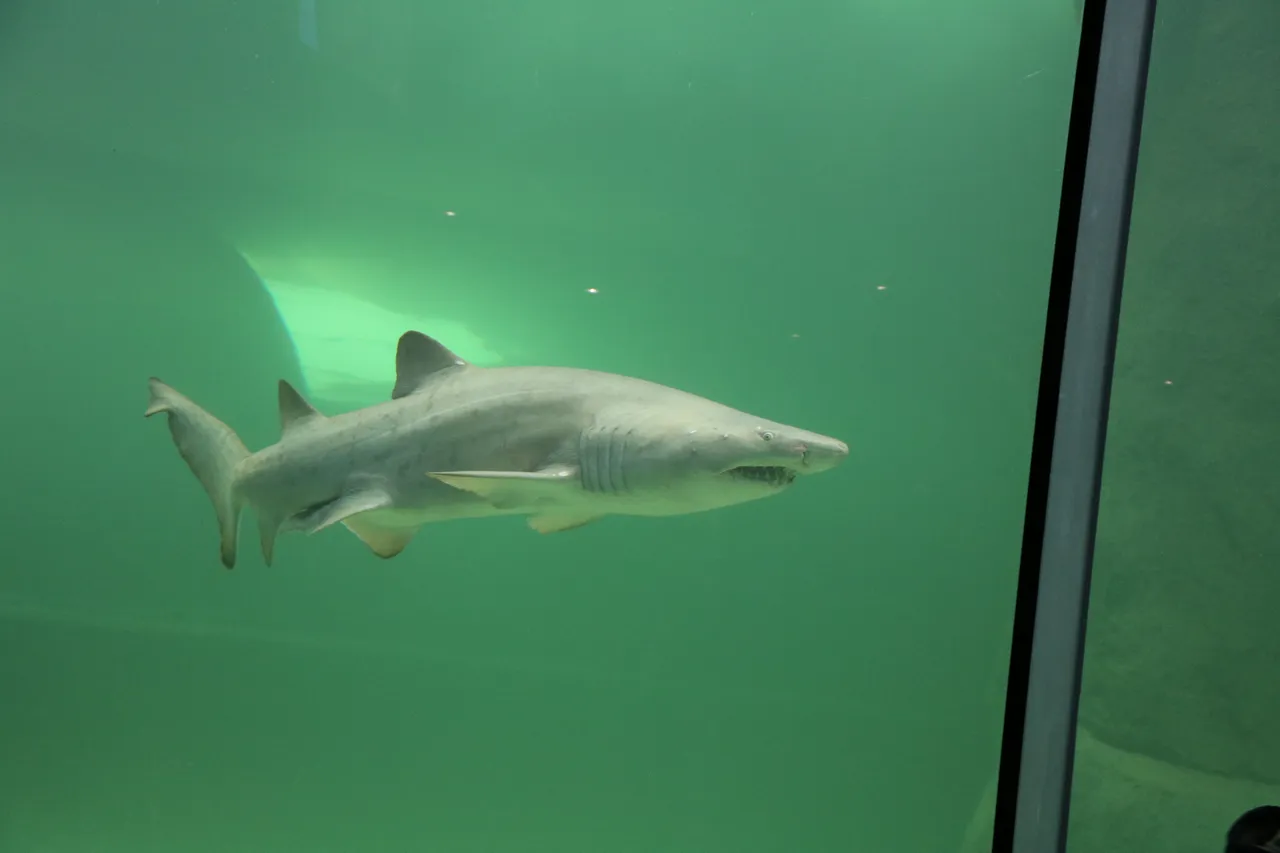
Around the world, ragged-tooth sharks are prized by aquariums. This is partly because of their docile nature and relatively sedentary lifestyle. They also have an unusual way of controlling their buoyancy. Like other sharks, their lightweight cartilaginous skeleton and large, oil-rich liver help counteract their tendency to sink. But ragged-tooth sharks have an additional adaptation: They can gulp air at the surface and retain it in their stomachs, helping them achieve near-neutral buoyancy. This allows them to hover almost motionless and swim slowly with relatively little effort. Unlike many other sharks, they can also pump water over their gills while stationary, so they do not need to swim continuously to breathe. Together, these characteristics make ragged-tooth sharks particularly well suited to aquarium environments.
Professional elasmobranch husbandry guidance even describes how the air in a shark’s stomach may be deliberately and safely removed during transport, making the animal negatively buoyant and easing their transport. Once introduced to an aquarium, the shark can swim to the surface and gulp air again.
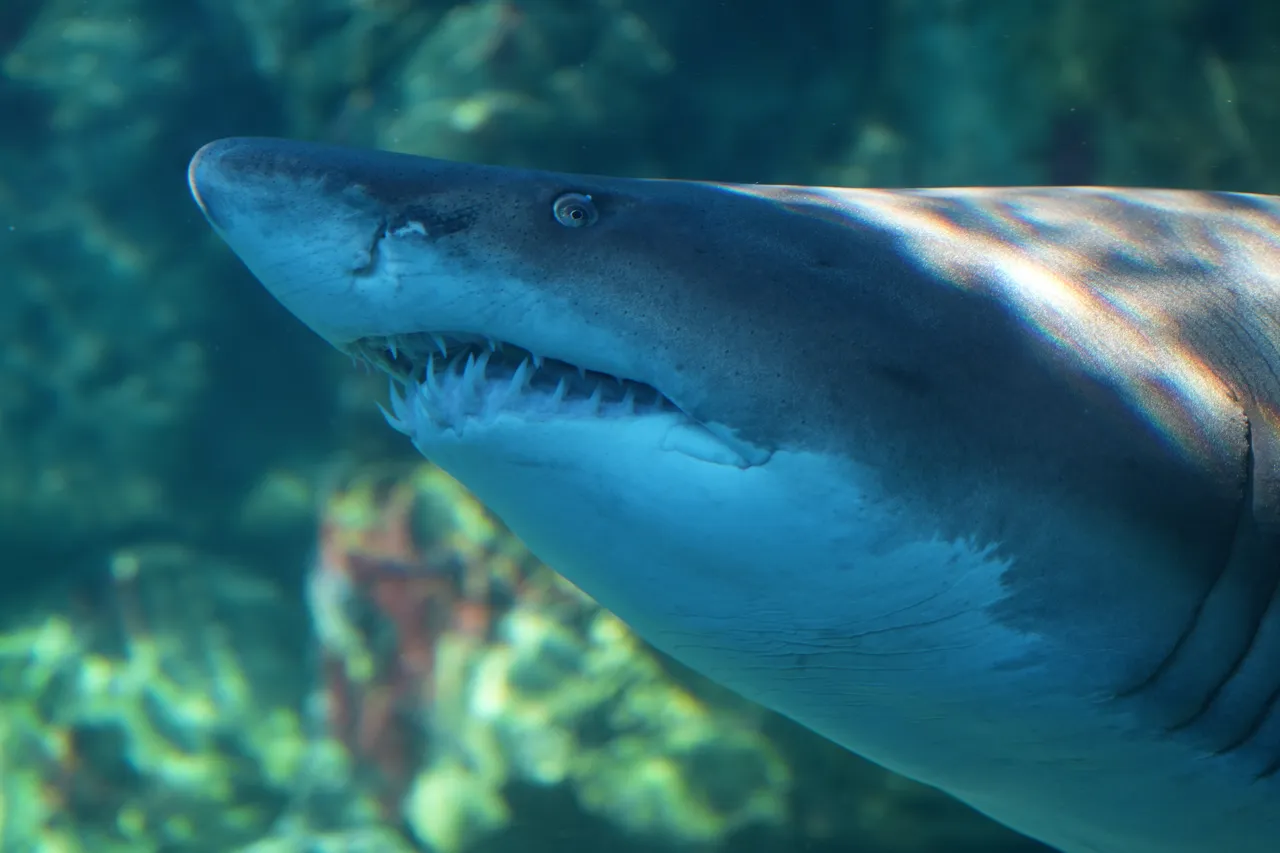
There is another reason they are so sought after. “Raggies’ toothy grins are a huge crowd-pleaser because there aren’t that many shark species whose teeth are displayed so prominently. For the aquariums that are looking for that ‘wow factor’, raggies certainly hit that mark,” says Kevin Spiby, Curator of Operations and Animal Husbandry at the Aquarium. Raggies’ prominent teeth can reinforce the common misconception of sharks as fearsome, which may be part of what initially captures visitors’ attention. Yet their appearance belies their comparatively docile nature – a contrast that creates an opportunity to challenge those misconceptions.
Between 2021 and 2024, researchers documented 76 wild ragged-tooth sharks legally collected in Delaware for aquariums. Roughly 90% were exported outside the United States, illustrating the international demand for raggies. The same study documents an attempted illegal collection in Massachusetts. After being denied a collection permit, a poacher allegedly attempted to capture juvenile ragged-tooth sharks for sale into the private aquarium market, with an approximate value of US$10 000 per shark.
Closer to home, in 2000, a South African exporter sent an adult ragged-tooth shark to an aquarium in France. Although the shark’s sale price was undisclosed, its airfreight alone cost about R177 000. The exporter had previously sold 19 sharks to China and 10 to Korea. Together, these cases illustrate the international demand for ragged-tooth sharks, through both legal and illegal markets.
“Had Blue and Charlie’s trafficking story continued without our intervention, it would have resulted in their being kept in the private aquarium trade indefinitely. They would never have left. This is in part owed to the fact that buying and transporting sharks is incredibly expensive, so these private aquariums wouldn’t release a shark they’d spent a fortune on,” says Spiby.
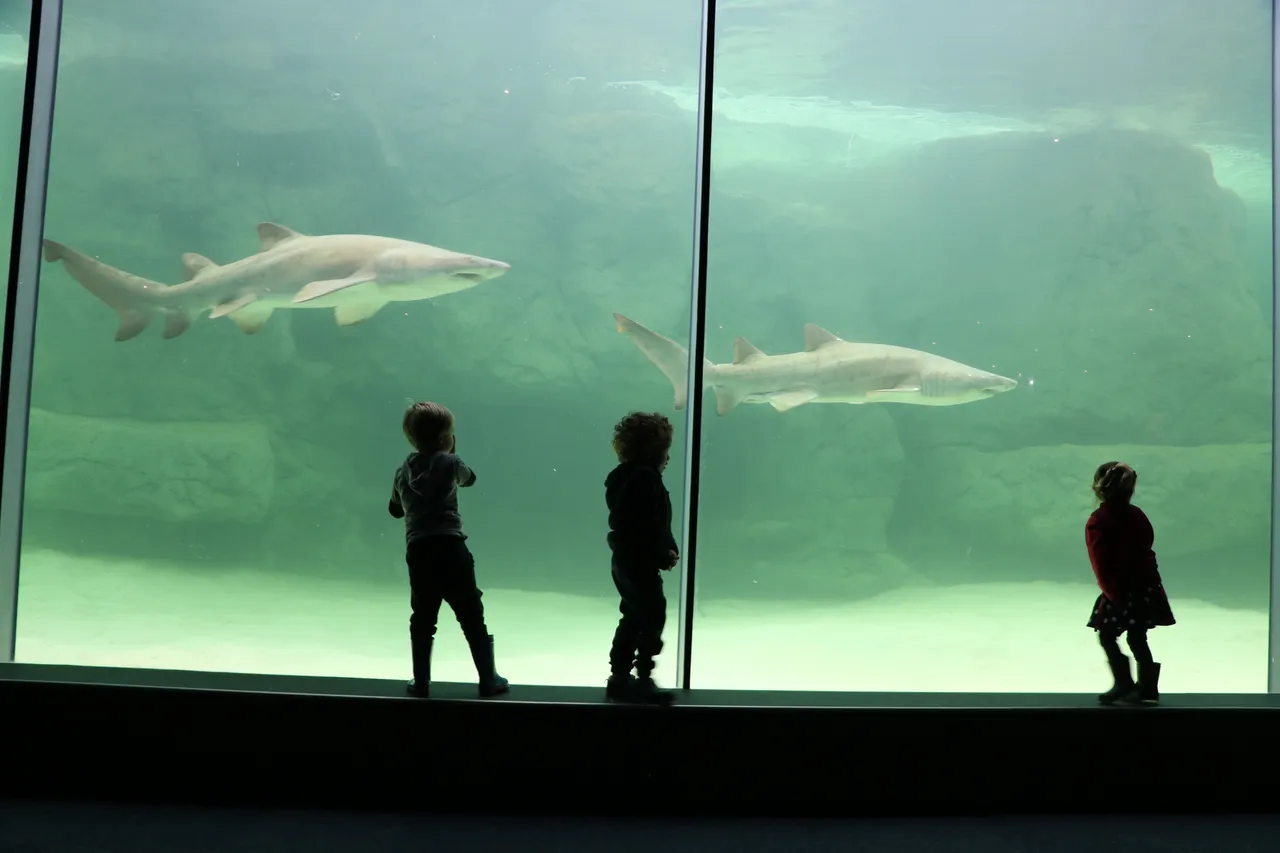
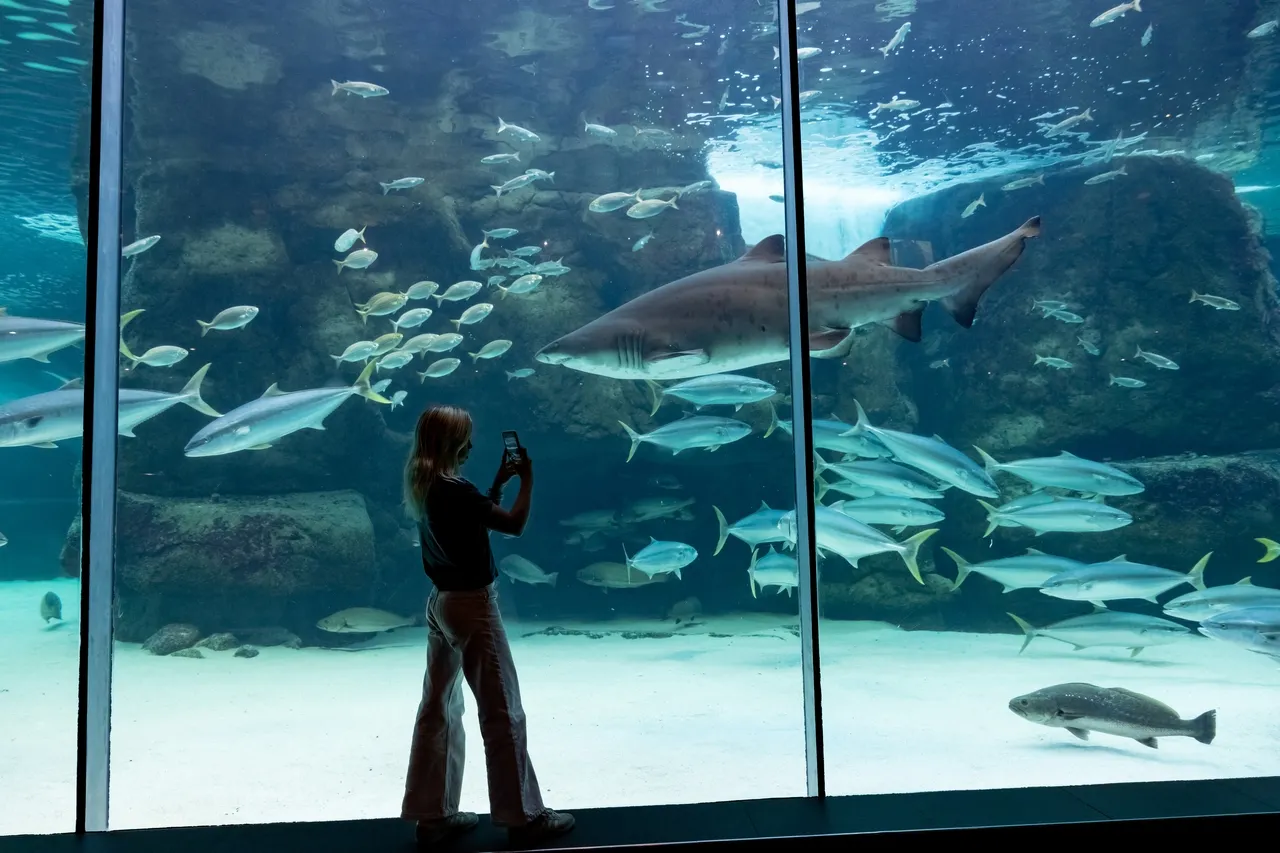
Blue was supposed to become part of that international movement of live sharks. Instead, her journey ended at Cape Town International Airport when the decision was made to give the young sharks temporary sanctuary at the Two Oceans Aquarium, where they could recover and be monitored by our in-house veterinary team.
Then-aquarist Leigh De Necker was part of the team that received and cared for them: “I named them after the four velociraptors from Jurassic World: Delta, Echo, Blue, and Charlie. It was incredibly rewarding to watch them grow and thrive in our care,” she says.
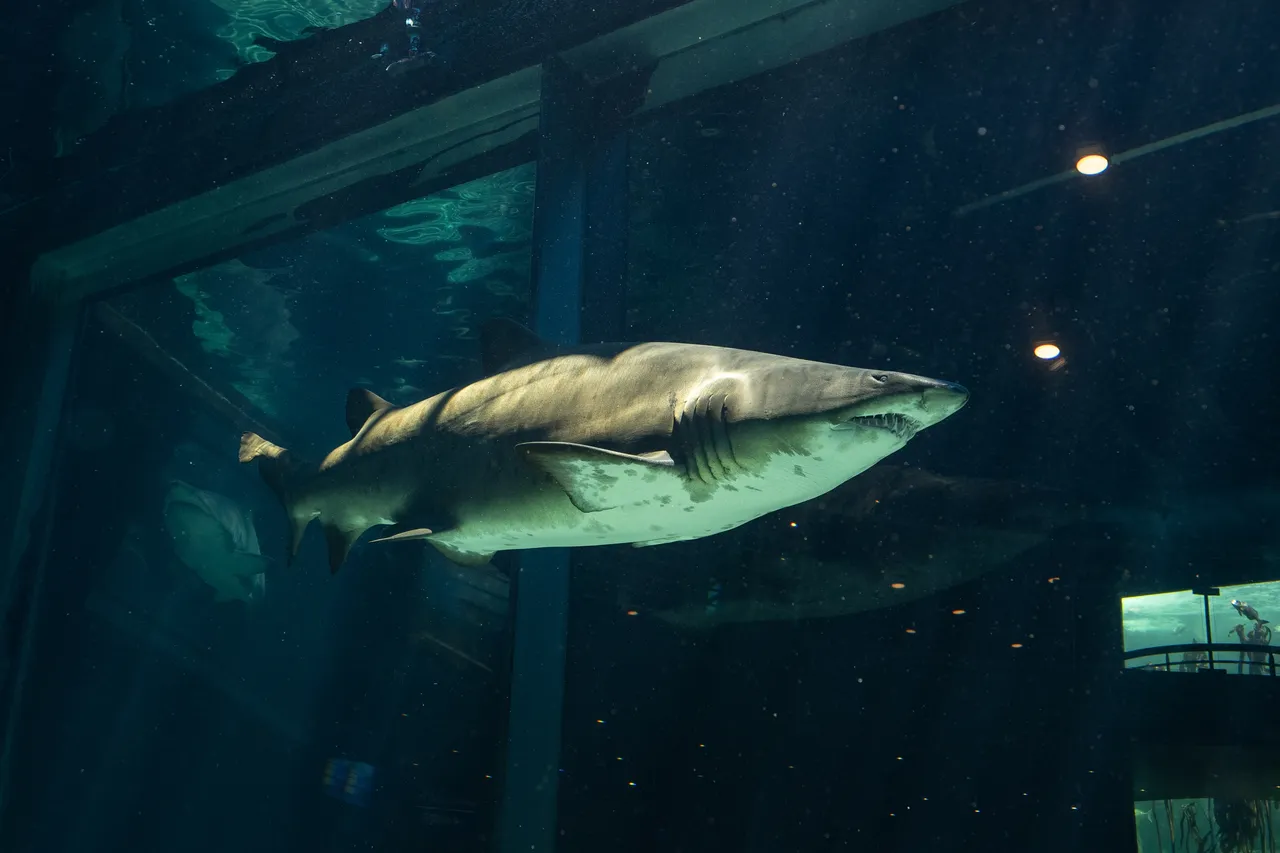
The four sharks were at very different life stages. Delta and Echo were essentially newborns, while Blue and Charlie were considered juveniles at 26.6kg and 28kg respectively. The smaller two recovered quickly under the care of our aquarists and were released back into the ocean in the Eastern Cape not long after being rescued. Blue and Charlie, however, were required to remain within the Save Our Seas Foundation Shark Exhibit at the Aquarium as evidence in the ongoing court case against their traffickers.
For unknown reasons, the case never reached fruition. But Blue and Charlie became invaluable ambassadors for their species, shining a light on the little-understood world of live shark trafficking.
Their story also highlights one of the ways accredited and ethical aquariums like the Two Oceans Aquarium can play a role in conservation. Rather than entering the illegal wildlife trade with an uncertain future, the sharks were cared for under veterinary supervision, contributed to research and public education, and were ultimately given the opportunity to return to the ocean.
Their story is a powerful reminder that wildlife trafficking does not only involve rhinos or pangolins. Sharks are victims too.
The sharks’ second chance
When Blue arrived at the Aquarium as a rescued juvenile, she measured just 183cm in length and weighed less than 30kg. On the day she was released as a sexually mature female into the clear blue waters of Struisbaai, she measured 295cm and weighed an impressive 201kg.
Female ragged-tooth sharks take roughly eight to 10 years to mature, have a reproductive cycle lasting two or three years, undergo up to 12 months of gestation, and have at most two surviving pups per pregnancy. Their extraordinarily slow reproductive rate means removing even relatively small numbers of females from a population can matter. This makes Blue’s release all the more meaningful: The young shark rescued in 2018 was returned to the ocean as a mature female capable of contributing to the wild population. Charlie remains in our care in the Save Our Seas Foundation Shark Exhibit – soon, she will be ready to join Blue back in the ocean as a valuable contributor to their critically endangered species.
“Blue’s release was so exciting – the ocean was relatively calm, and she didn’t take long to head off into the big ocean. She’s served her time as an ambassador for her species, showing us the importance of raggies in the ocean and the ecosystems,” says Inge Adams, Head of Quarantine.
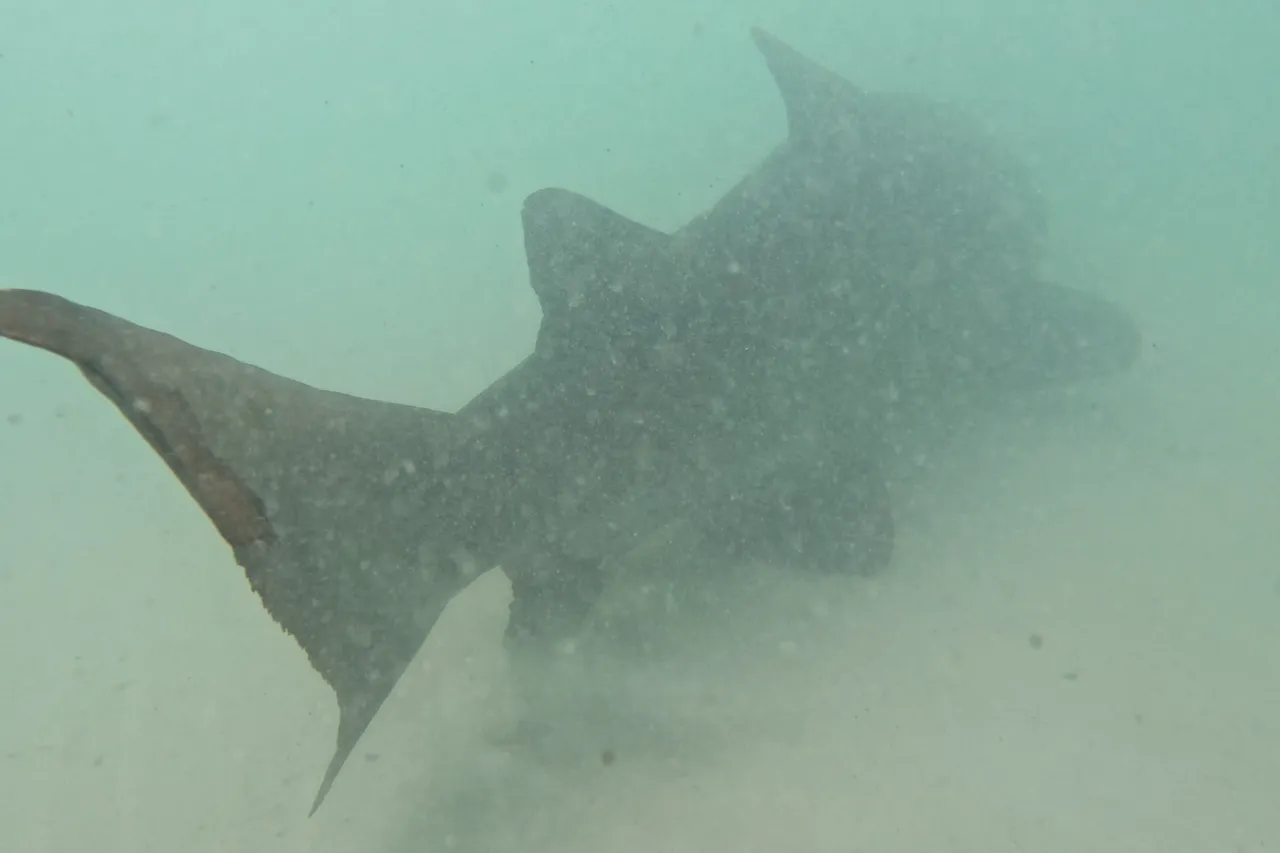
Despite spending years in human care, sharks never forget how to be sharks. Because they receive no parental care after birth, the behaviours they need to survive are largely instinctive. When they return to the ocean, even after a period in an aquarium like ours, those natural instincts take over remarkably quickly.
In fact, studies have shown that ragged-tooth sharks adapt particularly well. Standard practice at the Two Oceans Aquarium is to release our ragged-tooth sharks after up to eight years in our care as part of our conservation programme, which centres on education and research. Not only do the sharks have a better chance of survival if they are larger when released, but they are also more likely to be sexually mature and ready to contribute to wild populations.
When the Two Oceans Aquarium releases raggies, we fit them with acoustic tags that allow us to monitor their movements post-release. These tags provide valuable insights into their migration and habitat use. As the ocean is increasingly impacted by human activity, this data is critical for understanding and protecting ragged-tooth sharks and the spaces they call home.
“We are currently tracking approximately 60 sharks, some of whom have given us 10 years of data. We now have a huge dataset that compares the movements of previously captive sharks to those of wild sharks, and they show remarkably similar movements,” says Spiby. These include the typical northerly migrations to breeding grounds in KwaZulu-Natal and Mozambique before the sharks move back to the Eastern Cape for winter.
A month before her release, Blue was fitted with an acoustic tag by veterinarian Dr Ilse Jenkinson. Her movements are gradually being revealed by the network of acoustic receivers around the South African coast, providing fascinating insights while contributing to a growing body of research.
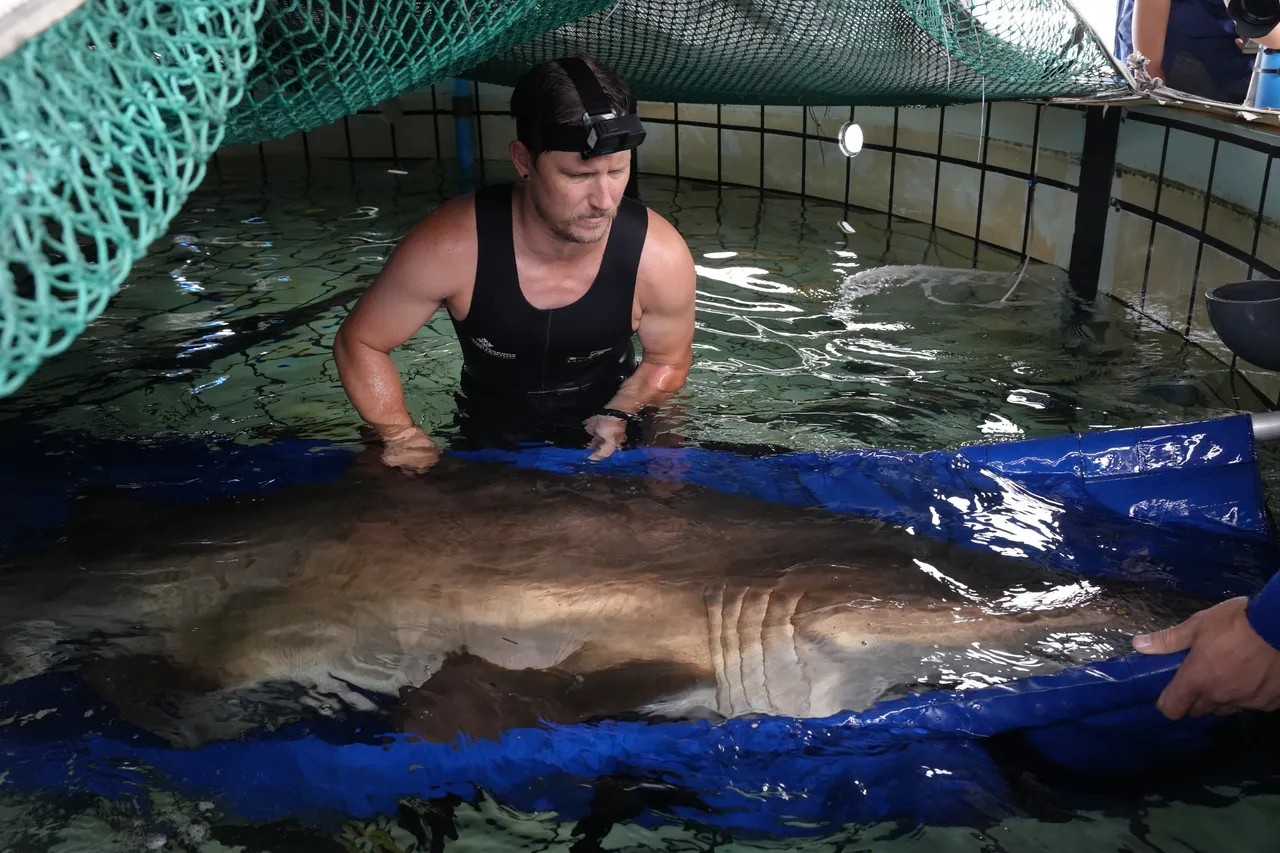
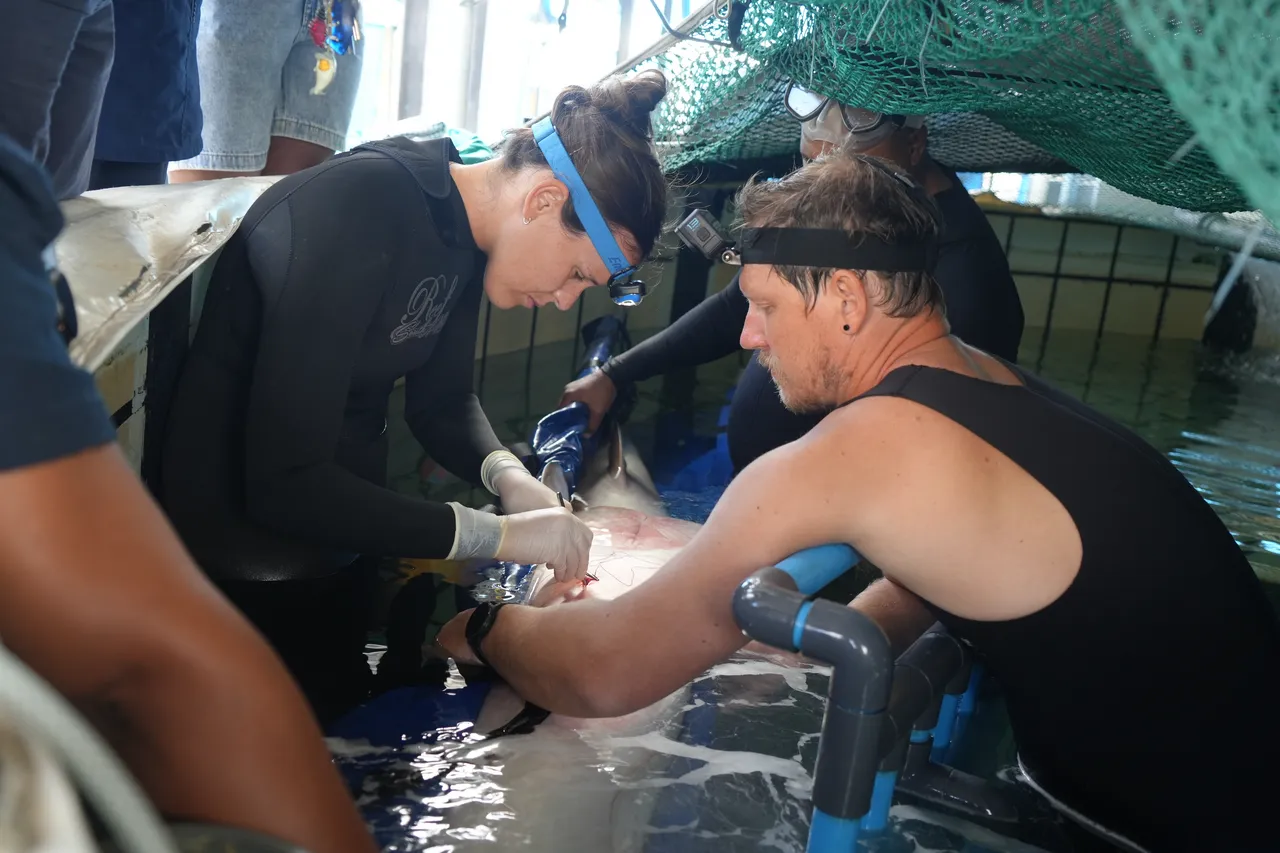
Kevin Spiby assisting Dr Ilse Jenkinson with Blue's tagging procedure.
Ragged-tooth sharks are critically endangered worldwide. Despite their wide distribution, they are vulnerable to population decline because of their slow reproductive rate. Combined with their preference for shallow coastal and nearshore habitats, this makes them especially susceptible to fishing pressure, habitat disturbance and accidental capture.
Ragged-tooth sharks have suffered severe declines across much of their global range. However, genetic research specifically examining South Africa found no evidence of a comparable population decline here. In comparison, parts of Europe, Asia, and the Middle East that historically supported ragged-tooth shark populations of their own now import wild-caught raggies for display after local populations were severely depleted or completely eradicated.
Blue wasn't simply being removed from a threatened species. She was being taken from one of the populations that appears to have fared substantially better than others for export into an international market that increasingly draws sharks from surviving wild populations. This leaves wild raggie populations even more vulnerable.
How can you make a difference for raggies like Blue?
“The biggest threat to sharks is overfishing, which removes their natural prey species from the wild. You can look at WWF’s Southern African Sustainable Seafood Initiative (SASSI) to learn which fish to avoid and which are sustainably safe to buy. Sharks are often caught as bycatch by unsustainable fisheries, so just by educating yourself on these practices, you can help,” says Adams.
In an ocean where millions more sharks are killed by humans than vice versa, research and conservation efforts are more important than ever. “As one of the few places where ragged-tooth sharks still have a relatively healthy population and important breeding grounds, South Africa is a lifeboat for a species in global decline. Releasing Blue gives her the chance to do what she was always meant to do, not just survive in the wild, but help secure the future of her species,” says De Necker.
By releasing these sharks back into the wild, the Two Oceans Aquarium contributes to long-term research while giving them the opportunity to resume their natural role in the marine environment.
Blue’s release is more than the story of one shark returning to the ocean. Eight years after an illegal export attempt nearly carried her halfway around the world, she is back where she belongs and has the chance to contribute to the future of her species.
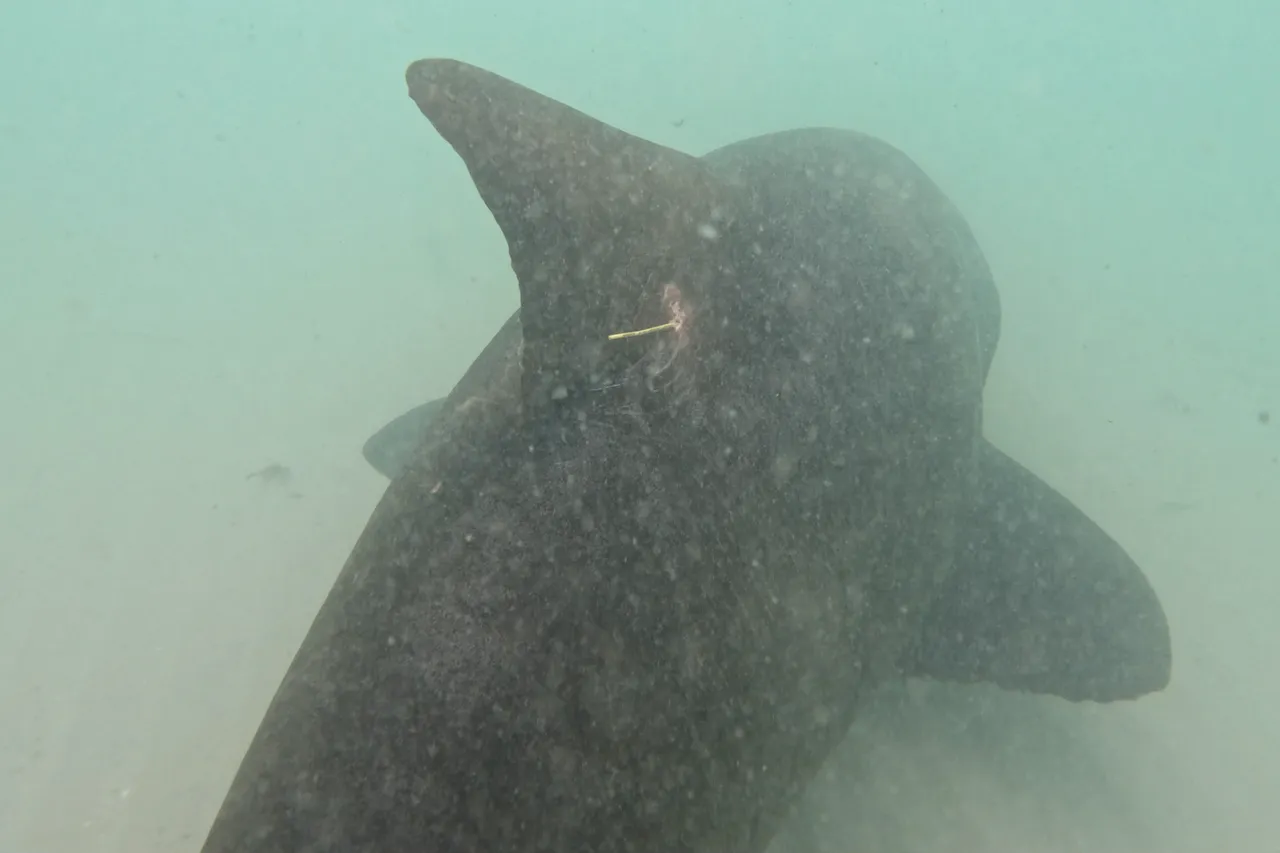
Watch Blue's journey
Related News
Sign up to our Newsletter
Receive monthly news, online courses and conservation programmes.