Tracking our Turtles: Kai and Nori are making missions
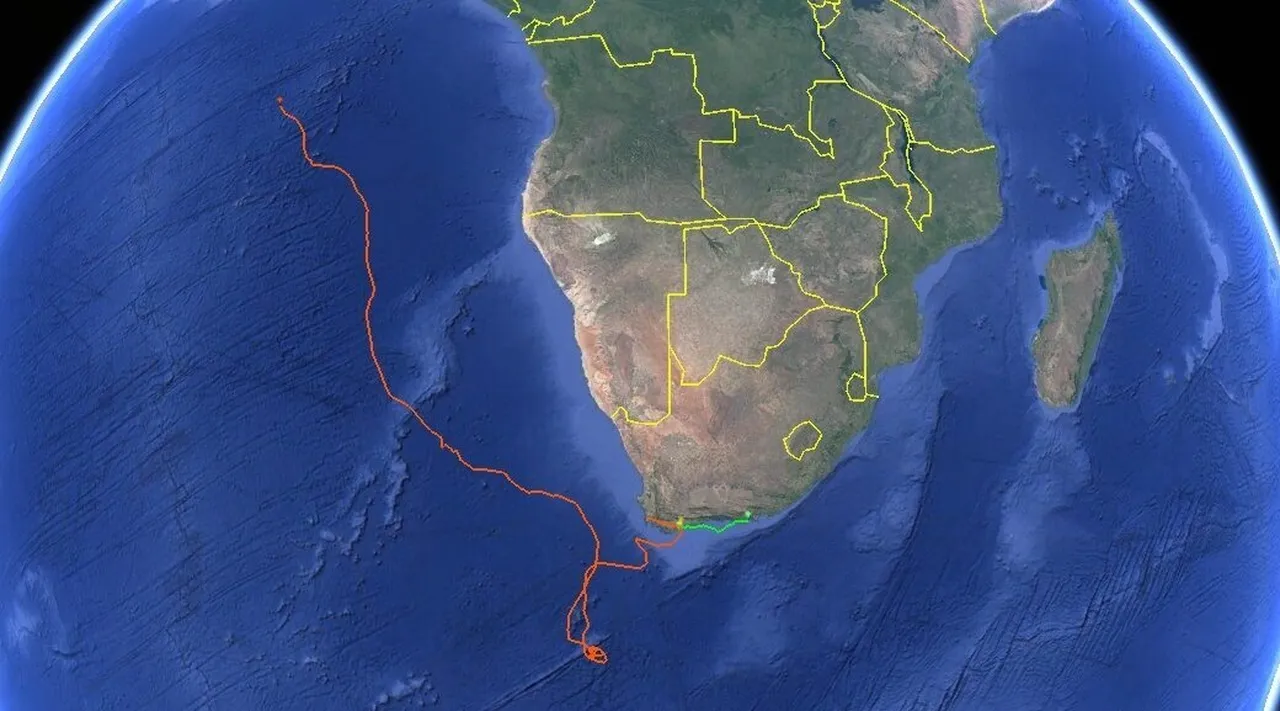
Our Turtle Conservation Centre is currently tracking the movements of two rehabilitated turtles as they journey through the ocean: Kai, a loggerhead, and Nori, a green. While they were released in the same area of De Hoop Marine Protected Area, into the same ocean, these turtles’ tracks could not be more different – but they are equally fascinating.
Let’s catch up with Kai and Nori…
Kai, the loggerhead turtle
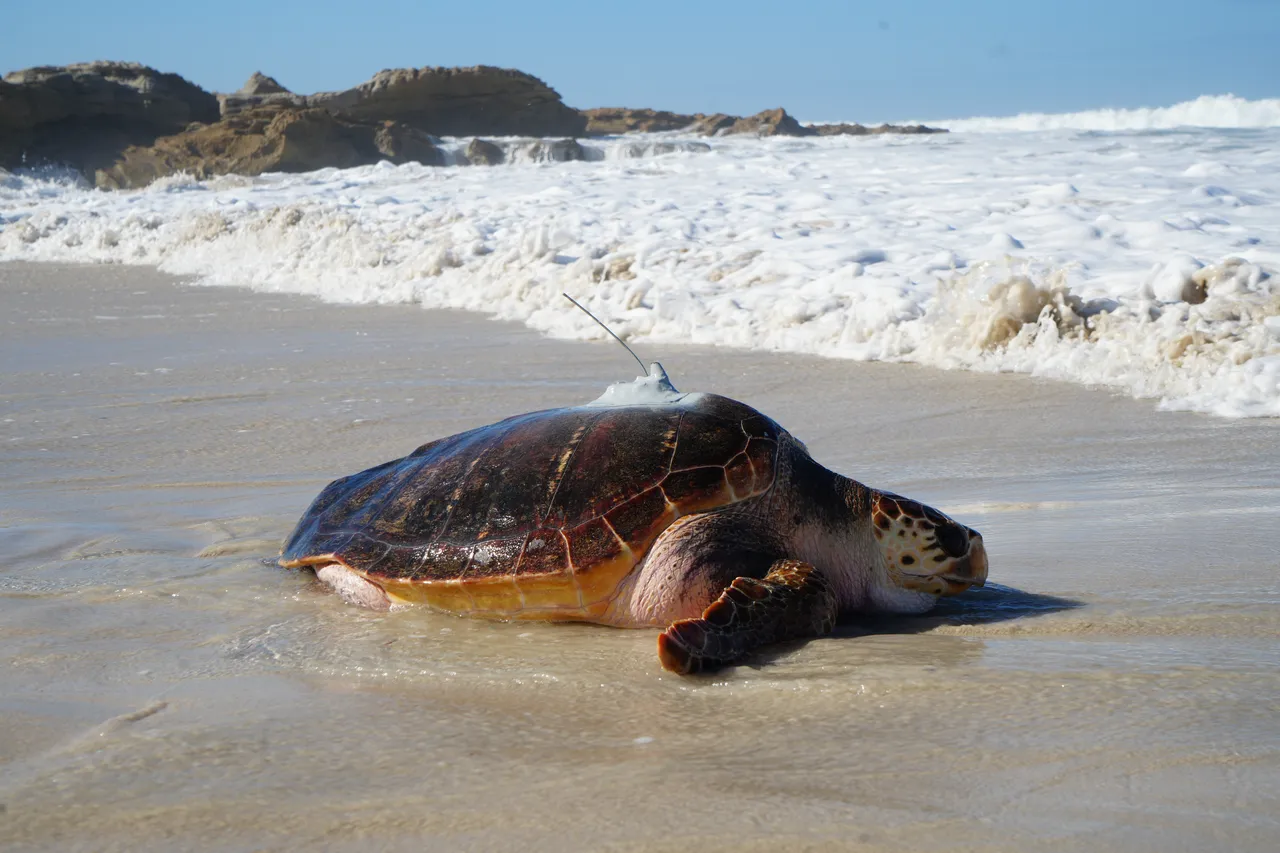
It has been just 18 days since wonderful Kai, who was rescued as a hatchling in 2020, returned to the big ocean after six intensive years of rehabilitation. He was released into the De Hoop Marine Protected Area on 14 May 2026, watched over by the Turtle Conservation Centre team, Morukuru Goodwill Foundation (his adopters), and many wonderful supporters.
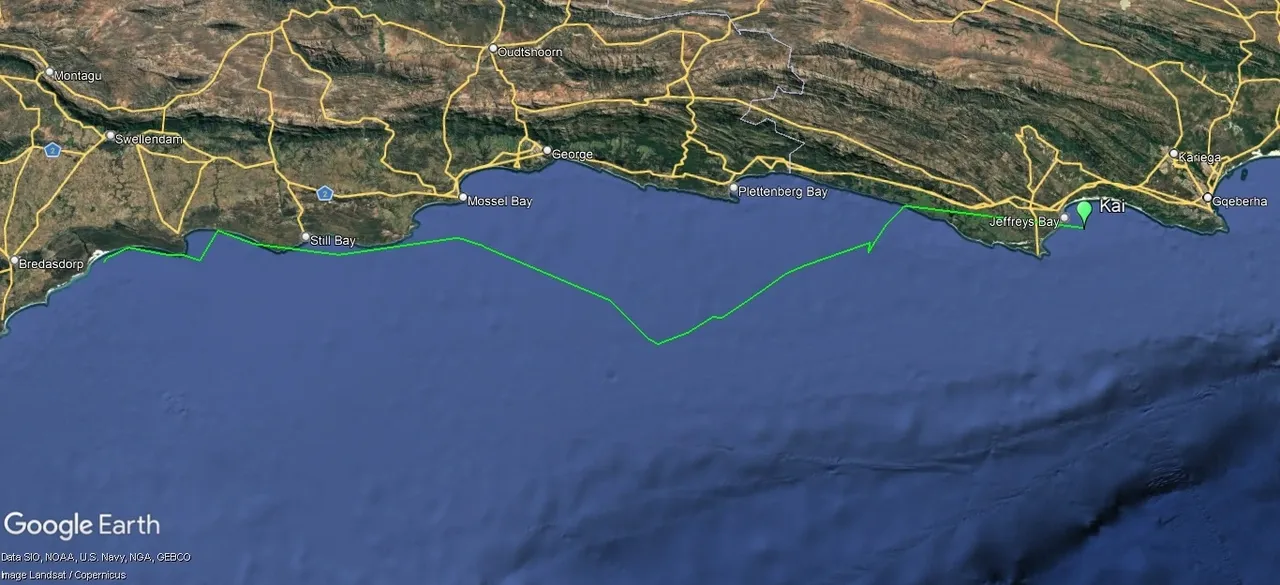
Since his release, Kai has chosen to stay coastal, slowly making his way east along the coastline towards the Eastern Cape. This is totally expected from a turtle who has spent most of his life in rehabilitation – he is recalibrating to life in the wild!
When he reached Tsitsikamma National Park, he moved slightly closer to shore and spent some time around the Eersterivierstrand river mouth. This area is particularly biodiverse and known to be a prime habitat for squid, which was one of Kai’s favourite foods in rehabilitation!
After this snack stopover, we experienced a bit of inaccuracy with Kai’s tag, which is why his track appears to cross over land. Don't worry, though, he didn't temporarily become a tortoise!
Currently, Kai is in J-Bay, where he is maybe catching a few waves with the surfers… In his first three weeks at sea, Kai has travelled 472km, averaging 26.2km per day. We can’t wait to see where our big boy ventures next!
Nori, the green turtle
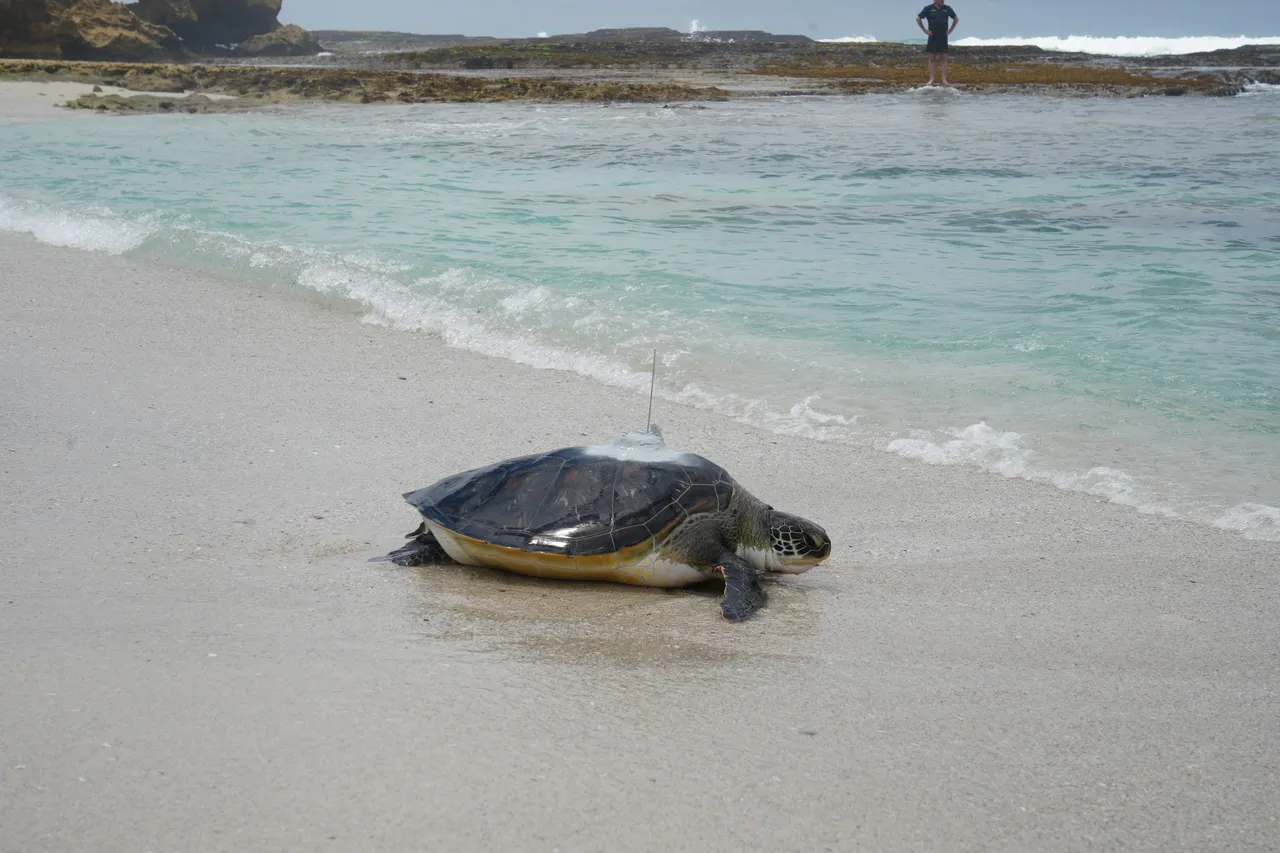
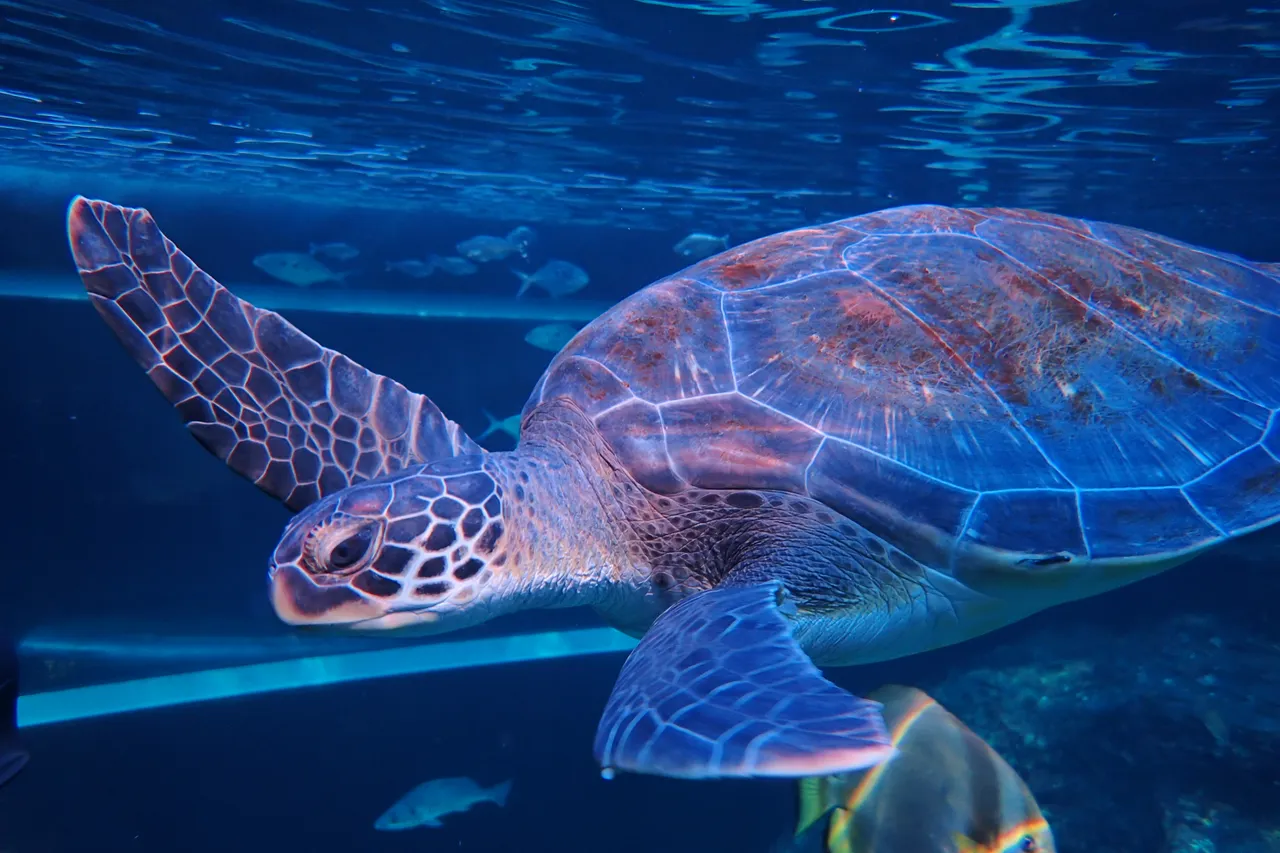
Nori, on the other hand, is not sticking to the coast at all. Instead, she seems intent on crossing the Atlantic Ocean basin.
Nori, our subadult green turtle, was released on 26 November 2025 after about two years of rehabilitation at our Turtle Conservation Centre. In the 189 days since then, she has travelled an incredible 7 239km, averaging 38km per day.
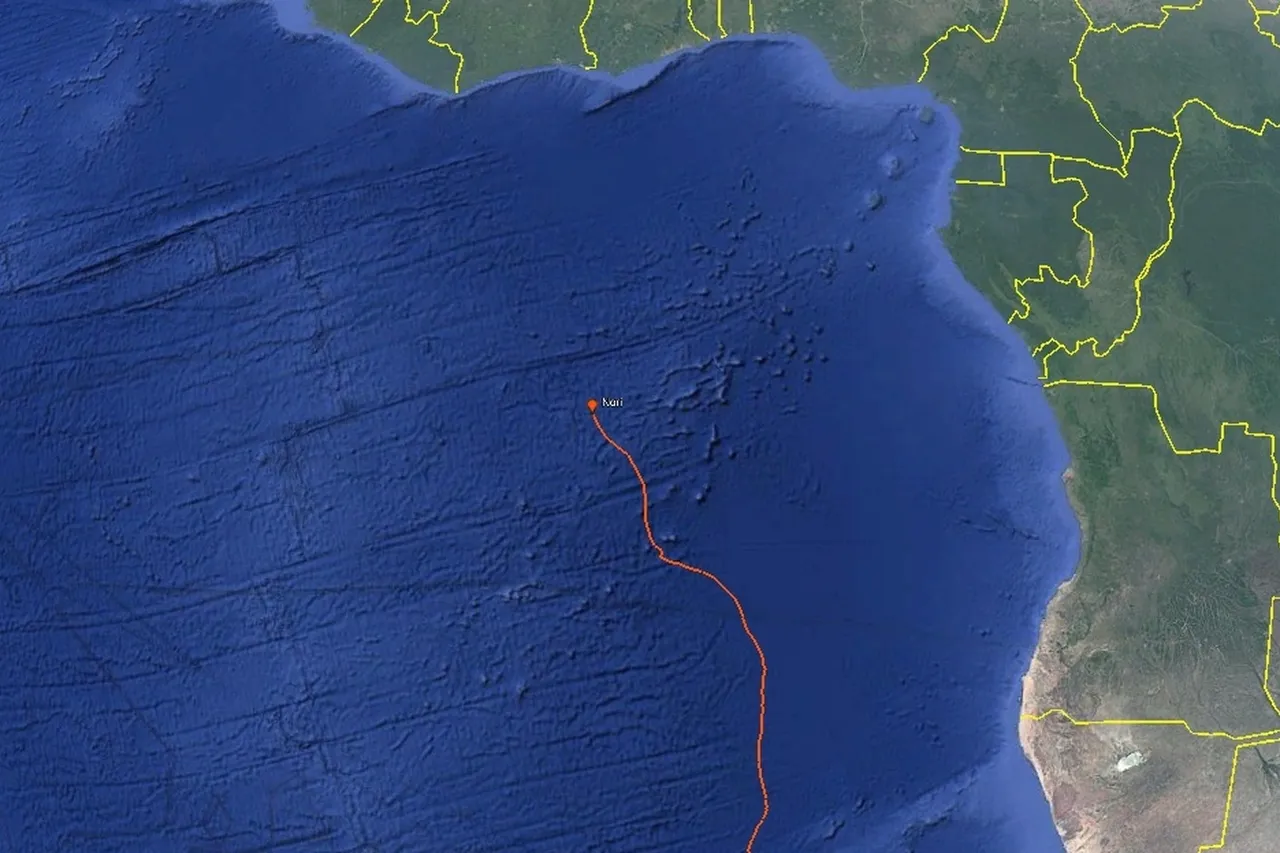
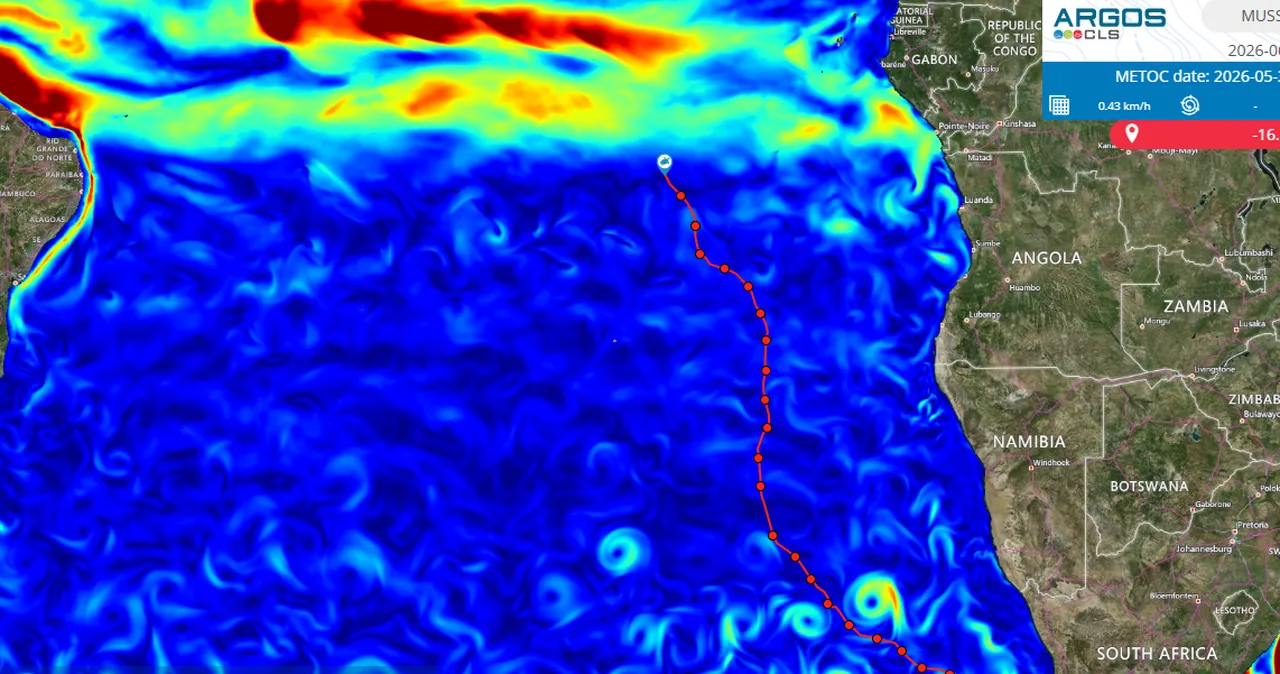
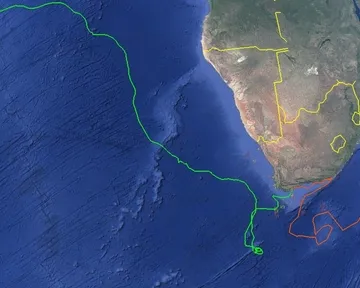
Interestingly, much of this journey has not relied on any of the major ocean current systems. This could indicate that Nori is travelling with purpose instead of “going with the flow” of the currents. On the map below, blue indicates areas of low current activity, while red represents very strong currents, so we can see that Nori is now approaching a zone of stronger currents. The turtle team is waiting in anticipation to see: Will she go with the currents, or swim against them?
Along this stretch of Africa’s Atlantic coastline, the waters are home to some truly epic nesting and feeding grounds for green turtles. In fact, Nori is close to some of the region’s most important nesting sites in Guinea-Bissau, including Poilão Island, one of the largest green turtle rookeries in the Atlantic Ocean. Another significant nesting area is São Tomé and Príncipe near Gabon, as well as Bioko Island in Equatorial Guinea. Green turtle nesting season in Guinea-Bissau generally begins in July, while nesting further south in Gabon and Equatorial Guinea starts slightly later in the year. From these islands, turtles disperse across the West African coastline to productive feeding grounds stretching from Senegal to Angola. It could be a possibility that Nori is heading to one of these areas for nesting season!
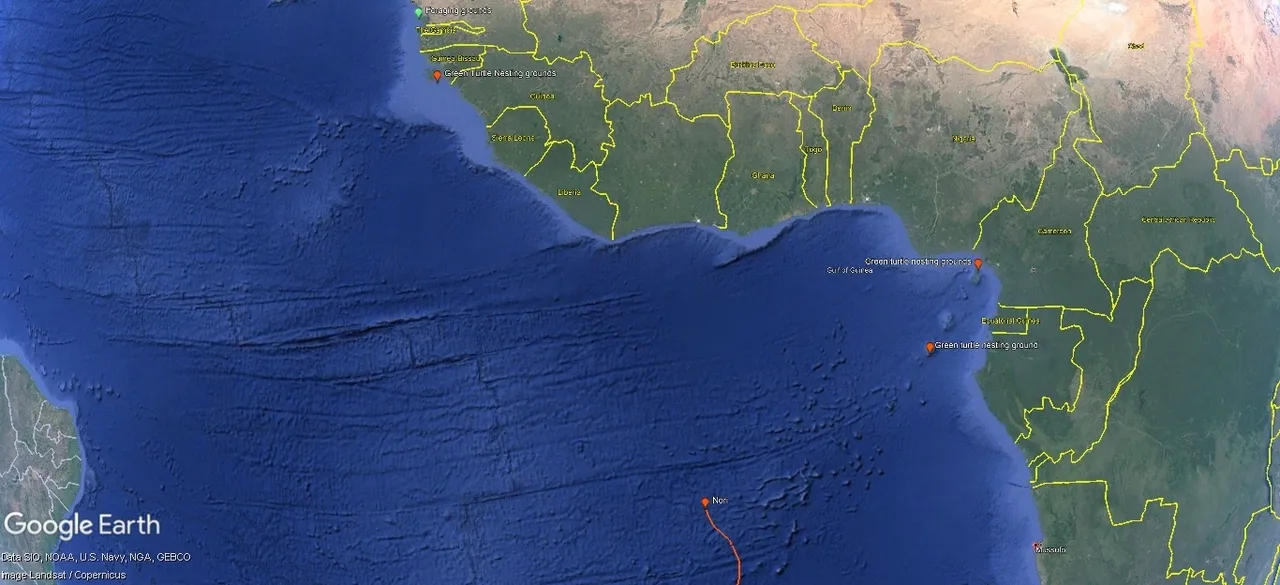
While we certainly cannot know what Nori's next move will be, it is so much fun to imagine where she might be heading and what could be drawing her there.
Nori and Kai may be very different turtles, but they are both teaching us a great deal. Their satellite tags allow our Turtle Conservation Centre team to follow their journeys after rehabilitation, giving us valuable insights into where they go, how they use different habitats, and how they navigate life back in the wild. Every transmission helps us piece together a better understanding of these incredible animals, proving that no two turtles are the same, and that each has something important to teach us about conservation.
Related News
Sign up to our Newsletter
Receive monthly news, online courses and conservation programmes.