Meet big mamma Pearl, a loggerhead turtle fighting for life at the Turtle Conservation Centre
At the Turtle Conservation Centre, our team works tirelessly to give all the turtles we rescue a second chance at life. We have an 85% release rate, meaning that most of our rescued turtles are released back into the ocean after a period of rehabilitation, stronger and more likely to contribute to their endangered species one day.
However, the nature of our work as a rehabilitation space also means that our turtles are rescued in poor health – many struggle with traumatic injuries, entanglements, chronic debilitation, severe lung disease, or even neurological damage. The Turtle Conservation Centre team strives to provide the best, individualised care for all our patients, always intending to help them to recover enough to be released back into their ocean home.
For some turtles, however, the rehabilitation journey proves more arduous, often due to severe diagnoses that require significant intervention. Pearl, a loggerhead turtle rescued in March 2026 and currently in our care, is one such story.
Pearl’s rescue story
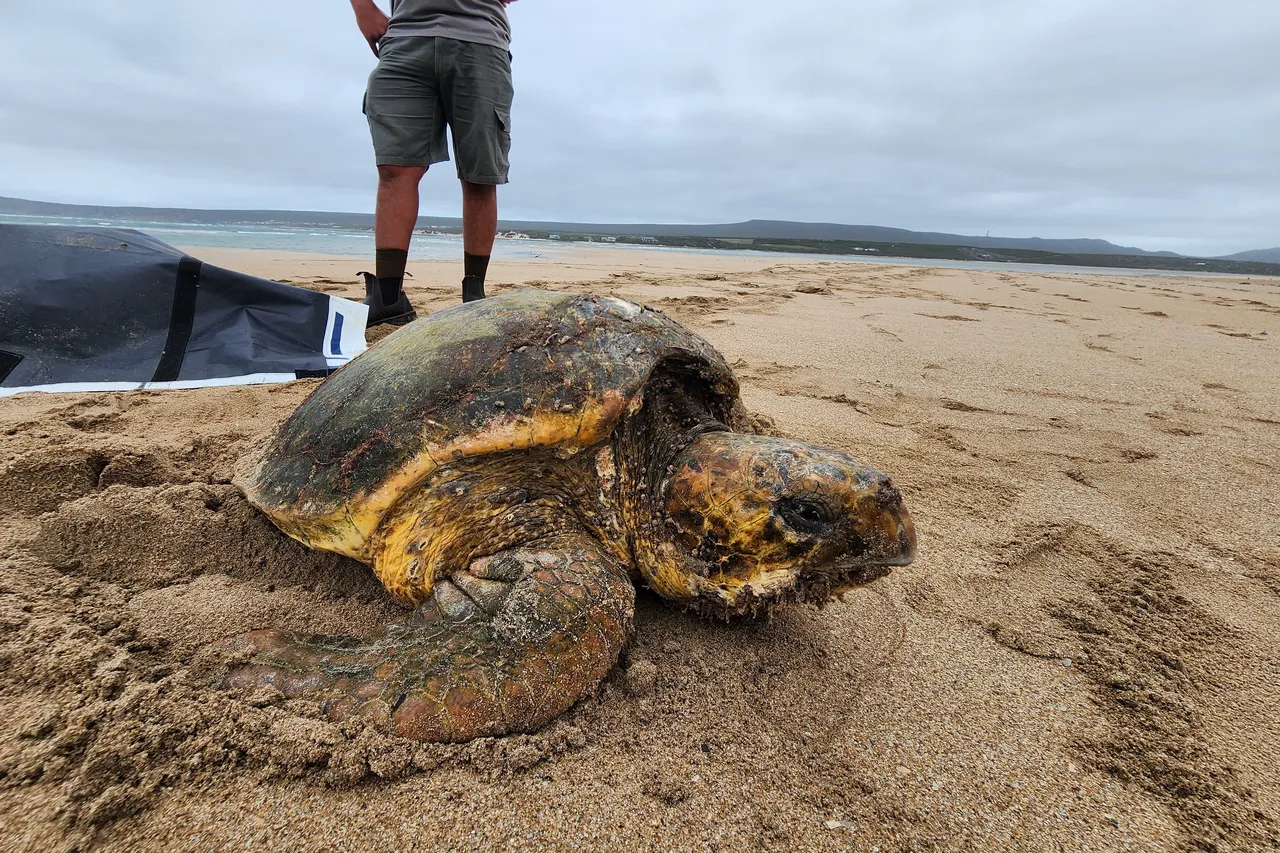
On the morning of 17 March 2026, the Lower Breede River Conservancy Trust received a phone call alerting them to a stranded turtle on Witsand’s main beach. The organisation, a trained member of the Turtle Rescue Network, immediately notified us before heading to the scene.
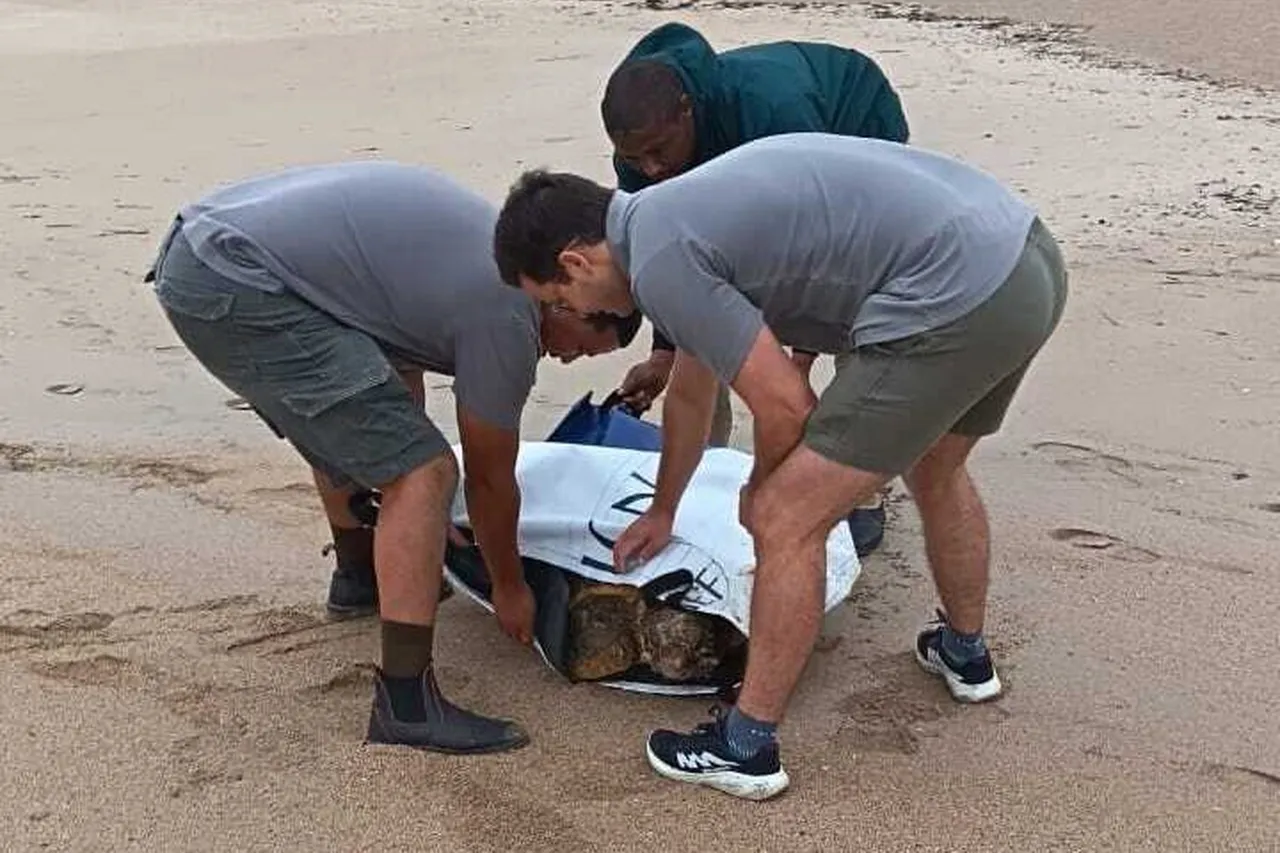
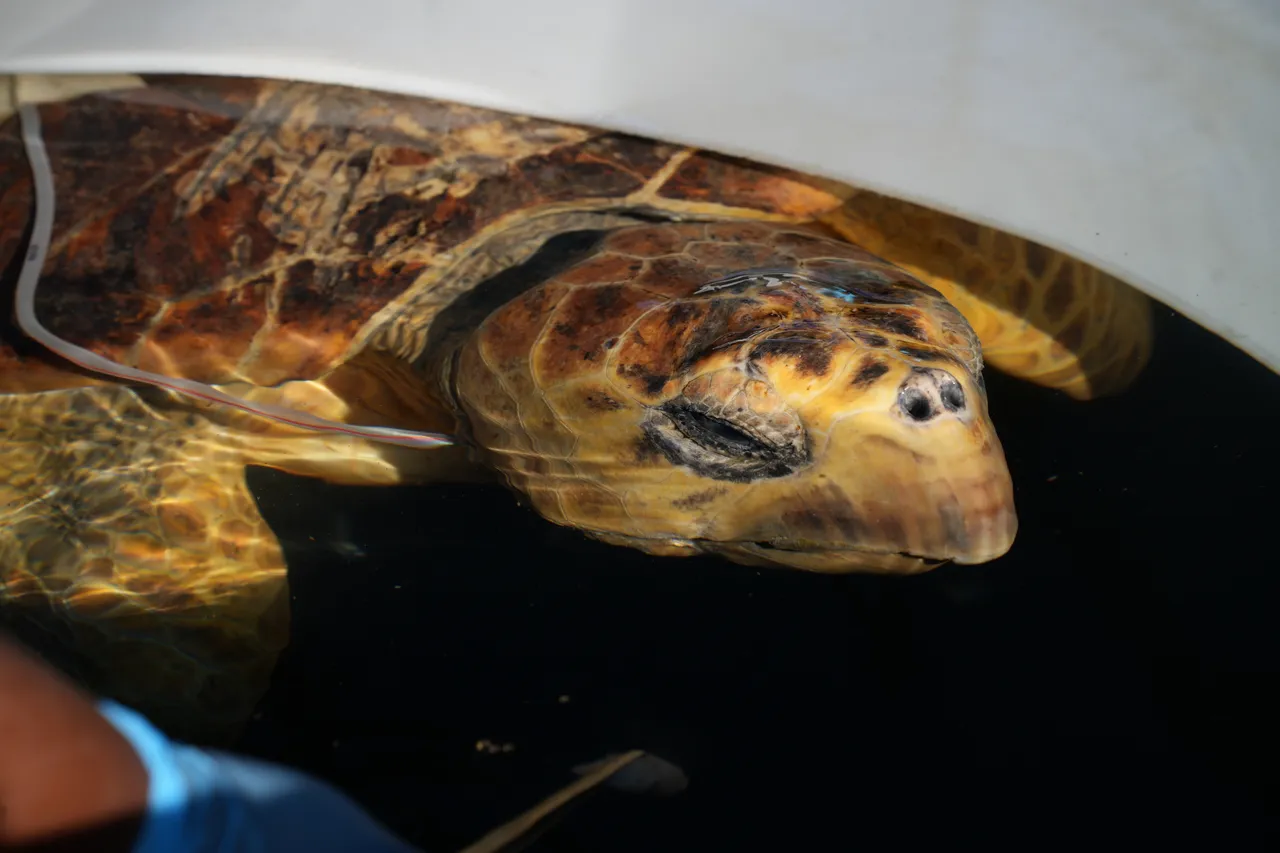
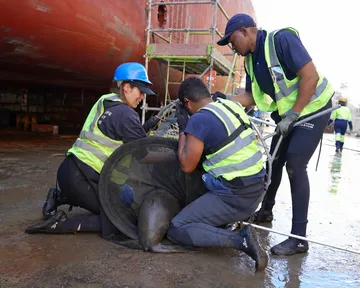
Lying on the sand near the mouth of the Breede River was a large loggerhead turtle, absolutely covered in marine leeches. She was extremely weak, dehydration showing in her sunken eyes. Thanks to the efforts of Jason, Tertia, Luton, and Gershwin, the 68kg turtle was gently lifted onto a specially designed rescue stretcher and carried to an awaiting vehicle for transport.
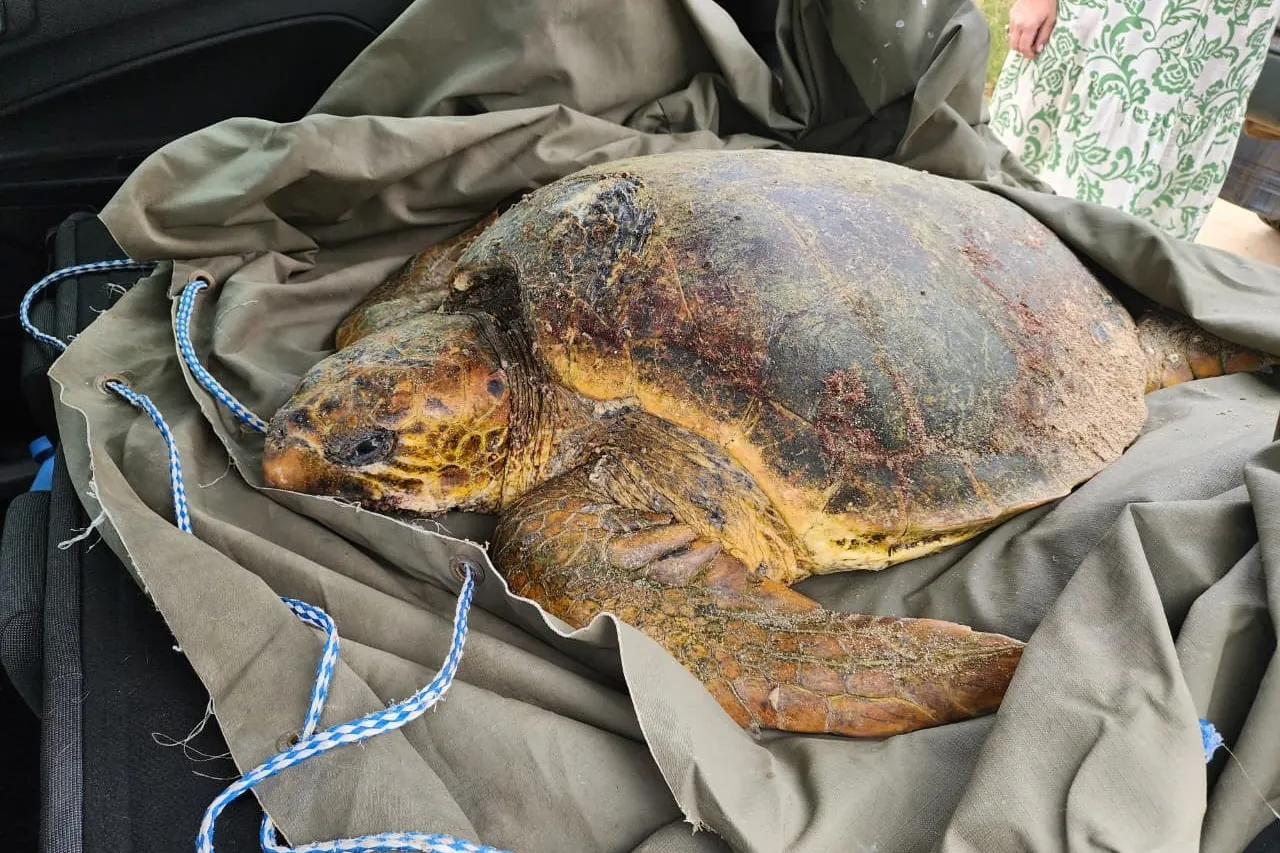
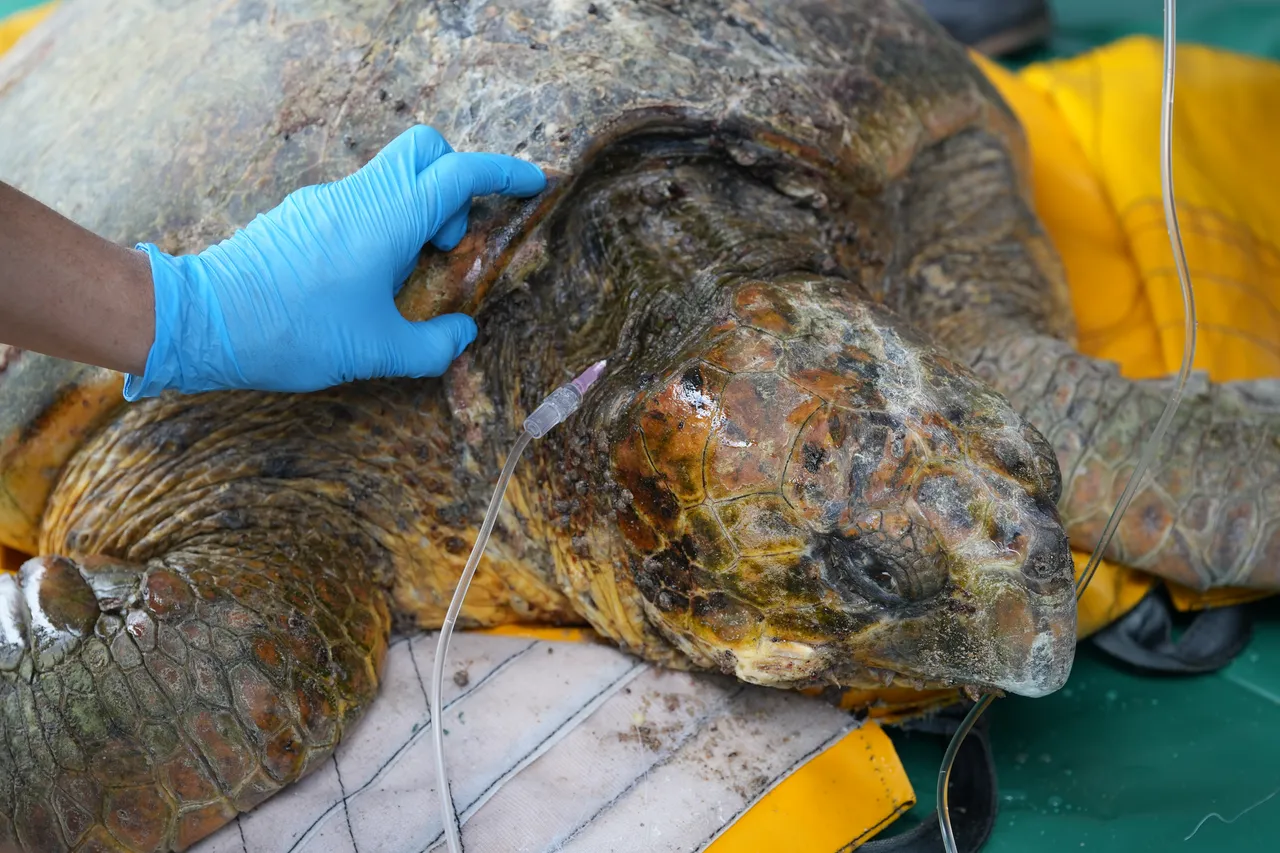
When the turtle arrived at the Turtle Conservation Centre in Cape Town, she was carefully hoisted to the critical care area, where turtle veterinarian Dr Bernice van Huyssteen oversaw first-response care. This involved administering IV fluids, vitamins, and antibiotics and initiating a de-leeching protocol to manually remove the leeches and their eggs from the turtle’s body.
As with many turtles who are rescued covered in leeches, this turtle’s red blood cell count was worryingly low. For context, a healthy loggerhead turtle in the wild could have a hematocrit (the volume of red blood cells in the blood) of up to 48%. This turtle’s hematocrit was a mere 5%. The leeches drinking her blood had taken a severe toll, leaving her critically anaemic. Interestingly, the leeches in question were from the family Ozobranchus, which feeds solely on turtle blood.
The leeches and their eggs were painstakingly removed by the turtle team over the course of two weeks and, along with supportive care and nutrition, the turtle’s blood levels slowly began to return to normal.
A first for the Turtle Conservation Centre – an egg-bound female
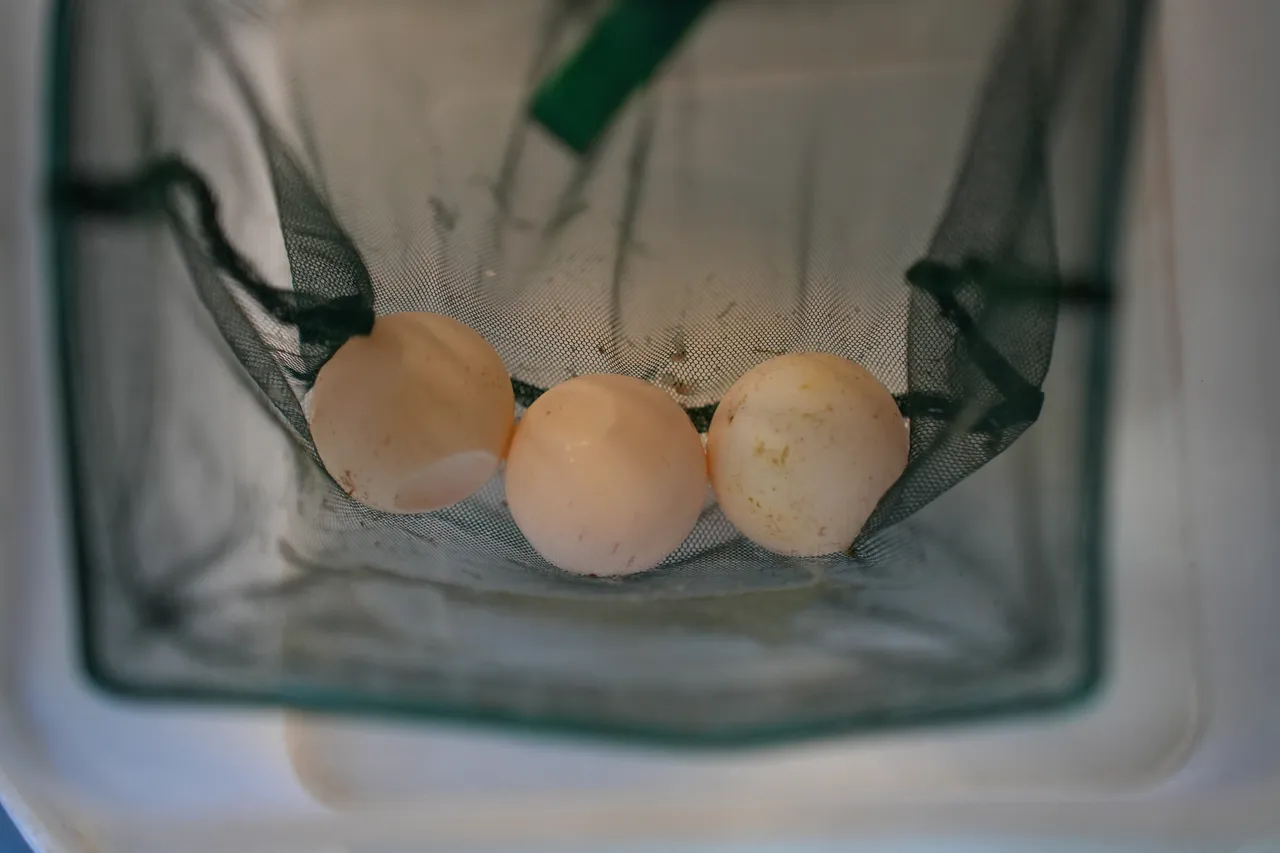
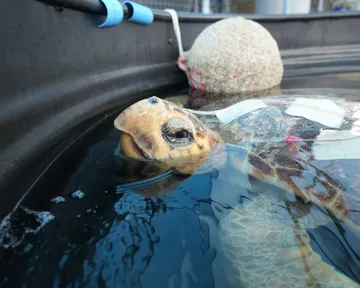
The turtle was soon given the name Pearl in line with the year’s naming theme. Later, she became known as “big mamma” Pearl when the team discovered two unfertilised eggs in her holding pool shortly after her rescue. An ultrasound soon confirmed that Pearl was carrying six more eggs in her abdomen.
“We were concerned that she was egg-bound, which is when a female turtle is unable to lay eggs due to environmental stressors, physical obstructions, systemic illness, or other reasons. The retained eggs can make her very sick or even be fatal if left unattended,” says Dr Bernice.
Dr Bernice administered a form of the hormone oxytocin to help Pearl drop the last eggs. She did this successfully over the course of the next two days, and another ultrasound confirmed that there were no more in her abdomen. It was impossible for us to know how long Pearl had been carrying the eggs. Female loggerhead turtles can lay as many as 120 eggs in a single clutch, so Pearl may have been mid-nesting season when she was injured, leaving her unable to haul herself ashore to drop the last eggs.
The team incubated all the eggs, but none were viable – likely a result of Pearl’s extreme stress and poor physical condition during the stranding ordeal.
Severe wounds concealed a bigger problem
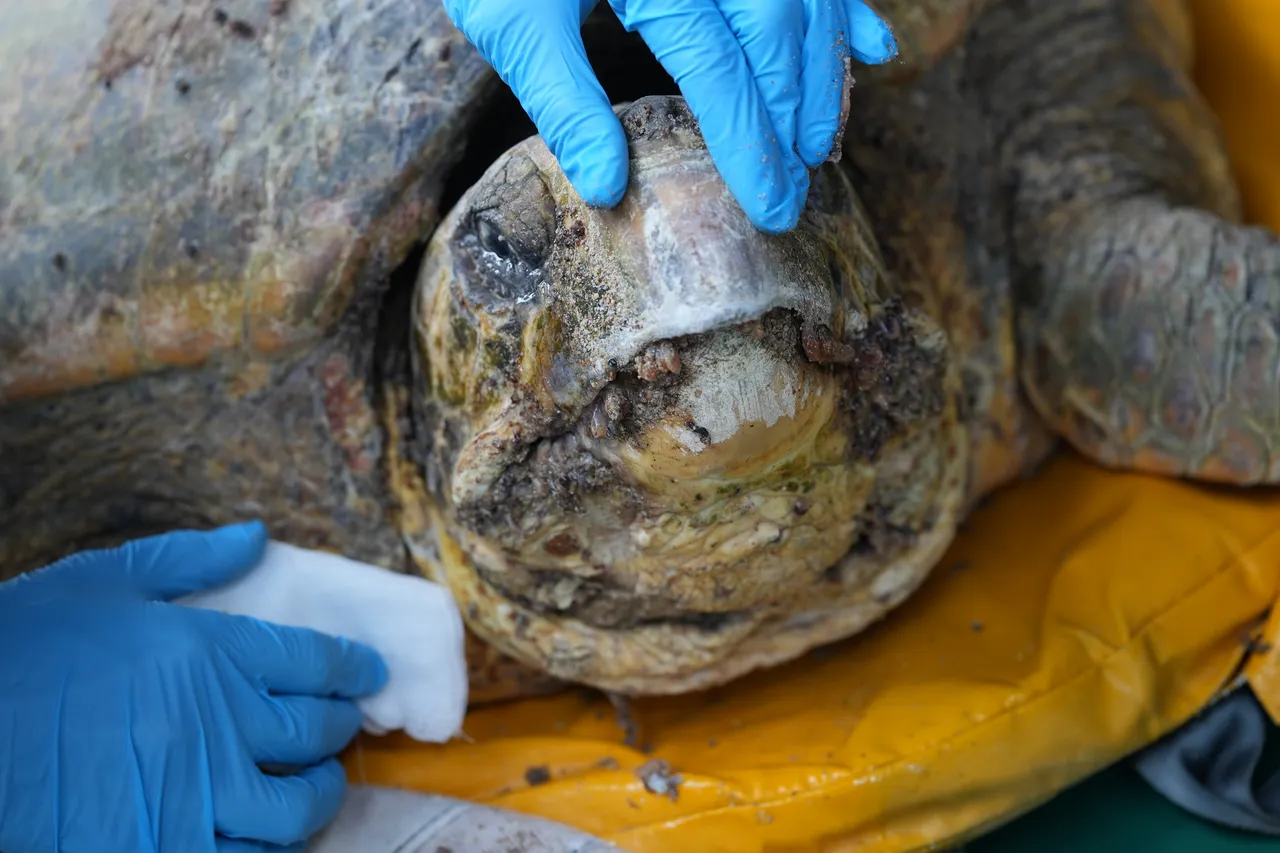
It was clear from her arrival that Pearl was suffering from multiple issues. The most obvious were the two deep wounds under her chin, both clogged with necrotic (dead) material.
Dr Bernice and the veterinary team spent several sessions debriding the area, removing large chunks of necrosis to allow new flesh to fill the gaps. Once the wounds had been cleaned out a few times, the team discovered that the two actually connected deep in her neck tissue. It was unclear what caused such a severe injury, but it had clearly been festering for some time.
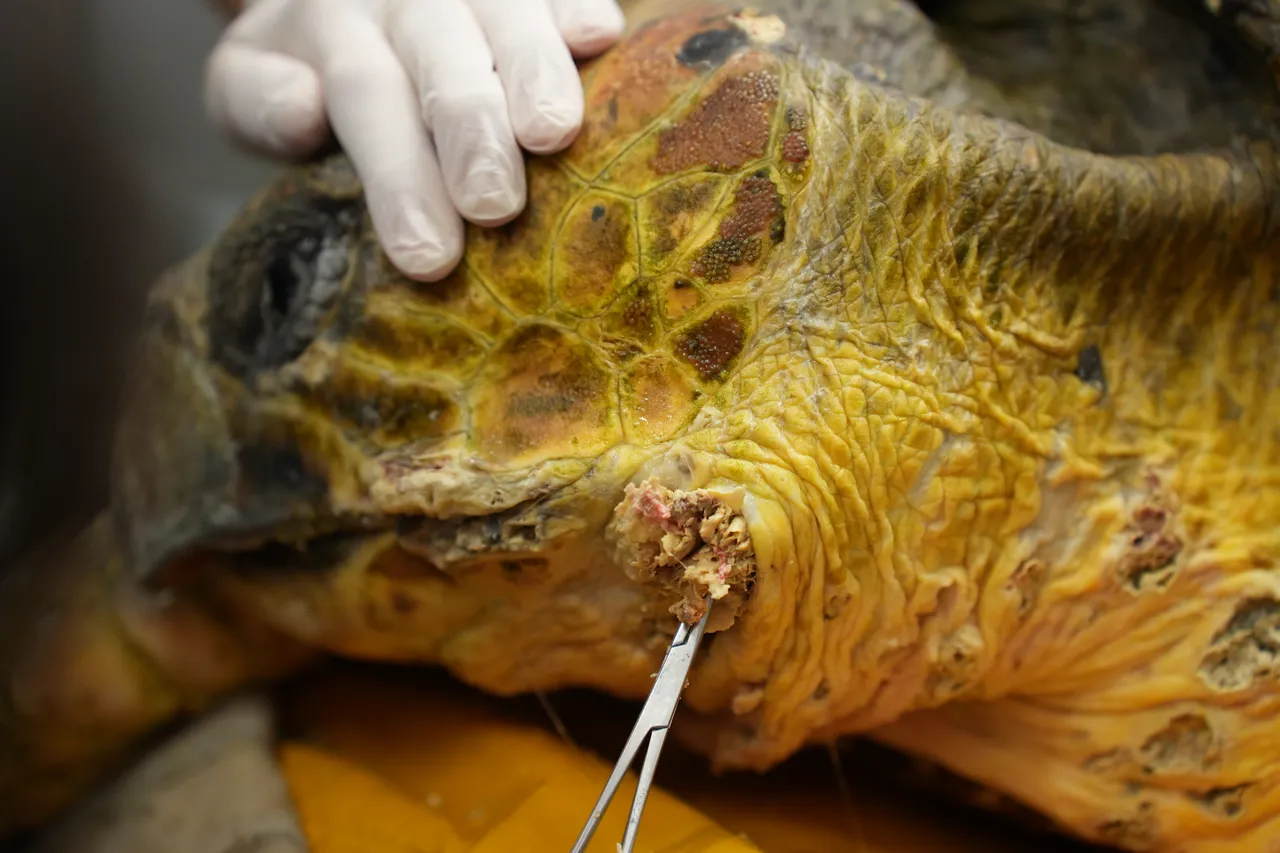
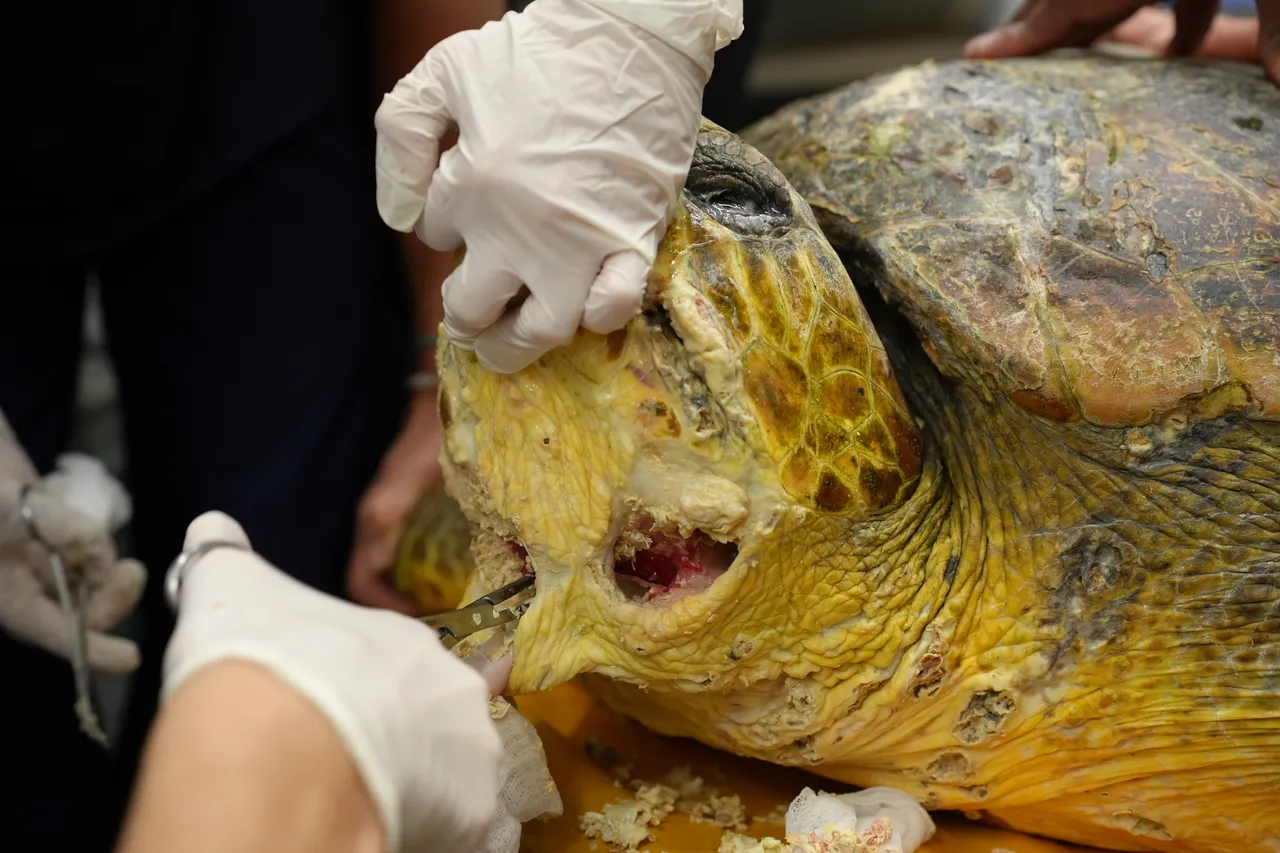
The Turtle Conservation Centre’s trusty combination of veterinary disinfectant and honey was regularly applied to the wounds, helping prevent infection. Over many weeks, the area mended remarkably well.
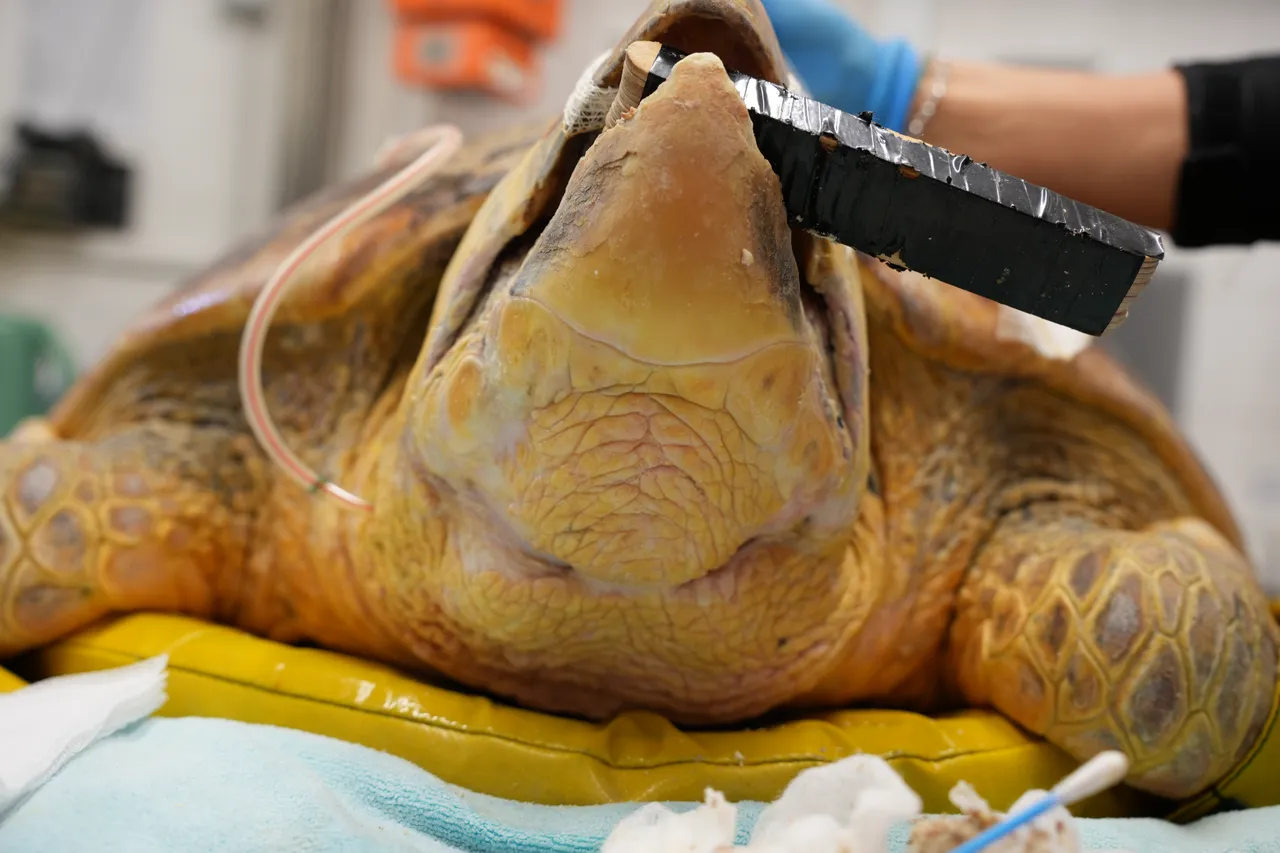
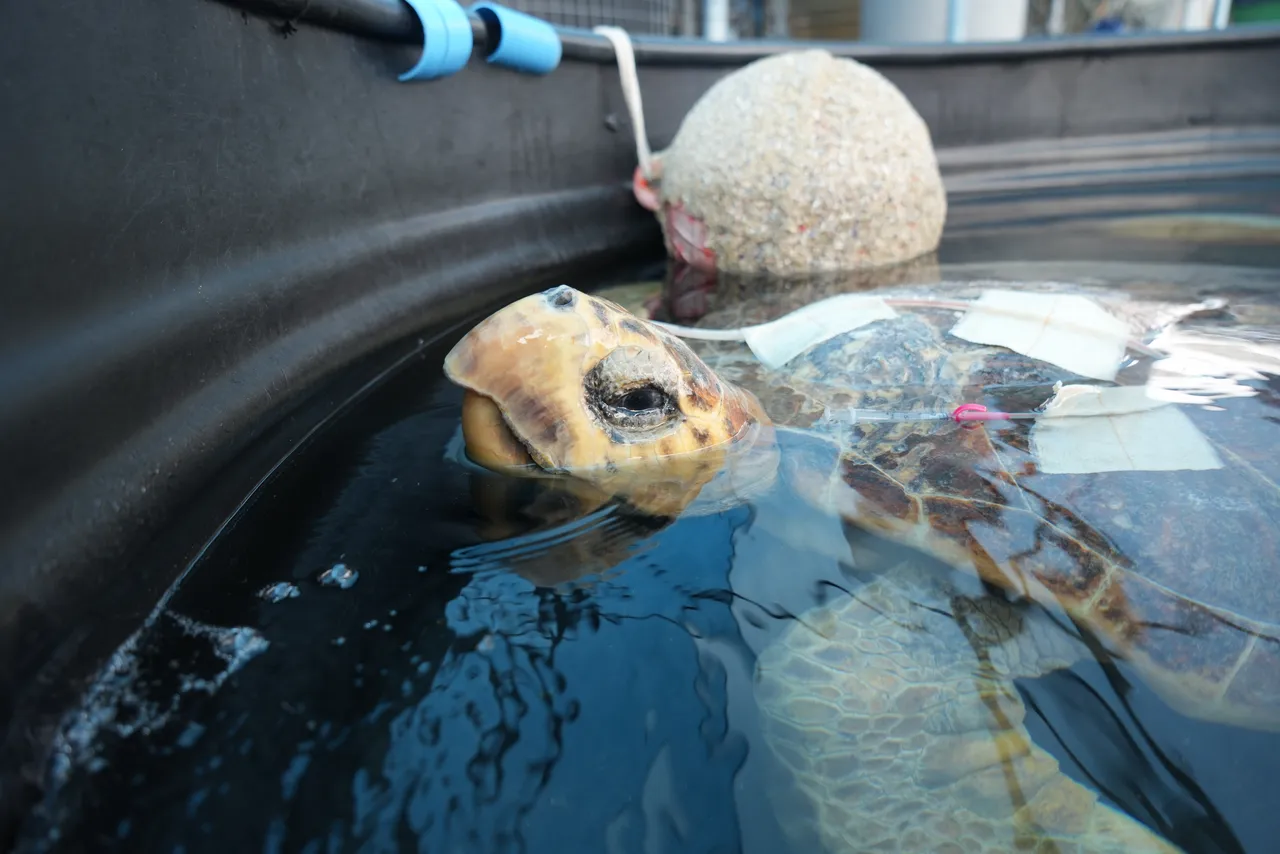
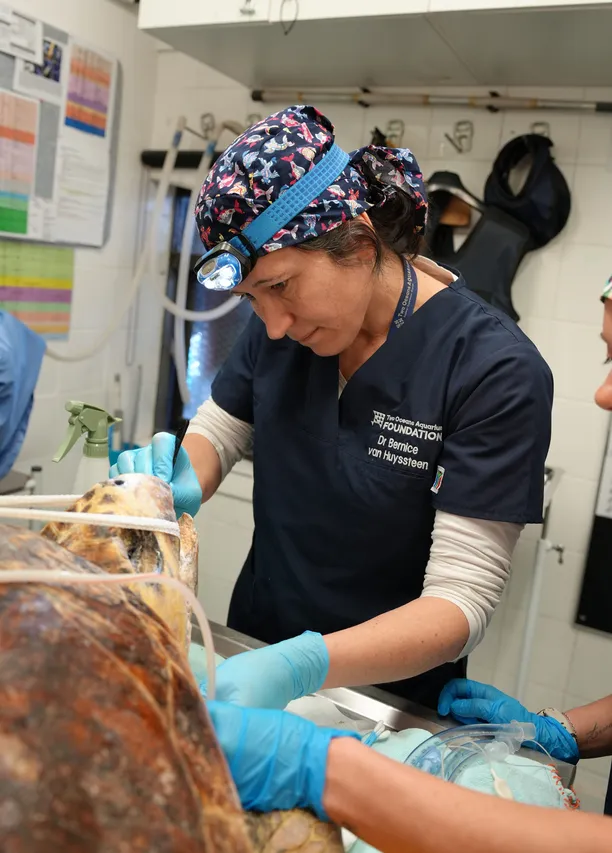
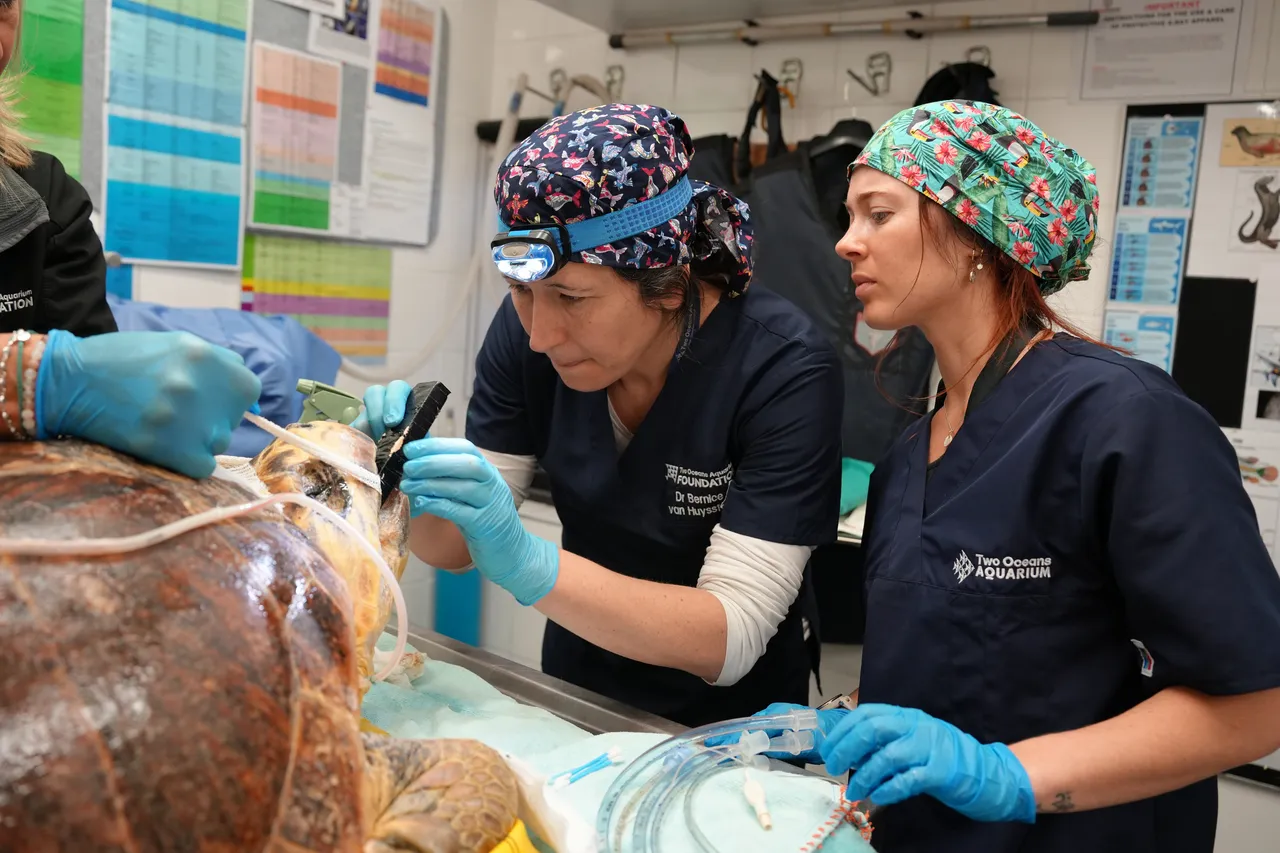
In the image above, Pearl was sedated for a biopsy. The wooden apparatus is used to keep her mouth open while the veterinary team supports her with an external breathing apparatus. You can see the amazing progress in her neck wounds, which are now almost completely healed.
Throughout this process, however, Pearl remained extremely lethargic, weak, and barely responsive. Despite the team’s attempts to feed her small pieces of protein, she had yet to eat since her arrival and was rapidly losing weight. It quickly became clear that instead of simply not having an appetite, Pearl was actually unable to open her mouth.
This meant that the team needed to provide Pearl with quality nutrition that would keep her alive while they treated her jaw issues. The first port of call was total parenteral nutrition (TPN); a mixture of nutritional supplements administered directly into the bloodstream, providing essential nutrients for patients who cannot eat independently.
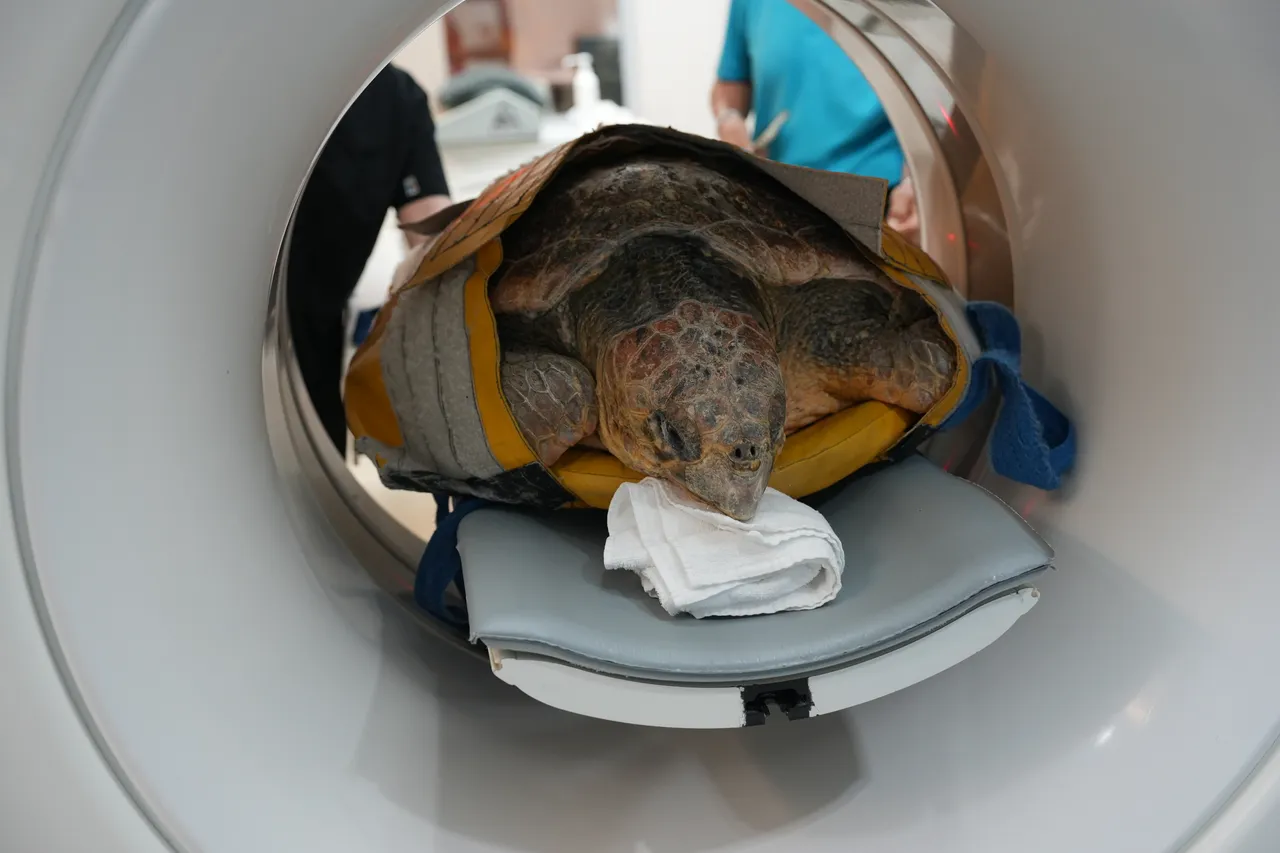
Hoping to confirm the cause of Pearl’s inability to open her mouth, the team took her to Winelands Radiology for a CT scan. There, a severe infection in the bones of her skull and jaw was revealed, which explains why she could barely open her mouth. Dr Bernice took another blood sample, and its culture provided insight into the best antibiotic to fight the bone infection. As a result, Pearl’s behaviour has hugely improved, and she has become significantly more alert and responsive to stimuli.
With the diagnosis confirmed, the team had to find treatment that would be more sustainable in the long term than TPN: “We needed to make a plan that could support her feeding for many months as she healed,” says Dr Bernice.
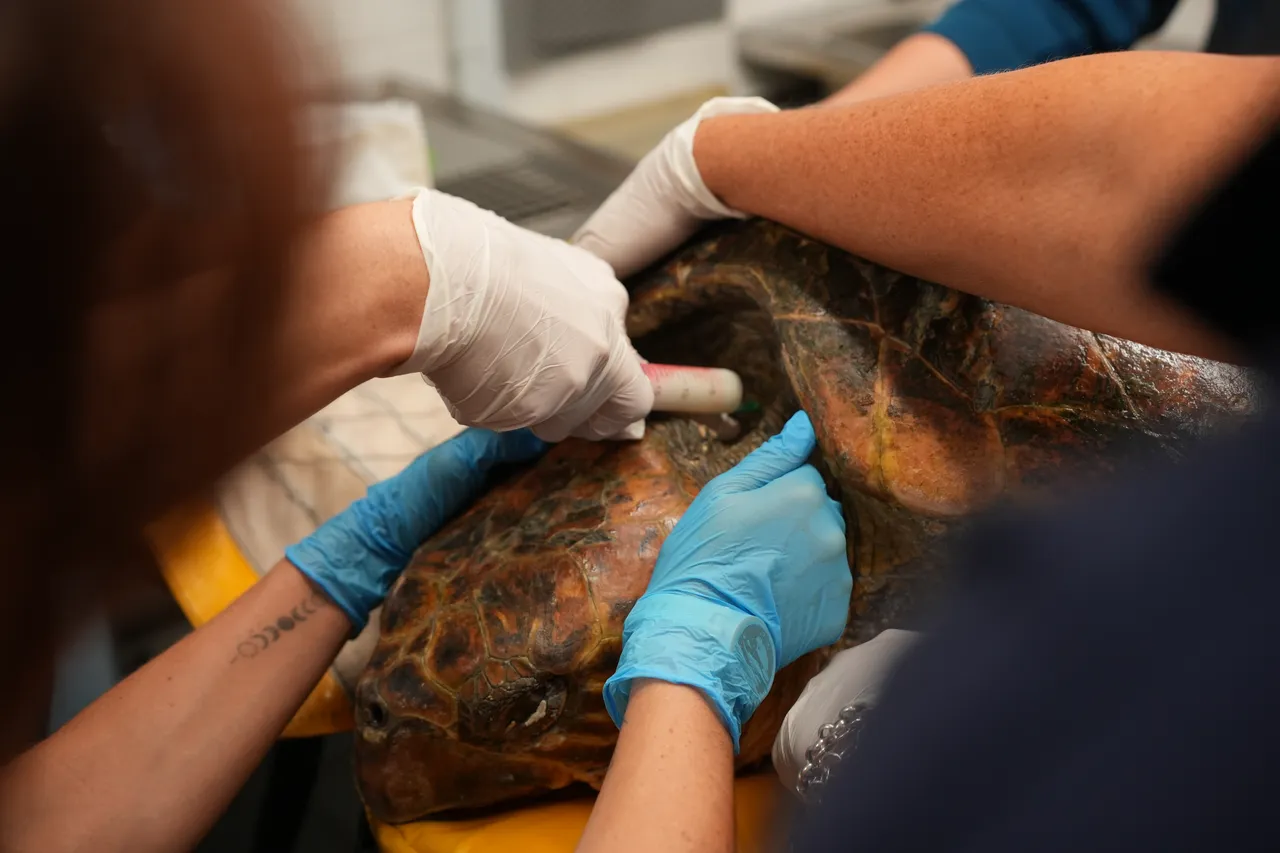
On 29 April 2026, Dr Bernice surgically placed a feeding tube into Pearl’s throat: “The tube allows us to bypass her mouth completely and administer a highly nutritious slurry straight into her stomach through the oesophagus”. Since the tube placement, the team has provided Pearl with daily meals of tinned critical care formula, a nutrient-dense paste that is allowing her to slowly regain some weight.
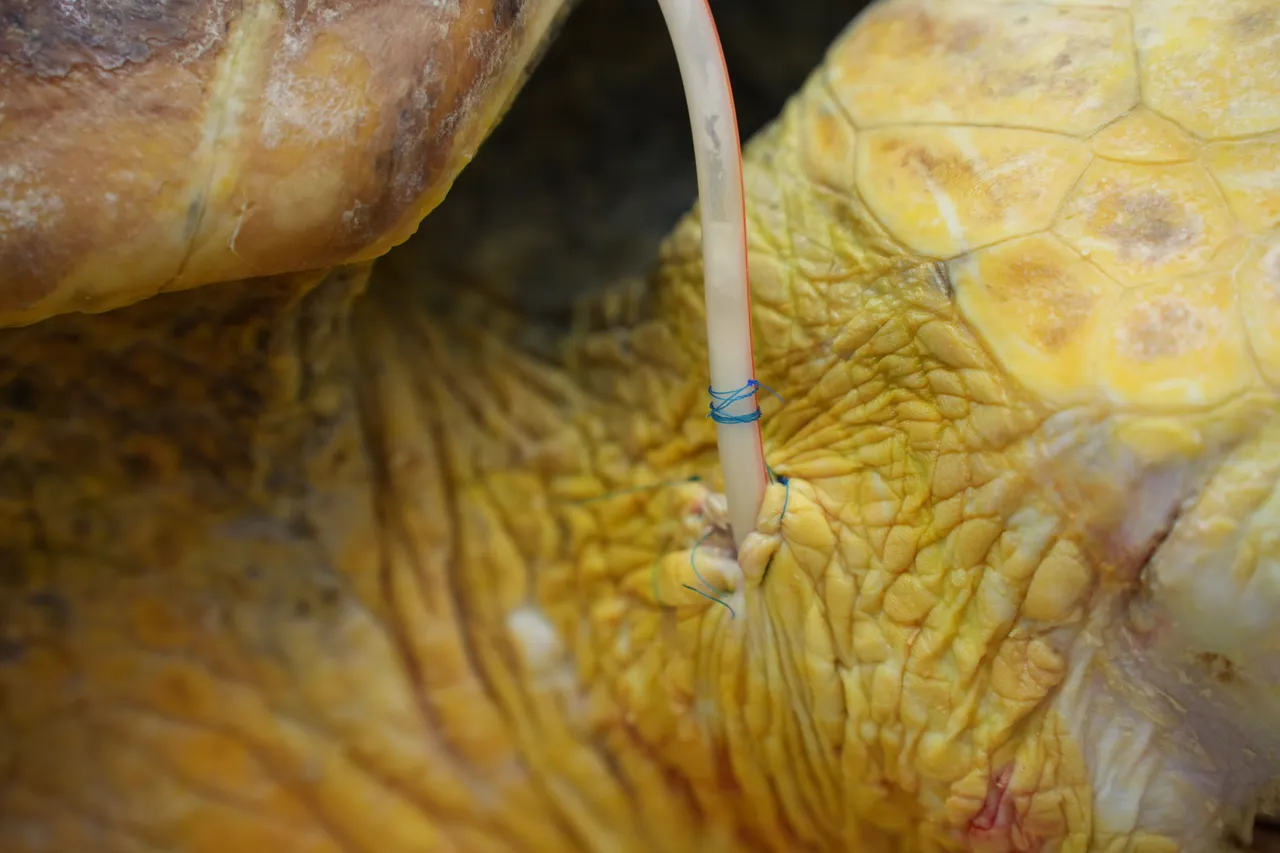
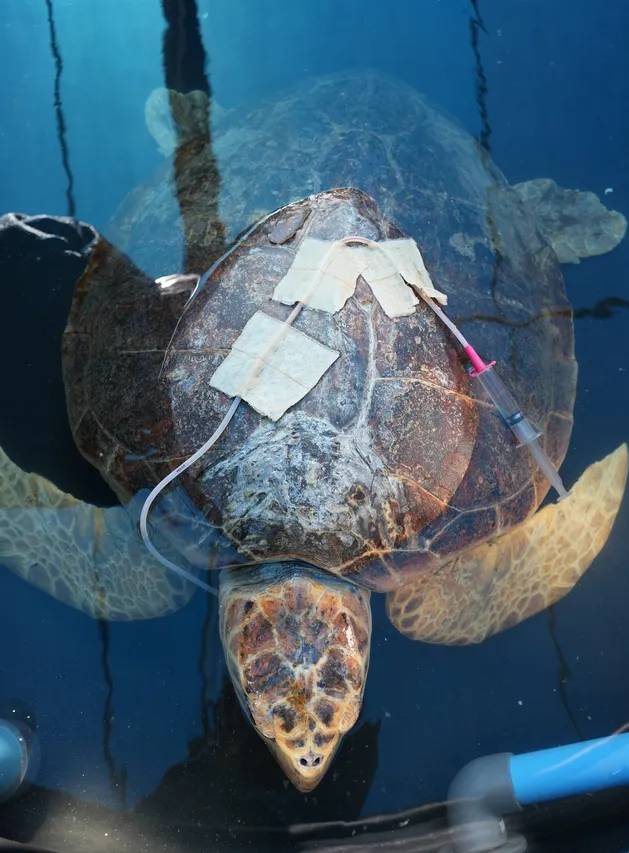
Pearl's feeding tube provides a direct pathway to her stomach. To feed her each day, the team attaches a syringe filled with formula to the end of the tube and slowly "injects" the food.
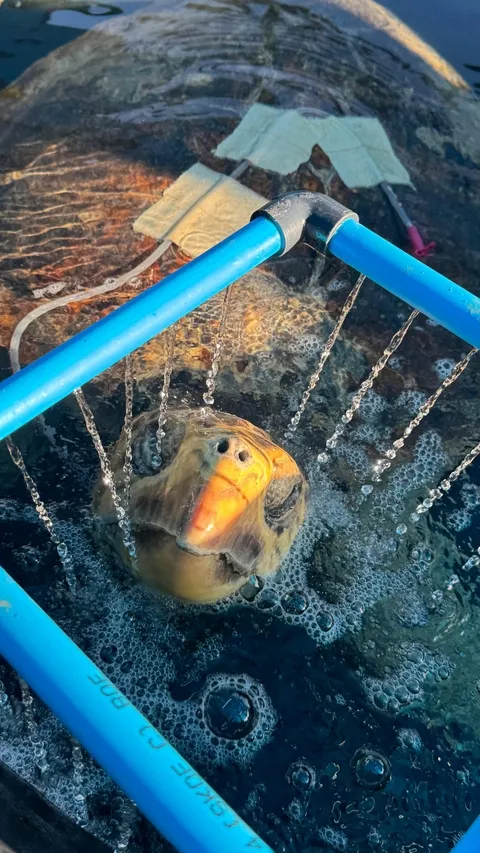
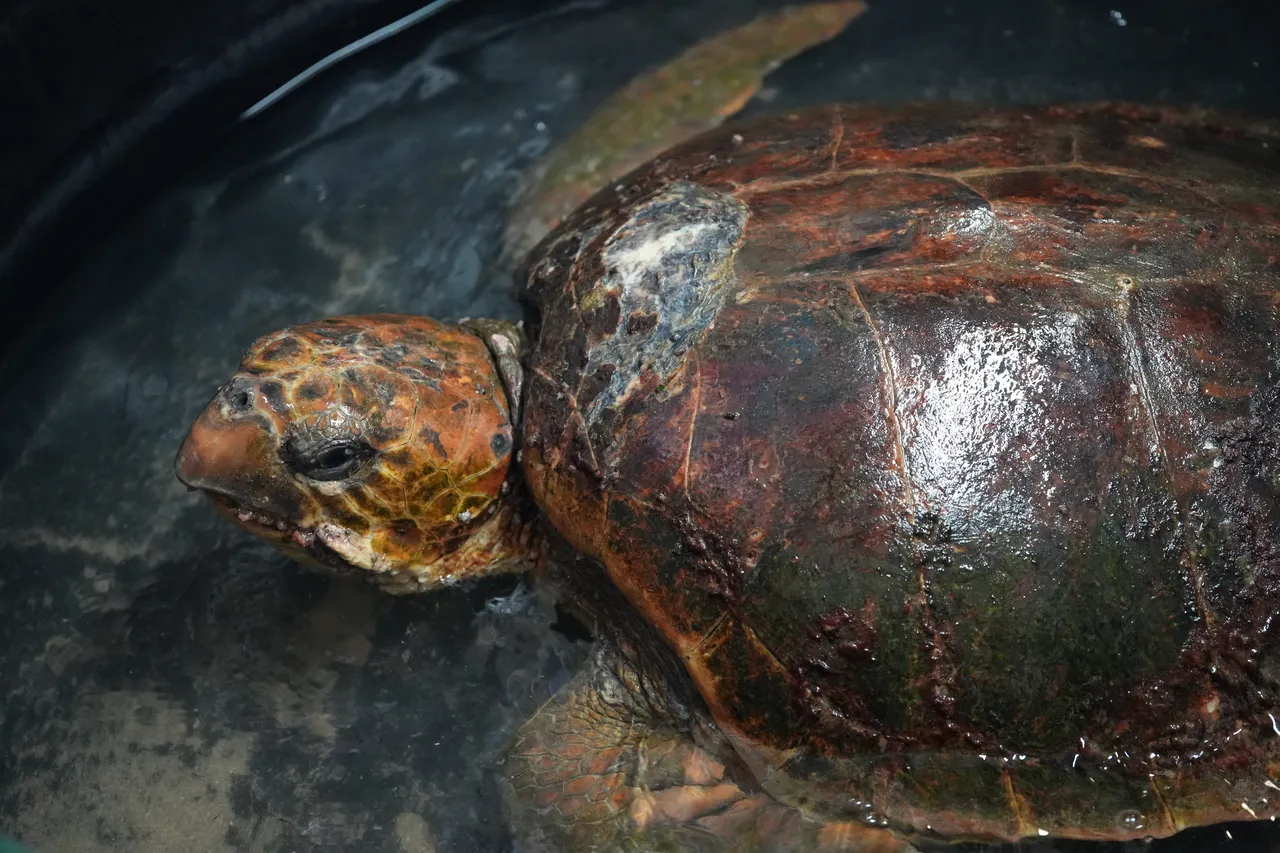
Finally, on 3 June 2026, Pearl graduated from the critical care area to a larger holding pool in the turtle rehabilitation space. Here, she was introduced to some enrichment activities to assess her behaviour and keep her stimulated. One of these activities was a ‘shower’ that provided a steady trickle of water for Pearl to bask under – she responded very positively to this, lifting her head and enjoying the sensation.
Unfortunately, a follow-up CT scan at the end of June confirmed that Pearl’s bone infection had remained unchanged from the previous scan. She had also developed a lung infection, and her left middle ear cavity now appeared to be filled with fluid. Despite being on antibiotics and daily supportive care, her infection continued to rage.
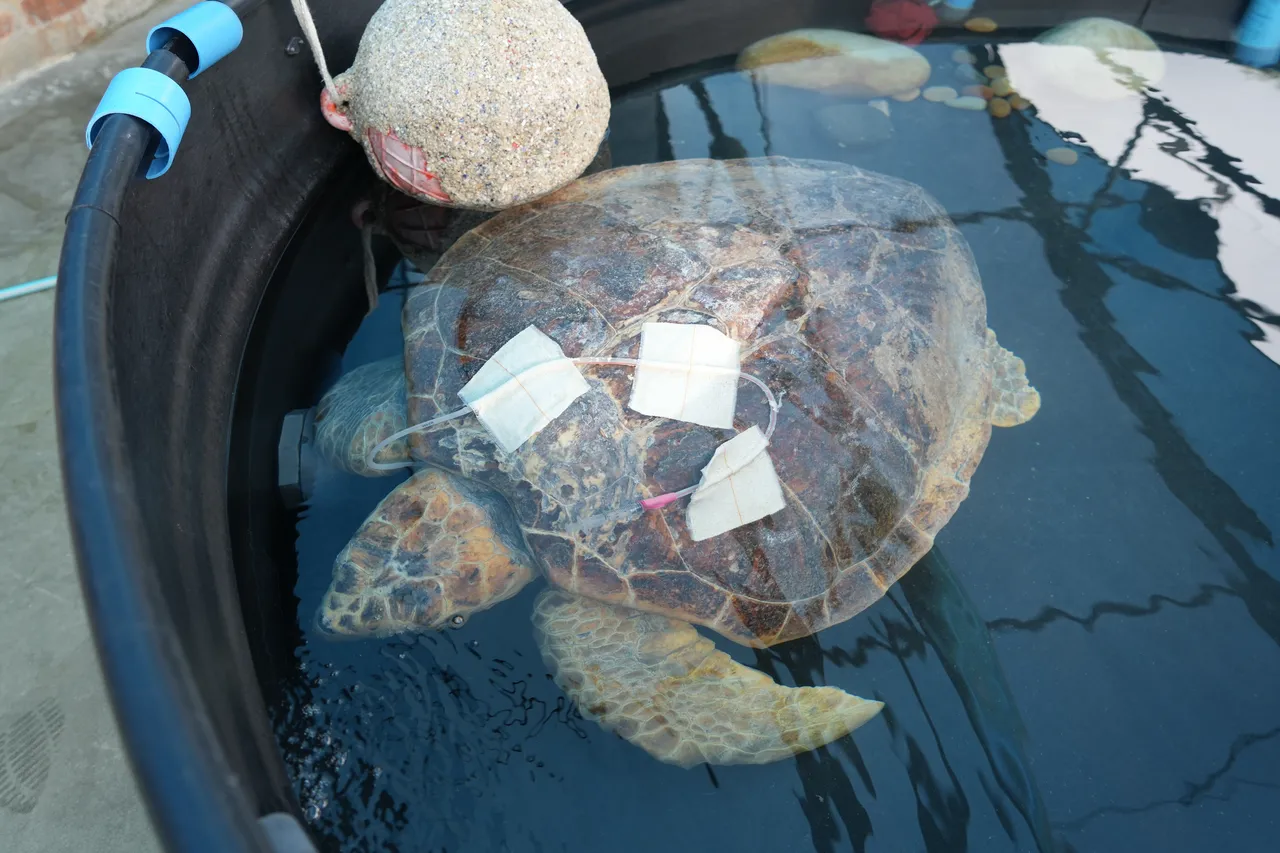
“We needed to conduct more tests to determine if Pearl’s spreading infection was from new pathogens, or if her immune system was simply too depleted to fight back,” says Dr Bernice. To achieve this, Dr Bernice conducted a bronchoalveolar lavage (BAL), during which Pearl was sedated so a sample of lung fluid could be collected and sent for analysis. During the sedation, Dr Bernice also swabbed Pearl’s nasal passages and collected some fluid from the middle ear cavity. Interestingly, the culture results of these samples later revealed that her lungs, nose, and ear all have the same infection. In response, Dr Bernice added another antibiotic to Pearl’s treatment plan that could more effectively target the infection in her lungs and sinuses.
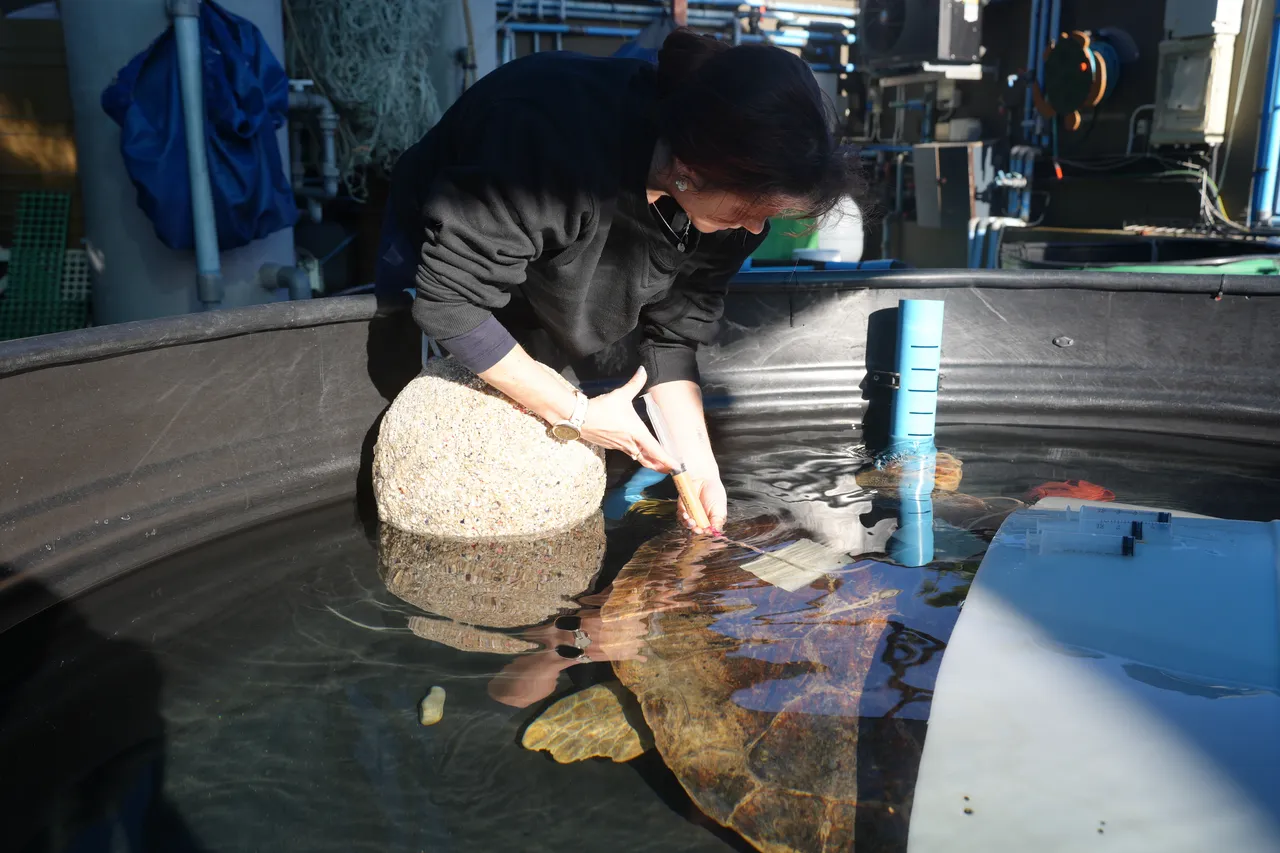
Despite these challenging and often disheartening circumstances, the Turtle Conservation Centre team is celebrating Pearl’s small wins: On 15 July 2026, she was able to open her mouth enough to eat actual food (two pieces of squid) for the first time while being hand-fed!
What’s next for Pearl?
Pearl still has her feeding tube in place and is currently receiving about 200ml daily of tinned critical care formula, which provides complete nutrition so that she does not lose too much weight. “She has stronger days and weaker days, and she tries very hard to eat her pieces of protein that get hand-fed to her,” says Dr Bernice. “She is not able to open her mouth very far, and only occasionally eats a little piece successfully.”
At the moment, Pearl’s prognosis is guarded as bone infections like hers can take many months to resolve. Still, the Turtle Conservation Centre team holds out hope that she will eventually beat her infections.
As an adult female loggerhead turtle, Pearl is a powerful contributor to the future of her endangered species. We know that she is sexually mature and, if given the chance to lay healthy clutches of eggs in the wild, she could contribute hundreds or even thousands of offspring to future generations of loggerhead turtles. Her story highlights the importance of rehabilitation – if Pearl pulls through and beats the odds, her possible reintroduction to the marine ecosystem would be of immeasurable value.
A gentle and inquisitive presence at the Turtle Conservation Centre, big mamma Pearl has a long, difficult road ahead of her, but her potential recovery holds a lot of promise – both for her and for the future of her species.
Related News
Sign up to our Newsletter
Receive monthly news, online courses and conservation programmes.