Appearance and lifestyle:
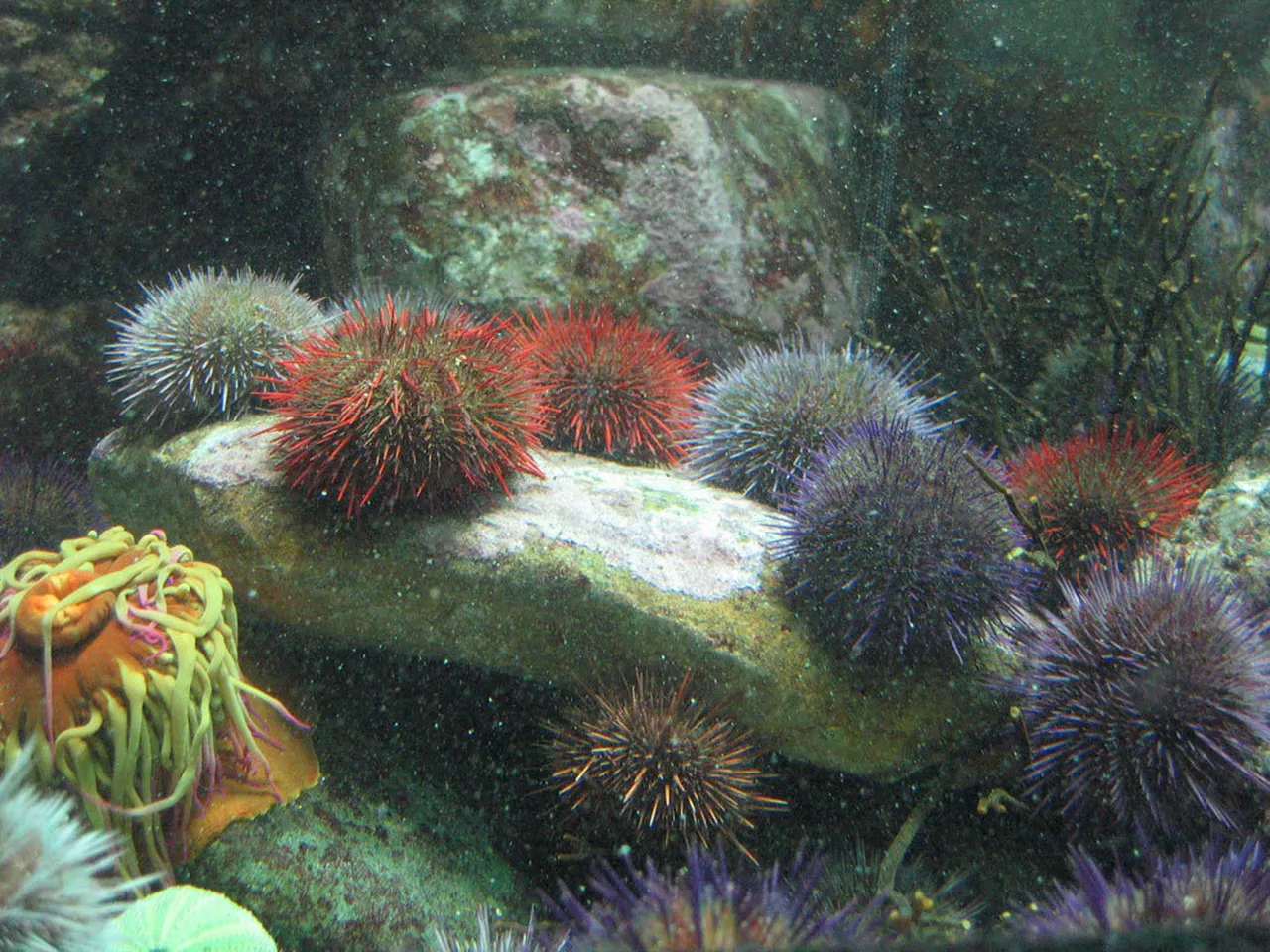
Cape sea urchins (Parechinus angulosus) are round and have short, pointed spines that vary in length, they come in a variety of colours such as purple, green, pale or red. In fact there was a time when the density of urchins was so great along the southwest Cape coast that you couldn’t walk comfortably to the water’s edge at low tide without feeling like you were treading on sharp needles! Then, in 1994, the urchins did a mysterious disappearing act – vanishing almost completely. In just two years they were virtually extinct in certain areas.
The disappearance of the urchins had marine scientists baffled. What could have caused this strange phenomenon? Like detectives, the scientists had to unravel the clues until they discovered that, prior to the disappearance of the urchins, the number of rock lobsters had increased considerably. It turned out that these creatures were responsible for the disappearance of the urchins – the lobsters had simply devoured them!
So, the lobsters ate the urchins – big deal? Yes, it is a big deal; as with all life on our planet, if something happens to one kind of animal or plant, it has a ripple effect on many other animals and plants. In this case the disappearance of the urchins had an impact on abalone (perlemoen).
Although Cape Sea urchins alone are of little value to humans, they provide important nurseries for abalone (perlemoen), which have significant commercial value. The spines of the urchins protect juvenile abalone from predators such as octopus, klipfish and rock lobsters. The dramatic disappearance of the urchins left juvenile abalone in the open, making them an easy target for hungry predators.
Habitat:
A wide diversity of creatures finds their homes in the jungle of stems and fronds of the kelp forests that are prolific off South Africa’s west coast. Cape sea urchins live in vast numbers on shallow reefs, where they graze on kelp and algal debris.
Diet:
Feed on kelp and algal debris.
Threats:
Climate change, pollution, habitat damage etc.