Appearance and lifestyle:
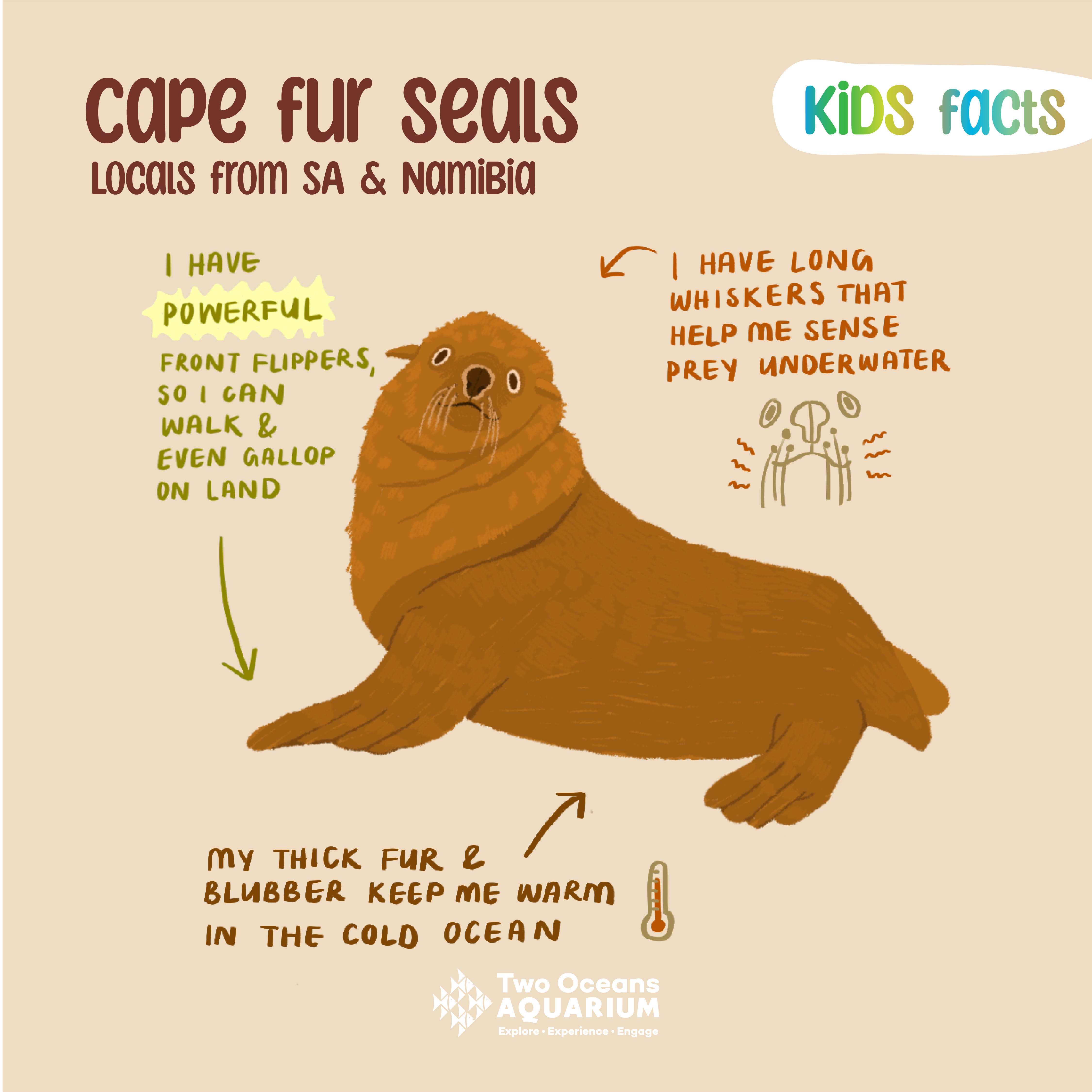
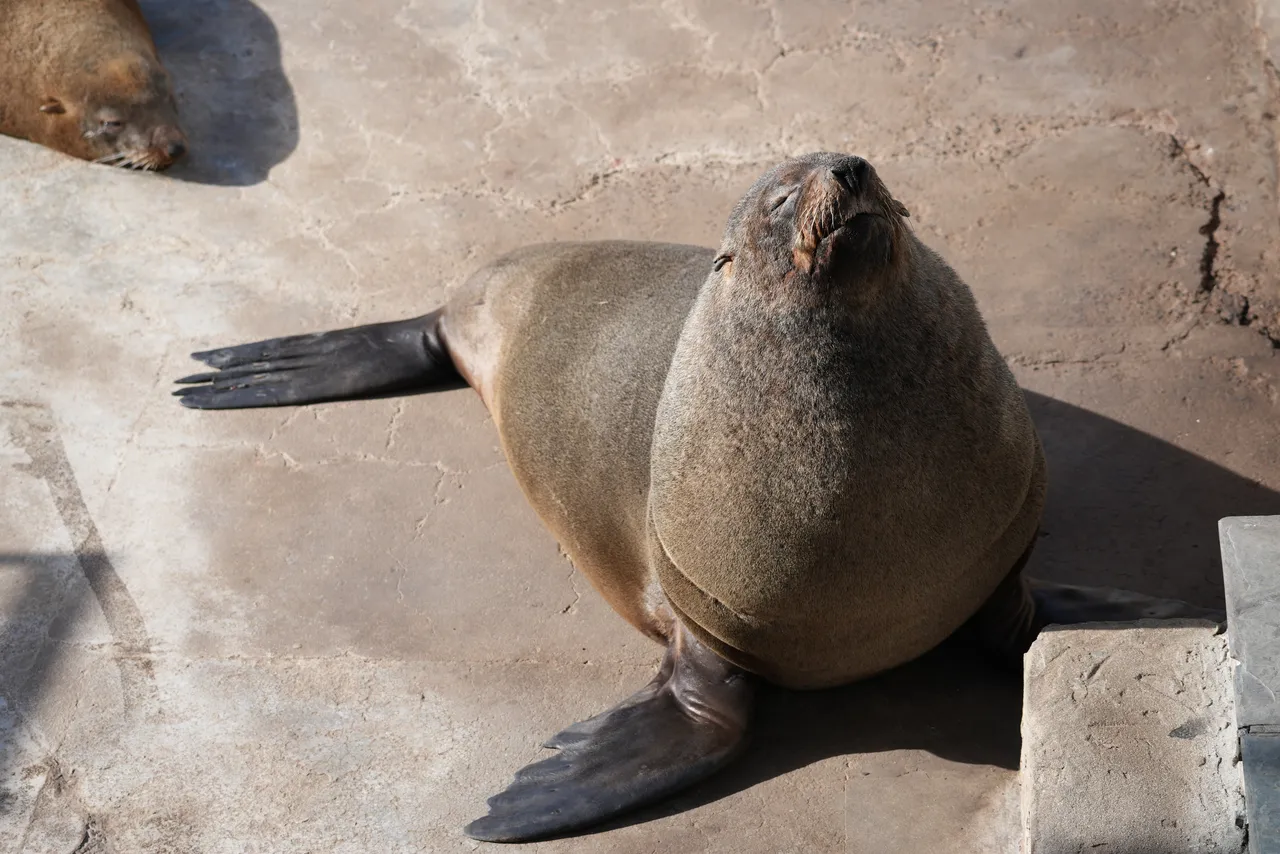
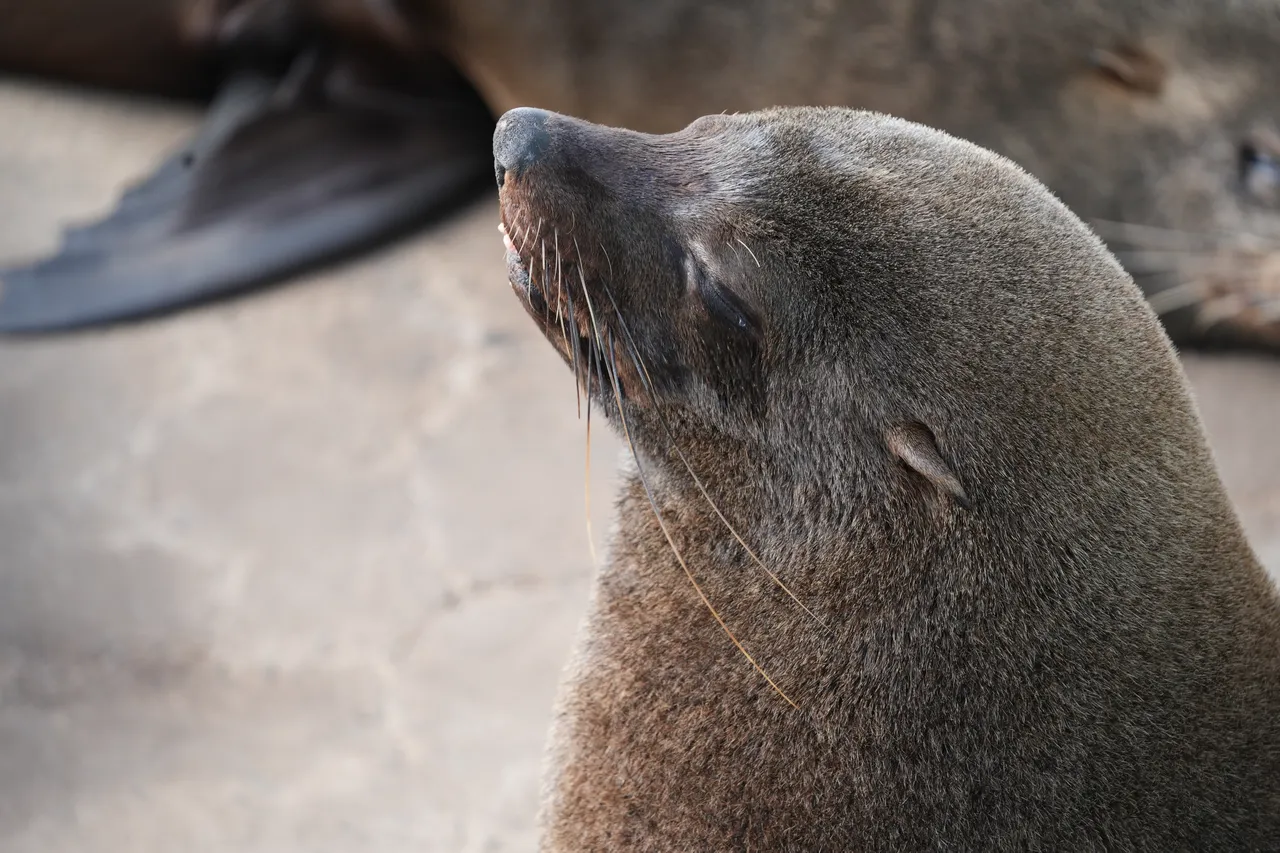
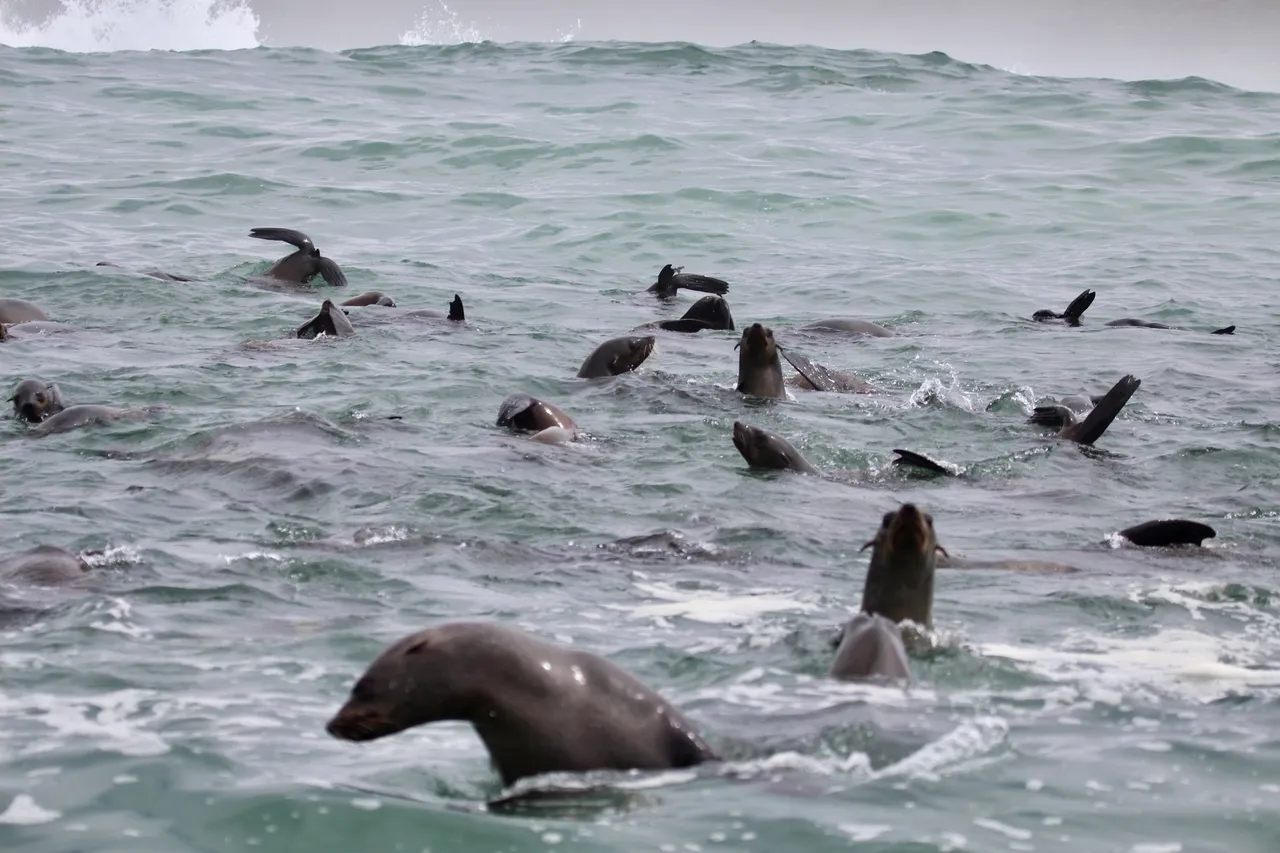
Cape fur seals are eared seals (otariids), not true seals. Unlike true seals, they have visible ear flaps, large fore flippers, and hind flippers that can rotate forward. These adaptations allow them to walk and gallop on land, hear the direction of sounds in the air, and swim and manoeuvre powerfully in the water.
Cape fur seals are carnivorous, semi-aquatic mammals, spending time at sea hunting and on land resting, moulting, healing, and caring for their young. This lifestyle also exposes them to human-related threats, such as fishing gear, boats, hunting, and plastic pollution.
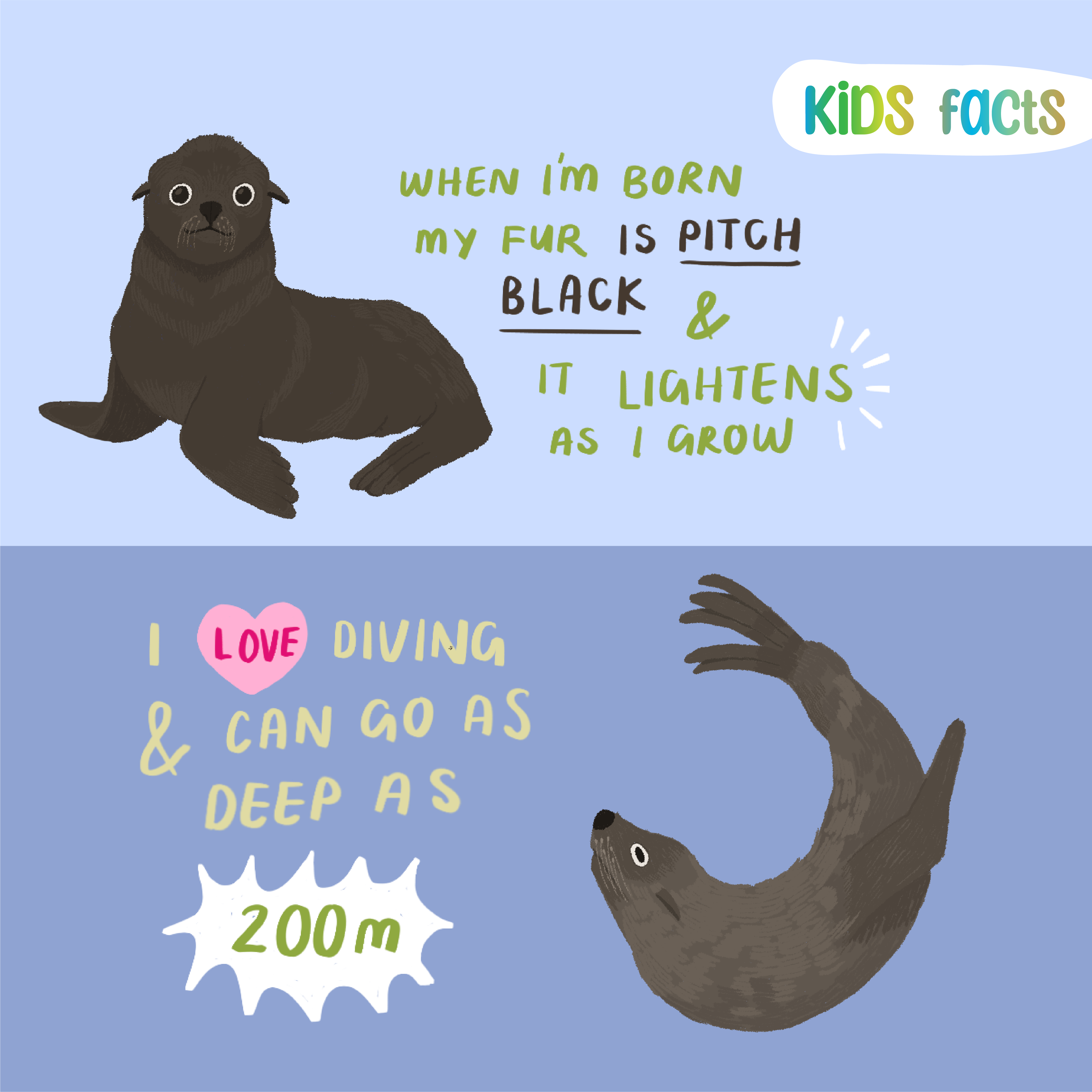
Pups are born on land between late November and early December. They are born black and moult to grey within their first few months. For about six months, they depend on their mother's milk while she alternates between feeding trips at sea and caring for them on land. Because they are born without insulating fat, young pups cannot enter the water and rely entirely on their mothers, although they often gather and play together while waiting for them to return.
By March, pups begin entering the water and gradually learn to forage independently, though they continue nursing. After about a year, they develop a silvery-grey coat and are largely independent. Females reach sexual maturity at three to four years of age, while males mature at four to five years but typically do not breed until around ten years old. Cape fur seals can live for more than 21 years.
Cape fur seals show strong sexual dimorphism, with males growing much larger than females. Adult males can weigh up to 350kg, while females reach about 150kg. During the breeding season, males establish and defend territories, often fasting for up to six weeks while competing for access to females. Successful males may control territories containing as many as 50 females.
Females return to breeding colonies in mid-November, selecting smaller territories within those of dominant males. After giving birth to pups conceived the previous year, females mate with the dominant male once they have recovered and cared for their newborns.
Habitat:
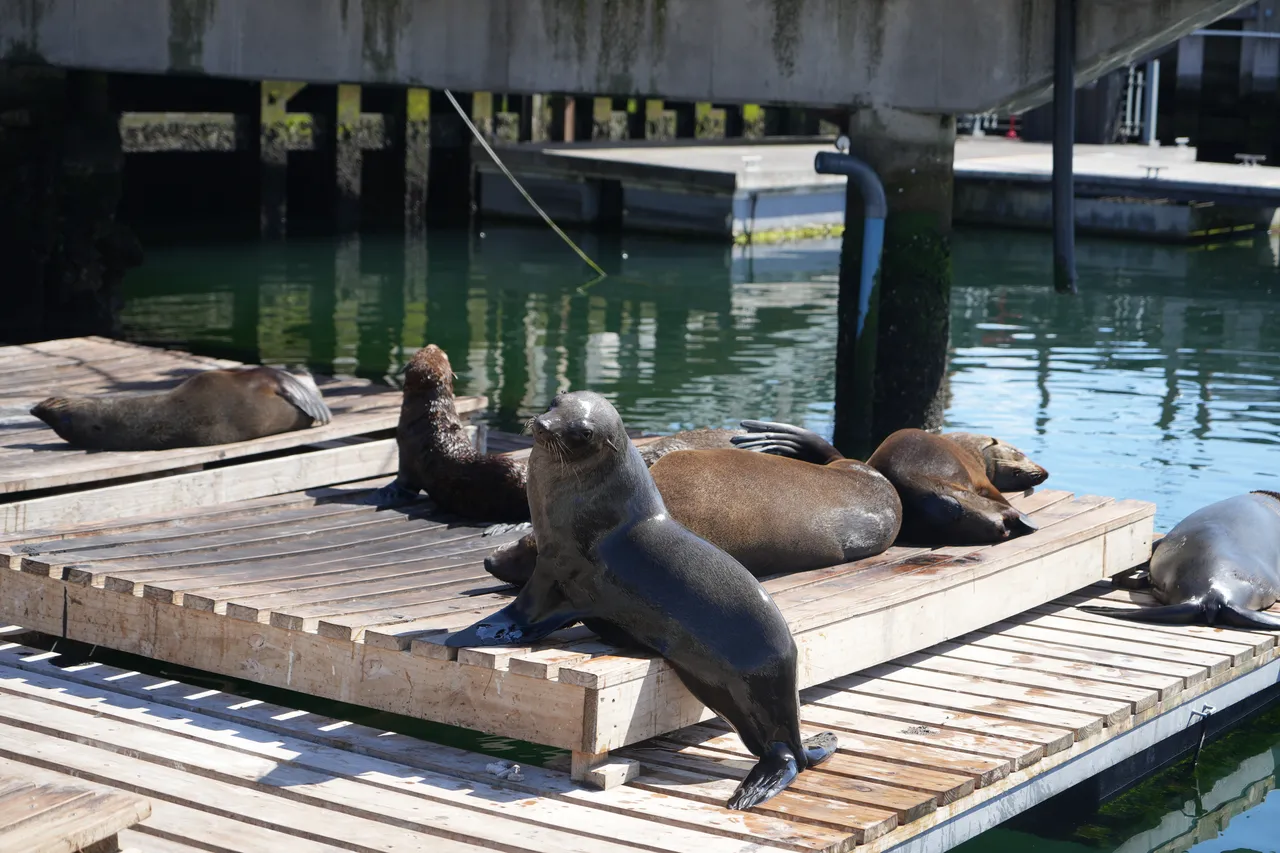
Cape fur seals are the only seal species native to mainland South Africa. Their range extends along the coasts of southern Africa, from southern Angola down the west coast of Namibia and South Africa, and eastwards to Algoa Bay. An estimated two million Cape fur seals inhabit this region, gathering in colonies on rocky shorelines and offshore islands. Colonies can range from a few dozen individuals to many thousands, particularly at major breeding sites where seals congregate to rest, breed, moult, and raise their young. Their preference is for coastal habitats near productive feeding grounds that allow them easy access to food.
Diet:
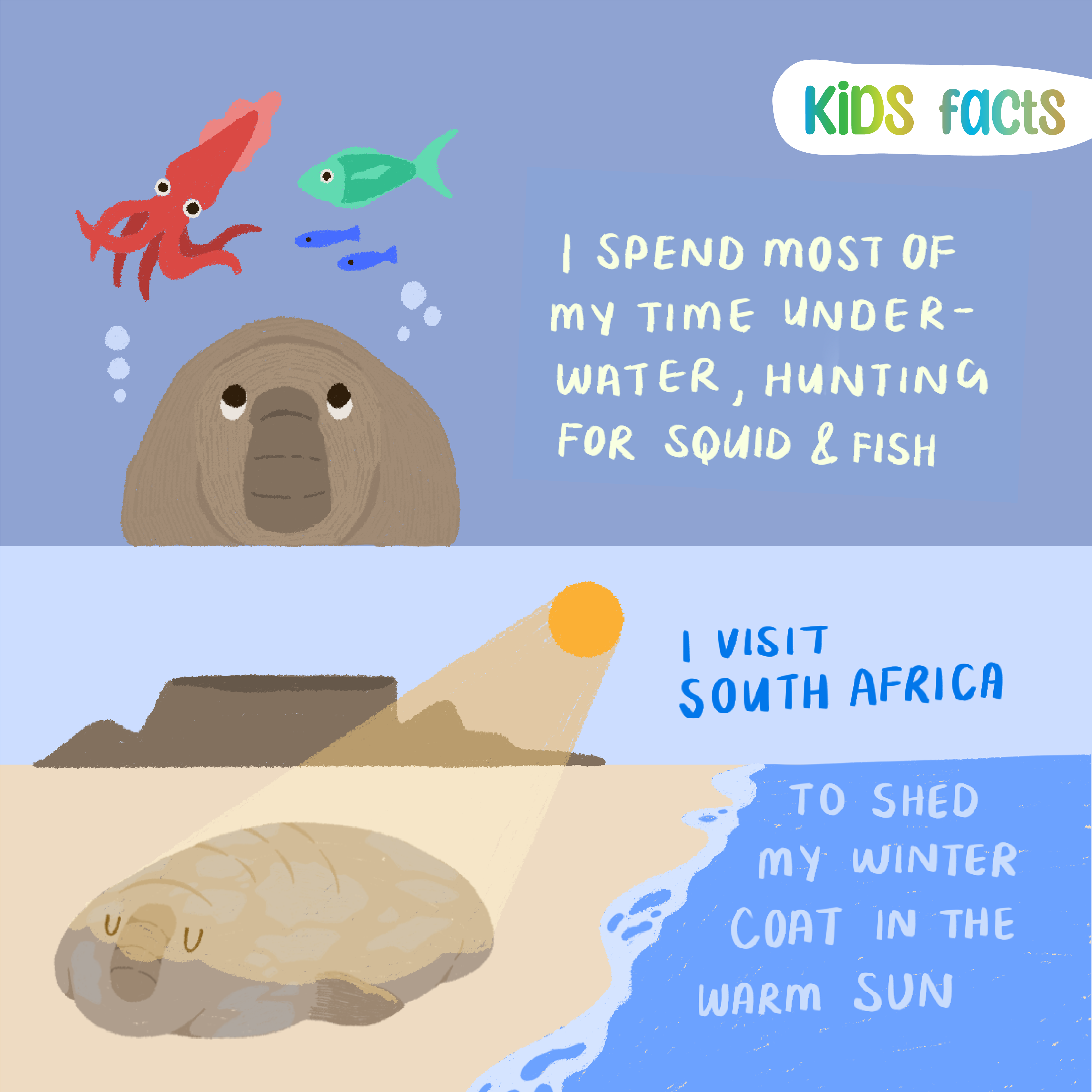
Cape fur seals are opportunistic carnivores that primarily feed on shoaling fish and squid, often diving to depths of up to 200 metres in search of prey. They frequently hunt cooperatively in groups of up to 20 individuals when targeting large schools of fish, but will hunt alone when pursuing more scattered prey. Smaller prey is usually swallowed whole underwater, aided by a specialised digestive system that can process the seawater ingested during feeding.
In recent years, declining fish stocks caused by overfishing have led some Cape fur seals to expand their diet. They have been observed feeding on a variety of alternative prey, including octopus, rays, crayfish, and even small sharks. When capturing larger prey, such as large fish or seabirds, seals typically bring it to the surface, where they thrash it vigorously to kill it and break it into smaller, more manageable pieces before eating.
Threats:
Although Cape fur seal populations are considered stable, they are increasingly exposed to a range of human-related threats. Seals are frequently injured or killed through entanglement in fishing gear, ropes, and plastic pollution, and can also be affected by diseases such as rabies. Misconceptions that seals are responsible for declining fish stocks have led to their persecution in some areas, including commercial seal hunts in Namibia and illegal shooting incidents around Cape Town. The Two Oceans Aquarium Foundation's Marine Wildlife Management Programme works to address many of these threats through disentanglement efforts, rescue, research, and public education.
Kids facts: