Appearance and lifestyle:
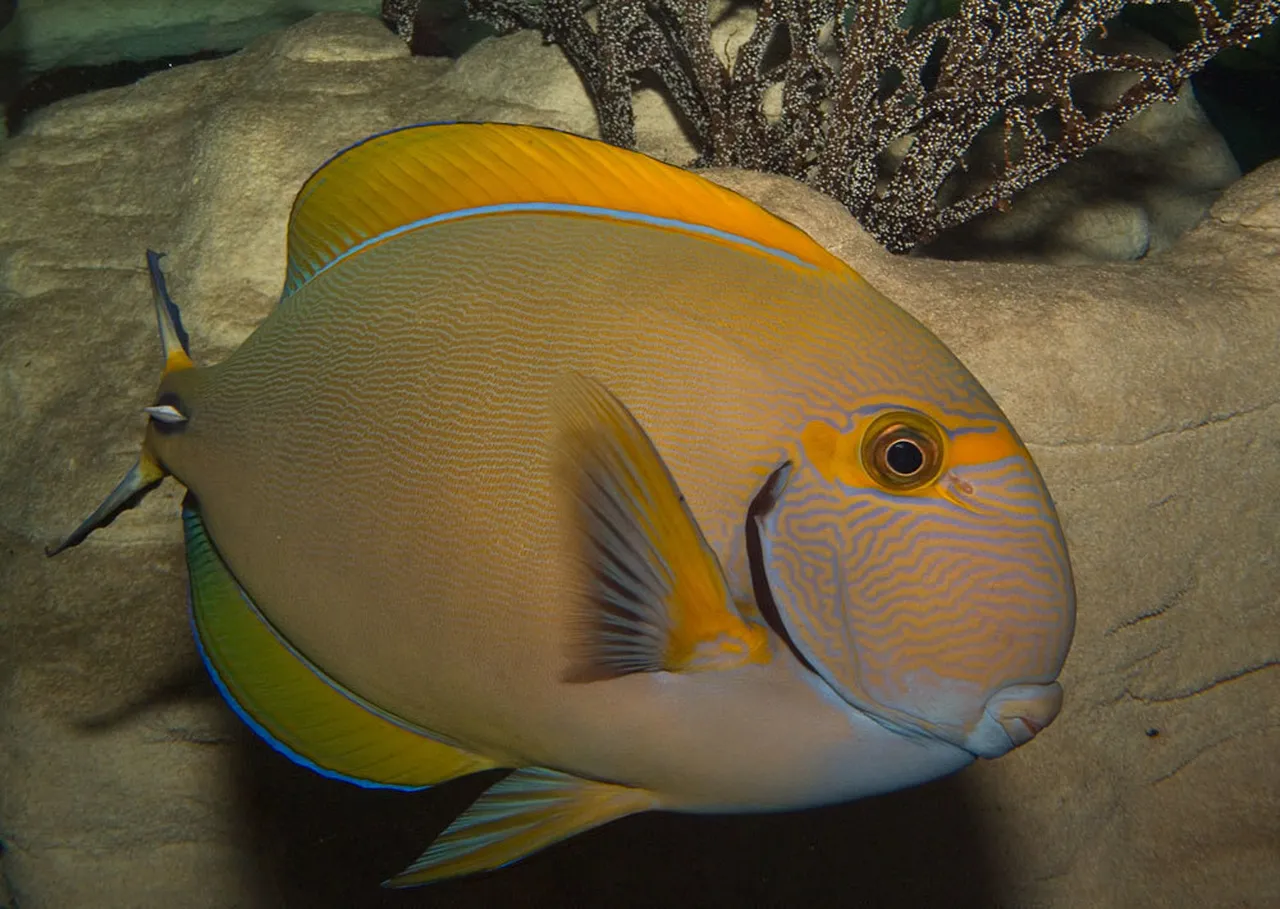
Pencilled surgeon's (Acanthurus dussumieri) are so named because of the scalpel-like spines on either side of their tail fins, which are folded into a groove when not in use. The pencilled surgeon has a single fixed spine on each side of the base of its caudal fin, which is used in defence or when fighting. The fish is brown, oblong, and laterally compressed. It has thin, wavy blue lines running horizontally along its body and a yellow band surrounding and between its eyes. The white spine of the tail peduncle is housed in a black socket. The tail is frequently blue, while the anal and dorsal fins are yellowish. Adults have a wide blue border and black spots on the tail fin, whilst juveniles have a white band at the base.
When surgeons are threatened or alarmed, they lift their scalpel spines, using them to slash at their attackers! They also use the spines to wedge themselves into cracks in the reef.
Habitat:
There are 51 species of surgeon fish, 19 of which occur in southern African waters. Adults live in caves on reefs at depths of up to 100m, or in open water around sea mounts and islands. The juveniles are found in estuaries where they graze on algae-covered rocks.
Diet:
Pencilled surgeons are herbivorous that feed on organic matter, algae and seaweeds.
Threats:
Pollution, climate change, habitat loss etc.