Appearance and lifestyle:
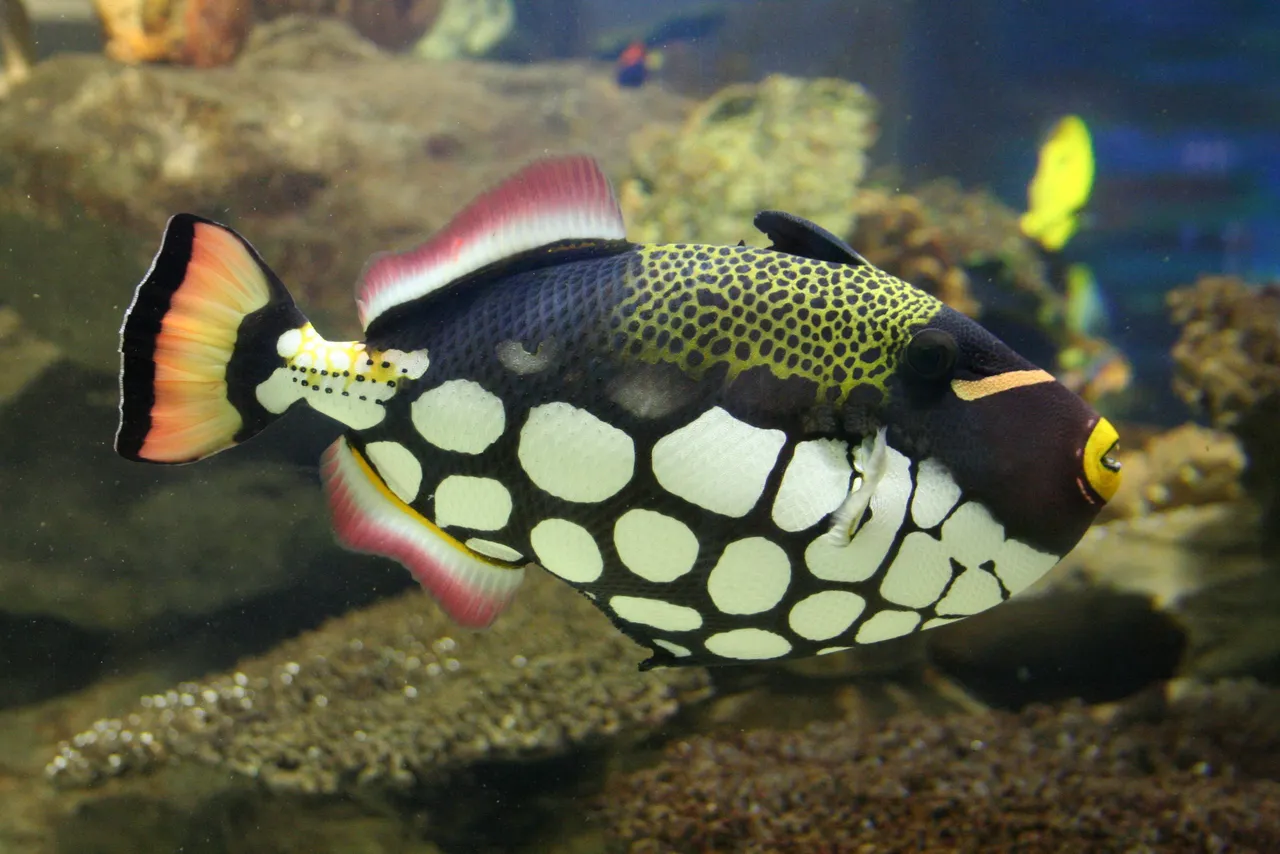
The clown triggerfish (Balistoides conspicillum) is easy to spot, with its orange “clown lips” and large white spots on the lower part of its body. It has three spines in its first dorsal fin. The first spine can be locked upright (using the second spine as a “trigger”) to help protect the fish from predators, or to wedge it securely into the reef.
Divers may hear grunting or clicking sounds from clown triggerfish. These sounds are produced by vibrations associated with the swim bladder. Some triggerfish can be highly territorial and may chase divers or snorkellers away from their territories, especially near nesting sites.
Habitat:
Clown triggerfish are found on shallow rocky and coral reefs in the Indian and Pacific oceans.
Diet:
They feed on crustaceans and other hard-shelled animals. They particularly favour sea urchins and use their strong teeth to bite off the spines.
Threats:
Pollution, climate change, habitat loss etc.